

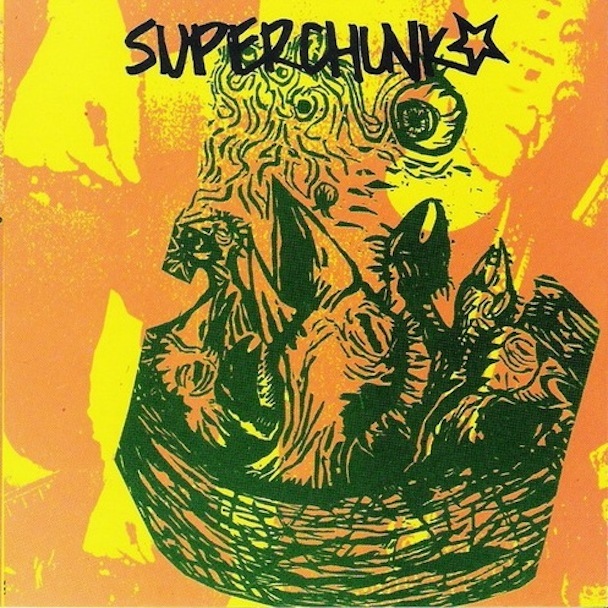
Almost everybody likes Superchunk, and they have their share of ardent superfans, but with regard to their estimable catalog, it feels in some ways that they have been underappreciated. Over the course of its 20-plus years together the group has greatly expanded its musical palate, but the principal attributes that comprise the band's unmistakable sound remain largely as they were from the outset: Mac McCaughan's reedy, urgent vocals; Laura Ballance's steady, unfussy bass playing; Jon Wurster's forceful and creative timekeeping; and McCaughan and Jim Wilbur's energetic, intertwining lead/rhythm guitars. Though probably best known for barnstorming major-key anthems, throughout the years Superchunk has manifested an extraordinary diversity, widening their scope to include exciting digressions into country and avant-folk, while still managing to maintain the signature strengths that made the band great in the first place. Superchunk's uncanny ability to remain just themselves even while steadily evolving is to their infinite credit, but has been something of a blessing and a curse in critical circles, with too-complacent music journalists frequently ignoring the band's seismic advances, and resolving instead to a "Good Ol' Superchunk" approach to reviews. In reality, Superchunk's is a rare story of continuity and growth, a great band staying together and sticking it out, all the while adding new layers of texture, ambition, and complexity to their work without ever straining themselves toward a contrived reinvention.
Superchunk's first blush with real notoriety came in the form of their epochal 1989 single "Slack Motherfucker," a careening bit of power pop later reissued to a larger audience on the band's early singles compilation Tossing Seeds. "Slack Motherfucker" became one of those whimsical moments that occur periodically in popular culture wherein an unforgettable song somehow gets shoehorned into a completely inappropriate media narrative (see Ronald Reagan adopting "Born In The USA" as his theme song for his 1984 re-election campaign). In this instance, "Slack Motherfucker" found itself somehow a piece with the largely asinine early-'90s media fixation on a supposed crush of young, unambitious layabouts known alternately as "slackers" or "Generation X." The irony could scarcely be thicker. "Slack Motherfucker" (recorded with original drummer Chuck Garrison and original second guitarist Jack McCook) was actually McCaughan's scathing indictment of a fellow employee at a minimum wage job, for his colleague's unwillingness to carry his own weight throughout the drudgery. Thus on the their first well-known song, Mac was playing anything other than the slacker. Instead it was a window into the near-Calvinist work ethic that would power the band through numerous great albums, countless transcendent live shows, and eventually the formation, in partnership with Ballance, of Merge Records -- the impeccably curated label who would survive and advance and become an institution, as seemingly every vestige of the old record industry withered around it.
McCaughan has periodically been self-effacing on the topic of his lyrics, but in reality this is one of the band's great strengths. Even in the early going, when first-wave classics like "Precision Auto" and "Skip Steps 1 & 3" laid bare preoccupations running toward a deeply felt impatience with just about everything from slow traffic to stemwinding speech, McCaughan's capacity with a well-judged turn of phrase gave Superchunk's songs some of the memorable epigrammatic genius of the Replacements and Dinosaur Jr. As the years have progressed, his singing has taken on greater dexterity and dynamism, with his lyrics becoming more expansive in a roughly equivalent fashion, bringing to bear an ever more authoritative and emphatic capacity for storytelling. For devoted fans, much of this trajectory could be charted on McCaughan's always interesting and periodically wonderful solo project Portastatic, an alternate identity that seemed to free him from expectations and reinforce his creative restlessness.
If there is a singular turning point for Superchunk, it is surely the 1994 masterpiece Foolish, an astonishingly intense pop record, which ranks as one of the best releases of its era. This was not the band's first brilliant act -- the previous year's On The Mouth was as great a collection of rollicking punk anthems as anyone could hope to expect -- but Foolish nevertheless represented something new entirely. Various interpersonal dynamics had brought the band to a state of near dissolution and the frustration is more than palpable. Here McCaughan is reminiscent of Blood And Chocolate-era Elvis Costello, filled with rage and recriminations and nearly feral in his wounded state, and yet self-aware enough to recognize his righteous indignity is profoundly flawed.
If it can be stipulated that Superchunk never felt quite so desperately lightning struck, it is only understandable -- this was the kind of open-nerved expression rarely sustainable over the long term. But Foolish was a crucial touchstone in the development of the band -- never again would they release music that was less than profoundly adult, complex, and engaged. On subsequent albums, Superchunk frequently vacillated between emotional uplift and profound melancholy.
1995's Here's Where The Strings Come In was a muscular and exciting album, replete with galvanizing rockers, tricky time signatures, and ebullient anthems. 1997's brilliant Indoor Living was a different animal altogether, wedding some of McCaughan's most evocative lyrics and best singing to a reflective album verging on the funereal. Both releases are terrific, as are the valedictory releases of 1999 and 2001 Come Pick Me Up and Here's To Shutting Up. It was something of a surprise when the band resurfaced with 2011's Majesty Shredding, a back-to-basics primer that touched upon all of Superchunk's distinct charms with a kind of "we're not dead yet" insouciance. It isn't the greatest album the group ever made, but it sure functions as a shot over the bow. They've been with us for a long time now –- dismiss them at your peril. Superchunk has come to represent so many things above and beyond the greatness of their music. They are the flagship band for Merge, the champions of Chapel Hill, and the reliably excellent live act that's come through your community for years without ever disappointing. Setting all of that aside, this is an attempt to talk about the band in terms of their achievements on record (including for consideration their studio LPs; only one of the band's several compilations is listed here), a remarkable catalog that stands shoulder to shoulder with any of their contemporaries.
9. Incidental Music (1995)
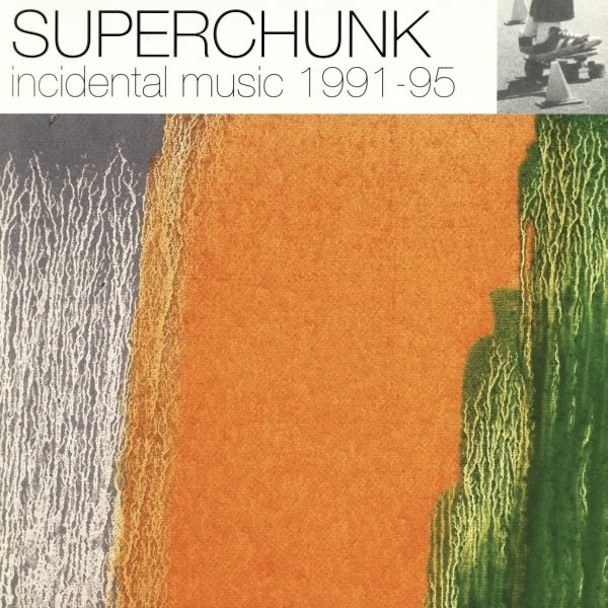
Characteristic of a group as gifted and prolific as Superchunk, there are a number of great compilations and extras available to fans including the Clambakes Series, 1992's Tossing Seeds, 2003's Cup of Sand and sundry terrific contributions to not-for-profit releases. 1995's Incidental Music deserves special notice, collecting a remarkable amalgam of discarded originals, cover songs and other curios that speak volumes to the group's breadth of influence. The cover of The Magnetic Fields' "100,000 Fireflies" and the Verlaines' "Lying in State" are worth the price of admission alone, and McCaughan's "Home at Dawn" is one of the best originals he's ever written.
9. Incidental Music (1995)
Characteristic of a group as gifted and prolific as Superchunk, there are a number of great compilations and extras available to fans including the Clambakes Series, 1992's Tossing Seeds, 2003's Cup of Sand and sundry terrific contributions to not-for-profit releases. 1995's Incidental Music deserves special notice, collecting a remarkable amalgam of discarded originals, cover songs and other curios that speak volumes to the group's breadth of influence. The cover of The Magnetic Fields' "100,000 Fireflies" and the Verlaines' "Lying in State" are worth the price of admission alone, and McCaughan's "Home at Dawn" is one of the best originals he's ever written.
8. Majesty Shredding (2011)
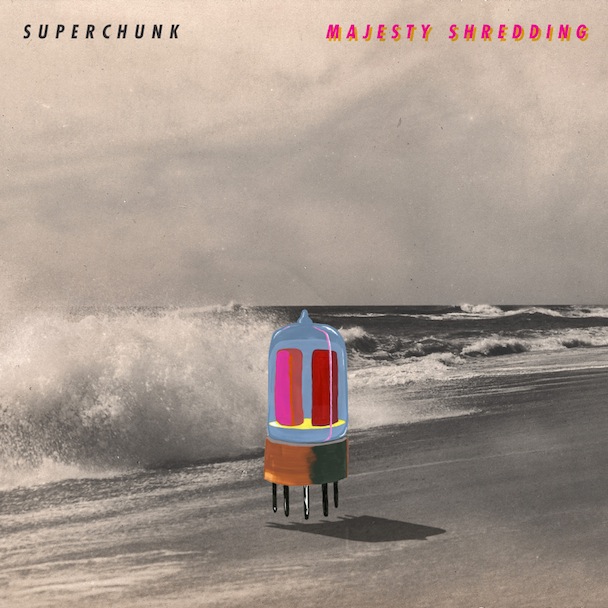
Ten years following their last release, Majesty Shredding is replete with wonderful songs and energy reminiscent of Superchunk's earlier albums. Tracks like "My Gap Feels Weird" could practically be a throwback to the No Pocky era, and it is tremendously heartening and exciting to see the band firing on all of its no-holds-barred cylinders. Missing is some of the welcome sophistication of later Superchunk records, yielding the hope that this palate-cleansing exercise in straightforward rock is just the next fascinating turn in the history of one of the genre's consistently arresting bands.
8. Majesty Shredding (2011)
Ten years following their last release, Majesty Shredding is replete with wonderful songs and energy reminiscent of Superchunk's earlier albums. Tracks like "My Gap Feels Weird" could practically be a throwback to the No Pocky era, and it is tremendously heartening and exciting to see the band firing on all of its no-holds-barred cylinders. Missing is some of the welcome sophistication of later Superchunk records, yielding the hope that this palate-cleansing exercise in straightforward rock is just the next fascinating turn in the history of one of the genre's consistently arresting bands.
7. Here's To Shutting Up (2001)
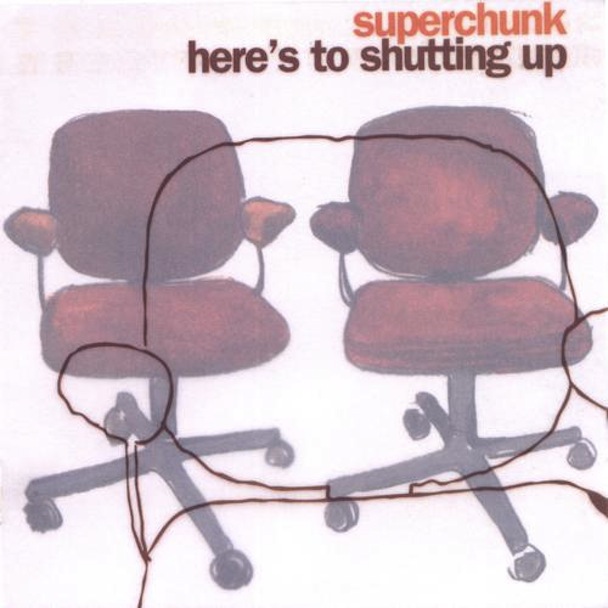
Portions of the wonderful Here's to Shutting Up could pass as the relaxed, keyboard-driven soundscapes of Roxy Music, like on the opener "Late Century Dreams." Meanwhile, tracks like the moving and slightly eerie "Phone Sex" evoke the disorienting moodscapes of American Music Club. On balance, the Superchunk of Here's To Shutting Up sounds remarkably sharp, refined and in control of an idiom that they have practically invented themselves. There is the weight of disappointment, too, as a great band seemingly winding down the clock struggles with the question of how best to exit the stage.
7. Here's To Shutting Up (2001)
Portions of the wonderful Here's to Shutting Up could pass as the relaxed, keyboard-driven soundscapes of Roxy Music, like on the opener "Late Century Dreams." Meanwhile, tracks like the moving and slightly eerie "Phone Sex" evoke the disorienting moodscapes of American Music Club. On balance, the Superchunk of Here's To Shutting Up sounds remarkably sharp, refined and in control of an idiom that they have practically invented themselves. There is the weight of disappointment, too, as a great band seemingly winding down the clock struggles with the question of how best to exit the stage.
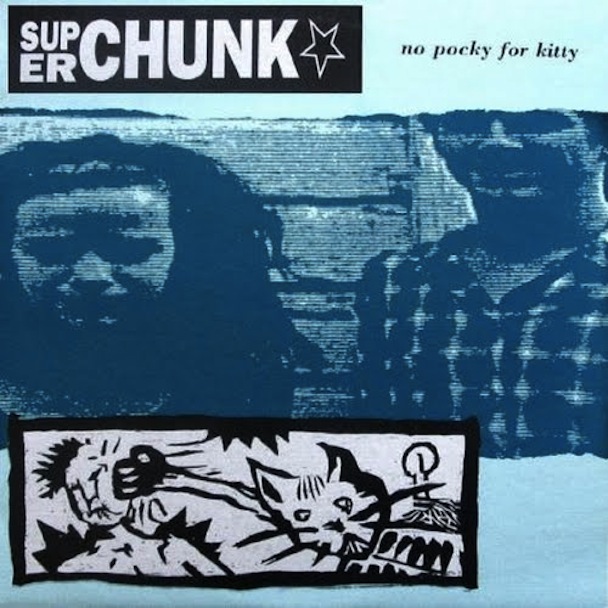
6. No Pocky For Kitty (1991)
The superb No Pocky For Kitty finds Superchunk tightening their sound to a highwire breaking point, with new producer Steve Albini bringing out all of the brilliant tension and anguish that was previously laid just beneath the surface of the group's dynamics. Startling songs like the opener "Skip Steps 1 & 3" and "Seed Toss" are urgent punk pop classics. McCaughan's songwriting chops are not fully realized by this point and as the album progresses, tracks like "Press" fail to achieve the same vaulting heights, but by and large this is a tremendous record portending greatness at every turn.
6. No Pocky For Kitty (1991)
The superb No Pocky For Kitty finds Superchunk tightening their sound to a highwire breaking point, with new producer Steve Albini bringing out all of the brilliant tension and anguish that was previously laid just beneath the surface of the group's dynamics. Startling songs like the opener "Skip Steps 1 & 3" and "Seed Toss" are urgent punk pop classics. McCaughan's songwriting chops are not fully realized by this point and as the album progresses, tracks like "Press" fail to achieve the same vaulting heights, but by and large this is a tremendous record portending greatness at every turn.
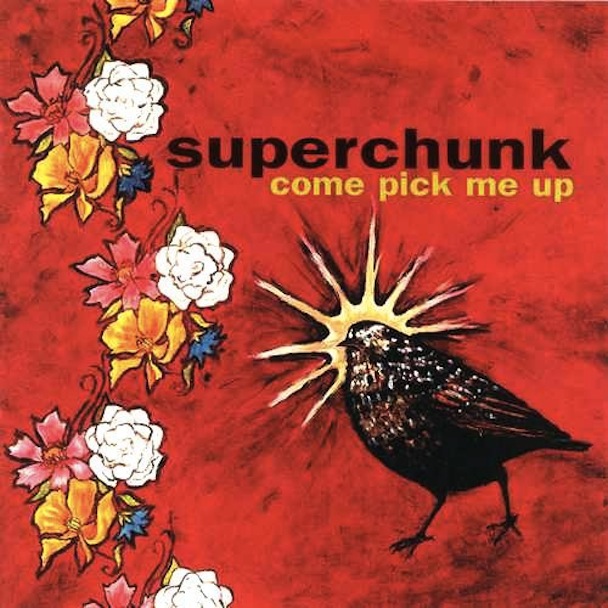
5. Come Pick Me Up (1999)
Yet another in a longstanding series of power pop classics, Come Pick Me Up features some of the best and most memorable items in the Superchunk oeuvre, including the unforgettable Tommy Keene-like "Cursed Mirror" and the surging Bob Mould-style "1000 Pounds." On the album's final track, McCaughan places his entry into the soul ballad sweepstakes with the crushing "You Can Always Count on Me (In The Worst Way)." Come Pick Me Up is amongst the most powerful writing of his career.
5. Come Pick Me Up (1999)
Yet another in a longstanding series of power pop classics, Come Pick Me Up features some of the best and most memorable items in the Superchunk oeuvre, including the unforgettable Tommy Keene-like "Cursed Mirror" and the surging Bob Mould-style "1000 Pounds." On the album's final track, McCaughan places his entry into the soul ballad sweepstakes with the crushing "You Can Always Count on Me (In The Worst Way)." Come Pick Me Up is amongst the most powerful writing of his career.
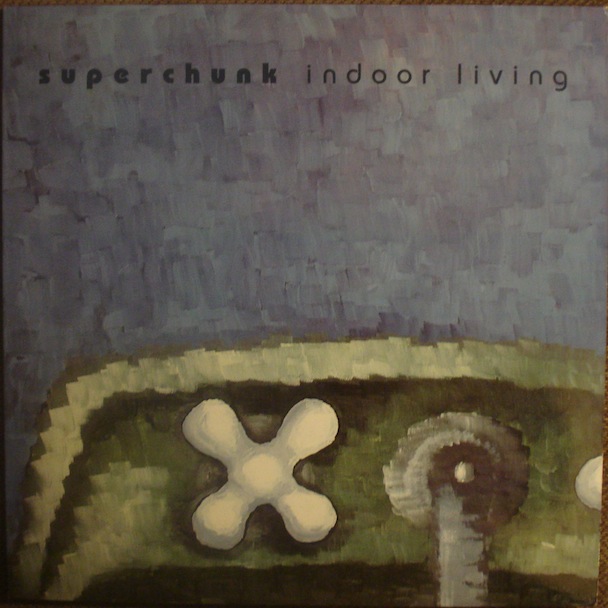
4. Indoor Living (1997)
The stunning Indoor Living finds McCaughan and company further advancing from recent gains on albums like Foolish and Here's Where The Strings Come In. On winning songs like the opener "Unbelievable Things" and the single "Watery Hands" McCaughan seems suddenly capable of turning his frustration inward, recognizing that even his herculean work ethic and capacity for magical thinking will not cede to him a true sense of control. (Throughout his career, McCaughan seems uniquely fixated on uncontrollable disasters -- see his many songs about plane crashes and natural disasters.) There is a wry element to Indoor Living, but the ultimate takeaway is one of sadness and loss, culminating with the finale "Martinis On The Roof" -- a longing elegy to a friend taken too soon.
4. Indoor Living (1997)
The stunning Indoor Living finds McCaughan and company further advancing from recent gains on albums like Foolish and Here's Where The Strings Come In. On winning songs like the opener "Unbelievable Things" and the single "Watery Hands" McCaughan seems suddenly capable of turning his frustration inward, recognizing that even his herculean work ethic and capacity for magical thinking will not cede to him a true sense of control. (Throughout his career, McCaughan seems uniquely fixated on uncontrollable disasters -- see his many songs about plane crashes and natural disasters.) There is a wry element to Indoor Living, but the ultimate takeaway is one of sadness and loss, culminating with the finale "Martinis On The Roof" -- a longing elegy to a friend taken too soon.

3. Here's Where The Strings Come In (1995)
Foolish was a difficult act to follow, but 1995's Here's Where the Strings Come In was a tour de force with designs to bring the band to ever-larger audiences. No one can rightfully resist the paint-by-numbers classic opener "Hyper Enough," but the real intrigue on this album comes with the tricky time signatures of "Silverleaf And Snowy Tears" or the ingeniously affirming "Detroit Has A Skyline." Here's Where the Strings Come In is Superchunk at their most diverse, ambitious and fearless. Even the material that doesn't work is a credit to a band never willing to play it safe.
3. Here's Where The Strings Come In (1995)
Foolish was a difficult act to follow, but 1995's Here's Where the Strings Come In was a tour de force with designs to bring the band to ever-larger audiences. No one can rightfully resist the paint-by-numbers classic opener "Hyper Enough," but the real intrigue on this album comes with the tricky time signatures of "Silverleaf And Snowy Tears" or the ingeniously affirming "Detroit Has A Skyline." Here's Where the Strings Come In is Superchunk at their most diverse, ambitious and fearless. Even the material that doesn't work is a credit to a band never willing to play it safe.
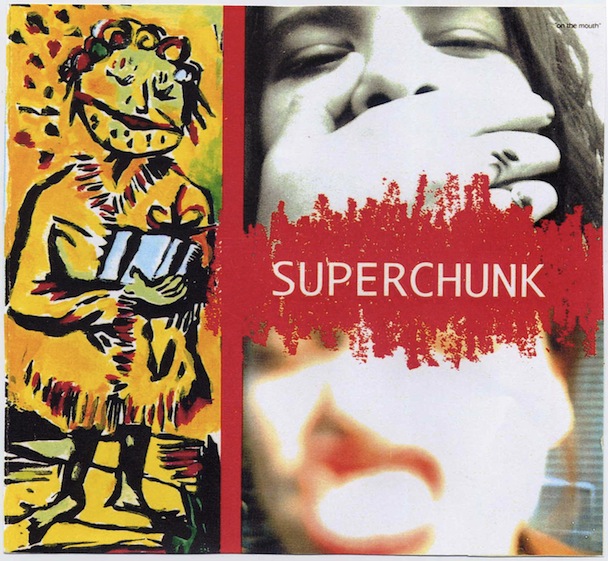
2. On The Mouth (1993)
On The Mouth commences with the breathless "Precision Auto," essentially a speed-addled warning to stay out of the highway's fast lane, and hardly lets up from there. Tracks like "Package Thief" and "The Question Is How Fast" all revolve around the need for expediency in music, life, and personal conduct. The net result is a record so exhilarating that morning coffee is rendered a moot afterthought. On The Mouth is a pure melodic distillation of everything we need to be anxious about starting yesterday.
2. On The Mouth (1993)
On The Mouth commences with the breathless "Precision Auto," essentially a speed-addled warning to stay out of the highway's fast lane, and hardly lets up from there. Tracks like "Package Thief" and "The Question Is How Fast" all revolve around the need for expediency in music, life, and personal conduct. The net result is a record so exhilarating that morning coffee is rendered a moot afterthought. On The Mouth is a pure melodic distillation of everything we need to be anxious about starting yesterday.
1. Foolish (1994)
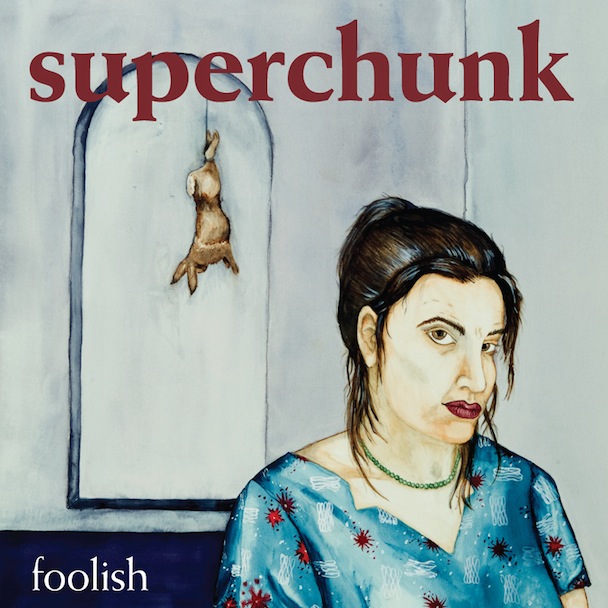
From the slow-building noir of the opening track "Like A Fool" to the crushing confession of the lead single "Driveway To Driveway," Foolish remains one of the saddest and most relatable documents of suffering and alienation rendered in recent music history. The songs are uniformly great -- from the angular attack of "First Part" to the languidly demoralized "Stretched Out," everything here works. By the unbearably tense album closer "In A Stage Whisper," McCaughan's seething has nearly crossed the line into a full psychotic break. Foolish is often harrowing but unmistakably a the watershed moment for one of the era's best and most enduring bands.
1. Foolish (1994)
From the slow-building noir of the opening track "Like A Fool" to the crushing confession of the lead single "Driveway To Driveway," Foolish remains one of the saddest and most relatable documents of suffering and alienation rendered in recent music history. The songs are uniformly great -- from the angular attack of "First Part" to the languidly demoralized "Stretched Out," everything here works. By the unbearably tense album closer "In A Stage Whisper," McCaughan's seething has nearly crossed the line into a full psychotic break. Foolish is often harrowing but unmistakably a the watershed moment for one of the era's best and most enduring bands.