
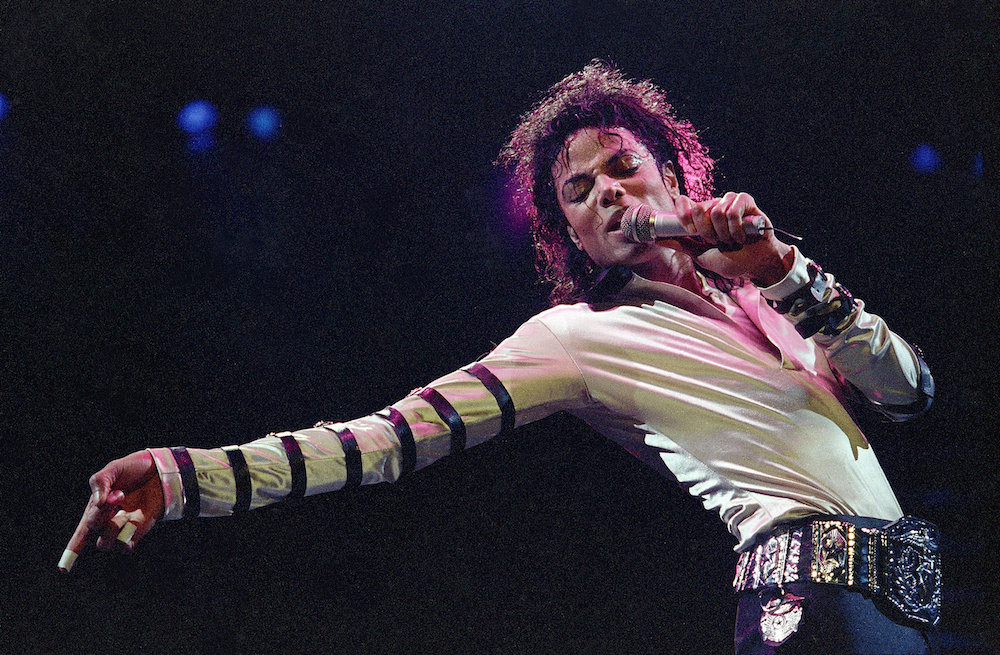
Today, on what would've been Michael Jackson's 60th birthday, we learn that it doesn't actually matter legally whether Michael Jackson was really singing on Michael Jackson records.
As Variety reports, three appeals court judges have cleared Sony and Jackson's estate in a lawsuit over the 2010 posthumous album Michael. Four years ago, the Jackson fan Vera Serova brought a class-action lawsuit claiming that Jackson hadn't really sung on three of that album's songs: "Breaking News," "Monster," and "Keep Your Head Up." The story was that Jackson had recorded those three songs in 2007 with songwriters and producers Edward Cascio and James Porte. But for years, fans have believed that those vocals really belong to Jason Malachi. And Malachi reportedly admitted in a since-deleted 2011 Facebook post that he'd sung those songs, though his manager later claimed that the Facebook post had been faked.
Last week, news got around that a Sony executive had conceded that the vocals were fake, though that report turned out to be false, based on something an onlooker misheard. And now the court has decided that, whether or not the vocals are fake, Sony and the Jackson estate have no liability. The court ruled that, since Sony didn't know for certain whether or not the vocals were really Jackson's, the album's cover and its promotional materials don't strictly constitute commercial speech.
According to court documents, the plaintiffs "could only draw a conclusion about that issue from their own research and the available evidence... Under these circumstances, [Sony Music, MJJ Productions and the Jackson estate’s] representations about the identity of the singer amounted to a statement of opinion rather than fact." The court hasn't ruled on whether or not those vocals are fake; it's apparently legally irrelevant.