Skip to Content
Columns

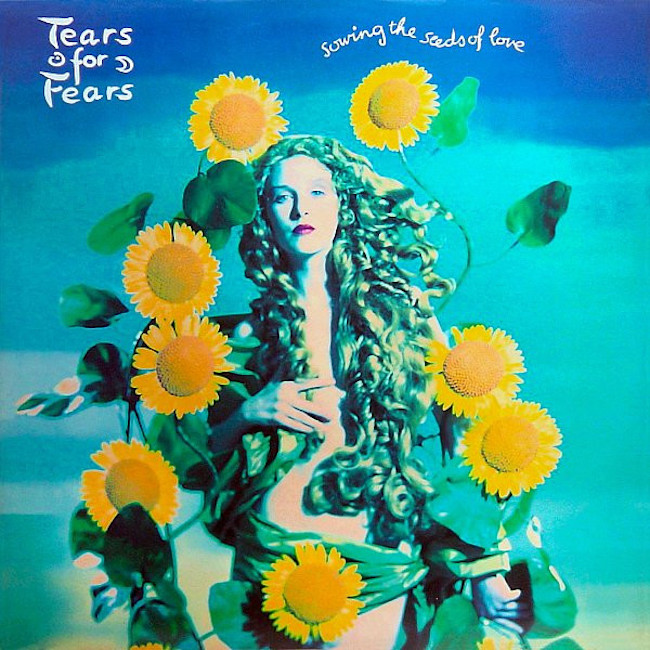
The Alternative Number Ones: Tears For Fears’ “Sowing The Seeds Of Love”

October 14, 1989

  • STAYED AT #1:1 Week

In The Alternative Number Ones, I'm reviewing every #1 single in the history of the Billboard Modern Rock Tracks/Alternative Songs, starting with the moment that the chart launched in 1988. This column is a companion piece to The Number Ones, and it's for subscribers only. Thank you to everyone who's helping to keep Stereogum afloat.

How do you follow an out-of-nowhere blockbuster? It's a question that's sent plenty of musicians into indecisive, self-doubting tailspins. Sudden, overwhelming fame tends to turn people into neurotic freaks who habitually question their own decisions. It's a headfuck and a half. Some artists take full advantage of their newfound cultural capital, making era-defining works once the world's eyes are on them. Others immediately blow their shots and come crashing right back down to obscurity. Most of the time, blockbuster follow-ups land somewhere in between those two extremes. Tears For Fears' The Seeds Of Love is one of those.

At least in the UK, Tears For Fears were a big deal early on. High-school friends Curt Smith and Roland Orzabal emerged out of the small English city Bath together, playing in lesser-known bands Graduate and Neon before striking out on their own as Tears For Fears. Even in the high synthpop era of the early '80s, Tears For Fears weren't exactly sure-bet megastars. They were two shy studio-rat types who made insular, introspective music inspired by pop psychology. Early singles like "Mad World" were UK hits, but their debut album The Hurting barely made any impact in the US. Sophomore LP Songs From The Big Chair was another story.

On Songs From The Big Chair, Tears For Fears went more maximal with their sound, explicitly shooting for American radio play. They got what they wanted. Songs From The Big Chair came out in 1985, near the end of the MTV-fueled UK synthpop boom, and it became a sensation. Two different singles, "Everybody Wants To Rule The World" and "Shout," went all the way to #1 on the Hot 100. A third single, "Head Over Heels," got as high as #3. Songs From The Big Chair was one of the year's biggest-selling albums, and it eventually went platinum five times over. All of a sudden, Tears For Fears were pop stars.

Nobody has an easy time following an album like Songs From The Big Chair, but Tears For Fears had a harder time than most. They toured behind Big Chair for a long time, took an extended break, and then took multiple stabs and recording their next LP. Orzabal and Smith were growing apart from each other by that point, and Orzabal wrote most of the tracks for the record without Smith, often working with the keyboardist and backup singer Nicky Holland instead. The duo tried recording with a few different big-name producers before deciding to co-produce the LP themselves with engineer Dave Bascombe. They brought in big-deal session musicians, jamming for hours at a time and then painstakingly splicing together the best takes. They piled tons of ideas onto every track, turning all the songs into ungainly beasts.

In the end, Tears For Fears spent something like a million pounds recording The Seeds Of Love, which came out nearly five years after their breakthrough. Pop music changed in that time, but so did Tears For Fears. The Seeds Of Love pushes the maximalism of Songs From The Big Chair much, much further -- all the way into the realm of pinwheeling psychedelic prog. For the album's lead single, Tears For Fears dove into baroque late-Beatles fussiness, crafting a showy and idealistic opus that demanded to be taken seriously.

Thanks in part to the duo's accumulated goodwill, that song turned out to be a legit hit, both on mainstream and alternative radio. But "Sowing The Seeds Of Love" couldn't measure up to what Tears For Fears had done with their Songs From The Big Chair hits, and the duo didn't last much longer. In their ambition to outdo what they'd already done, Tears For Fears tore themselves apart.

"Sowing The Seeds Of Love" is the only Seeds Of Love track that Roland Orzabal and Curt Smith wrote together. In fact, it's the only song on the album where Smith gets any credit at all, though it still seems like Orzabal still did most of the work. Orzabal got the idea for the song title from an old English folk traditional. In 1903, the folklorist Cecil Sharp heard a gardener named John English singing a song that's sometimes known as "The Seeds Of Love," though its more common title is "Sprigs O' Thyme." Orzabal heard a radio show about the song's history, and that's where he got the line about "Mr. England sowing the seeds of love."

You could read '80s political commentary into Tears For Fears tracks like "Everybody Wants To Rule The World," but the duo's lyrics are vague enough that you can also read just about anything else into those songs, too. On "Sowing The Seeds Of Love," Roland Orzabal's lyrics are a little bit more concrete. Orzabal started writing the song in 1987, during the same week that Margaret Thatcher was elected to a third term as British Prime Minister. On the song, he takes an explicit shot at her: "Politician granny with your high ideals/ Have you no idea how the majority feels?" In the same year that Elvis Costello sang about how he couldn't wait to dance on Thatcher's grave, that line seems a little timid, but it's something.

"Sowing The Seeds Of Love" also finds Orzabal throwing a subliminal diss at fellow British new waver Paul Weller: "Kick out the style, bring back the jam." The Jam, Weller's great mod-punk band, broke up in 1982, and he went on to a more yuppie-friendly sophisti-pop style with his next group the Style Council, which happened to break up in 1989. Tears For Fears sound a lot more like the Style Council than like the Jam, but maybe Orzabal didn't see it that way. (Weller did not bring back the Jam; he just went solo instead. Weller's only Modern Rock hit, 1992's "Uh Huh Oh Yeh," peaked at #10. It's a 6.)

Mostly, though, "Sowing The Seeds Of Love" is a soft, indistinct aquarian-age meditation. Tears For Fears sing about how it's "high time we made a stand and shook up the views of the common man." The way we're living right now is foul: "Food goes to waste/ So nice to eat, so nice to taste." But there's a better world out there for us if we recognize it: "Time to eat all your words/ Swallow your pride, open your eyes." Tears For Fears don't have any specific ideas about how we might reach this beautiful new world. Instead, they rely on moony-eyed baby-talk: "Every minute of every hour, I love a sunflower, and I believe in love power." On the chorus, they pretty much just repeat the song's title a bunch of times. Nobody's going to hear this song and be like, Wow, I never thought of it that way.

Tears For Fears were not alone in their fuzzy-brained idealism; that's basically the only way the pop stars of the late '80s knew how to approach any kind of political commentary. I still find that school of lyric-writing to be irritatingly shallow. After a full decade of conservative domination and fearsome austerity on both sides of the Atlantic, all anyone could think to do was recycle sunny the Beatles-style optimism of the late '60s. Politics in music has a way of aging badly, but I can't believe anyone ever really thought this was an adequate response.

The Beatles-pastiche elements of "Sowing The Seeds Of Love" go way beyond the lyrics. Tears For Fears discard the clean, shimmering synthpop of Songs From The Big Chair for dizzy orchestral maximalism. The song layers triumphal horn-tootles over thundering gated drums. The vocals are all richly multi-tracked, and some of them have vocoder effects all over them. There are funky organ squelches, starry-eyed guitar-twinkles, and wave after wave of synth-strings. During one crescendo, an opera singer's voice wanders into the mix, adding to the general sense that there's just a lot going on. People have compared individual elements of "Sowing The Seeds Of Love" to bits from various individual Beatles songs -- "Penny Lane," "I Am The Walrus," "All You Need Is Love." I can't differentiate those elements. There's too much happening. The only thing I can really do is let the enormity wash over me.

On a certain level, "Sowing The Seeds Of Love" is a truly impressive piece of work. You can certainly hear where all the money went. Tons of session musicians get the chance to go off, and plenty of the sounds are really cool. I like how huge those drums sound. I like the way Curt Smith's voice comes soaring in on the chorus. I like the vocoders. As the song continues to build, it seems like it's gotten as big as it can possibly get, and then it gets bigger. If I heard "Sowing The Seeds Of Love" while I was on shrooms, I might have some kind of religious experience. I just wish all that grandeur was put to work in service of a better song.

Curt Smith sings the "Sowing The Seeds Of Love" chorus beautifully, but I happen to think that the chorus is pretty irritating and repetitive. Roland Orzabal's verses are not repetitive; they're dense and wordy. But Orzabal sings them like an uptight British guy who's trying to sound like an American soul singer, and it's some real goofball shit. This kind of ornate art-pop is really just not my thing at all. "Sowing The Seeds Of Love" has lots of really cool sounds and ideas, but it never adds up to anything for me. It's the same reaction that I have to most flowery, overstuffed late-'80s attempts at psychedelia.

Still, Tears For Fears' Seeds Of Love sound was right in the zeitgeist of that moment -- fairly close to the similarly overwrought records that XTC and Elvis Costello released in the same year. Maybe that's why modern rock radio continued to embrace Tears For Fears, even long after they'd crossed over into mainstream pop. "Shout," a song that couldn't be more different from "Sowing The Seeds Of Love," was one of the biggest college-radio hits of the '80s, and "Sowing The Seeds Of Love" rose up the Modern Rock chart faster than it climbed the Hot 100. When I started listening to alt-rock radio a few years later, I'd still hear "Sowing The Seeds Of Love" every once in a while.

"Sowing The Seeds Of Love" also probably got a boost from its music video, which mixed live-action footage with psychedelic animation. Director Jim Blashfield had already done elaborate animation stuff on Michael Jackson's "Leave Me Alone" video, and his "Sowing The Seeds Of Love" clip won the VMAs for Visual Effects and Breakthrough Video. If the "Sowing The Seeds" video really was innovative, though, its innovations have not held up. The animated stuff looks like a Fruitopia commercial, and the Tears For Fears guys look like dorks. Maybe that couldn't be helped, but Blashfield probably could've gotten something more cinematic if he didn't film them in close-up, staring right into the camera.

The real selling point for "Sowing The Seeds Of Love" is that it was the first Tears For Fears single after Songs From The Big Chair. That was enough to turn it into a legit hit. Shortly after the song topped the Modern Rock charts, it peaked at #2 on the Hot 100. The Seeds Of Love album eventually went platinum, which means it only sold about a fifth of what Songs From The Big Chair had done. Tears For Fears followed the "Sowing The Seeds Of Love" single with "Woman In Chains," which had drums from Phil Collins and guest vocals from Oleta Adams, a singer who the group discovered in a Kansas City hotel bar while they were touring. But "Woman In Chains" only made it to #36 on the Hot 100 and #27 on the Modern Rock charts.

When Tears For Fears got done touring behind The Seeds Of Love, Roland Orzabal and Curt Smith went through a bitter split. Smith left the band, and Roland Orzabal kept Tears For Fears going as a solo project. "Sowing The Seeds Of Love" was Tears For Fears' last real mainstream hit, but modern rock radio programmers still had love for Orzabal. We'll see Tears For Fears in this column again.

GRADE: 5/10

BONUS BEATS: Here's "3 Or 13," a track from the Los Angeles underground-rap fixtures 2Mex and Aceyalone that samples the swooshing intro from "Sowing The Seeds Of Love":

GET THE STEREOGUM DIGEST

The week's most important music stories and least important music memes.