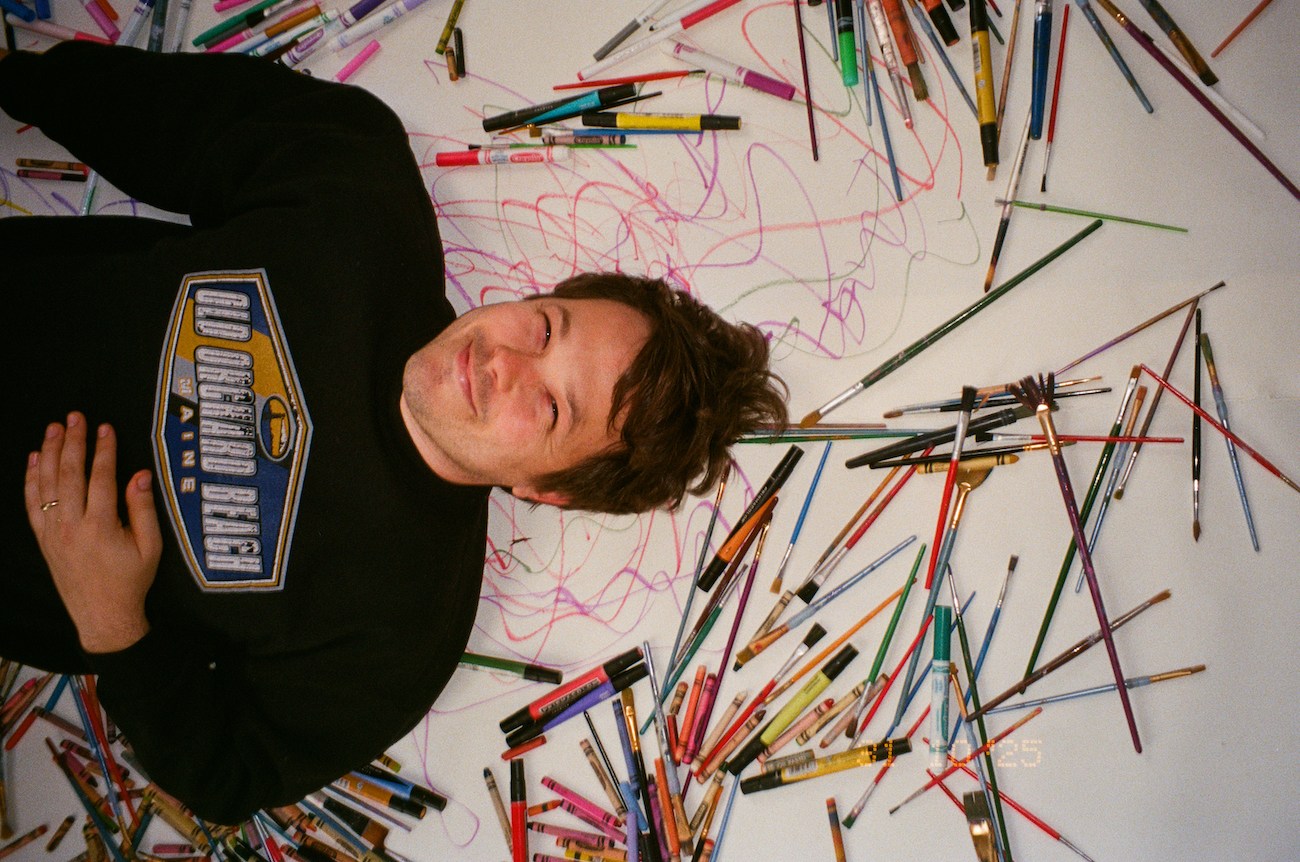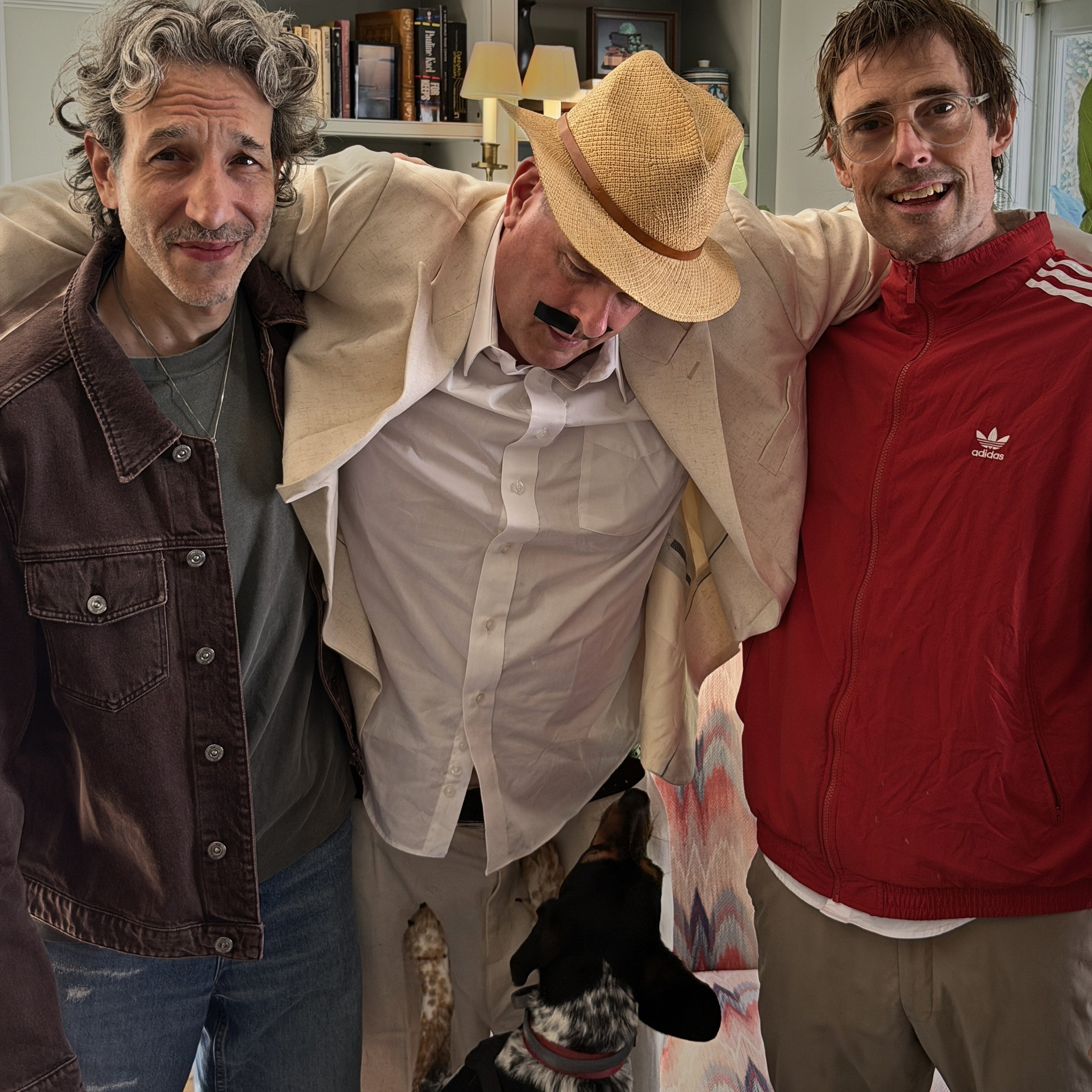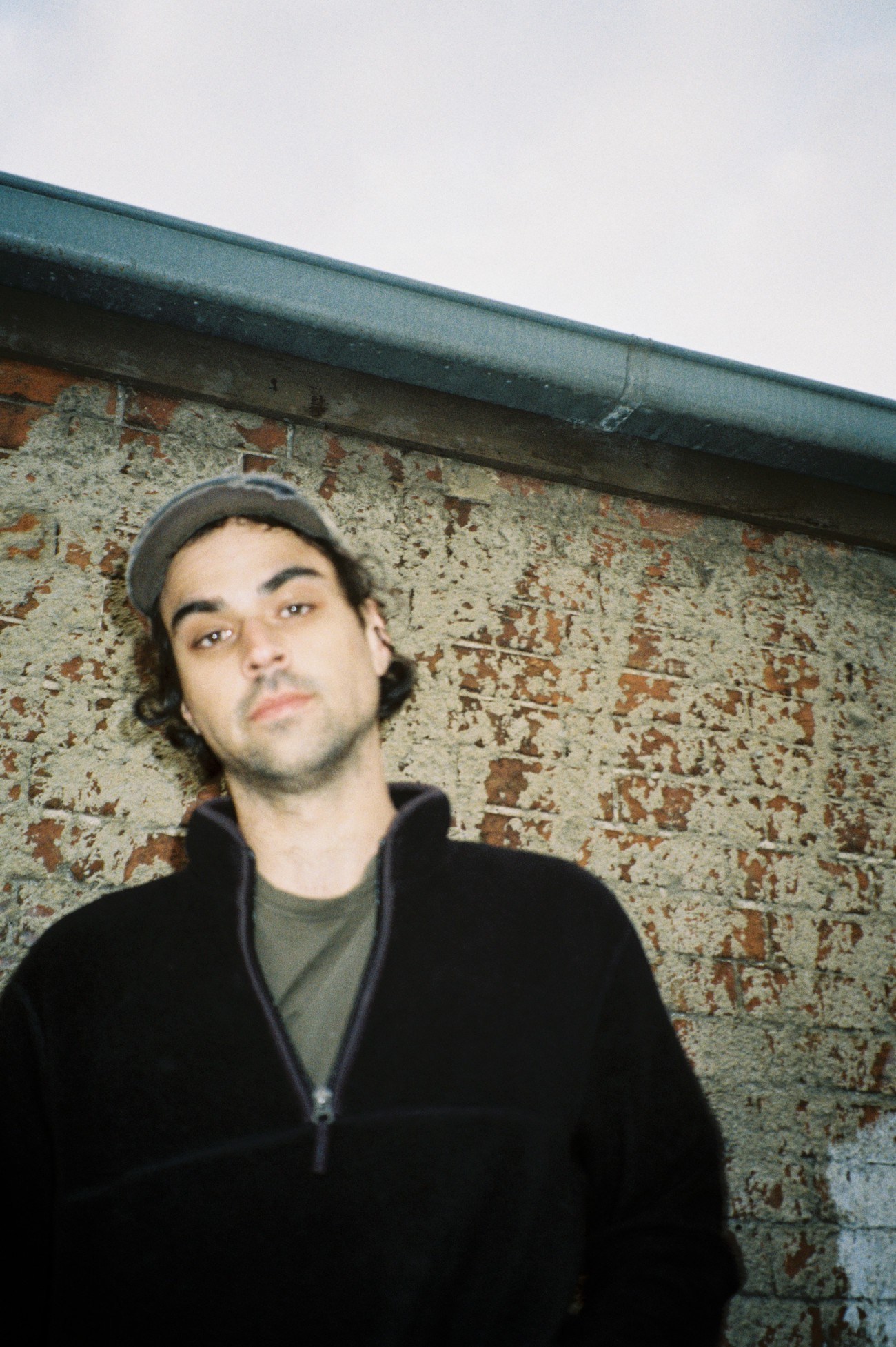

We’ve Got A File On You features interviews in which artists share the stories behind the extracurricular activities that dot their careers: acting gigs, guest appearances, random internet ephemera, etc.
"Who wants to live forever?" Sharon Van Etten sings repeatedly, beginning Sharon Van Etten & The Attachment Theory with a loaded question. "It doesn't matter," she later declares, alluding to either the inevitability of death or her skepticism about the value of eternal life. The song's a slow-building wonder, gorgeous and grandiose — the sound of Van Etten and her bandmates ascending toward some kind of immortality, if only the kind bestowed upon musicians when they tap into rare power and allure.
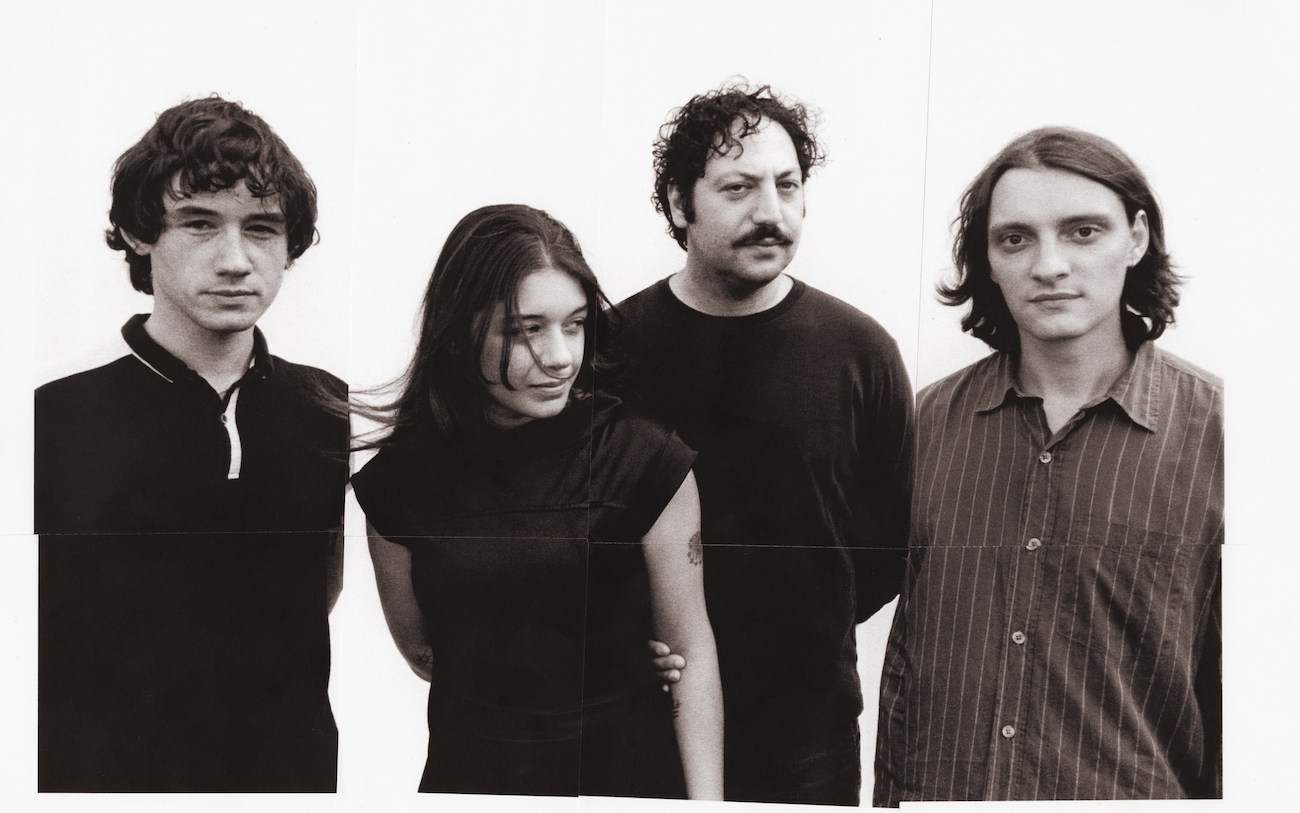
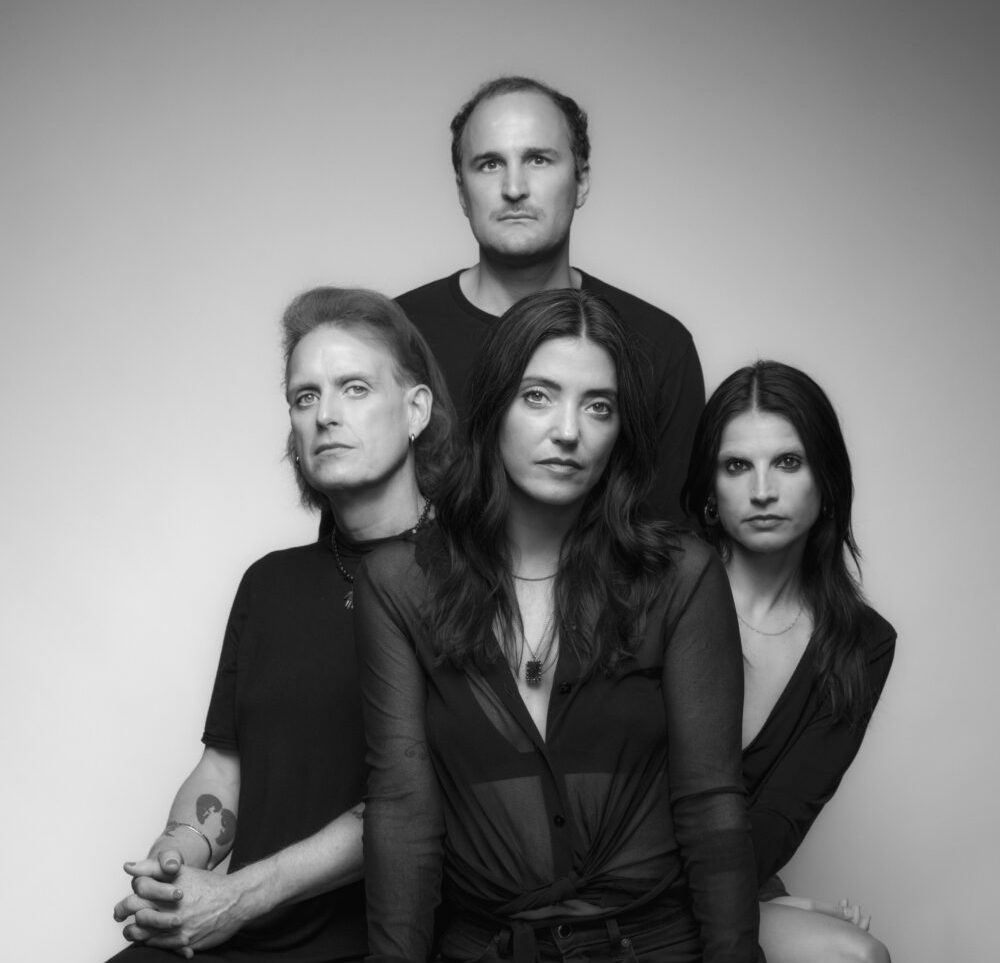
Van Etten has sometimes seemed to be living many lives at once. The NYC-honed, LA-based musician has racked up a staggering number of collaborations, side projects, acting roles, and other kinds of extracurriculars that make her an excellent candidate for a career-spanning interview. With the new album out today, she steps into yet another phase in a lifetime of creative outpourings, joined by Jorge Balbi on drums and machines, Devra Hoff on bass and vocals, and TEEN's Teeny Lieberson on synth, piano, guitar, and vocals.
Van Etten, a career singer-songwriter, has played with backing bands for years, but she's never been in a band until now. Sharon Van Etten & The Attachment Theory finds her writing with her touring unit for the first time, the result of a rehearsal retreat graced with a surprise creative spark. The results are awesome — narrated by Van Etten's unmistakable bellows, howls, and sighs, yet carried forward with a new wave propulsion that makes the album stand out as a unique treasure within her discography.
Back in December, on the day she released the album's second single, Van Etten hopped on a video chat to discuss the new project plus her acting history, the time Jimmy Fallon gave her a mulligan, how a tennis date straight out of Hacks resulted in her singing on Jeff Goldblum's album, her guest spot with Xiu Xiu, the days when she was sending PR emails to Stereogum and other blogs as an intern at Ba Da Bing Records, and more. Below, stream the new album and read our conversation.
Sharon Van Etten & The Attachment Theory (2025)
So this album started with you deciding you wanted to write some songs by jamming with your touring band?
SHARON VAN ETTEN: Yeah, so I've played with two of the band members since Remind Me Tomorrow. And then Teeny came on while we were rehearsing for We've Been Going About This All Wrong, for a tour. And we all hadn't been in the same room together since COVID. And the other two band members hadn't even met Teeny. So I thought a nice way for us to reconnect after being isolated was, instead of going to a rehearsal space, to [have a] band camp, like a literal band camp and retreat. So I found a house that had a detached studio with two trailers on this compound in the desert. It was just a way for us to reconnect.
So we'd have breakfast, lunch, dinner together, and in between we'd practice and talk through the songs and how to translate them live. And after four days of rehearsal, we got through all the material, and we had extra time. I was just kind of bored of hearing myself, and I asked if we could take a quick break and come back and just start fresh and just jam. And I hate that word, I hesitate saying it, but there's just no real better word for it. There's negative connotations to that word. But it ended up [that] we wrote two songs in an hour, and it happened pretty effortlessly, and my engineer at the time, Dan Knowles, documented it. So we had recordings of these demos that I went home with. And it left me feeling very inspired, feeling like I knew that that was the next thing I had to do creatively.
Did the band have a name already? Or did the Attachment Theory name come about once you decided, "Oh, this is a band"?
VAN ETTEN: Once we decided we were going to make a record together, we had so many names on the plate, but I kept coming back to the Attachment Theory for a couple of reasons. The number one was that we're each other's chosen family, and with all the time you spend on the road, it's so important that the chemistry works and that you listen to each other and that you respect one another. And we really lean on each other in some really stressful situations. They're not just my family, but you know, my kid thinks of them as family, and they're my home away from home. So our dynamics are very sibling-like.
But then, on top of that, I think of how grateful I am that we're all from these different backgrounds, have different experiences, different tools in our belt, and we somehow came together and found each other and we made this beautiful thing. I just think that's rare these days for people to get in a room and to create from the ground up. And walk away from it better. I feel like I grew from the experience personally.
You've collaborated with so many different artists over the years, but have you been in a band like this before? Because I think of you as a singer-songwriter who's bringing the song to the band, and this was creating in it a very different way.
VAN ETTEN: I've never been in a band. Way, way back, I remember my friends in the band Forest Fire asked if I would play bass. And I love bass, but playing live and never having played live with a band before, I had no idea what I was doing, and I couldn't hear myself, and I probably sounded like shit. And I just decided I didn't want to do that again. But no, I've never been in a band environment before.
That idea has always been very intimidating to me because I don't know key signatures, like keys or times. I can't, like, shout out a chord change to people on the fly. I'm very much by ear and by feel. So I learned that that doesn't matter as an adult, and everyone has different styles, and both styles have their own merit. But as a kid growing up and always wanting a band, I always felt inadequate.
Inadequate because of what you were saying about not knowing music theory-type stuff?
VAN ETTEN: By the time it felt like a possibility, I was in my twenties in New York. I felt like people had way more experience than me, and I was like, "Well, I'm already carving out this path of solo work under my name. It feels silly now to go to a band." But yeah, I was just very intimidated by playing with other people.
"Afterlife" was the lead single. How did you decide on that being the introduction to this project?"
VAN ETTEN: Well, it was collaborative. I have a whole team of people throwing ideas at me. I think they were a little scared of "Live Forever" being the first one, although that's what I really wanted. But, I think ["Afterlife" is] probably the most immediate and relatable, and a lot of the songs are dark, shockingly.
Well, "Live Forever" ended up as the first song on the tracklist, so it's the introduction in some sense. Why was that your pick for the lead single?
VAN ETTEN: It was the first song that, from start to finish, we wrote in one sitting when we went to the studio to write intentionally. And I just feel like the arc is really interesting, and I'm really proud of the way the melody develops. I think it eases you in, but then you can also slowly hear the different instrumentation coming in where you get a feeling like, "What kind of change is going to happen?" and "What's gonna be different about the record?" while inviting the listener in.
But I know, it is the opening track, so people are gonna hear it. Hopefully they get through the intro part of it. But no, I just say that one is very satisfying to perform, so if that's gonna be a single, I know I'm gonna have to play it all the time.
And today, on the day we're speaking, "Southern Life (What It Must Be Like)" is coming out. Are you writing from a hypothetical perspective, or do you have experience living in the South?
VAN ETTEN: I lived in the South. When I left high school, I moved to Tennessee. And I have a love/hate with the South, from past relationships and my first experience, witnessing blatant racism. So that was going on in the '90s, early 2000s. But generally, the idea for "Southern Life" is just trying to see somebody's other perspective. And I try to have a wider view, as well as my own view of myself and my values and how they've evolved over the years -- how I've changed, and how my outlook has changed, and how other people have helped me develop my perspective and my point of view. But also, how important it is to see it from everybody's perspective. 'Cause as frustrating as it is, I think we have to learn how to coexist.
So it's funny 'cause my partner, who's Southern, and I had this conversation. He's like, "You don't want people to think you hate the South." I don't hate the South. I am scared of what the stereotype of the South is, and sometimes lives up to. But it's more about understanding opposing views.
Starring As The Mom Of A Pregnant Teen In Abortion Drama Never Rarely Sometimes Always (2020)
You acted in this, and you had a song for it. Which came first? What was your entry point to being involved with this?
VAN ETTEN: Eliza Hittman reached out to me to act in it. And obviously, I read the script, and I found out what the story was about, and I think it's an important narrative to be told, especially now more than ever. And she's just a very passionate writer/director. And a lot of what's special about her writing is that you have to be able to put your own words to the very internal dialogues that are happening when you watch her work. And you have to ask yourself those questions, and you have to put some of the pieces together yourself. There was so much unspoken in that film that was the most moving to me.
When you're writing a song specifically for a movie like that, are you trying to capture some of those sensations? Or is it more like, "This is my pure reaction to this material"? How did you go about that?
VAN ETTEN: Well, that's always the tricky part, right? Especially with an end title, where you want that last scene to breathe a little bit. And do you lean into that feeling, do you want to leave people with the feeling from the scene? Or do you want to switch gears to have people, like, have a minute? Like help them flip their emotion switch? But in that moment, I felt like it was very important for people to sit with it. And I was sitting in my garage studio in LA, and it faces out to the yard, which has a -- well, it's not a mountain, but we called it our bluff. It was like a big sandstone cliff hovering over our yard. And my piano is in the window, and I looked up, and I just felt the weight of this mountain. And that kind of started the song. I was just playing with a lot of weight.
You said Eliza reached out to you. Did you know her previously?
VAN ETTEN: I didn't know her previously, but she was friends and colleagues with Katherine Dieckmann, who I worked on Strange Weather with. That was the first score I'd ever written. And I think Katherine introduced her to me. Eliza lived in Brooklyn at the time, when I was still living in New York, and just came over to my apartment, and we chatted. And I really loved her energy. I respected her intentions. And she's just a very down-to-earth person, artist, mother. I appreciated her perspective.
Making Her Late-Night TV Debut Playing "Serpents" On Fallon (2012)
What do you remember from that experience?
VAN ETTEN: That I fucked up and I had to do it again. I was so nervous, and I was learning how to use my pedals, and I was trying to look nice while also rocking out. And you know, I'd played it 100 times probably at that point. When the camera's on, I just got stage fright or something, and where I'm supposed to hit the pedal, where it boosts it, it muted it. And then I looked down, and I realized what I did. And when I looked back up, I hit my head on the mic, and I looked at the camera, and I said, "Shit." We finished the song, and it was, who knows how obvious that was to the audience or whatever, I knew. And Jimmy was so nice. We finished the song, and he did the closing out, you know, the ending, whatever. And he's like, "How was that for you? Did you feel good about it?" And he's like, "Do you need to do it again?" I was like, "Can I do it again? I definitely fucked up." He's like, "No problem." You have a bit more time because I don't think it's live live most of the time. So I felt like that was the best first show experience I could have had, and he was so kind about it, and I am so grateful that I got to do it. Yeah, I was very nervous.
Collaborating With Jeff Goldblum On "Let's Face The Music And Dance" (2019)
VAN ETTEN: My ex-bandmate Charley [Damski] -- this sounds so LA. He plays tennis with [Goldblum's] manager. And he turned them on to my music. And he was doing this duets record. He was like, "I would love to have her." I can't tell if he's, like, in character all the time or what. But he was very funny and very present and very kind, and so easy to work with. And his whole band was incredible. I think I tracked that right before I had to get on a flight to Australia, like the day I had to fly to Australia. It happened so last minute. But I was like, "Yeah, I'll make this work. This sounds really interesting to me."
I imagine that happens kind of frequently where you have to cram something in before another thing just based on the number of recordings and tours and collabs and acting roles you do. I imagine you kind of being in this state of constant busyness, but maybe that's not reality.
VAN ETTEN: Well, you know, it comes in -- just like any creative work, right? When you're independent, you take it when you can. You learn how to curate the things that you say yes to because you know that becomes part of your identity. But there's things that I just felt like along the way I couldn't say no to. So I just feel like when it rains it pours, and you have to enjoy your downtime and appreciate when you're busy. But yeah, it's an exceptionally busy time even running into the holidays right now.
Covering The Old Standard "I Don't Want To Set The World On Fire" With Michael Imperioli For Este Haim's A Small Light Soundtrack (2023)
VAN ETTEN: My friend Zach Dawes, who played bass on Remind Me Tomorrow, we've done a lot of collaborations for film and TV. He's incredible. But yeah, he does a lot of film work, and he helped me in my pre-production for We've Been Going About This All Wrong. He's like T Bone Burnett's right-hand man, and he's incredible. If you look up Zach Dawes, he has a long history of making really beautiful work. But any time he invites me to do something, I know it's gonna be good. And that one just felt too special not to not to do. I love standards.
Imperioli did a voiceover on that. Did you meet him through that? Was he there at the same time as you?
VAN ETTEN: He wasn't there at the same time as me, but we messaged each other. Because he heard the song before his voice was on it, but I had done vocals already. He was like, "When they played me the song, I was like, 'I can't say no to this.'" And he's such a nice guy, and he does music as well.
Yeah, he's a big music guy.
VAN ETTEN: Yeah, and he's got a great sense of humor. But he's also just very passionate.I hope to meet him someday. Our paths haven't crossed yet, but he seems like a really down-to-earth guy.
Performing With Yo La Tengo At Their Hanukkah Residency (2018)
VAN ETTEN: We have Jersey connections. But then also we have a lot of mutual friends from being in the New York world. And it's funny because an old friend of my husband manages them, but her husband, Ryan, used to tour with my husband and his younger days band Queen Sarah Saturday. It's just a funny little [coincidence], you know, worlds colliding in different decades. But yeah, I knew Yo La Tengo through Ben Goldberg at Ba Da Bing, when I was working there, and just from playing around New York, New Jersey. Really sweet people.
You covered the Ramones and Fred Neil, and then you played your own song. Did they give you a choice of what you wanted to do? How did you come to a consensus on what to play?
VAN ETTEN: They sent me ideas, and I love that Fred Neil song. I think it's so beautiful. And obviously the Ramones are just super fun to sing, and they have such great taste. So I think they sent me a list of songs and I picked a couple. And I got to have Yo La Tengo as my attacking band. I mean, you can't really — that's gonna be hard to top.
Guesting On Xiu Xiu's "Sad Mezcalita" (2021)
To me this was one of your more unexpected collabs. How did it come about?
VAN ETTEN: I first met Jamie [Stewart] 'cause he played modular synths and extraneous sounds on Remind Me Tomorrow, and he was incredible to work with. He was a mad scientist opening suitcases full of these boxes and boxes and cables and cables and throwing things at live wires, and I was just fascinated by his process. And he had great ideas, things that I never would have thought of, sounds I still don't know to this day how he made. But I also knew of his music through Jonathan Meiberg from Shearwater. They had worked together before. And so I've heard Jamie's name for a while before we worked together on Remind Me Tomorrow.
And then when he asked me to sing on his record, I was like, "Of course." I had just moved to LA. I think this was just before COVID hit because I was able to go to his house. We recorded vocals. Shortly after, we shot a video. And then I think It shut down pretty quickly after that. That's crazy timing, but I think that was one of the last things I did before everything shut down.
Starring In Netflix's The OA
That was the first time where I realized you were an actor. Was that one of the first things you did?
VAN ETTEN: I think that was the first time I realized I wasn't an actor. But I had a cameo in Song One, where we played at a venue in Brooklyn. Oh my god, what venue was that? But yeah, I played a song in that movie. But I hadn't had a role in anything before. And the timing of that, it was actually really annoying because I had just gotten into Brooklyn College to go back to school for psychology. And I had just told my band I was taking a break to go back to school and that I didn't know when we'd be back on the road yet, but I needed to do this for myself. And then pretty much the week I got accepted, I got asked to audition for this part. And I remember saying no immediately. Like, I have already set my attention to do this thing. But my partner, he was like, "The universe is offering you an adventure here. I think we try to take it. And you can always defer your enrollment and go next year." I was like, "Well, if they'll defer my enrollment and I get this audition, well then, OK, I'll do it." But it wasn't my first choice.
So they wanted you. They sought you out, and you didn't really have much acting experience at that point. Do you know what made them say, "We gotta have Sharon for this"?
VAN ETTEN: I have a feeling they reached out to multiple songwriters for this role. But I connected with the character because, you know, her backstory is that she had a near-death experience. And because she was a singer and being able to sing saved her life. Being abducted by a scientist and being held hostage — I mean, that is not something I directly relate to. But the singing part being healing definitely spoke to me. So I think that that was the pull was that I could sing. And that was a big part of the character. The acting part didn't come naturally.
How did you learn it? Was it just, "You gotta get in your reps and figure it out on the fly," or did you study anything?
VAN ETTEN: I saw an acting coach, but I also think part of the appeal was that I wasn't an actor, And that I was shy and timid and scared the whole time. I think that's also what the role required. [Laughs.] But the memorizing lines the day of is really tricky, so you don't even get your sides until the day you're shooting, and then sometimes they change halfway through the day. So that was new. But all the actors on set were really supportive and encouraging because I was the only non-actor on set. I definitely felt like an imposter. But nobody made me feel that way on set.
We rely on reader subscriptions to deliver articles like the one you're reading. Become a member and help support independent media!
Interning At Indie Label Ba Da Bing Records
You mentioned working at Ba Da Bing. I know you used to send music publicity emails. What was that experience like?
VAN ETTEN: It was very formative. I think why I first wanted to intern there was because I wanted to know how a label worked. And I didn't know the internet. I didn't know what blogs were. You know, I played open mic nights, and I moved to New York, and I wanted to figure out how the music world functioned. But I wanted to learn it on an indie level. A friend of mine from college in Tennessee, she got hired there first. And when I moved there, I told her I wanted to find an internship at a label, and she's like, "Actually, we need an intern."
So between my friends Alicia and Ben Goldberg, they taught me how to search music, how to do research on who's writing about what kind of genres of music, and then try to reach out to the people that are writing about the music that we are putting out into the world. Maybe they will be interested. But I didn't know how to reach out. I didn't know how to follow up. I was trying to be organized, but I didn't know what I was doing. But you know, you send out promos, and I learned how to do packages, weigh them myself, stamp them myself, drop them off at the post office without pissing off the guy behind the desk. Because I was an intern, I also ran errands. And I did research, and I sent out packages, and eventually started reaching out to blogs.
But I just think in that process I learned how much work it took to either be a publicist or be a manager, and I knew that that wasn't something that I would be good at. By the time I think I realized that I was just an artist, but I think it gave me a deeper appreciation for all those fields. Because your work doesn't stop when you get out of work. It's not a clock in, clock out job.
The job of trying to get people's attention about artists, and also all the behind the scenes stuff that you were talking about, going to the post office -- you really paid your dues.
VAN ETTEN: I put in my hours. But I mean, I think the most frustrating thing is that you can love an artist and you can reach out to as many people as you can, but it's just more and more artists. It's harder to be heard. It's harder to be seen. And sometimes you feel like you're screaming into the wind, and you try to explain to the artist why no one wants to write about their music, and I'm just like, "There's too much out there." It's not because they're not good, you know? It was so painful.

Sharon Van Etten & The Attachment Theory is out now on Jagjaguwar.