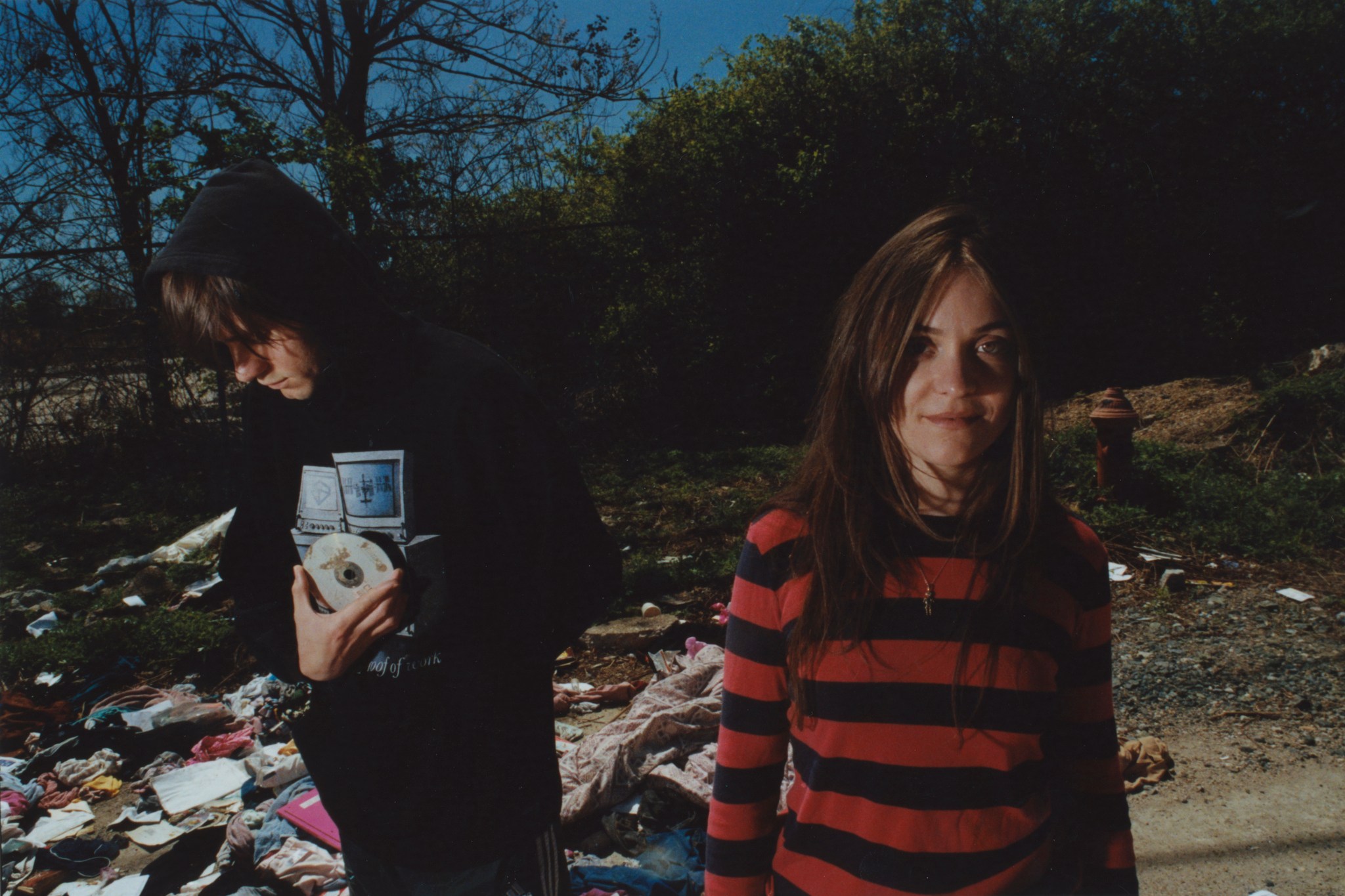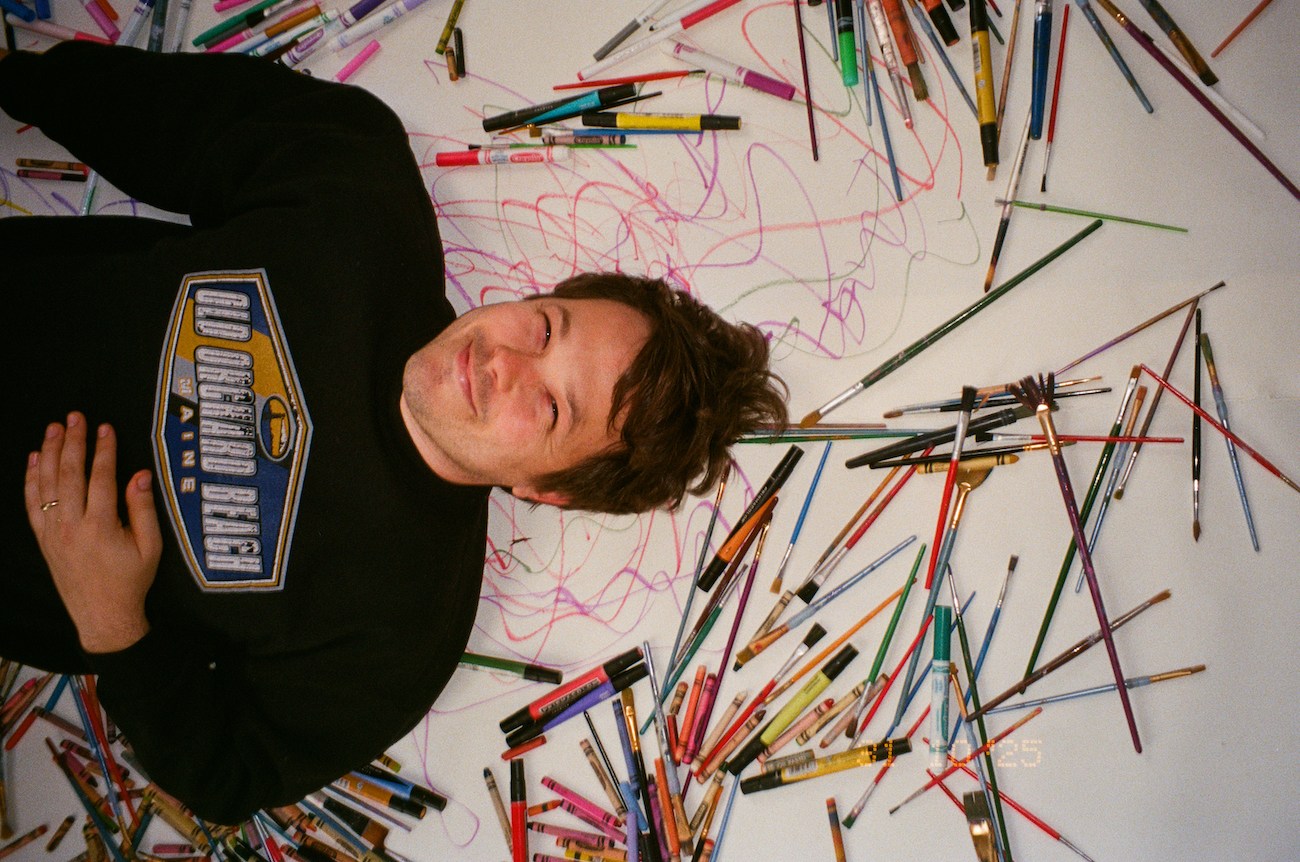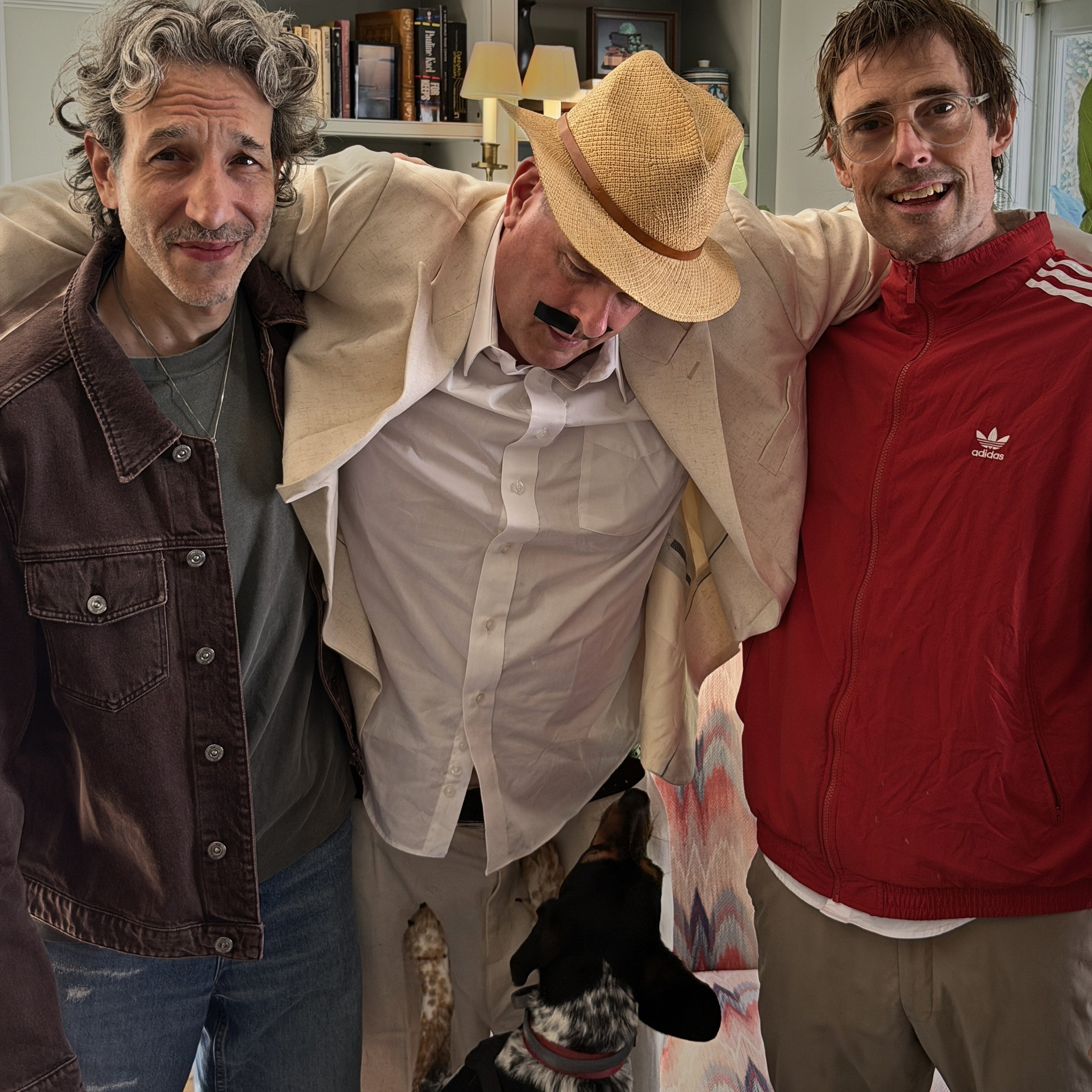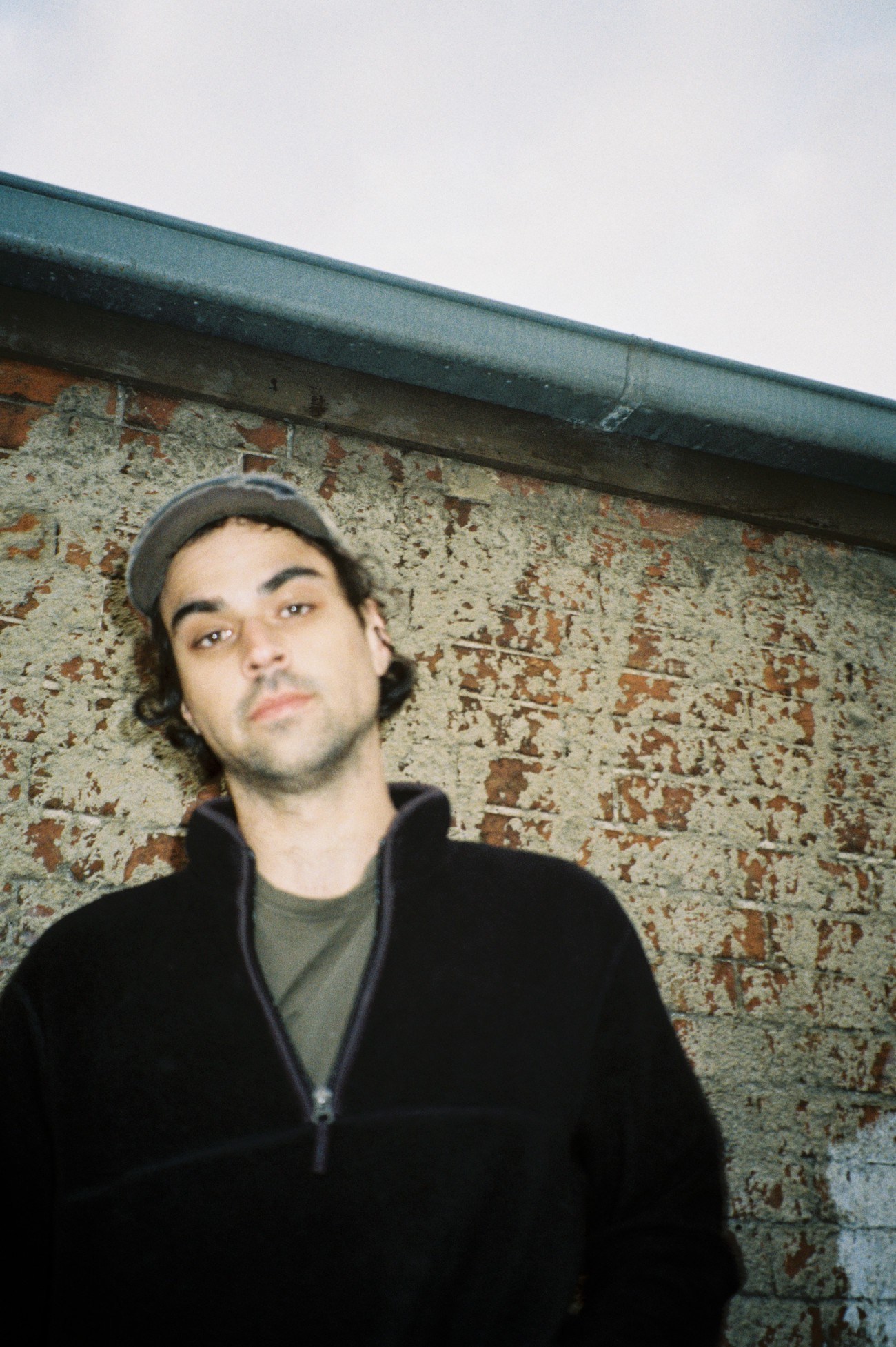

With each decade, musicians who've been in the game since they were a kid get to add a little flair to their performance style, like badges on a Boy Scouts sash. John Dwyer and David Barbarossa are such unshakeable giants at this point that listeners tend to associate them with a specific sound: garage rock for the Osees singer-guitarist, new wave for the Adam & The Ants drummer. But listen to all of their other bands — because, boy, do they both have a lengthy scroll of projects — and the compulsive, unstoppable creativity that's coursing through the two of them on the regular is unmistakable.
After quietly appreciating each other's work for years, Dwyer and Barbarossa crossed paths several years ago and immediately hit it off. When the idea of jamming together became too enticing to bear, Dwyer flew Barbarossa out from London to his homebase in Los Angeles. Over the next five days, they churned out the backbone of what would become Chime Oblivion, a brand-new project teetering on the edge of weird proto-punk, hearty no-wave, and tripped-up dub.
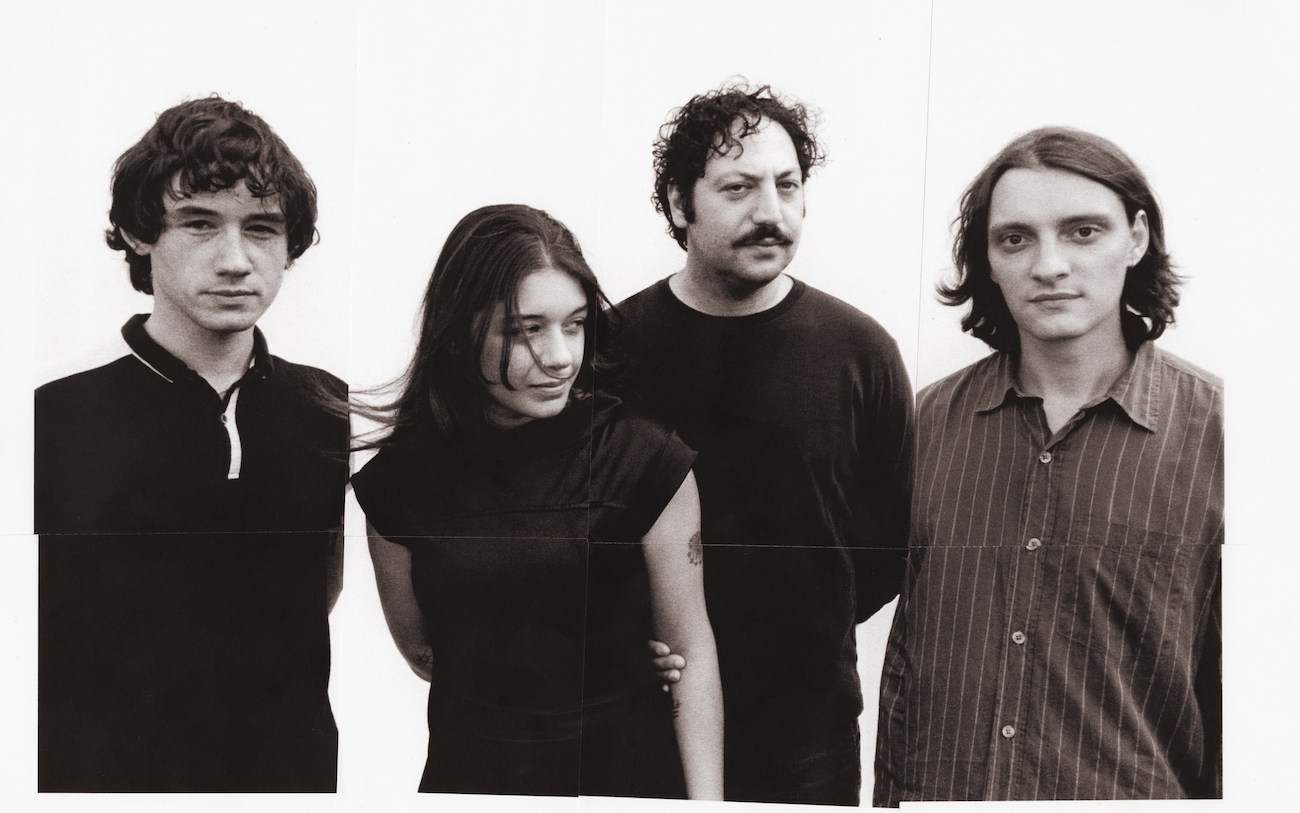
With Barbarossa behind the drum kit and Dwyer on bass and the occasional vocal part, they hand-picked the rest of their lineup to form a dream roster capable of achieving their grand vision: the unpredictable freakouts of guitarist Weasel Walter, of the Flying Luttenbachers and Lydia Lunch's Retrovirus; the cheekily militaristic shouts of singer H.L. Nelly, of Naked Lights and FKA Smiley; fuzz pedal-filtered marimba by Tom Dolas, of Osees and Mr Elevator; and panning, multi-layered horns by Brad Caulkins, of Bent Arcana and Witch Egg.
Across their debut self-titled album — out this Friday via Deathgod but streaming in full here a day early — Chime Oblivion pogo around the room with the unbridled energy of collegiate nerds drunk off their first Edward Fortyhands. These songs are technical and busy, with each member meticulously juggling diverging parts, but they play out so melodically that it sounds like the weirdest collage-pop song you've ever heard. Helly's musical grunts on "The Fiend," or her ravenous howls in "Kiss Her Or Be Her," punch up the tracks with extra punk edge that beg you to memorize her delivery for karaoke. Barbarossa's drumming shifts from anticipation-building change-ups in "Smoke Ring" to blissed out dub in "The Catalogue." Then there's Dwyer, laying down the type of driving basslines and vocal harmonies in "The Uninvited Guest" or "I'm Not a Mirror" that recall the earliest days of Thee Oh Sees.
I'd be remiss not to mention how Dwyer picked Stereogum as the sole publication he wanted to do an interview with, too. "Stereogum is like the cool cousin who loves music and knows about the underground, but isn't annoying about it," he laughs. "They're not trying to be tastemakers. They're just doing the work and paying attention and chill about it. Plus, Stereogum is just more in line with my personal tastes."
Over a Zoom call from their respective homes, both Dwyer and Barbarossa were delighted to go long talking about their friendship, the making of Chime Oblivion, and why they're still so enthusiastic to create new music all these years later. Below, stream the album and read our conversation.
Let's start with a question that seems unrelated to Chime Oblivion, but I promise it ties in. John, you recently made headlines when Bill Hader did that Amoeba Records series "What's in My Bag?" and he told a story about you. Did you watch that video?
JOHN DWYER: I think it was sent to me? I'm not sure.
Bill explained that for a scene in his TV show Barry, he asked you to record an elongated version of Black Sabbath's song "The Wizard," but you immediately said no because "it's sacriledge to fuck with Sabbath." For the record, Bill said you were right. Do you remember how you two met?
DWYER: I met Bill I think because his show hit up me and two of my friends to potentially do a bit part on the show. We were fans of the show. I mean, Bill Hader is a hilarious, very fast man. Anything he's ever been involved in is usually the highlight of that show in many ways. We all spoke to each other, but I hit everybody up — they're all, like, rocker dudes — to ask, "Are you gonna do this?" and they were like, "Are you gonna do it?" Essentially it was an "I'm in if you're in" kinda deal.
But it turns out that Hollywood, how they book shit? My memory is that I got a phone call from a woman with this unknown number — and I usually don't pick that up, but they called me a couple times in a row — who sounded extremely exhausted and frantic, and she was like, "Hi! This is blah-blah-blah from Barry! And! Uh!" Just so winded and had obviously been making phone calls all day. She asked, "Are you ready to run this tomorrow?" And I was like, "What the fuck? I'm on the road." I accepted my touring schedule like six months before. Is this how you do everything? You call people on the phone all frantic? It was so archaic, and obviously it stressed her out. So I hit up all my friends, but they were all on tour, too, so nobody could do the part. But because of all that, we found out that Bill was a fan.
Bill is the type of dude who is exactly what you see in interviews with him. That's cool; I like when people are the "what you see is what you get" type. There's no other vibe. He's not "on" because he's sort of always on already. It was cool. It's nice to meet somebody whose work you like and find out that, much like David [Barbarossa] here, that they're not an asshole.
DAVID BARBAROSSA: Only when I'm working!
DWYER: But I just got lucky a couple times, you know?
Bill goes on to say how he's a huge fan, he's seen your band a lot, and he finally met you and your bandmates while backstage at an Osees concert. We need a photobook documenting what goes on backstage at Osees shows because so many people have mentioned that's where they end up first meeting you, John, and forming a friendship. Including you, David?
BARBAROSSA: Yes! It was amazing! Meeting the man after the amazing effort he put into that show where he absolutely rinsed his soul in it? And he was a gentleman afterwards? That was extraordinary.
How long ago was this?
BARBAROSSA: It was Brixton maybe three years ago in London. I went down with my mate Giles. I love the band. I love the big show and the two drummers, the coordination, the energy. People were going mental. It was a really great night.
Nothing like an Osees show, for sure. Had you both been admirers of each other's work for a while before this point?
BARBAROSSA: Well, I've been around a while, so yeah [laughs]. I've always loved them and heard them from afar. Then to get to know John and the genuine bloke he is was a really, really great thing.
DWYER: I can tell you one of my prized possessions. My roommate once got so drunk in Oakland, back when we lived in San Francisco, that he had to spend the night outside a BART station somewhere in Oakland. I can't remember which power station, but he came home with twigs and dirt on him, and obviously had been out in the rough all night. He literally walked in the door and as I was like, "What the fuck happened to you?" he was holding an Adam & the Ants pin of the Dirk Wears White Sox record cover, put it in my hand, and went straight to bed. The back of it was clotted with dirt. I had that on my jacket for like 10 years! But I've been a fan since I was a kid, when I loved Adam & The Ants and Bow Wow Wow and David's drumming.
Maybe 10 years ago, Weasel Walter — who's also on the record, and who is very good at being this OCD focus kinda guy — pointed out how his drumming makes the record. When I went back and revisited those albums, I realized, "Wow, yeah, it really is all about the drumming" – which is David! And then, dude, you just emailed me out of the blue, right? Is that how we got introduced?
BARBAROSSA: Oh yeah!
DWYER: What elation to randomly get a note like that from somebody you've admired for so long being like, "We want to come to the show!" Fuck yeah you can come to the show! Please! You brought Sunna [Yates], right?
BARBAROSSA: Yeah, Sunna! My girl, my Icelandic princess. Yeah, she came down, too.
DWYER: That smoothed out the snake ranch quality of our meeting, having an amazing woman in the mix. It wasn't just a bunch of dudes backstage, you know. It was a nice hang. I remember right when I met you thinking, "This motherfucker is feral as hell." I hadn't looked up how old you were or anything, so I had no preconceived notion of you, except that you've been around making great punk records since I was a kid. When you walked in, I was like, this guy's 45 years old, tops. You were all chuffed, too, coming in all hot [impersonates a boisterous hug] and it was like we already knew each other. It was very easy to slip right into friendship mode because there was no bullshit up front.
BARBAROSSA: There was no competition, nothing. We just got on with it because the vibe was there. You have that instinct where you want to see what's behind the person. Then we started swapping emails about playing together and getting really excited.
Before you rehearsed together, what did you expect when it came to each other's playing styles? Did you end up having any misconceptions?
BARBAROSSA: None. The bloke is authentic and committed, and I'm authentic and committed. There's nothing between it. It just gets stuck in and you've gotta pour it out.
DWYER: Obviously David's a lifer. I knew that, and that's a big point of respect for me. Even if it's a band I don't like, I'll always respect somebody for giving it an effort and trying to make art. I can dig that. But I know that David is legitimately in this for life, like Lemmy, Iggy Pop, or somebody who's been doing it for so long that they can't stop.
I always look at the drummer first in every band. It's probably why I have two; I'm a bit of a pig. A bad drummer will ruin an otherwise great band and vice versa. Like I'll see a terrible fucking band with a great drummer and leave thinking, "Eh, they're pretty good!" If they have a good rhythm section but I hate the fucking vocals, so be it. There's been so many times when I'm with my band and I'm very bitchy commenting, like "Good band. They could ditch the main guy, but the rhythm section, now that's the stuff."
I feel like David has written his own book on his own method and style of drumming, and begat a tsunami of imitators, probably through the '80s, of dub punk and shit like that. You can still hear it in his drumming now. I didn't really know what to expect, honestly, because, like I said, I hadn't done too much research into what he'd been up to until we met. Then the possibility of us getting together happened and nothing had changed. You still have your chops, you've got the stamina, it's you through and through. I do remember he was always freezing cold at my house, though. I think I like it really cold, so he was wearing a parka while playing drums with a toque hat on [laughs].
BARBAROSSA: You lose heat through your head! I have this one I always wear to keep me warm.
DWYER: But it was very much exactly as I hoped it would be with us. We got together in five days, wrote 20 or 21 sort of vignettes, and then 12 of them ended up being on the record. We still have a bunch of material that we haven't finished. It was a really fruitful, positive experience.
BARBAROSSA: It was an open door. And once the door opened, magic just happened.
This was your personal studio in LA, John?
DWYER: I did open a studio that was available to the public for a while, but I ended up selling it because it was a fucking headache, as you could imagine. That was my midlife crisis: We should buy a building and open a studio! A lot of great stuff happened. But also: What the fuck have I done? Especially in terms of the world in general right now, having something that big in your lap while the ether is insanity? It was exhausting, but I did two records there while it was open, one of which was with David, and we just spent a week there with Eric Bauer, the engineer that was working there. It was good and we took it slow.
After David left, I brought in Weasel Walter to play guitar, who plays with Lydia Lunch and Flying Luttenbachers, Hatewave, a million bands over the years. He's a Chicago staple no-wave guy. Extremely nerdy, like a laser of nerdiness. He said David's drumming sounded great but he didn't care for my bass playing. He literally said, "I would never, ever, ever, ever, ever play over these basslines in my other band." I was like, "Thanks, buddy." But then he did the opposite of me in this very interesting way where we became a really good foil. Afterwards, he said he changed his mind and my bass playing was really good, and I was like, "Yeah, because it was this flat thing for you to write this amazing guitar over."
Then Tom Dolas came in to play marimba. We just stacked it. Then I brought it all home: [H.L.] Nelly's vocals were at my house, the saxophone was at my house, the synthesizer. But the body of it was created in that space in a room together.
BARBAROSSA: It was an amazing time together. It felt like a dream! We stayed and just absorbed each other and made that sound really, really fascinating.
DWYER: I can barely remember it, too, so I must've been pretty high for the whole experience. A mild high, you know?
BARBAROSSA: Eating all that food! In that mad Beetle car!
DWYER: [laughs] Right, we were driving around in my Bug, which really suited him somehow. You could picture that bald head in the passenger seat being slightly terrified on the highway in L.A. as we went 80 miles an hour in what's essentially a go-kart.
Is this one of the old '90s Beetles or even older?
DWYER: Nah, it's a '72. And David, you don't drive, right?
BARBAROSSA: I do drive! I do!
DWYER: Okay, okay, sorry! I assume that everybody that lives in London doesn't have to drive because most of my English friends shrug it off. So you do drive, but not like me. I drive like an East Coast animal. He was fully like [imitates a frozen, wide-eyed shocked face] with a lot of quiet whimpers followed by, "No, no! I'm fine, mate! I'm – oh shit!" Just white knuckling around the bend on the 110.
BARBAROSSA: Breaking, breaking, breaking, breaking…
DWYER: Sorry, man. [laughs] Guess I'm a breaker.
I love how easy this is to picture, like a knockoff Top Gear episode. So when y'all entered that studio together, did you come in with a game plan or were you just throwing ideas at the wall?
BARBAROSSA: Yes, a lot of, "Ooh, I like that! And I like this!" or "Let's try a minute of that." And that was it.
DWYER: Honestly, I might even describe it as overly ambitious and quite bold in a way that was pure hubris. We just walked in like, "We got this." Then five days later I was like, "Wow, we actually fucking wrote a bunch of songs." I'm good in a pinch at improvising, but I had this mild preconceived notion — because of his history of what he's played in, his style — of the vibe, and because I was playing bass and not guitar, which was a little bit more simplistic and gave me room to relax. The guitar is wildly more complicated with what Weasel's doing than my bass playing. So imagine walking in thinking it'll be fine, but at the end of the week realizing it was really shit? I'm glad that we're capable and that we got along, but at the same time it was a sigh of relief that we actually did it. Because imagine that in any other job, like a surgeon entering the room saying, "This is how the body works, right?" And you're laying there like, "I fucking hope so, dude."
How much time passed between you two jamming this out and when you reached out to your other soon-to-be bandmates?
DWYER: It took about a year and a half to get this record done, which is very long for me because I'm constantly moving. This one had so many moving parts with bringing in different people from all over: Weasel lived in New York then Chicago, Nelly lives in Florida, David lives in London. It wasn't remote, but it had that same vibe of taking it as it comes and each piece will all into place. Weasel is like me where he wrote his guitar parts — all 21 of them! — in a week, and came back chipper like, "Okay! I'm done!" You wrote all 21 songs by yourself and everything is fucking great? It's annoying how easily it came to him.
Me and Nelly went back and forth. It took awhile. We're alike in some ways, in that once there was a deadline and I bought her the flight — she wrote one song at that point, and maybe I had written six sets of vocals? — then she just started cracking through 'em all as soon as she got here. I think she hated the fact that I didn't want to start working until noon because I want to, like, walk the dog and relax and eat breakfast, then go to the studio. Some people start all enthusiastic at 8 a.m. and I'm still fucking stupid then. She would write for hours. She's also a mom, so she would wake up at god knows what time — long before I woke up, that's for sure — and be in the backyard drinking coffee, smoking cigarettes, writing away. She wrote her five songs in the interim while she was at my house for five days.
BARBAROSSA: You're kidding?
DWYER: Yeah, she really banged it out, you know? So it was about a year and a half from our first conversation to it actually going off to mastering. And only because I was so fucking busy touring with Osees and writing the Osees record! I have these records that are just sitting off to the side because I simply don't have time. But this one felt important to me, and David was getting more and more excited, which was making me excited. My band is like old hat at this point: Do a record, sure, great. But David was in my ear like, "Oh man, I'm fucking excited!" and getting me jazzed. That kept the ball rolling, albeit more like trundling along, for a year and a half, but it came together really quick. It was The Deer Hunter of writing sessions, a real all-day affair.
I really do love how you hand-assembled the lineup for this band because it feels very organic and tight. That said, I was surprised the roster wasn't determined from the jump, but rather after you jammed. How did you know these musicians — Nelly, Weasel, Tom, and Brad [Caulkins] — were the right ones for this project?
DWYER: Well, to be fair, I did the very lazy thing of bringing in all ringers. Everybody in the record is very good at what they do, they're in a million bands, I know they're capable, and I actually like their bands. I'm so picky that when I see a band I like, I'm like, "Fucking finally." It's one of those things where you think, "Has music gone to shit?" and then you see something you love and you're like, "Wait no, this is actually quite great. I'm just a pessimist."
Weasel I've known forever. When I was a kid, like 23ish, I toured with Weasel, so that was an obvious pick. Tom and Brad are my go-tos. Tom can do anything. He's a phenomenal keyboardist, guitar player, singer, everything. He's one of those guys where he'll ask you if you want it to sound more Beatles or Beethoven and can actually bring whatever you want. So this was extremely simple for him. It was a marimba going through a fuzz pedal, and he was like [pretends to hit marimba keys with a single mallet].
We rely on reader subscriptions to deliver articles like the one you're reading. Become a member and help support independent media!
Fascinating. Despite listening to this record several times now, I would not have guessed that's what the setup was.
DWYER: That was a little homage to the Flesh Eaters' A Minute To Pray, A Second To Die and Stark Reality, a band out of Boston that had a ring mod and fuzz vibraphone player in the band – that's John Abercrombie's old band from the '60s, fucking fantastic.
Nelly, let's see. I put out a record for a band called Naked Lights that she did not sing on, as it was a different singer then, but that singer moved away and Nelly took over and had performed with them live and worked with them in the studio afterwards. They did a couple more EPs I think? So I saw her perform and pull her weight, knew her voice and knew that she was capable of this very old-school, innovative punk sound that's not straight punk. It's very off-kilter and artsy and maintains a hook-iness, like the Slits, Bow Wow Wow, Adam & The Ants, and a million other bands I could think of, including the Flesh Eaters from Southern California. They were this weird thread between Southern California bands like SST or Frontier bands, and then bands where Malcolm McLaren was pulling teenagers out of their homes to be drummers in these bands that are going to be famous momentarily, which is David's story. I also learned a lot just hanging out with him. People showing up at your parents house and being like "There are the people David's gonna be in a band with!" They'd have an afro or be dressed wild and you had to say, "Guess I have to quit high school" or whatever. Man.
But yeah, I just knew these people were capable of hopping into this and doing it right. I did a lot of it in improv through COVID, these improv records where I'd pull in random players, always drums first, maybe a bass player and me playing guitar or keyboard, and then start layering the band, bringing in Brad Calkins on horn. Brad is also like Tom: just phenomenal. One day he surprised me because he's a horn player, but he came in here, picked up this upright bass I've got, and played a bunch of Charles Mingus songs. What the fuck? And he's like, "Yeah, I dunno. I just picked it up." He's that kind of guy. I can't play double bass; I just have it in my house because it's cool. That motherfucker can actually play it and make it sound beautiful. There wasn't a lot of risk involved so much because I knew these people were capable.
Even with Weasel, it felt like annoyingly asking a professor, "Hey, can you come over to my house and play Tic-Tac-Toe?" He's so scholastic and academic, even though he's creating this chaos and noise that's weirdly heady. Then you realize, wait, has he been writing this all down while he's playing? And he'll just be notating parts. Not to float his boat too much, he made a record recently with this crazy prog-metal band where they had him just improvising drums — because that's the thing, he's an insane drummer, too. And he notated the drums, while [Krallice co-founder] Mick Barr — another guitar player, who I don't know — wrote over the notated improv drums. Then a singer came in afterwards? It's insane: an improv death record, which is crazy to think of. But then they did another record where the singer sang improv and they notated that and wrote the music under the singer? Reverse engineering? Too much for my brain. So this is a walk in the park for him, and it's this old, weird punk that he loves so much. Plus, he got to sit in with one of his favorite drummers of all time: David! It was kismet.
David, had you met any of the other band members before this project?
BARBAROSSA: I'd met Weasel – apparently, we jammed together, but I don't remember. Or he played the drums and I went to see a gig? But he did know me and he knew a lot of people I knew over here. But what a musician! He's just explosive. I mean, he just goes, doesn't he? He's off.
DWYER: When I offered this to him initially, because it's kind of thanks to him that I started paying more attention to your career than as a casual fan, he said – well, actually? Look. Weasel is an… I don't want to say an acquired taste, but he's an intense guy. You don't get him right away. It takes a second for some people because he's a lot, he's really smart, he's a little unfiltered, says whatever the fuck comes to his mind — much like myself, but from a different direction, where every ex-girlfriend I've ever had has loved him, which like, of course — and can be loud. When I told him this project involved David, he said he'd met you and thought he freaked you out because he said he was your number one fan and you told him, "Alright, mate. Cool. Just back up." [laughs] He gets very close when talking.
BARBAROSSA: I had met Tom before, too. He's lovely! A real gentle soul and a quiet man, too, who knows what he's doing before he's doing it.
DWYER: I do feel bad for him because he has to put up with the rest of us in the band, especially me, and he's the quiet dude in the back of the room.
BARBAROSSA: He's very sage. The one with all the answers.
DWYER: It's like the quiet guy in the kung-fu movie where you're always wondering what he's gonna do. That last fighter who's secretly the most powerful.
Now I'm just trying to picture all of these different people together in the same studio and it's impossible, that wild group dynamic.
DWYER: Oh god, it would've been too much to have everybody together. I was really trying to keep it simple with me and David, initially bringing him in and easing him into it with me, making sure me and him worked well together. Who knows? I think it would have been a fucking nightmare, frankly, to bring everybody together suddenly [laughs]. Although I've done it with improv records! But improv is different. But yeah, it was all done piecemeal separately: Weasel, Tom, Brad, and Nelly. I was doing it in between tours, so I'd get one person lined up, send them the songs, be like, here's what I want, Tom would notate everything, I'd send that out, and yeah.
Did anyone's parts surprise you by deviating from what you asked for and improving the record in the process?
DWYER: I think that was everybody involved, frankly. I always have a vision in my head when I have a project going, especially once it hits the the place that me and David were already at where we had bass and drums, which is the core of a song. Weasel came in first and completely fucking blew my mind by doing all these diminished, simplistic, triadic, weird, minor, chord-y things. He's such an argumentative and contrarian soul that if my bassline was simple, he would do something totally insane. If I was half time, he would go double time; if I was double time, he would go half time. If you listen to the guitar and bass on the record, it is interesting that he always managed to write the opposite end and fill in all my spaces. We were rarely together, which is what makes it work. That was especially prevalent in those bands back in the day. This isn't meant to be mean to bands back then, but bass playing — even John Lydon in Public Image Ltd — was very simple, riding the wave. It's how I like bass, and it's certainly how I play bass because I'm not a good bass player!
Tom? I kinda screwed Tom down because he'll always surprise me when he's writing, so I didn't let him write too much. On this, I indicated when to follow the bass here, or follow the keys here. That's why earlier I said he was just plunking away, standing in the room, checking his phone while he's playing these parts. He wasn't rude! The vision I had was just simple for him in practice.
Every song that Nelly wrote was one I tried to write before but couldn't. She did everything I was incapable of doing: hearing a melody in a song that doesn't necessarily have one, writing lyrics that mean something. What a gift for a singer these are! At one point she was like, "All I want to do is rage about the state of affairs in the world!" Hell yeah, do it. "I want to yell about capitalism!" That's fine; fucking go for it.
Brad Caulkins? Sometimes I'll sit there with a keyboard with him, or we're just throwing ideas back, but Brad works really fast. Brad's the kind of guy, like Tom, where he'll just ask, "Wait, what about a fourth harmonic? Then we'll do a sub here, slow the horn down, get into some funky shit." He's a very fast writer and has his own style that he brings to the table quickly. Everybody involved brought surprises to the table. I like when somebody comes in and changes the trajectory of the record with their part. Each time, it makes me realize, oh, maybe I can take myself out here, or we can back off on this. It's not as important anymore and becomes loose.
I fell hard for Nelly's delivery as a vocalist on this album because it daws out all these different textures and parts – both from herself, and from the rest of the band. She's not here to speak for herself, but did she mention any influences or a goal she had in mind?
DWYER: Well she's been in the game like us and works in studios. Her band FKA Smiley is very proto-punk, Naked Lights was the same thing but a bit more dub punk – fucking great stuff. Wild drummer and great rhythm section. Like you said, she's not here to speak for herself, but it's impossible right now not to think there's a ton of fodder out there, especially as a woman and a mom and a person from Florida. She's like a double black diamond in America. Her lyrics were interesting, including some pleasant surprises that you'll catch in the lyrics sheet.
The first single, "Neighborhood Dog," I wrote the lyrics and melody, but "Kiss Her Or Be Her" was all her. That was the day where we peaked and she took a lot of time because she really wanted to get it exactly right. It was day three, and I'd need to go eat something, and she'd yell at me, "Sit down!" I'd crawl back into the chair with low blood sugar being like: Record. Stop. Record. Stop. She had the vision, she got it done, and it's now one of my favorite songs on the record.
Did you and Nelly write all of the lyrics yourself, or was there any collaboration with the other guys weighing in?
DWYER: She wrote six of the songs and I wrote six of the songs. It just happened to work out half and half like that. I think what I'm good at with other people's lyrics — because I liked everything she wrote, and she wrote a lot — is suggesting another word. I'll literally open Thesaurus.com, totally certain there's gotta be a better word that's monosyllabic to fit there, instead of word cramming. Our friend Christopher was there, too, and was doing the same thing of suggesting which words to ditch. We're big on cleaning lyrics up a bit, but that was also one of Helly's strengths; she's very concise in her delivery, very playful. I wanted that sort of Eve Libertine, Ari Up, nursery rhyme punk that's not afraid to be a little silly or even theatrical, Rocky Horror Picture Show, Broadway style where it's punk but over the top. I love stuff like that, you know, and she definitely has that in her blood.
Yeah, it made me think of, to be honest, Devo and the subset of bands they've inspired who chase that very playful, fun, goofy, childlike attitude even if they're singing about serious topics.
DWYER: Yeah, Devo are a perfect example of that kind of thing. They're a band that was designed to sell toys, it feels like [laughs]. But they're singing about sex and drugs and willpower. I could go on about Devo for a long time.
So obviously y'all are tapping back into this weird proto-punk, no-wave sound, but there's other things bubbling to the surface as well. If you drew a diagram with the different bands whose albums or concerts influenced Chime Oblivion in sound, who's on it?
BARBAROSSA: I think a lot of early Roxy Music is here. When the sex comes in and out of our sound, it does take me back to my school days and listening to Roxy Music. There's always a lot of Afro and Latin in the mix, too, especially being in L.A. and eating up all these Mexican and Cuban lunches. It's got that type of swing to it and quite a London feel to it, which is surprising because I've never worked with American musicians and producers in America. It was really exhilarating.
DWYER: I didn't know that!
BARBAROSSA: Yeah, yeah. I mean, I've recorded in America. I did quite a bit of Bow Wow Wow stuff there. But I'd not played with Americans — real Americans, like you lot who can actually play and not pretend — while there before.
DWYER: [Laughs] I like that. Well Roxy Music, that totally works; I can hear it. Remember when I mentioned this to you, the fucking Irish band? Dexys Midnight Runners! The horns. They're another band that's kinda playful and from that era who I fucking adore. When people say they don't like that band, I'll just cue up "Geno" and they're like, "Oh my god? I love this band." Yeah, of course, because it hits!
It all comes back to the rhythm section!
DWYER: Exactly! The whole thing is a rhythm section, basically.
BARBAROSSA: You know what it reminded me of as well when we listened back to it? Gong, this mad, sort of French-English band. It's got a hippie, kinda commune, free, things washing and waving vibe. Even though the songs are structured, there's an anarchic element in them that flows through it. Yeah, Gong, and that production.
DWYER: I'll take some of that credit because I fucking love Gong. I love all those Kraut-y bands. It's all about that production, you're right! It's about the editing. Can was another example, where they would play a straight song and then pull the threads apart on it a little bit so you start getting these frays. It's like that dub song at the end of our record. I had to edit that and loop it for a long time to create the rhythm section because that's not how we ended up writing the song initially. Then Nelly improvised over it and I ran her echoes through tape machines. That process? That's what I like about that psychedelic era from Europe.
BARBAROSSA: You had to be more involved in it, yeah.
DWYER: Letting it get a little wild, too, you know? Let it go. Let it get weird, David.
David, you employ such a range of drumming styles on this album that keep songs sounding quite diverse, whether it's that cowbell on "Heated Horses" or the change-up from tight rolls into spacey dub in "The Catalogue." How intentional was that diversity in sound on the drums?
BARBAROSSA: It wasn't consciously diverse. When jamming with John, we just went there. It felt like in a millisecond we would go dubby, or it would go Latin, or it would go punk. There was no preamble, no thought, no trying to sound like that exact thing. It's just the way the spirits went and it came out there.
DWYER: I love the fact that we just sort of ran. And I am excited about the prospect of taking a moment to go through the songs that we haven't touched yet and fucking with them again. There was a lot of freedom because the songs were never stuck in one place. I'm not sure how the orchestration of the record worked out, but we definitely would write three songs some days, and another day would be five songs. They'd all have a common thread through them, though, because they were related being from the same mindset. I remember during the last two days, I turned to you and said, "Okay: punk!" And you turn to me like this and go, "Aw fuck, alright." I'd ask for a four on the floor beat and you'd be like, "I guess" [laughs]. It turns out, even when you're doing that, it still has a bit of you in it. There's no straightforward drumming with him. I loved the timbale sounds, and the fucking cowbells? I sent the original version to a director friend here who fucking hates cowbell, and he replied, "Oh god, too much cowbell." But then I sent him the final version of "Heated Horses" with Nelly singing and he's like, "Fuck, this is great." Yeah, I told you dickhead.
BARBAROSSA: The cowbell is in the beat! It's not overdubbed. Live cowbell.
DWYER: I told him there was a cow in the room when we did it [laughs].
Correct me if I'm wrong, but John, I think you just recently turned 50, and Dave, you're in your 60s now. That's both crazy because you look and sound like you're half your ages, and inspiring because you've continued playing music for so long while staying creative and open to change musically. Do you think part of that comes naturally with age, like how we all stop giving a shit about expectations or continue learning from new experiences?
BARBAROSSA: Honestly? I think you should go through life thinking like a child, especially in music: constantly learning, absorbing, watching. For me, that also means not concentrating so much on the technical, brilliant, perfection side, but what can make me play? What's outside of my head that can only come out through my fingers? I'm more interested in the outside than the inside, because that's that's where it all comes from. And of course, too, the basic love and gratitude of being able to do what I love.
DWYER: I 100% agree. As I get older, I realize how fortunate I am to have found something — or, rather, is probably the only thing — that I do well. I've been doing it long enough now that it's remarkable I still love it. Even things that I otherwise love have lost some of their sparkle because you get older and that happens. Patton Oswalt has that great bit about how when you're young, you're like, "YES! AND FUCK THAT!" When you get older, then you're like, "Huh? And eh." That's really difficult to fight, but with music there's always room to stay excited. I'm always inspired by, these days, younger bands. I have no problem eventually passing the torch either; I don't want to hold onto this thing for dear life.
BARBAROSSA: Absolutely. You're right.
DWYER: I feel very fortunate that I got to meet David and do this project. That was such a pleasure.
BARBAROSSA: It was like a dream, a good dream, for me. It was a brilliant thing to do.
DWYER: And we have a ridiculous text thread going as well, so we're friends for life now. You're cursed, mate! I'm like athlete's foot: I'm not going anywhere else [laughs].
BARBAROSSA: I'll wear a sock [laughs].
DWYER: You're gonna have to wear socks everyday because you can't get rid of this Irish-Portuguese guy from America.
Oh wow! I didn't realize you're Irish-Portuguese, John! I am, too. My mom's family is from Madeira.
DWYER: Really? No way! My great grandmother was from the Azores. Have you Googled yet: Do I have Portuguese citizenship? [Laughs] Portugal's pretty nice! They have great fish, everybody's super chill, just the best. But how cool! Are you from the East Coast?
I live in Chicago now, but my parents are from Eastie and Braintree.
DWYER: No shit! [Points to self] Providence! My dad lives in Rehoboth, but I'll tell you what: There's so many Irish-Portuguese there. There were always — this is gonna sound really fucked up to say — they were always the hottest girls. I remember going to Catholic High School dances and being like, Irish-Portuguese girls? Oh my god. This is, man, what a perfect blending for the future. They're gonna need that because everybody's gonna be able to drink a lot and be great fishermen.
So much beer and even more wine.
DWYER: Did you have a barrel? I don't know if your family had it, but we had Portuguese wine — which was like the first booze I ever drank, by the way — just in my great grandfather's basement, like in a barrel. He was just churning it out down there.
Yes, exactly!
DWYER: And it was the worst shit I ever drank in my life [laughs]. Homemade wine from the Portuguese on the East Coast? Not like Portuguese wine in Portugal, mind you. This is like a meth dealer's bathtub wine or something. Holy shit. Like how did they drink this shit?
This is killing me. I know you've gotta go soon, though, so let's speed up from childhood to present day: At this point in your respective careers, what gets you revved up and eager to keep playing music for decades to come?
DWYER: Seeing new, young bands carve their own path, and meeting new people that I respect, either to play with or write with. Ideally both? There's always something too horrid to fathom happening, so art is a good foil to that. I'm a bit of a pessimist or realist in that way, but I have hope for beauty though.
BARBAROSSA: Yeah, it's just that horizon, that place you want to get to, and you get to it and it's wonderful. Then yet another one appears, and you start heading towards that. It's a metaphor for searching for that feeling you always get when making great music. Eventually it fades, and you want to make great music again. So you practice, you meet people and you jam, and you get on, and you look for that moment again. It's a wonderful gift that keeps on giving.
Absolutely. Collaborating with other people — friends or not — is such a key, and it really does relight that creative spark. On first listen, before I read the liner notes, the massive energy y'all radiate made me think this was 20-year-old musicians jamming hard.
BARBAROSSA: Well that's because John is a very, very inspiring guy. He's the type of person where if he believes in you, you'll go to the end of the Earth with him, you know? He really believed in me as a musician. With his stature in Osees, coming up to me and saying, "Let's make music together?" Well that really fired me up. It was a wonderful thing to do, especially playing over there where you all are as opposed to grimy, gray London. [laughs]
On that note, what are you tired of and simply don't have the patience for anymore?
DWYER: Any bands that simply rip off other acts, especially when it's a contemporary act. Can't stand it. Same goes for algorithmic pop music and just the whole entirety of social media, top to bottom, all of it.
BARBAROSSA: Well, obviously things like money and fame are pretty nonsensical. This action of making great music with great people? Those moments, money can't buy them and fame doesn't recognize them. It's just the moment. Of course, the other gift is that people appreciate it and say nice things. It's a wonderful thing to do, making music, and I'm gonna keep doing it. I feel good, strong, and creative. I've got my own band over here, and I write novels, and I'm pretty creative year-round.
I think I know the answer, but I've gotta pester: What are the odds of Chime Oblivion taking this record on the road and doing a proper tour, or even just one show?
BARBAROSSA: I would love to do that, absolutely love! I think it'd be great live! But he's a busy man, you know? If the demand is there, I think it'd be very fun to perform live. At least I'd love to do it. It'd probably be in America, though, because it would be quite a big deal to get all five of them over here, whereas I can just be one little person in an airplane seat coming over there.
DWYER: Same, of course I'd love to! But I'm just not sure if it's in the cards with the touring schedules and everything. When we started this, it was meant to just be a studio thing because I'm so, so slammed with everything else. But hey, you never know I guess!
Chime Oblivion is out 4/18 via Deathgod. Pre-order it here.