
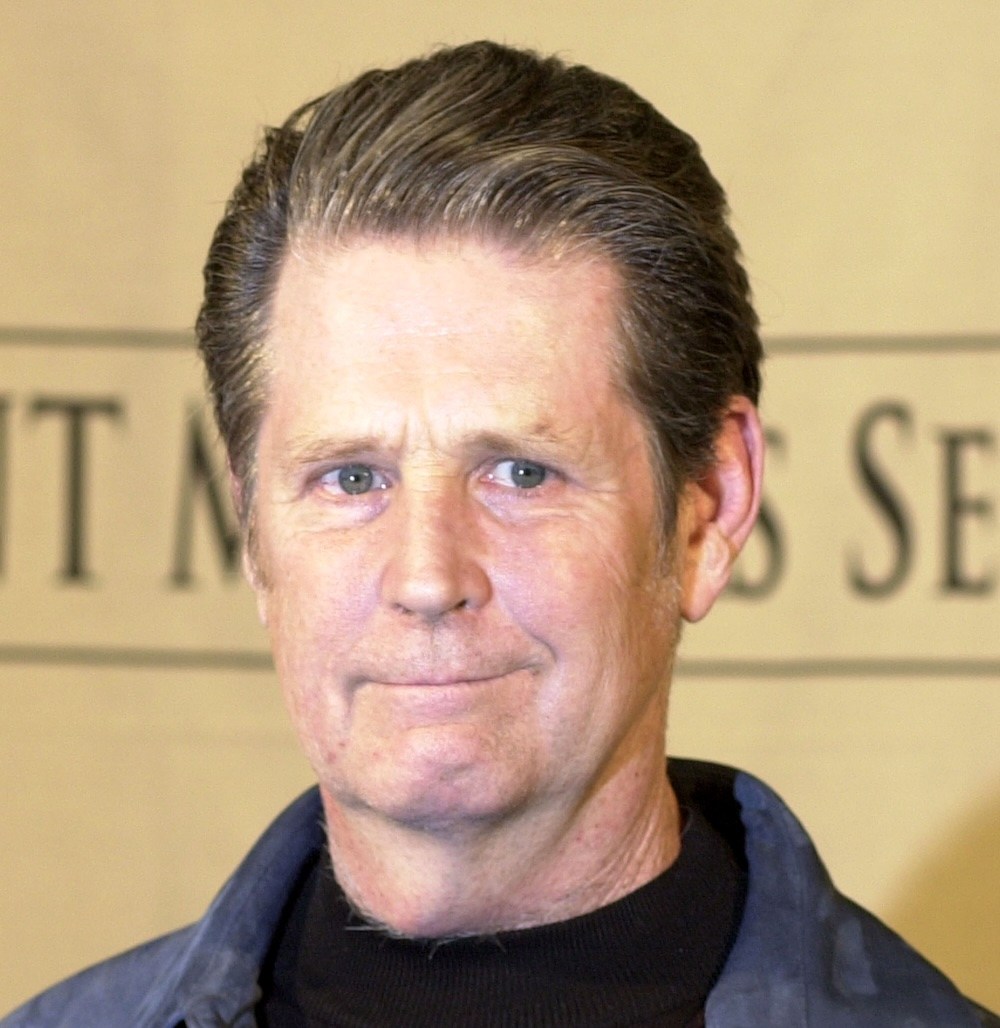
Brian Wilson, the legendary sonic mastermind behind the Beach Boys, has died. Wilson's family posted the news of his passing on Facebook page this afternoon. No cause of death has been reported, but Wilson has suffered from declining physical and mental health for many years, and he was under a court-ordered conservatorship for dementia. Wilson was 82.
Quite simply, Brian Wilson was one of the greatest visionaries that popular music has ever known. In his work with the Beach Boys, Wilson unlocked new tools to create lush, cascading, euphoric melody -- turning pop songs into what a publicist once memorably and accurately described as "teenage symphonies to God." Wilson's dizzy experimentation worked within the context of the pop music of its day, and he introduced all kinds of far-out sounds to the mainstream without sacrificing his wild visions. Wilson did all this while dealing with serious mental health problems and negotiating tense relationships with his Beach Boys bandmates and with various exploitative managers, including his own father.
Brian Douglas Wilson was born in Inglewood, and he grew up with his younger brothers Dennis and Carl in Hawthorne, California. Their father Murry, a part-time songwriter who worked as a machinist, was abusive and demanding. The Wilson brothers sang in a local choir, and the director claimed that Brian had perfect pitch. Brian taught himself to play piano, and he closely studied the forward motion of R&B and the harmony vocals of the Four Freshmen. Brian was a high school athlete, serving as quarterback on his football team, and he also worked in his father's machine shop while finding the time to record stray sounds and experiment with his tape recorder.
In 1958, the Wilson brothers started singing with their cousin Mike Love and with Al Jardine, Brian's friend and football teammate. They went through a few names, calling themselves the Pendletones and Carl And The Passions. Brian went off to study at El Camino College, but he dropped out before long and continued working with the group. Murry got the group an audition for a local independent label called Candix, and Brian wrote the song "Surfin'" about the surfing craze, which would become the great lyrical subject of the early Beach Boys songs. Candix changed the group's name to the Beach Boys without consulting them, and the "Surfin'" single came out in 1961. The song took off in California and reached #75 on the Billboard Hot 100.
After the success of "Surfin'," Murry Wilson became the Beach Boys' manager, and they began to perform live. All five Beach Boys sang, and Brian Wilson played bass. The group landed a contract at Capitol Records, and the 1962 single "Surfin' Safari," which Brian co-wrote with Mike Love, reached #14. A year later, Brian adapted Chuck Berry's "Sweet Little Sixteen" melody, turning it into a Beach Boys single called "Surfin' USA." (Notably, Brian did not surf. Of the Beach Boys, only Dennis Wilson did.) "Surfin' USA" became the group's first true smash, reaching #3. Brian Wilson soon took over as the group's producer and, inspired by fellow pop producer Phil Spector, started experimenting with studio techniques. That same year, Brian also brought an unfinished track called "Surf City" to the duo Jan & Dean. They finished the song and released it, and it reached #1. Murry Wilson was furious that Brian gave away a hit song.
But the Beach Boys were making plenty of hits of their own. In 1963, the group cranked out a series of top-10 singles -- "Surfer Girl," "Be True To Your School," "Fun, Fun, Fun" -- that depicted California as a mythic teenage utopia. In 1964, as the Beatles arrived in America and changed the face of pop music, the Beach Boys reached #1 with "I Get Around." Brian Wilson produced all those songs, and he wrote or co-wrote them.
As a producer, Brian Wilson worked intensely to compete with both the Beatles and Phil Spector. The Beatles' arrival heralded the end of the surf music craze, so Wilson began to write about different things. The pressure affected him deeply. In December 1964, just after his marriage to Marilyn Rovell, Brian suffered a sudden, severe nervous breakdown while on a flight to Houston. Brian returned home, and the Beach Boys replaced him on tour with Wrecking Crew session ace and future pop star Glen Campbell before Columbia producer Bruce Johnston became his permanent replacement. From then on, Brian quit touring with the Beach Boys, opting to stay home and work on their records instead.
Isolated from the rest of the Beach Boys while they were on the road, Brian Wilson got increasingly into marijuana and LSD, and his songs became grander and stranger without losing their pop appeal. The Beach Boys returned to #1 with "Help Me Rhonda" in 1965. Wilson's musical ideas became increasingly melancholy and experimental, and the Beach Boys continued to land big hits like "California Girls," "Barbra Ann," and a deliriously beautiful version of the Bahamian folk song "Sloop John B." Publicist Derek Taylor pushed the (accurate) narrative of Brian Wilson as a genius, which deepened divisions within the Beach Boys.
During this period of success, Brian Wilson pushed himself hard. His drug use increased, and his personal skills declined. Wilson's wild creativity led to the creation of the Beach Boys' 1966 album Pet Sounds, one of the all-time great pop masterpieces. It's one of the great evolutionary leaps of '60s pop, and all of the Beach Boys' peers scrambled to catch up, leading to one of the great creative explosions in rock 'n' roll history. The Beach Boys followed that single with the wild, euphoric smash "Good Vibrations," an all-out masterpiece that became the group's third #1 hit.
The success of Pet Sounds and "Good Vibrations" only made things more difficult for the Beach Boys. The group got into fights with Capitol and Murry Wilson, and they continued to have issues with one another. The FBI arrested Carl Wilson for dodging the draft, though charges were later dropped. Brian became deeply paranoid while endlessly tinkering with his opus Smile, which would go unreleased for decades. The other Beach Boys pushed Brian to abandon his exploratory tendencies and to get back to making pop music. The group pulled out of their headlining spot at 1967's iconic Monterey Pop Festival, which made them look old-fashioned when compared to the wild psychedelic rockers who did play the festival. Singles like "Heroes And Villains" and "Wild Honey" failed to match the impact of "Good Vibrations." Dennis Wilson became friends with Charles Manson, and the Beach Boys recorded and released the Manson-written song "Never Learn Not To Love," and the Manson Family's subsequent killing spree left him deeply affected. For a short stretch of time in the late '60s, Brian was quietly admitted to a psychiatric hospital.
In the early '70s, Brian Wilson was only intermittently involved with the Beach Boys, whose commercial fortunes continued their downward slide. After Murry Wilson's 1973 death, Brian went into drug-fueled seclusion, living in squalor and rarely appearing in public. Occasionally, Brian rejoined the Beach Boys, both in the studio and on tour, in the late '70s, but his health continued to suffer. Brian was repeatedly hospitalized in the late '70s and early '80s, and his wife Marilyn divorced him in 1979. (Their daughters Carnie and Wendy later became two thirds of Wilson Phillips, a pop trio who had brief but enormous success in the early '90s.) Brian's brother Dennis, who had plenty of issues of his own, drowned in 1983. Carl Wilson, his other brother, died of lung cancer in 1998. Therapist Eugene Landy eventually took total control of Brian's life. Under Landy's care, Brian released his self-titled 1988 solo debut and published the 1991 memoir Wouldn't It Be Nice, and his mother and surviving bandmates all sued him for defamation. When the Beach Boys landed back at #1 with the 1988 chart-topper "Kokomo," Brian was not involved.
Eventually, Brian Wilson's family won a legal battle to remove him from Eugene Landy's control. He married his second wife Melinda in 1995, and he spent much of the '90s embroiled in further expensive legal battles, including one against his ex-bandmate Mike Love. He re-recorded a number of Beach Boys songs for the 1995 documentary I Just Wasn't Made For These Times. As Brian's health improved, he returned to performing live, and he released solo albums that included contributions from peers like Paul McCartney, Elton John, and his old Beach Boys collaborator Van Dyke Parks. In 2004, Wilson completed work on the long-abandoned Beach Boys LP Smile, releasing it as a solo album. It went platinum and earned critical raves, becoming one of that year's best-reviewed records. Brian continued to play live, leading orchestral performances of Pet Sounds at festivals like Pitchfork. In 2012, Brian temporarily reunited with the other surviving Beach Boys to tour and to release the album That's Why God Made The Radio. In 2014, both John Cusack and Paul Dano played Brian in Love & Mercy, a biopic about his mental health struggles and his emancipation from Landy.
Brian Wilson released his final solo album At My Piano in 2021, and he gave his last performance in 2022. Later this year, we're supposedly getting the release of Cows In The Pasture, an unfinished country album that Brian recorded in 1970. Melinda Wilson, Brian's second wife, died in 2024, and his family had him placed under a conservatorship. The news of his passing isn't exactly unexpected, but it hits hard, especially after the loss of his fellow troubled genius Sly Stone earlier this week. Below, check out a small sampling of Brian Wilson's work.