
- Epic
- 2005
"I got mad questions for you," said Kanye West. Fiona Apple said, "No." Apple was supposed to be asking the questions. This was the whole thing. The two artists had never spoken before, and she'd never interviewed anyone. But here, Kanye West and Fiona Apple both had new albums coming out, so Interview put the two of them on the phone together. She asked him some fairly quotidian things -- about speaking in public, about how much sleep he got, about what kinds of dreams he had. But Kanye West knew that he was on the phone with Fiona Apple, and he wanted to make a moment out of hit. Their mutual collaborator Jon Brion came up in conversation, and Kanye West told Fiona Apple, "I actually wanted to work with him so I could be like the rap version of you. That was one of my main goals."
Kanye West accomplished a lot of his goals, but he never became the rap version of Fiona Apple. It's impossible to know what that would even mean. If there's a rap version of Fiona Apple today, it's probably André 3000, merely because he's a universally adored '90s legend who never raps. Kanye West and Fiona Apple are almost exactly the same age; West is three months older. Both of them grew up in major American cities, amongst the intelligentsia, and both of them had to deal with critical acclaim and media omnipresence when they were really just starting out. For the past two decades, however, the two of them have been on opposite trajectories -- West defined by his constant presence, Apple by her near-constant absence. West always wanted to be more famous than he was, and Apple always wanted to be less. West wanted to let us know how much time he spent shopping for shoes, and Apple wanted to let us know how much time she did not spend shopping for shoes. But in fall 2005, their paths overlapped just long enough for Kanye West to claim that he wanted to be the rap version of Fiona Apple.
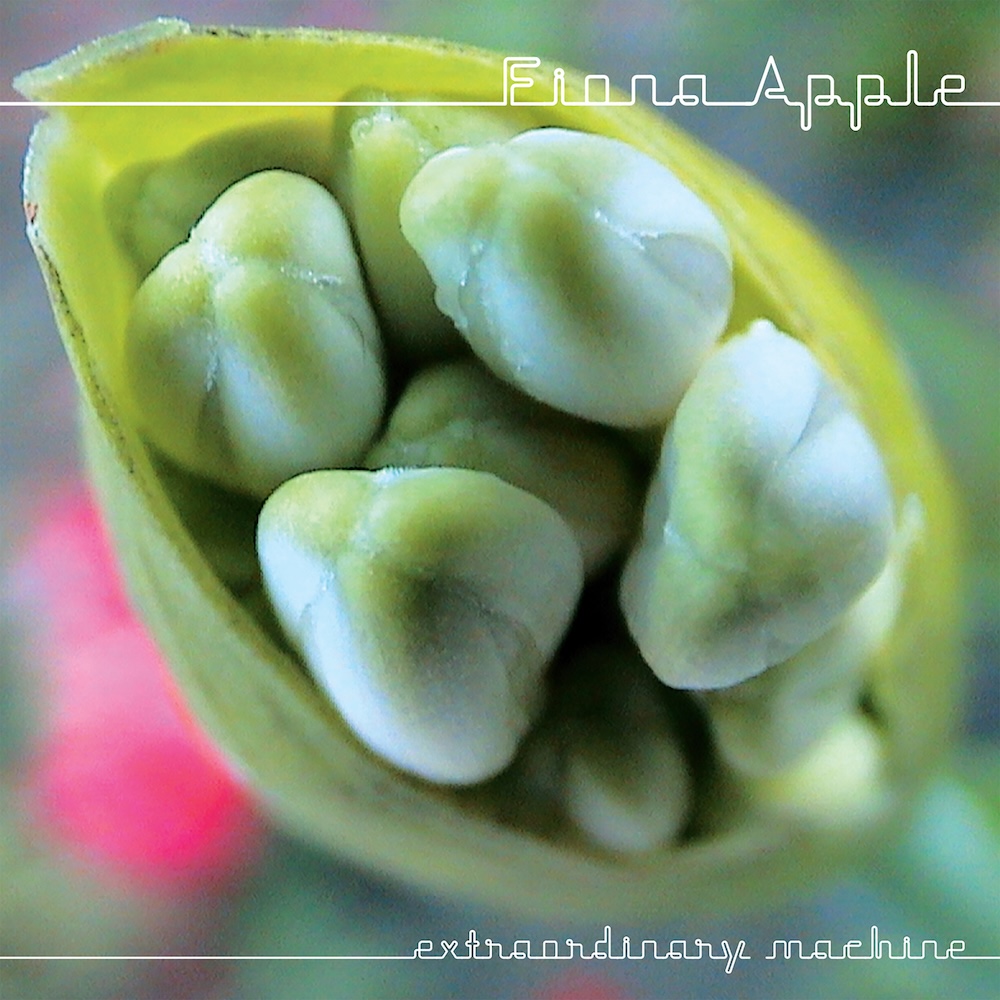
Kanye West and Fiona Apple both made records with Jon Brion, those two records came out close together -- West's Late Registration in August 2005, Apple's Extraordinary Machine in October. (The latter turns 20 on Saturday, which is why you are reading this article today.) But Apple and Brion started working on Extraordinary Machine back when West was still trying to get people at Roc-A-Fella to take him seriously as a rapper. Extraordinary Machine took a whole lot of time to finish, and its release was chaotic enough to rival any Kanye West album rollout. The final version of the album wasn't the one that many of her fans wanted, and people made up their own imagined behind-the-scenes stories about label meddling and inter-producer beef. Today, though, Extraordinary Machine stands as one more powerful work in a career that has only yielded powerful work. Fiona Apple records don't arrive often. When we get one, we have to savor it because the next one might never arrive.
The Extraordinary Machine story, as told in The New York Times Magazine, goes like this: Fiona Apple was done. She thought she might never make another record again -- a possibility that she always seems ready to entertain. Apple had known Jon Brion since she was a teenager. He played a ton of instruments on Tidal, the 1996 debut album that turned her into an unlikely pop sensation before Kanye West dropped out of college. Then Brion produced her second album, the 1999 masterpiece When The Pawn Hits The Conflicts He Thinks Like A King What He Knows Throws The Blows When He Goes To The Fight And He’ll Win The Whole Thing ‘Fore He Enters The Ring There’s No Body To Batter When Your Mind Is Your Might So When You Go Solo, You Hold Your Own Hand And Remember That Depth Is The Greatest Of Heights And If You Know Where You Stand, Then You Know Where To Land And If You Fall It Won’t Matter, Cuz You’ll Know That You’re Right. That one didn't sell like Tidal, and the strain of trying to sell it did not agree with Apple. A show at the shitty New York venue Roseland went badly in ways that got lots of publicity. Apple broke up with her famous boyfriend Paul Thomas Anderson. She was ready to be done, but Jon Brion coaxed her back out into the world.
Apple wasn't with Paul Thomas Anderson anymore, but Brion was. At some point in the early '00s, Brion was working on his brilliant score for Anderson's Punch-Drunk Love. He'd just gone through an intense breakup with the actor and comedian Mary Lynn Rajskub, who was in Punch-Drunk Love. While working on the music, Brion had to keep staring at her face. He didn't like that. When he finished his score, he needed to work on something else, and the thing that he wanted to work on was a Fiona Apple album. At the time, Apple and Brion would have lunch together once a week. At one of those lunches, he reportedly beseeched her, "Please, please make another album. I need work that can save me." She said OK, so he went to Epic Records, her label, and set some terms. Apple, he told them, would make another album, but she needed access to certain studios, and there needed to be no deadline at all. The Times Magazine Jon Brion profile came out two years before the album did.
At some point, Fiona Apple recorded an entire Extraordinary Machine album with Jon Brion. We know this because the recording exists. They worked hard on that shit. They rented a famous California mansion, living there and using it as a studio. Then they went to Abbey Road and got themselves an entire orchestra. Brion brought in big-deal musicians like legendary session drummer Jim Keltner and Heartbreakers keyboardist Benmont Tench. Money was spent. The record was supposed to come out in 2003, but it kept getting pushed back. Apple and Brion obsessed over details, reworking songs again and again. For a while, the only news about the album came through in little smidges of information -- a song title, a stray lyric -- that would pop up in a magazine story, usually one centered on Brion. Then in 2004, the songs started leaking, and they sounded fucking awesome. But as a rough version of the LP came into focus, Brion said that Epic had shelved the entire record. Epic disagreed. They said the album was still coming. Apple was just re-recording some of it.
Eventually, Fiona Apple went and made a whole new Extraordinary Machine, mostly without Jon Brion. She kept a couple of songs from the Brion sessions, and they bookended the LP. But Apple recorded most of the official versions of her songs with Mike Elizondo, a musician who moved in the same circles as Brion but who stood in a different place within the pop hierarchy. As a session bassist in the '90s, Elizondo played on a lot of records, including When The Pawn... In the early '90s, he became one of Dr. Dre's most trusted collaborators, which led to production credits on huge hits from people like Eminem, 50 Cent, and Mary J. Blige. Elizondo wasn't famous, exactly, but he held a place of huge esteem within the record industry, and he worked with big-name artists constantly. The records with Elizondo's name on them tended to sell much better than the ones that Brion produced. That information led to the birth of a whole new narrative, and it really didn't matter whether that narrative was true.
Imaginations ran wild. Epic was locking Fiona Apple's record up in the tower like Rapunzel. The label overlords demanded that she make a friendly pop record, not one with ideas flying in every direction. Mike Elizondo was a hack who could never approach Jon Brion's genius, and he just wanted to smother Apple's true voice. Elizondo and Brion hated each other. A voice once stentorian was now again meek and muffled. This was what people thought, anyway. It became a whole thing. Fans sent foam apples to the headquarters of Sony, Epic's parent company, and Epic's president had to make a statement about how Apple was still working on her album and the label had nothing to do with it. One by one, unmastered versions of Brion-produced songs leaked out, until a fully assembled bootleg version went wide on the internet. It didn't matter that Apple insisted that the leaked album wasn't done, that she wasn't happy with those recordings. You can still hear the full Jon Brion Extraordinary Machine bootleg. If anything, it's easier to hear now than it was in 2005. The whole thing is on YouTube, and it's fucking awesome. Here, listen.
The Jon Brion version of Extraordinary Machine took up so much oxygen that it threatened to overwhelm the final album. Kanye West told Fiona Apple that those bootlegs were one of the reasons that he recruited Jon Brion to co-produce his own Late Registration. When Extraordinary Machine came out, Pitchfork reviewed the final album and the bootleg together, giving the bootleg a much higher score. But Apple herself should be the final authority on her music, and she didn't like the bootleg album. She didn't want to release it, and she didn't release it. Maybe the arrangements were too busy. Maybe it prioritized Brion's dazzling instrumental flourishes over her own songs. And Brion himself seemed cool with the change. When the album finally came out, Apple played a few promotional shows with both Elizondo and Brion in her band. People just have to tell themselves stories, you know?
Here's what we do know: Extraordinary Machine now exists in a completely different form from what Fiona Apple and Jon Brion recorded. Two songs remain the same, the title track and "Waltz (Better Than Fine)." The latter exists so that Apple can tell herself that it's OK if she's not working all the time or if she's not in another relationship with another famous person: "If you don't have a date, celebrate/ Go out and sit on the lawn and do nothing/ 'Cause it's just what you must do and nobody does it anymore." "Extraordinary Machine" is fey and flowery and perhaps a smidge too cute for its own good, but it's another song about how people need to stop worrying about Apple's business and leave her alone. Of all the songs on Extraordinary Machine, "Extraordinary Machine" is the only one that I find a little dated, a little afflicted with the bougie whimsy of its era. It still goes hard, though.
The rest of the record is more sonically direct and streamlined, and you can hear bits and pieces of the funky economy that Mike Elizondo brought to his work with Dr. Dre. Elizondo brought in plenty of big-name musicians for his own sessions. Questlove plays drums on a couple of songs, and Paul McCartney's drummer Abe Laboriel Jr. plays on the rest. Roger Joseph Manning Jr. from Jellyfish plays some keyboards, and his Moog Cookbook bandmate Brian Kehew co-produces. Future Death Cab For Cutie member Zac Rae is all over the record. And anyway, these are Fiona Apple songs. Even at their most focused, they're never going to be radio fare. Apple's tiny window of massive popularity was a freak occurrence, a convergence of a young artist just finding her voice, an alt-rock radio landscape that briefly aligned with that voice, and one very striking music video. Those conditions could not be recreated, and Apple wouldn't want to recreate them if she could. By 2005, she was off in her own world, making music that did not exist in conversation with the larger pop landscape. She had things that she wanted to say, and she had ways that she wanted to say them.
One of the cool things about Extraordinary Machine is getting to hear how Mike Elizondo's pop instincts serve Fiona Apple's singular vision, the way his gloss collides with her messy humanity. Apple's songs always veer in their own directions. Some of her peculiarities are lyrical. She bursts out with arcane turns of phrase, densely clustered syllabic bursts, and the occasional cold-eyed accusation that hangs in the air like a live grenade. Some of her idiosyncrasies are structural, as when "Not About Love" spins out of control, chaotic rushes of words into crashing chords into extended pauses. Apple hits her notes with playful jazz timing, sometimes coming off casually conversational and sometimes letting loose with primal grunt-howls. She hammers her piano like it threatened her dog. She cannot be contained, and her collaborators don't try to contain her. They just help her explode in more efficient ways.
It's tempting to hear Extraordinary Machine as an album about Paul Thomas Anderson, and who knows, maybe it is. But that's just us telling ourselves stories again. Much later on, Apple revealed that she was married to some other guy for a little while when she was making the record. Nobody knew! The specifics don't matter. What matters is the devastating way that Apple describes the petty resentments and underhanded comments that poison so many relationships: "'What is this posture I have to stare at?'/ That's what he said when I was sitting up straight." But it's not all accusations. Apple takes plenty of blame. She wonders why she kissed some guy she can't stand, why she misses that stupid ape. She describes herself as "a frightened, fickle person, fightin', cryin', kickin', cursin'." Sometimes, she captures feelings too complicated and conflicted to be summed up so easily: "I opened my eyes while you were kissing me once, more than once/ And you looked as sincere as a dog." That could be good or bad. We don't know. Maybe Apple doesn't know, either.
Fiona Apple is such a great writer, and she's such a great vehicle for her own writing. Her Extraordinary Machine lyrics often look great on paper but sound way better when she sings them. In her voice, I hear the same sheer love of language that I get from some of my favorite rappers: "I knew that to keep in touch would do me deep in dutch/ 'Cause it isn't the rush of remembering, it's... just.... mush." The way she stretches those pauses out for maximum impact? Come on. Mike Elizondo's production on that track, "Tymps (The Sick In The Head Song)," has the same spy-movie sidle as many of the actual hits that he helped to produce around that time, and Apple almost raps over it. Instead, the track turns into a giddy, tourettic circus-music nightmare, in the best way.
"Red Red Red" is the song that really convinced me. I have vivid memories of hearing that song on iPod earbuds while walking down the street in Brooklyn, almost walking into traffic because I was hanging so hard on Fiona Apple's next word. She tries to think about things that normal people like, color combinations or fancy jewelry, and she can't see the things that others might see. But she sees herself clearly, realizing that the challenge of a shitty relationship with a difficult person might be what attracts her in the first place. It feels like we're hearing her internal monologue, except that her internal monologue takes the shape of a stunning, suspenseful torch song. The Jon Brion version of "Red Red Red" is great, too, but it never made me wander in front of a bus.
Ultimately, the release of Extraordinary Machine was way less eventful than its long, tortured creation. The record came out, got mostly great reviews, and sold moderately well. It went gold, which is to say that it sold way less than her two previous records, but I don't think anyone was mad. On that year's Pazz & Jop poll, Extraordinary Machine came in at an extremely respectable #5, between Sleater-Kinney's The Woods and the White Stripes' Get Behind Me Satan. (Late Registration was #1.) When Fiona Apple did interviews, she finally talked to people who seemed to respect her. The comments about her appearance were way less prevalent. Writers didn't want to depict her as a petulant, pretentious kid anymore. She was a major artist, and she was treated as such.
When she came out with Extraordinary Machine, Fiona Apple played the game a little bit. She made music videos and TV-show appearances. She posed for magazine photo shoots. She toured. She opened a Coldplay arena run for a month and a half, which must've been weird. I saw Apple for the first time that December, when she came to Times Square's Nokia Theatre (now the Palladium), a few miles south of where her disastrous Roseland show happened five years earlier. She fucking crushed, and people loved her. It was awesome. But once the album cycle wound down, Fiona Apple went away again. She didn't want to say anything until she had something to say. Apple would not release another LP for seven more years. When she did, no pop producers were involved, and nobody was confused about whose vision it was. Everyone knew that a Fiona Apple record was a special thing. That was true in 1996 and in 2005. It's true now, too. We've only got five of these things. They're all worth treasuring.