
- ATO
- 2005
My Morning Jacket almost didn't make it this far. In 2004, while touring their milestone 2003 album It Still Moves, the band fragmented. Two members quit, including keyboardist Danny Cash and guitarist Johnny Quaid, the cousin and right-hand man to MMJ mastermind Jim James. Despondent, James considered this might be the end of the band, until his publisher begged him to at least entertain the idea of auditioning new members. James, bassist Tom Blankenship, and drummer Patrick Hallahan reluctantly relented. The first two people to walk in the door were Carl Broemel and Bo Koster.
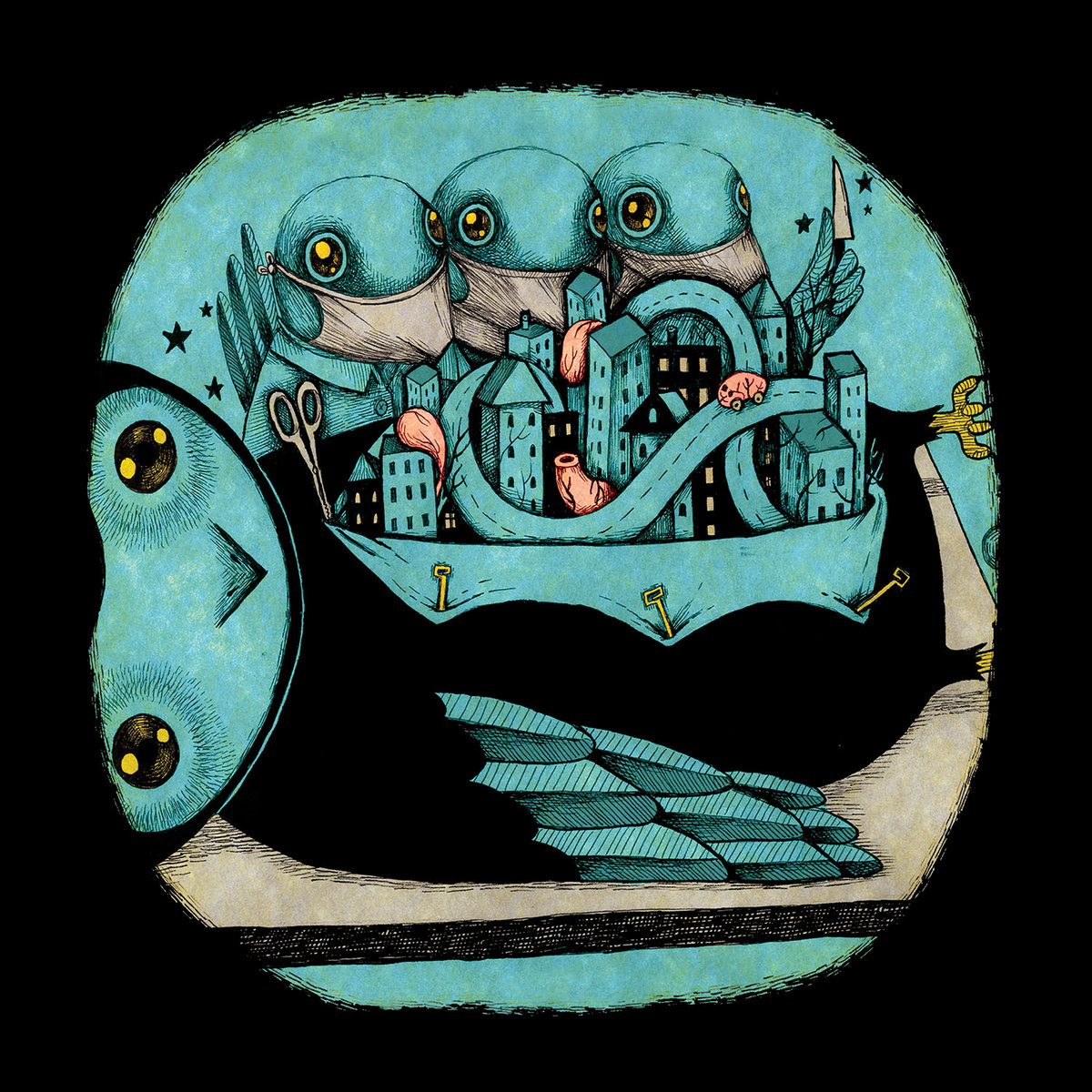
It was a moment of divine intervention. The band was floored at the instant chemistry they found with Broemel and Koster, who arrived already knowing most of the songs. They forged ahead. James began demoing new material, something that would introduce a whole new chapter — a new lineup, a new sound, a new scope. That chapter began with Z, which came out 20 years ago this Saturday.
My Morning Jacket had already covered a lot of ground. In their early days, they quickly became known for a ghostly, reverb-drenched iteration of classic rock and Americana, though littered throughout were oddball tracks like "Cobra" or "Phone Went West" or an Erykah Badu cover that all hinted at James' omnivorous musicality. They were, at one point, lumped into the whole alt-country thing, but they were always weirdos off to the side of any momentary trend, not fitting cleanly into one narrative or scene. Leading up to Z, James' impulses may have still come as a surprise to MMJ fans who'd been along for the ride thus far: He wanted to make dance music.
Around this time, James was hanging with fellow Louisville natives VHS Or Beta. They'd go out to clubs, and they got him into French house music. He began falling hard for Prince and Curtis Mayfield. He wasn't setting out to make electronic music, per se. But he wanted people to move. That meant he needed to write different kinds of songs and explore different tools. VHS Or Beta's Craig Pfunder lent him a Juno synth. A new song called "Wordless Chorus" tumbled out of him.
With a new band around him, James also adopted new practices. Z was the first album where MMJ went into a proper studio rather than working at Above The Cadillac, the recording space James had fashioned at a family farm. No more raw rock 'n' roll, no more grain silo reverb. Instead, the band linked up with the British producer John Leckie, whose career had included working on George Harrison's All Things Must Pass and Pink Floyd's Wish You Were Here before later producing a host of new wave acts, the Stone Roses' self-titled debut, and Radiohead's The Bends. It's an insane spectrum, but it neatly paralleled where James was trying to take My Morning Jacket: a rock band rooted in tradition, yes, but one seeking the outer limits of the genre.
At 47 minutes, Z was lean and tight compared to the sprawls of The Tennessee Fire, At Dawn, and It Still Moves. But it was an album packed with new ideas and sounds fused with the band's past. The reboot was evident from its opening moments. "Wordless Chorus" had unlocked something in the writing of the album, and served as the curtain rise on MMJ Pt. 2: synths, dubby rhythms,a star-gazing sigh for a chorus. It could serve as a jarring introduction — a complete heel turn from the rollicking "Mahgeetah" kicking down the door ofIt Still Moves. But what it introduced was an adventurous evolution for MMJ, and an album that streamlined experimental impulses with core DNA in a way no other MMJ album before or after has quite matched.
Across 10 songs, Z did it all. The autumnal rush of "It Beats 4 U" or the eerie waltz of "Into The Woods," both flecked with synth textures. The barroom chaos of "What A Wonderful Man" next to "Off The Record" and its marriage of tight funk and aqueous dub. They had become economical without sacrificing their ability to deliver cathartic journeys with unpredictable twists: "Gideon" became a calling card for the album's celestial psychedelia, emerging from mist and flickering arpeggios to a giant, full-throated outro all in the span of three and a half minutes.
Along with "Gideon," Z featured a batch of songs that would become definitive MMJ, seamlessly blending the past and future of the band: the synth-rock of "Anytime" taking the ragers of It Still Moves up to scrape the stratosphere, the drum machine pulse of "Lay Low" building to the iconic Southern Rock guitar duel between James and Broemel, the simmering-then-volcanic exorcism of "Dondante" at the album's conclusion.
For an album that often sounded like the exhilaration of new frontiers, Z’s finale was a gaping wound. You couldn't often hear it elsewhere, but "Dondante" exposed the darkness running underneath the album. James had recently lost two close friends — each had taken their own lives, and in the aftermath he struggled with alcoholism and his own suicidal ideations. In a recent Rolling Stone interview looking back on Z, James was candid about the headspace he was in and the fact that, even amidst renewal, he felt he and the band were at the end of the line:
I thought it would be our last album. That's why I named it Z. Because I was entertaining taking my own life as well, and I was feeling so pessimistic that I was sure that [the album] wouldn't work out. I was sure that it would suck and everybody would hate it and that everything would collapse. That's how powerful depression is. And thankfully, that wasn't what happened.
In recent years, James has been open about long struggles with depression and alcohol abuse, two demons he seems to have finally moved past. And from a career standpoint, Z was absolutely not the end. It's bizarre now to imagine the band collapsing before this was even made, or after it arrived to widespread acclaim. Though MMJ had been buzzed about in their earliest days, Z provided a different crossover moment. Maybe some old fans still bristled at the new lineup and new sound, but the album became a gateway drug for a whole new generation of MMJ listeners — those of us then in our teens, finding this album and working our way back through the catalogue.

It wasn't just the aesthetic of Z that won new fans. My Morning Jacket have rarely made an album as close to bulletproof as this one. The songwriting was inspired and perfectly balanced with the band's rangier qualities. The detours made sense; everything fit together. There were many great MMJ songs to come, but Z still casts a long shadow as the MMJ album that could tussle with the canon of its classic rock forebears.
For years, Z was a dividing line between those nascent grain silo days and the shape-shifting rockers walking between worlds. Now, 20 years on, it's almost like the pivot from one version of MMJ that had reached its zenith, and the MMJ they were then destined to become. The band we know today carries all that history with them, but that band was born here. Without Z, the narrative could've gone all kinds of different ways — without James chasing all these new impulses and interests, you could easily imagine MMJ having settled into a respected journeyman rock band plugging along over on the side someplace. Instead, this album allowed them to command fascination for years to come. It established them not as road warrior craftsmen, but seekers.
A few years ago, I interviewed James for a career-length biography. When reflecting on the initial stretch of My Morning Jacket's history, he referred to what he heard as a "universal grief" — an angst we're born with and spend our younger years purging. He talked about how he felt so much sadness, and the wail of those early albums was meant to release it, but also heal those who felt the same sorrow. Those records are potent documents of that sadness, and they succeeded in providing solace to many, many MMJ listeners. But something different had clicked on Z. James wasn't wailing anymore. He was roaring into the cosmos, looking for different answers to the universal grief.
We rely on reader subscriptions to deliver articles like the one you're reading. Become a member and help support independent media!