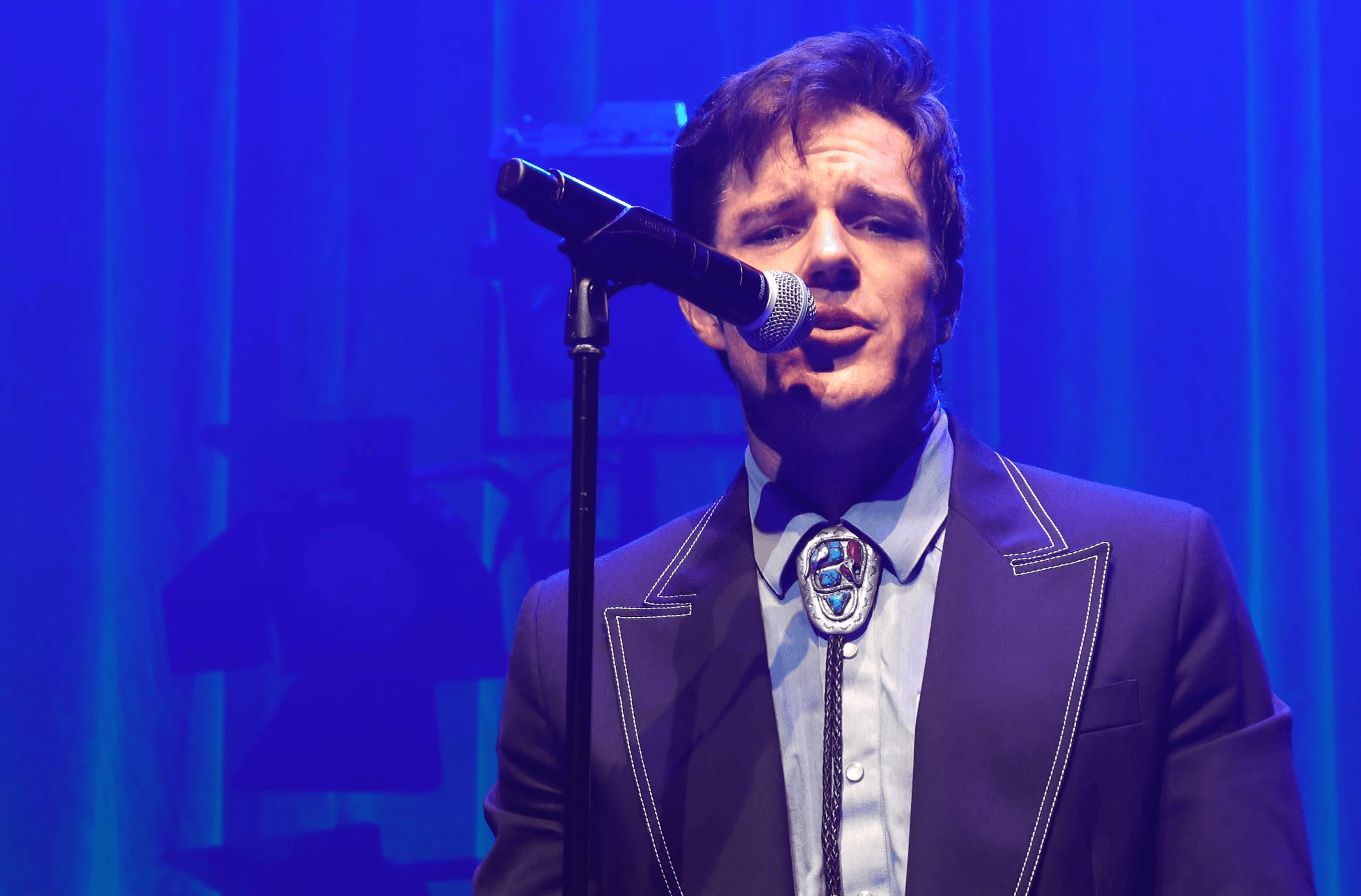

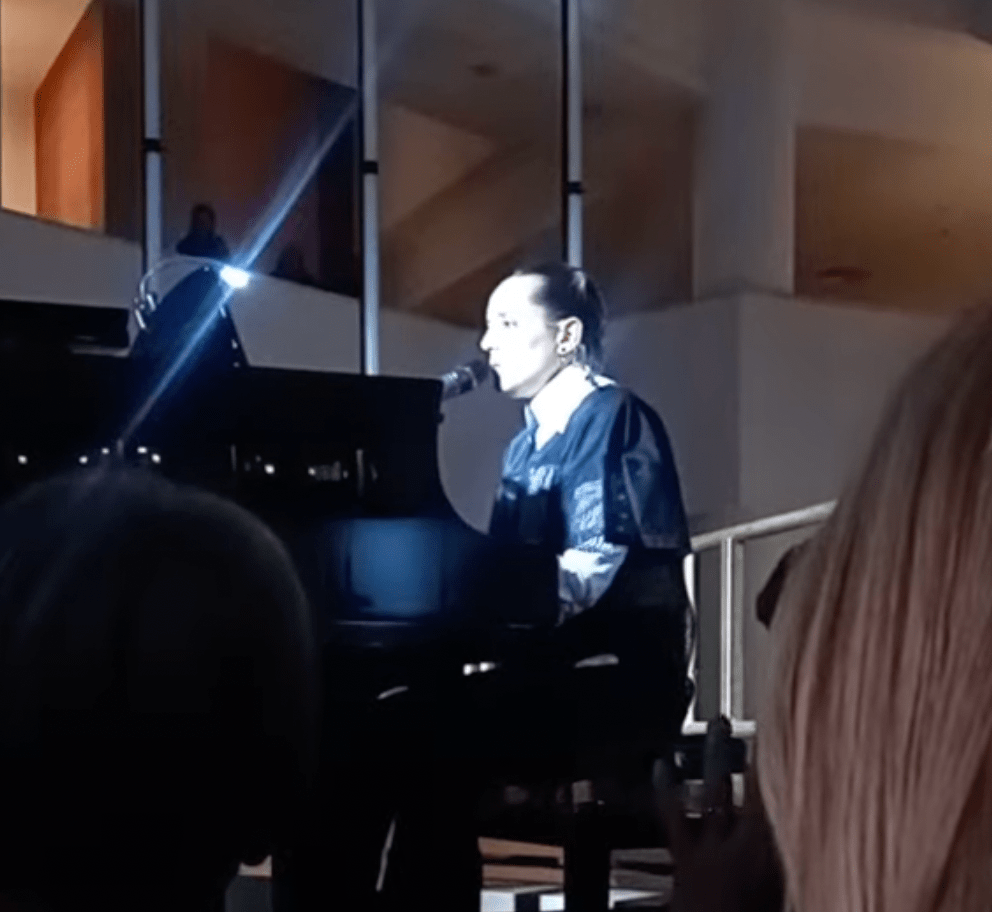
Ten years ago, just two days after releasing his final album Blackstar, David Bowie passed away. Over the weekend the national library in North London hosted a tribute event called David Bowie In Time, during which there were a few musical performances. Jehnny Beth, the ex-Savages frontperson who's covered Bowie a handful of times over the years, participated by covering two highlights from Blackstar: "Dollar Days" and "Girl Loves Me."
Beth performed on piano with accompaniment from Donny McCaslin, who performed on Blackstar. See some clips below — other highlights of the event included a performance from Einstürzende Neubauten frontman and Nick Cave & The Bad Seeds co-founder Blixa Bargeld, and a talk with Blackstar collaborator Tony Visconti.
Beth also shared a statement on Instagram about her relationship to Blackstar and Bowie. Here's that:
Blackstar is an album that changed my life, twice. First on January the 8th 2016. The day of the release.
I knew Bowie to be the exact opposite of the artist who simply goes on repeating himself. So I was excited! There is clearly a Bowieesque universe, but this universe is a boundless kingdom. So I wondered - what genre of music, what new movement, what era, what artists, influences he had assembled this time into his new piece of work: black star.
I played it.
Immediately, there was a sense of familiarity: I was thrilled to hear the influence of jazz, the music I first learned to play as a child. There was also an intimacy with the album's sound, embedded in its details: an amps' buzz at the end of a song, the sound of pages turning in the vocal booth, the sound of his breathing... you could almost visualise the studio where it was recorded. Bowie was not distant, he was right here!
Also a few months earlier I had fallen in love with the album To Pimp A Butterfly by the rapper Kendrick Lamar, a masterpiece which I later realised Bowie was listening to during the album's production.
So yeah, Blackstar felt like a home, right from the start, but — as always with an artist ahead of his time — it was a home in the future, a home to dream about
and aspire to reach one day.January 10th 2016.
Like most people I was unaware of Bowie's illness, so I was... unprepared. 3 am. Los Angeles. I wake up, I open my phone and learn the news of Bowie's passing. I wake Johnny Hostile up, who was sleeping next to me. and we immediately play Black star.
Now in retrospect I sometimes wonder why we played that record first, why not Hunky Dory my initial favourite record of his? why not Heroes?No, we chose to play Lazarus, as though led by an unspoken rule.
"look up here. I'm in heaven" those were the first words we heard. I wept. And we sat like this for hours in silence listening to the music. What was there to say except the words 'thank you' ?
It is then that the album revealed itself to me. And it is still unclear if the new circumstances changed my perception or the album itself had changed, but Death, his death, seemed to act as a key, opening a hidden passage into the record's meaning that might never have revealed itself otherwise.there is a certain point in art, as in life, at which the real and the imagined, the past and the future, the communicable and the incommunicable, the high and the low, life and death, cease to be seen as contradictory. It is this exact point that I suddenly saw in blackstar. he was speaking to us from beyond. That journey that awaits us all, it seemed that he had taken it for us and had made it his task to sing about. It's only natural for a man who had turned living into a creative lifestyle, to turn death into a work of art.
An image came to mind: that of him singing from behind a glass /or a mirror. Orpheus, the Devine comedy, Ophelia, Twin Peaks... Blackstar stands in a tradition of masterpieces forged exactly at that point of fracture between two worlds: where a living consciousness navigates post-life architecture. Mirrors become portals. Language becomes coded, gestures become rituals. Time collapses. The precise second before disappearance: Still breathing, already gone... Death, not an
ending — just another room?Blackstar is a record of someone who is dying but it is still the record of a believer. A believer in the liberating forces of living poetically, of instinct, of love. And it changed my life because this kind of lesson, when passed along, becomes a weapon.
Thank you.