

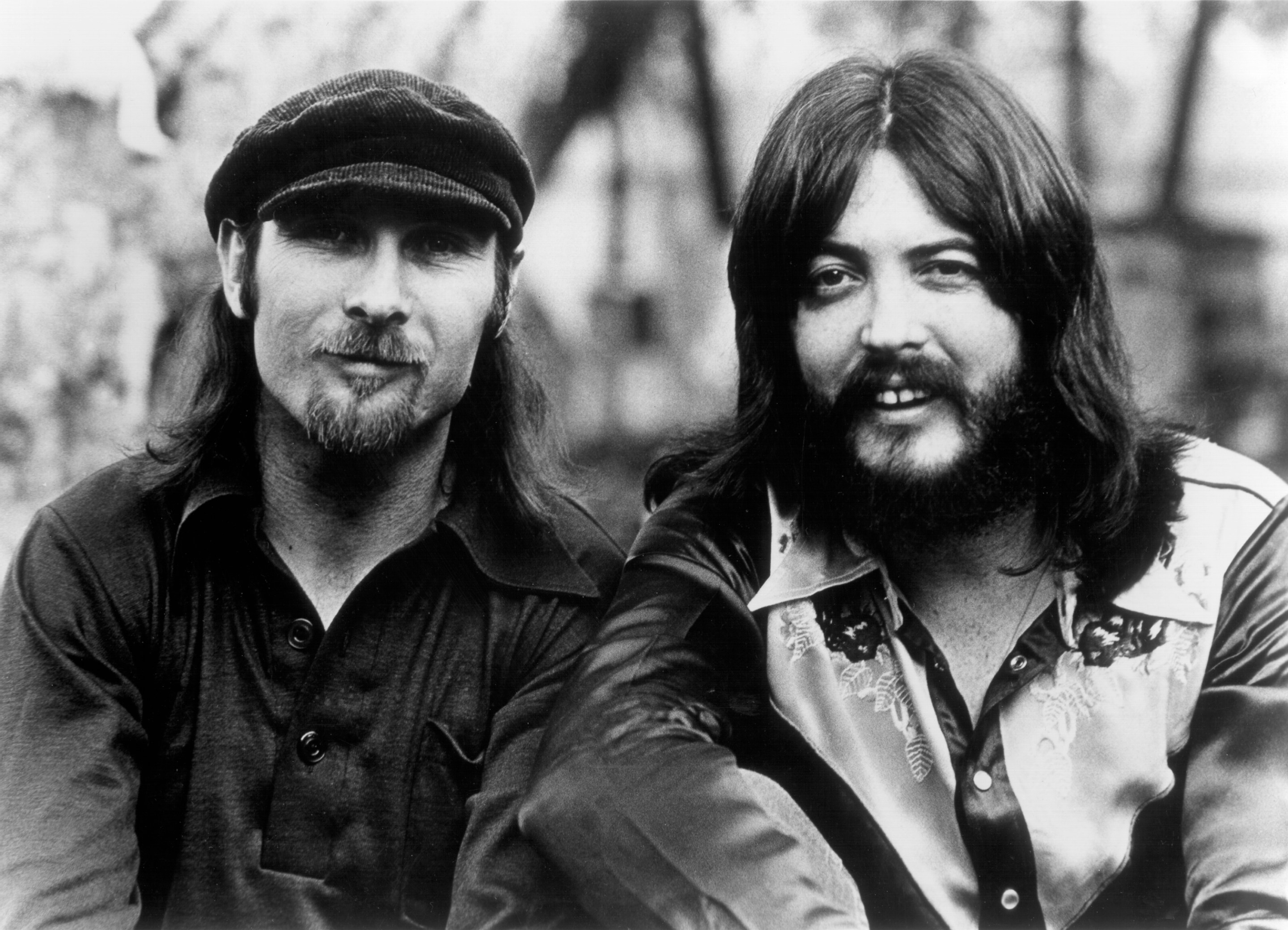
Dash Crofts, half of the popular '70s soft rock duo Seals & Crofts, has died. After producer Louie Shelton announced Crofts' death early Thursday morning, one of Crofts' relatives confirmed to TMZ that the "Summer Breeze" hitmaker (on the right in the photo above) died Wednesday from complications of a heart surgery. His death follows that of musical partner Jim Seals, who passed away in 2022. Crofts was 87.
His family shared this statement:
We are heartbroken to share the passing of our beloved father and husband Darrell “Dash” George Crofts, who passed away March 25, 2026 at the age of 87 surrounded by the love and prayers of his devoted wife and children.
With sorrow and gratitude we mourn a man whose loving-kindness, remarkable compassion, beautiful and tender voice has uplifted hearts across the globe. We extend our gratitude and appreciation for the outpouring of love and support that we have received from around the world and we celebrate and honor his legacy of service to mankind.
Darrell George "Dash" Crofts was born in Cisco, TX in 1938. He had a twin sister named Dorothy, which is where the Dash nickname came from: Their mother entered the twins into a "beautiful baby" contest under the name Dot and Dash. After taking up piano at age five, Crofts switched to drums at age 10, which led to gigs with the rockabilly group Dean Beard & The Crew Cats as a teenager.
In Beard's band, Crofts first played with Seals, a saxophonist at the time. They struck up a close friendship and musical partnership. After graduating high school, Seals and Crofts decamped to Los Angeles, where they joined up with the Champs, who'd just scored a chart-topping hit with "Tequila." Crofts' tenure in the band was interrupted when he was drafted into the army in 1962, which led to time stationed at Fort Bragg.
In 1963, Seals and Crofts left the Champs along with bandmates Glen Campbell and Jerry Cole to form a new band, Glen Campbell and the GCs. When that band petered out two years later, Crofts returned to Texas and formed the Dawnbreakers, whose name was a reference to his Baha'i faith. When he moved back to California, Seals became a member of the Dawnbreakers and also converted to Baha'i. The faith became a central focus of their music.
In 1969, the Dawnbreakers broke up. Inspired by the folk-rock of Crosby, Stills, Nash & Young, Seals and Crofts struck out as a duo under their own surnames, making folk-influenced pop music that went over exceedingly well in the folksy, easy listening '70s. Their first few albums came and went without making much of a dent on the charts, but a new deal with Warner Bros. led to success with LP4, 1972's Summer Breeze. The album peaked at #7 and went double platinum, and its title track became Seals & Crofts' first top 10 hit. "Hummingbird" also became a top 20 hit. The following year's Diamond Girl charted even higher, and it yielded the hits "Diamond Girl" and "We May Never Pass This Way (Again)."
The next Seals & Crofts' album was 1974's controversial Unborn Child. The anti-abortion title track, released in the wake of Roe v. Wade, topped out at #66, and follow-up "King Of Nothing" didn't get much higher. But Seals & Crofts returned to their hitmaking ways with the title tracks from 1975's I'll Play For You and 1976's Get Closer. As the '70s closed out, they scored some smaller-scale hits with "My Fair Share" and "You're The Love."
After 1980's The Longest Road, Seals & Crofts went on hiatus. A brief 1983 reunion was quickly called off. Crofts and his wife and two children moved to Mexico and Australia, eventually settling in Nashville, where he dabbled in country music. He and Seals continued to be vocal public advocates for Baha'i, and their appearances together in that regard led to Seals & Crofts reunion tours from 1989-1992. Crofts released a solo album, Today, in 1998, and in 2004 the duo reunited for one last album, Traces. Later in life, Crofts raised horses on a farm in Texas.
Below, revisit some of Crofts' best-known hits.