
If the summer 2026 US concert season has a theme, it’s blue dot fever. Tour cancellations abound, while other shows are way undersold. Theories abound as to why this fever rages, although it goes without saying that concerts are expensive: A Pollstar study found that the average ticket price for the top 100 worldwide tours rose by 37.2% between 2019 and 2025.
The auxiliary expenses associated with going to a show also add up. For example, a parking pass for one concert at my local amphitheater Blossom Music Center can cost significantly more than the actual concert tickets. (Seriously, the reserved VIP parking at an upcoming Mötley Crüe gig will run you $275 per car, while lawn seats are available for $24.75 each in a "Summer Of Live 4-Pack” promotion.) Throw in the possibility of severe weather, wildfire smoke, broiling temperatures, high gas prices, rude people, and annoying bag policies — and it’s no wonder that staying home can feel like the better option.
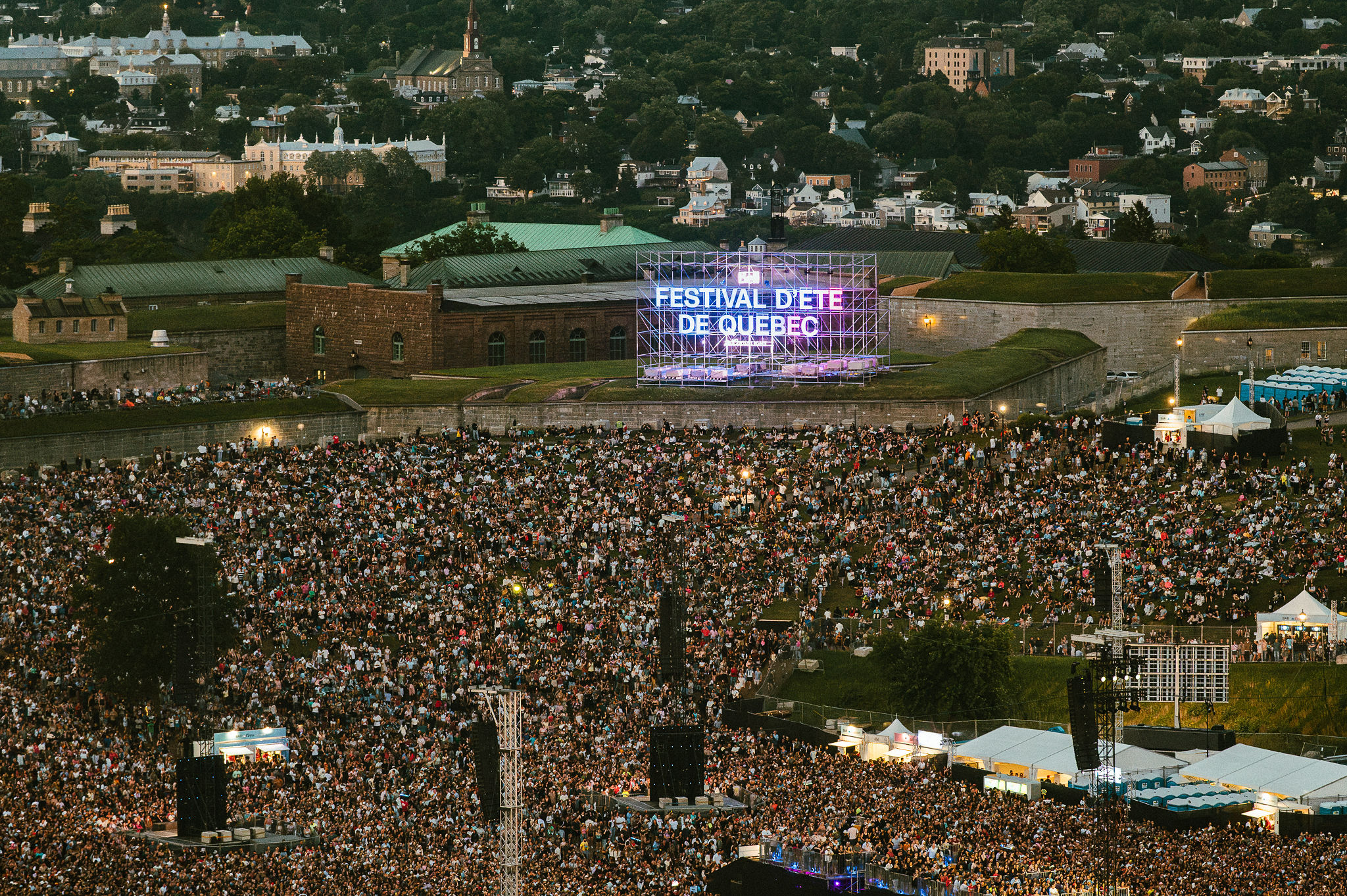
In light of all these things, it was incredibly refreshing to spend three days at the Festival d'été de Québec (FEQ) in Quebec City and have a completely enjoyable time: no jerks, no duds, no irritation. Started in 1968 (making it older than Glastonbury!) the event is now the largest outdoor festival in Canada, with more than 150 shows on six stages booked across 11 nights. Past lineups include a who’s-who of superstars; to name a few, the Rolling Stones, Beck, Lorde, Lady Gaga, Lana Del Rey, Rush, and Iron Maiden have all played there.
If I’m being honest, I don’t have it in me to go to all-day, multi-day festivals anymore. I had a great time attending Lollapalooza and the Vans Warped Tour in the 2000s and 2010s, and had amazing experiences at other long-gone regional festivals or one-off events (e.g., Vegoose, Matador at 21). But FEQ makes it easy to hop between different areas or take breaks, because the festival’s stages are situated within Quebec City itself in a compact space. Astoundingly, the sound also doesn’t bleed between stages. The large area with the headliner-heavy Bell Stage can hold 100,000 people and you wouldn’t know it unless you ventured onto the grounds.
The music at FEQ also starts in the early evening, meaning it’s much more manageable to navigate — more like just going to a concert rather than dealing with the marathon of a large festival — and the temperature when I was there was cool enough that I was comfortable wearing jeans and a sweatshirt. Quebec City itself is also gorgeous and extremely chill. And the fest’s food offerings are also a plus: Eating a warm brie-and-jam sandwich or poutine during sets was an elite experience.
FEQ is also very affordable: A general admission ticket that gives you access to all 11 nights of shows was just $180 Canadian (roughly $129 USD).
And the nice thing about FEQ is it’s very choose-your-own adventure. If you want the spectacle of a big show, you can hang by the Bell Stage. If you want to park yourself in one place and have a low-key night, the Sirius XM and Loto-Québec stages are right next to each other, and bands alternate one after another. The other individual stages all possess their own distinct vibes, especially because each night’s lineup of artists tends to stick to a specific genre, like metal, punk, indie, world music, or hip-hop. And FEQ overall is extremely well-curated, with established artists (Billy Bragg, Testament, Basia Bulat) mingling with up-and-coming acts such as buzzy electro act Haute & Freddy.
Unsurprisingly, FEQ emphasizes Canadian acts. Performing on the Bell Stage before Gwen Stefani, Toronto-born Jessie Reyez turned in an impressive hour-long set that showed off her versatility and charisma. After establishing that her show was a "no shame zone” where people were to be themselves, she proclaimed she was "gonna give you good vibrations.”
Mission accomplished: Backed by a tight live band, she ran through songs that touched on hip-hop, R&B, dancehall, and pop. Highlights included Ariana Grande-like vocals trills on "Coffin”; a folkish "Forever” that found her sitting on a stool strumming an acoustic guitar; a rock-leaning version of "Ridin’” that culminated in a bout of ferocious headbanging; and her own version of "One Kiss,” a hit she wrote recorded by Dua Lipa and Calvin Harris.
Reyez also chatted with the audience like they were old pals. "Who here made it out of the friend zone?” she said at one point, before singling out an adorable couple up front for a dedication. At several other points, she hopped off the stage and approached fans in the front row who were having emotional responses to the music; it was touching to watch her embrace and sing to them.
Vancouver’s Mother Mother, who earned some U.S. notoriety a few years ago with the viral hit "Hayloft,” also more than held their own opening for Muse on the Bell Stage a few nights later. Part grungy rock, part folk-rock, part spring-loaded indie—the vivacious "Explode!” reminded me of Los Campesinos!, while new song "I Love Life” exuded 2000s indie vibes—the band brimmed with confidence.
The multi-vocal configuration of siblings Ryan and Molly Guldemond and keyboardist Jasmin Parkin was a big plus, as it allowed the band to stretch out for the tender "Ghosting” and the evocative "Oh Ana.” Mother Mother also incorporated covers of Nirvana’s "In Bloom” and Pixies’ "Where Is My Mind”—a precursor to the explosive, set-ending "Hayloft II,” which was bolstered by loud synth cracks and proggy flourishes.
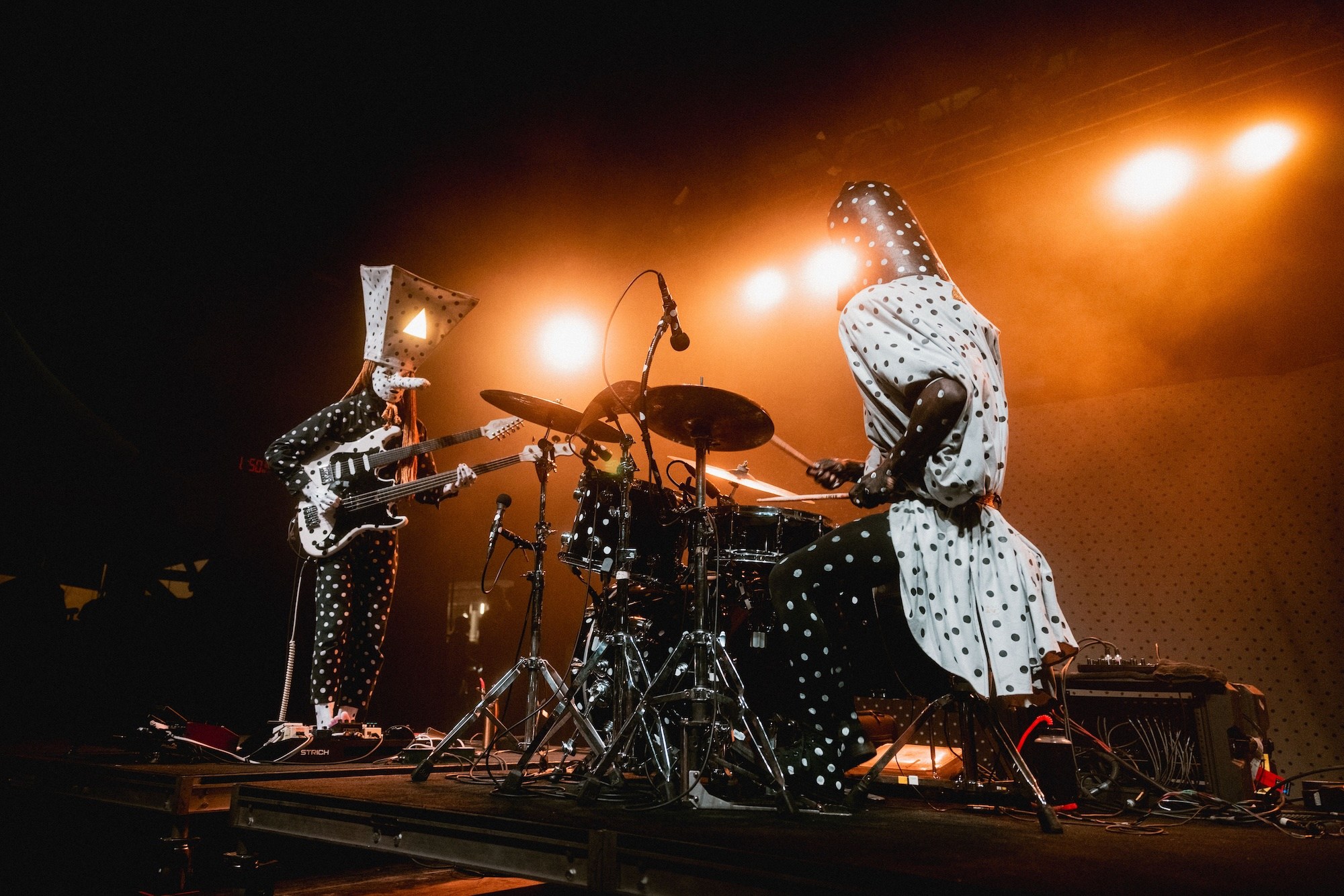
The smaller stages offered a more intimate experience. Playing in front of a criminally tiny crowd on the SiriusXM stage, Montreal’s No Joy nevertheless played an incredible set that was one of my personal highlights. Stuffed and inflatable butterflies adorned their stage and clothes as they ripped through tornadic shoegaze and grimy dreampop tunes, led by the My Bloody Valentine-esque distortion-fest "Here Tarot Lies” and synth-swirled noise jam "Four.” Other moments resembled a decaying antique music box or paired squirrelly keyboard effects with viscous dark grooves.
On another day, a brief early evening rain shower didn’t deter the earnest Ontario singer-songwriter Billianne, whose debut album, 2025’s Modes of Transportation, was a sleeper folk-pop gem full of dreamy coming-of-age sentiments. Her set was distinguished by "Save Me,” which underscored her quiet power. Right after her was Ottawa-born Leif Vollebekk, a Juno-nominated folk-rocker whose music is tinged with smoky soul and blues.
Vollebekk exuded some Bruce Hornsby vibes (complimentary) on "Elegy,” courtesy of glassy piano and groove-heavy rhythms; "Elijah Rose” featured some evocative guitar and jazzy drums; and "False-Hearted Lover” was blissfully laid-back. His set ended with "Hot Tears,” which featured both a subtle Oasis lyrical nod ("What’s the story morning glory?”) and a propulsive ending that found Vollebekk playing piano and guitar at once, before ditching the former to unleash a storm of forceful, distorted blues riffing.
Australia’s Dope Lemon began playing when the sun was still up, an incongruous setting for their dark sounds and devilish vibe. Clad in black cowboy hats, the Angus Stone-fronted band favored gothic psychedelic rock with a desert-cowboy edge, full of ominous harmonica, distorted vocals and thundering guitars; think Nick Cave and the Bad Seeds, Black Rebel Motorcycle Club and the Verve. To temper the darkness, however, goofy dancers wearing stuffed headgear (i.e., a lemon with fangs) danced around onstage while they played.
Another standout for me was Faux Real, a charmingly deadpan French electro duo comprising brothers Elliott and Virgile Arndt. Truth be told, they resembled Sparks with more elaborate choreography: Wearing matching all-white outfits—wide-legged pants under ruffled miniskirts and midriff-baring tops—the pair did body-bending calisthenics and exaggerated coordinated dance moves, with the occasional flute solo (from Elliott) thrown in for good measure. Faux Real’s music was serious and expertly executed, calling to mind Hot Chip and Chromeo. The new single "One & Done,” meanwhile, is a retro electroclash throwback.
Although the main Bell Stage is huge, the atmosphere across all three nights was surprisingly low-key, even for an artist like Kesha, who headlined the night on Wednesday, July 15.
The trick to enjoying her current tour, The Freedom Tour, is going into it knowing she’s not interested in playing most of her hits as they sounded on record. That’s not a negative thing: Having extricated herself from her contract with Dr. Luke’s Kemosabe Records, she has spent the last few years rebuilding her career and reclaiming her songs, even by re-doing some of her old hits. Her concerts reflect who she is now, not who she used to be.
While at times this meant her set had trouble sustaining momentum, the individual moments shined, as Kesha’s artistic maturity is evident. The country-EDM hit "Timber” was reconfigured with speckled synths and trap beats, while "Blow” was slower and more menacing. And the show-opening "TiK ToK” was immediate catharsis. Wearing gigantic angel wings, Kesha declared a moratorium on abusive men and encouraged the tens of thousands of people in attendance to throw their middle fingers in the air for the song’s new first line: "Wake up in the morning like fuck P. Diddy!”
In reality, the Freedom Tour reminded me of Lady Gaga’s Mayhem Ball: Both are tightly choreographed, stylized shows with pointed messages and imagery woven into the music. For Kesha that meant including a Ram Dass interlude as well as theatrical performances; for example, she fake-slashed her dancers with a knife during "Cannibal” and embraced sexual empowerment on "Sleazy.” Bloodthirst references aside, the night’s powerful message was that freaks and misfits are perfect who they are—Kesha clasped hands with her dancers for graceful moves signaling solidarity on "Crazy Kids” and beamed during the life-affirming anthems "We R Who We R” and "Warrior.”
Opening for her was the reggae superstar Shaggy, who turned in a crowd-pleasing, lighthearted set. (At one point, he ticked of all the reasons he didn’t come to Quebec — weed, food, weather — and instead proclaimed: "I came to Quebec for the women!”) Hits like "It Wasn’t Me” and "Angel” drew big responses, while a cover of Bill Withers’ "Ain’t No Sunshine” showed off his more serious side.
Gwen Stefani has spent the last few months performing with No Doubt at the Sphere; Thursday night’s headlining show marked her first public full-length solo gig since December. Appropriately, Stefani looked like she left Las Vegas and hopped directly onstage in Quebec: She started the night sporting a very No Doubt-esque black-and-yellow plaid outfit and two-tone hair reminiscent of Berlin’s Terri Nunn in the "No More Words” video.
Wisely, her solo setlist also featured many No Doubt hits and fan favorites, all performed with the usual ska-pop gusto by a killer live band that included a horn section and the work of guitarist Liso Lee and bassist Kyla Wright. Highlights included the supercharged "Sunday Morning,” a passionate "It’s My Life” (the Talk Talk cover), and the elastic "Hella Good.” Stefani also stuck to performing her best-known pop solo hits, led by the sugarspun "The Sweet Escape,” indelible "Hollaback Girl” and the spikier "Wind It Up” and "What You Waiting For?” One major exception: The set included her 2024 single "Somebody Else’s,” which came across surprisingly well as revved-up punkish new wave.
If there’s a quibble, her stage banter rang a bit hollow; for example, a comment about her reluctance to do No Doubt’s 2000 song "Ex-Girlfriend” ("But because I love you guys, I’m going to do this one, even though I want to throw up in my mouth”) felt awkward, not relatable. And after she brought an adorably shellshocked fan onstage for a hug — he was wearing a Blondie shirt and held up a sign that quoted "Hollaback Girl” — getting him back into the crowd felt rushed.
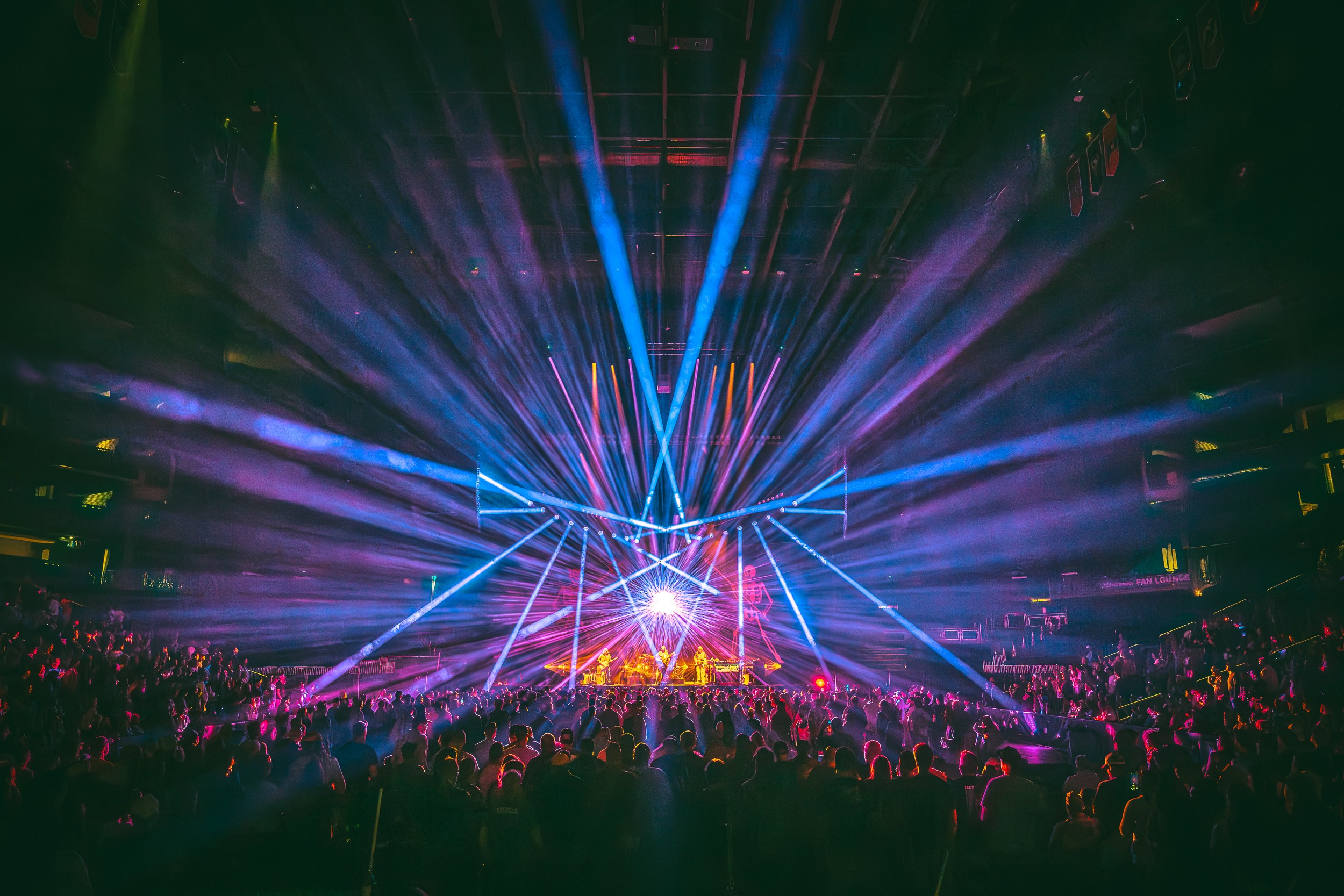
In the end, Muse’s jaw-dropping Friday night headlining set stuck with me the most. Anyone who’s seen the UK trio before knows their stage shows are wildly creative. This night was no different: Nodding to the set’s major themes — fighting back against our dystopian world (and oppressive political systems) and embracing the possibilities of outer space — the set was a bombastic rock show merging prog excess and electronic music’s pulsing humanity.
"Madness” was Kraftwerkian, while "Uprising” sounded even closer to Battles’ complexity than it did originally. And the epic "Knights Of Cydonia” is still astonishing: Introduced this time by Enno Morricone's "Man With A Harmonica,” the song built steadily to its ferocious, fight-the-man conclusion.
Muse are currently promoting a just-released LP, The Wow! Signal. Happily, new tracks "Cryogen” and "Hexagons” fit in easily with older material; in fact, hits such as "Plug In Baby,” "Stockholm Syndrome” and "Supermassive Black Hole” felt supercharged. Later in the set, Bellamy even donned a jacket and glasses with light-up panels for the electro-funky new single "Nightshade Superstar.” (Close enough: welcome back, Daft Punk.)
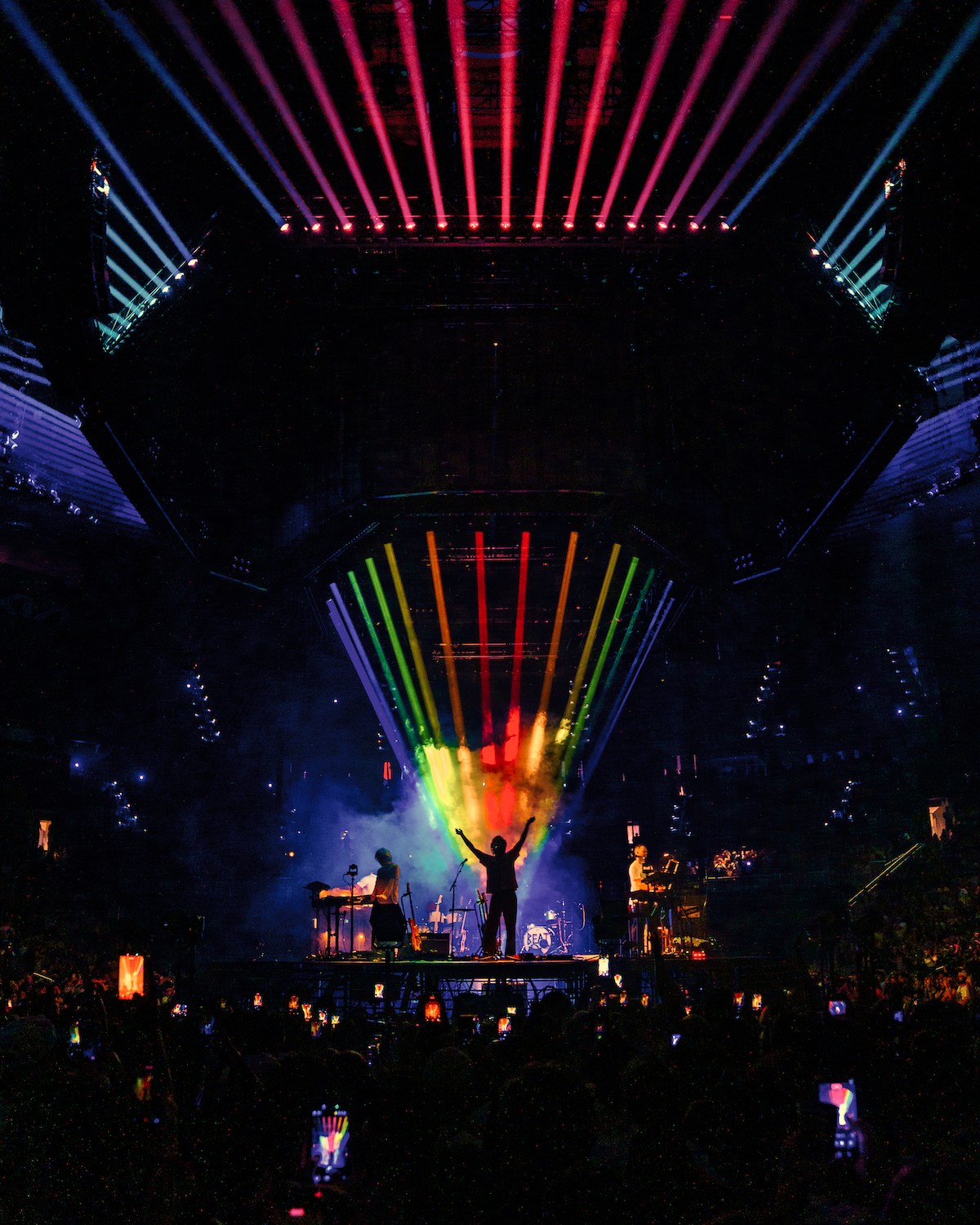
Fittingly, the encore included just one song, "Take a Bow.” A biting condemnation of corrupt leadership, the song was galvanizing and menacing. Pulsating keyboards crescendoed in time with dazzling multicolored cubes hanging from the stage. Bathed in red light, Bellamy lifted his arms to the heavens, resembling a preacher casting hellfire and damnation on sinners. He punctuated this stance by grabbing a guitar and unleashing hellfire riffs as streamers shot over the crowd, a precursor to the song ending in a burst of pyro. As Muse said their goodnights, a fan onscreen could be seen holding up a sign: "The Resistance Lives On.”
Although the Bell Stage was packed (and it was the whole weekend) the crowd left the grounds in a leisurely but orderly way, with no pushing or rudeness. A few people even offered to help us navigate through the pathway back to our hotel. I marveled at how rare it is that this happens, but it summed up the pleasantness of the entire experience. Turns out FEQ is that unicorn of a music festival: one that’s affordable and enjoyable.