
November 27, 2021
- STAYED AT #1:1 Week
In The Number Ones, I'm reviewing every single #1 single in the history of the Billboard Hot 100, starting with the chart's beginning, in 1958, and working my way up into the present. The column is now biweekly, alternating with The Alternative Number Ones on Mondays. Book Bonus Beat: The Number Ones: Twenty Chart-Topping Hits That Reveal the History of Pop Music.
You can accuse Taylor Swift of a great many things, but pretentiousness is not one of them. Taylor Swift is a pop formalist. She believes in tight, structured songwriting. Her bridges tend to be the best parts of her songs, since she knows exactly how to make feelings surge up without breaking the format to which she carefully adheres. Swift started off in the world of commercial Nashville country music, where song architecture is practically a religious tenet. Even as she ventures far afield from those roots, she keeps that dedication. She doesn't play extended guitar solos or go off on free-form spoken-word jags. That's not who she is. A Taylor Swift song will not waste your time.
So when Swift even made vague mention of a 10-minute version of one of her best-loved songs, that fabled extended Snyder Cut took on a totemic significance, at least within her enormous fanbase. When "All Too Well," a heart-wrecked deep cut from Swift's 2012 masterpiece Red, emerged as a fan favorite, Swift built up the song's mythological backstory and actively whetted that collective appetite. I don't know whether or not that mythological backstory is true, and I don't much care. That's the beauty of a mythological backstory.
The mythological "All Too Well" backstory goes like this: One night in 2010 or 2011, Swift was getting ready to head out on tour behind her Speak Now album, and she was going through it. Swift has never confirmed that "All Too Well" is a song about her breakup with Jake Gyllenhaal, the movie star who she dated for a couple of months in 2010, but that's always been the general assumption. Our guy Donnie Darko also seems to be the inspiration for songs like "We Are Never Ever Getting Back Together," Swift's first-ever Hot 100 chart-topper, so she got a lot of material out of that little dalliance.
So anyway, this one night, Swift was rehearsing for her tour, and she was bummed the fuck out. She started playing a four-chord riff and freestyling lyrics, reeling off everything that was on her mind, and her band joined in with her. She kept going for 10 minutes or so, and the sound guy recorded it. Her mom asked the sound guy for a burned CD, and Swift took that freestyled rant-song to Liz Rose, the Nashville songwriter who'd been her main collaborator on her first two albums. Rose helped her turn the rant into a proper power ballad. That's what Swift has said, anyway. That's the backstory.
In truth, there was not a 10-minute version of "All Too Well," at least not in any way that can be accessed. Swift has said that she's lost the recording from that rehearsal. If a recording did exist, I doubt it would've sounded much like a finished song. But people wanted to hear the 10-minute version, so Swift was determined to give it to them, especially since that mission lined up nicely with her effort to re-record all of her old albums. She dug through all her old notebooks and came up with an extended take on "All Too Well" that was more reconstruction than restoration, and then she turned the release of that 10-minute version into a cultural event.
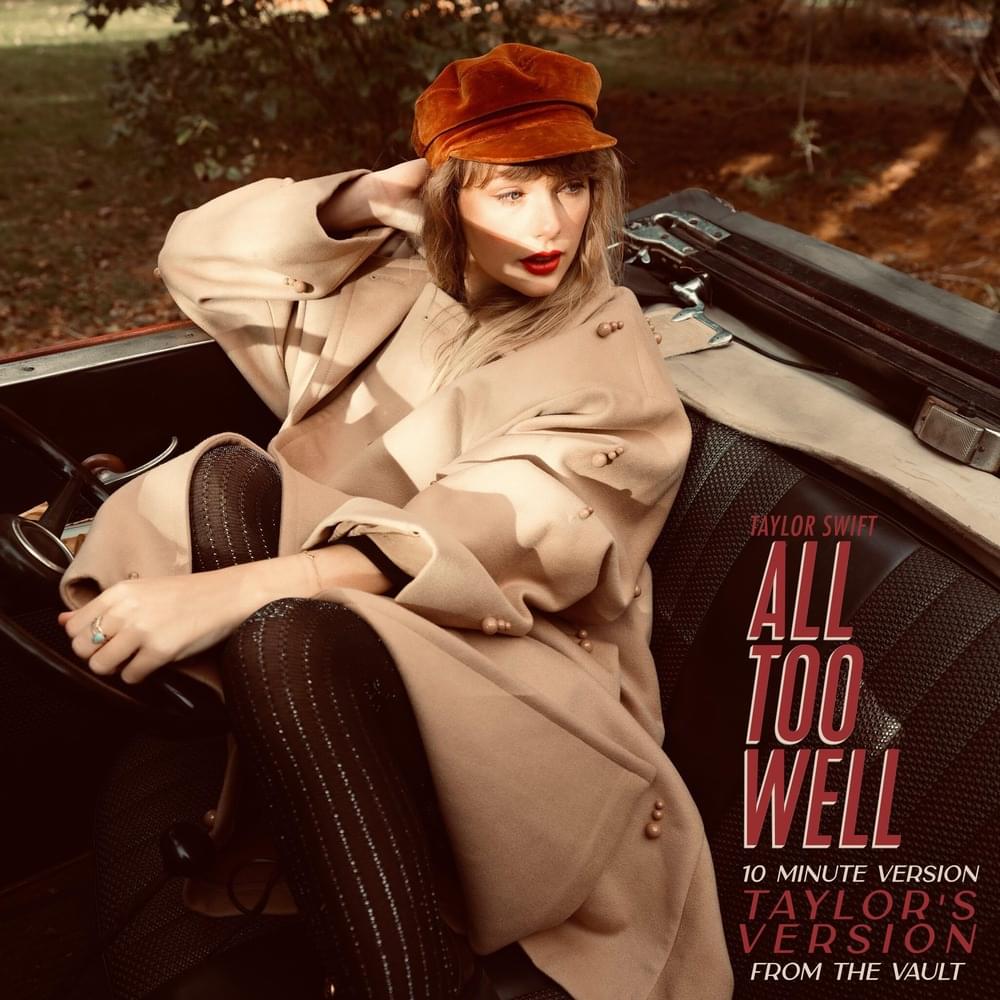
As a result, Taylor Swift now has the longest Hot 100 chart-topper in Billboard history — one more broken record in a career full of them. Before the release of (deep breath) "All Too Well (10 Minute Version) (Taylor’s Version) [From The Vault]," Don McLean's "American Pie" held that record for just shy of 50 years. The eight-minute "American Pie" was long enough that the 7" single had to be split in half, with the first part of the song on the A-side and the second on the B-side. The extended version of "All Too Well" came out at a time when those physical restrictions were gone. Taylor Swift could do anything. She could even get pretentious, if she wanted. She could reach #1 with a song two minutes longer than "American Pie."
There are plenty of critics, people whose tastes I respect, who believe that the 10-minute version of "All Too Well" is an unforgivable indulgence, a bastardization of a one-great song. I am not one of those people. In its original five-minute version, "All Too Well" is a searing, beautifully realized depiction of the effect that a breakup can have on a young person's psyche. The extended version obviously isn't as sharply focused. Some of the lines clank a little harder on my brain. Others don't feel like things that Swift would've actually written in 2011-ish. But the longer version of the song luxuriates in that feeling, and the sweep of it carries me right along.
On the 10-minute "All Too Well," Swift gets off even more vivid, stinging lines than she did in the original. She finds new ways to structure the song so that it never feels like an unformed ramble-rant, new images to call up from memory, new melodic turns to keep things interesting. Where the original recording still had the sting and intensity of fresh heartbreak, the later extension has the soft glow of adulthood working for it — a wiser person looking back on this situation with affection for her younger self and maybe even some exasperated pity for her ex. In pretty much any form, "All Too Well" is a staggering example of what you can do with a pop song, even if that pop song is stretched out to the point that it no longer looks like a pop song. It's some kind of miracle.
Taylor Swift's original version of "All Too Well" was about as indulgent as she ever got, which is probably why the song never became a single in the first place. Over five and a half leisurely minutes, Swift described rose-tinted memories of a romance's early days in discrete snatches of imagery: "There we are again in the middle of the night/ We're dancing around the kitchen in the refrigerator light." There's no fixed chorus; she adjusts the wording throughout to account for changing circumstances. When she hits the volcanic bridge, everything goes wrong: "You call me up again just to break me like a promise/ So casually cruel in the name of being honest." That is a bar. A huge part of Swift's legend comes from lines like that one.
In the opening verse of "All Too Well," Swift mentions leaving her scarf at her ex's sister's house. As the song winds down, she sings about trying to put her life back together again after the big breakup, and she imagines the guy having his own trouble moving on. That's when she uses the scarf as a totem: "You keep my old scarf from that very first week/ 'Cause it reminds you of innocence and it smells like me." Fans did detective work and decided that the scarf was real — that it was a red Gucci scarf that Swift was once photographed wearing when she and Jake Gyllenhaal went out to dinner at the Park Slope restaurant Al Di La, near Jake's sister Maggie's place in Brooklyn. (I used to live in Park Slope and ate at that place a couple of times. My wife and I were broke as fuck back then, so it was a big splurge, but it's some of the best food we ever ate. I hope Swift and the Prince Of Persia liked it as much as we did.)
Ostensibly, "All Too Well" is a country song, a late-period relic from Taylor Swift's time in the Nashville system. She recorded it with Nathan Chapman, the producer of her early records, and he played most of the instruments. In Swift's vocal, you can hear traces of the twang that she adopted on her earliest records. But "All Too Well" functions more as a classic singer-songwriter tearjerker. The song builds and builds, the music gaining steam while the narrator's anger and sadness swell.
On the original Red tracklist, "All Too Well" sits right between two Max Martin mega-pop bangers, "I Knew You Were Trouble" and "22," and the zippy hookiness of those two tracks offset its own seriousness. ("I Knew You Were Trouble" peaked at #2. It's an 8. "22" peaked at #20.) Upon its original release, "All Too Well" debuted at #80, probably thanks to iTunes sales, and then disappeared from the Hot 100. But the song endured.
Taylor Swift fans love "All Too Well." They always did. Despite never getting a push as a single, the original "All Too Well" went gold in 2018. Critics have always loved the song, too. When Rob Sheffield, rock critcism's reigning Swiftie, ranked every Swift song for Rolling Stone, he put "All Too Well" at #1. It's enshrined in the same way at Stereogum, though not by me. In 2018, Soccer Mommy claimed that her song "Scorpio Rising" was her "All Too Well." When he blogged it up, our own beloved James Rettig said that "All Too Well" was "indisputably, the best Taylor Swift song." I actually do dispute that. For me, the best Taylor Swift song is "Long Live," or maybe "Getaway Car," but "All Too Well" is an easy lock for the top five.
"All Too Well" always got huge pops and singalongs at her shows. At the 2014 Grammys, Swift sat at a piano and performed a dramatic take on the song, memorably flipping her hair all around and hitting the camera with an accusatory glare. Swift likes to talk about the song as a shared secret between her and her fans, but she is mainstream culture, so nothing is secret. My colleague Chris Molanphy was a little more precise when he compared "All Too Well" to songs like Fleetwood Mac's "Landslide" or Billy Joel's "Vienna": "the deep cut anointed by fans, a stealth hit everyone assumes was a real hit all along."
Fast-forward a few years deeper into Taylor Swift's endless imperial era. She started off on Big Machine Records, a Nashville indie that industry veteran Scott Borchetta basically founded as a way to release Taylor Swift records. In 2019, mega-manager Scooter Braun announced that his company was buying Big Machine, which gave him ownership over the master recordings for Swift's first six albums. (By that time, Swift had a new deal with Republic that gave her ownership over her later music.) Swift wanted to buy those masters back herself, and she especially didn't like the idea of Braun, whose list of clients has included Swift adversaries like Kanye West and Justin Bieber, being the guy who owned those records. She made a big point that these songs were hers, that she specifically didn't want Braun to take possession of them. In an effort to reclaim that ownership, she said that she would re-record and re-release those six albums.
Now: Taylor Swift is not the first artist to make new versions of her old records in an effort to claim ownership. Over the course of music history, this has happened many times. A 2021 NPR article got into the history, which goes back almost as far as the history of mass-produced recorded music. It's a classic way to pursue a dispute with a record label. Frank Sinatra did it. Gloria Gaynor did it. Squeeze did it. I can remember being a kid at the record store, trying to figure out what to buy and being cautioned away from Suicidal Tendencies' Still Cyco After All These Years because it was nothing but old songs re-recorded. The tactic used to be a chintzy thing — aging bands trying to replicate their early records as closely as possible but rarely capturing the feeling of the originals. They'd always do something wrong, making the songs feel too slick or clinical or just somehow cheesing them up.
But when Taylor Swift launched her re-recording project in 2021, she understood how to market those records. In lots of ways, the spate of Taylor's Version albums had the same issues as some of the previous re-records. Swift worked hard to slavishly clone the sounds of her older records, in some cases bringing in the same musicians and guests to re-do their parts. But she couldn't help sounding a little older and more composed, and she'd occasionally tweak a lyric that hadn't aged well. The records wound up sounding slightly more tasteful, and not in a good way. She made up for it by tacking on songs "from the vault" — tracks that she'd written during the same time that the albums came out. Some were unreleased; others were songs that different artists recorded, with Swift sometimes credited under a songwriting pseudonym.
It's a different thing to re-sell albums when nobody actually has to buy those albums. People did buy Swift's re-recordings, of course. Swift essentially enlisted her biggest fans as soldiers in her war for ownership, and she managed to sell plenty of albums to people who already owned the originals. But when you could just as easily stream either version, it felt a little less egregiously exploitative. And anyway, nobody was getting the re-records confused with the originals. At first, I thought the intent was to make soundtrack supervisors use Swift's re-recordings rather than license the originals, and that did happen plenty of times. But the effort was bigger than that.
Swift started things off by dropping the re-recorded versions of her two best albums, Fearless and Red. (I think they're her best albums, anyway.) Fearless (Taylor's Version) came out in April 2021, shortly after the one-two punch of her COVID indie-folk albums Folklore and Evermore. It was a big success right out the gate, and Swift's re-recorded version of "Love Story," which came out a couple of months ahead, debuted as high as #11. (The original "Love Story" peaked at #4. It's a 10.) Red (Taylor's Version) dropped seven months later, and it got an even bigger rollout.
The new version of Red had lots of selling points. Swift brought in collaborators like Chris Stapleton and Phoebe Bridgers for her "from the vault" tracks. She added in her own versions of country hits that she'd ghostwritten for Little Big Town and Sugarland. And she had the 10-minute version of "All Too Well," the linchpin of that entire sales pitch. Swift went on The Tonight Show to tell the story of why this 10-minute version existed. She performed all 10 minutes on Saturday Night Live, an indulgence that no other musical guest would've been granted. (That episode's host: pre-cancellation Jonathan Majors.) She directed her own music video, using big-name actors to depict the characters and calling it a "short film." She pulled out the stops.
Swift had directed a few of her own videos before "All Too Well." Shortly after its release, she announced plans to write and direct a feature film for Fox Searchlight, and that still hasn't happened. Like so many pop stars, Swift had always clearly wanted to break into Hollywood, and her list of acting credits — Valentine's Day, The Giver, The Lorax, Cats — is tragic. It's basically the only place that she has ever truly failed. Later on, Swift learned that she could conquer the theatrical landscape just by putting her live show onscreen, or by taking over cinemas on album-release week, putting lyrics and screensaver-level graphics up there. She still directs her videos, and maybe her movie will happen one day. But based on the endless "All To Well" clip, I'm not exactly fiending to see her cinematic vision in action.
The "All Too Well" video has Sadie Sink, then a fairly new Stranger Things discovery, as the Swift character and Dylan O'Brien, then coming off of the Maze Runner series, as a pretty convincing Jake Gyllenhaal lookalike. Good casting! Both actors have thrived ever since, and I really liked them in, respectively, Spider-Man: Brand New Day and Send Help this year. In Send Help, O'Brien makes a fantastic cartoonish shitbag. In the "All Too Well" video, he's just a regular garden-variety shitbag, and the song takes long pauses for things like a screamed argument after a dinner party. The actors commit, but the imagery doesn't even come close to serving the song, and the dialog scenes really hurt it. Usually, I embed the music videos at the top of this column, but that's just not a good way to reexperience this song, so I'm putting it down here instead.
But the thing about "All Too Well" is that it can survive that kind of treatment. It can survive the grand red-carpet rollout that Swift gave the re-recording. It can survive being stretched out to twice its original length, too. The song itself is powerful enough to stand among Swift's five-star masterpieces. The expanded version gives more of a chance to luxuriate in its depression and for Swift to get more bars off.
For whatever reason, OG producer Nathan Chapman wasn't involved in Swift's re-recordings. Instead, she laid down the 10-minute "All Too Well" with her regular collaborator Jack Antonoff, and Antonoff and his usual team played the instruments. The expanded version stretches out the original song's build but keeps its structure intact. Swift's verses go on longer, and she adds little details to the story. She throws in more lines that demand to be quoted, and she fills in more details.
When the longer version came out, my favorite bit of online discussion was the line about a "Fuck The Patriarchy" keychain on the ground. Is it possible that this line was in the original set of lyrics that Swift supposedly freestyled in that rehearsal a decade earlier? Is it possible that Jake Gyllenhaal owned a "Fuck The Patriarchy" keychain in 2011? The phrase certainly existed then, though it wasn't quite so heavily used. It feels more like a readymade bit of lyrical irony — Mysterio obliviously flexing his privilege while demanding an end to said privilege — that the older Swift would've written. There were articles in Gawker and Slate over whether that lyric could've possibly been a years-old relic or whether Swift wrote it specifically for the re-recording. I'm guessing Swift added it later, and I'm fine with it. It doesn't bother me, unlike the little CGI chattering beasties that George Lucas retroactively added to all those Star Wars movies. It works.
The 10-minute version of "All Too Well" also has Swift singing, "You kept me like a secret, but I kept you like an oath" — another all-timer bar. It's got the beautifully written part about the narrator's father: "You, who charmed my dad with self-effacing jokes/ Sipping coffee like you're on a late-night show/ But then he watched me watch the door all night, willing you to come/ And he said, 'It's supposed to be fun [extended pause] turning 21.'" It's got the snow falling. These are goosebump moments that weren't there in the original song, and the original song has more than its share of goosebump moments. My daughter's line about the 10-minute version is this: "She's so good at writing bridges, and it's like a bridge on a bridge on a bridge." Yes! Exactly!
Swift sells every piece of the song, too. On some of her re-recordings, Swift struggled to recapture the bratty energy of the original songs, but "All Too Well" never had any bratty energy. Like so many of her best songs, its perspective is prematurely old. She's able to totally seize upon fully grown anger and desperation of "All Too Well." Her vocal here is a better showcase of Swift's acting skill than anything that she has ever done in an actual movie, like the guttural sickness that creeps into her voice when she sings, "You said if we had been closer in age, maybe it would've been fine/ And that made me want to diiiieee." If she retroactively added in the bit about "I get older, but your lovers stay my age," then I can only admire that level of prolonged pettiness. (After the 10-minute version came out, Jake Gyllenhaal turned off his Instagram comments, claimed that the song never had anything to do with him, and bemoaned the pervasiveness of "cyberbullying.")
If that young man has Taylor’s scarf he should return it.
— Dionne Warwick (@dionnewarwick) November 15, 2021
Generally, I get impatient with really long songs. In recent years, as she has moved far beyond the zone where anyone can ever tell her what to do, Swift's writing has grown more labored and flowery, and you can hear bits of that peeking through on the 10-minute "All Too Well." Some of the metaphors — "I'm a soldier who's returning half her weight" — are a little much. But god, I love the 10-minute "All Too Well." For a little while, it became a kind of treat that my daughter and I shared. If we were driving back from someplace and hitting the city limits, we could just put on the long "All Too Well" for the end of the trip. And yeah, me and my daughter's shared affection for Swift in general and this song in particular is reflected in the number at the bottom of this page. Sorry. I have a personal relationship with this shit. At this point, I really hope nobody expects any level of critical objectivity from this column. Critical objectivity doesn't exist! It's a myth!
Speaking of my daughter: I took her to the Eras Tour in 2023. Wrote about it and everything. At those shows, Swift had a cutesy way of introducing the extended "All Too Well," asking if we happened to have 10 minutes to spare. I usually roll my eyes at stuff like that. In that moment, though, I was all the way in. Tens of thousands of people screamed along to every word like we were at Dashboard Confessional's Unplugged taping. Near the end of the song, when Swift sang about seeing the first fall of snow, all these blowers shot off fake snow that drifted down over the audience. It was beautiful. I fucking lost it, just turned into an emotional wreck for a minute there. Couldn't even tell you why. It just happened.
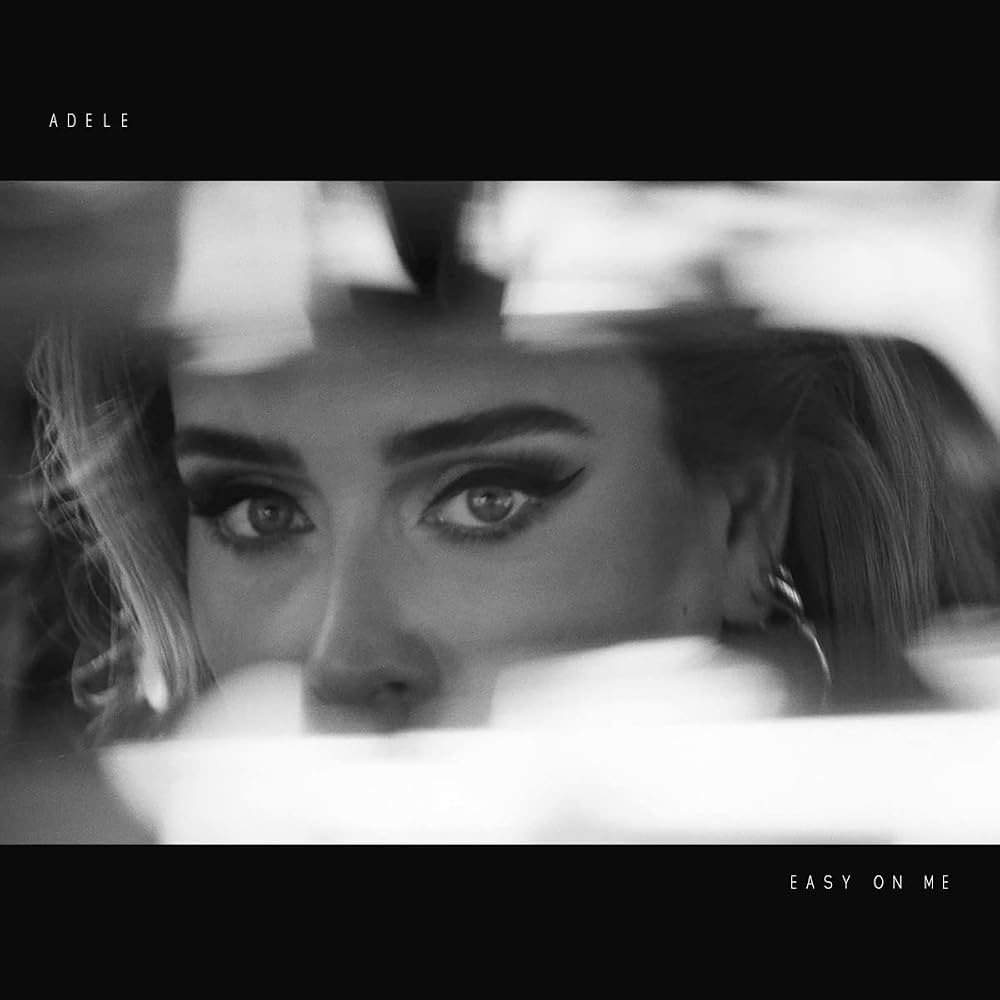
Taylor Swift did everything in her power to make sure that "All Too Well" debuted at #1. The two re-recorded versions of the song, regular length and extended, both counted toward its chart placement, though the longer version ultimately racked up bigger numbers. There was also an alternate version that she recorded at Aaron Dessner's studio. There was the video, the SNL performance, the general promotional blitz. All of it worked. Swift got her long-ass re-recording to the top of the Hot 100, interrupting the reign of Adele's "Easy On Me" before fading quickly. "All Too Well" got one more week in the top 10. Radio stations didn't start playing all 10 minutes or anything. Soon enough, the song went back to fan-favorite status.
Those Taylor Swift re-recordings turned out to be a bigger deal than anyone, with the possible exception of Taylor Swift herself, could've predicted. The re-recorded Fearless is now quadruple platinum, while the re-recorded Red is platinum six times over. Those versions actually helped Swift accomplish her goal of buying back all her original masters; they're hers now. The entire project also helped elevate Swift into the too-big-to-fail megalith that she is today. We're not done talking about them yet, either. Another Taylor's Version version will appear in another of these columns.
GRADE: 10/10
BONUS BEATS: Here's the "All Too Well" cover that the country singer-songwriter Ruston Kelly released in 2019, before Taylor Swift's re-recording campaign even started:
(Ruston Kelly has never had a Hot 100 hit, but his ex-wife Kacey Musgraves will appear in a future edition of this column.)
BONUS BONUS BEATS: Here's the scene in the 2024 motion picture The Fall Guy where Emily Blunt catches Ryan Gosling crying to "All Too Well" in his car:
And here's Gosling and Blunt singing a Barbenheimer-themed "All Too Well" parody on Saturday Night Live:
(Speaking of Barbenheimer: Ryan Gosling's only Hot 100 hit is 2023's "I'm Just Ken," which peaked at #87. Good song.)
BONUS BONUS BONUS BEATS: Here's Gracie Abrams, basically Taylor Swift's Mini-Me, covering all 10 minutes of "All Too Well" at an LA show in 2025:
(Gracie Abrams' highest-charting single, 2024's "That's So True," peaked at #6. It's a 5.)
The Number Ones: Twenty Chart-Topping Hits That Reveal The History Of Pop Music is out now via Hachette Books. Maybe we got lost in translation! Maybe I asked for too much! Maybe this book was a masterpiece until you tore it all up! If you did that, buy another copy here.