

Skip to Content
The Alternative Number Ones

The Alternative Number Ones: Matchbox 20’s “Push”

8:48 AM EDT on August 24, 2026

July 26, 1997

  • STAYED AT #1:1 Week

In The Alternative Number Ones, I’m reviewing every #1 single in the history of the Billboard Modern Rock Tracks/Alternative Songs, starting with the moment that the chart launched in 1988. This column is a companion piece to The Number Ones. The column is now biweekly, alternating with The Number Ones on Mondays.

This was the end. The keg kicked, and the party was over. If you missed it, you missed it.

In summer 1997, the terms "modern rock" and "alternative music" simply ceased to mean anything. Those two terms were always pretty meaningless, but they functioned well enough as a loose and interesting radio format. In the early days of this column, we covered the time that the Billboard Modern Rock chart was mostly focused on college radio stations and on the few commercial stations that adapted what LA's KROQ was doing. Thanks to a series of cataclysmic cultural events — Lollapalooza, Nirvana, the general grunge earthquake and its many aftershocks — "alternative music" became big business, and more and more stations switched to the format. Then they lost all their grasp on whatever "alternative music" was even supposed to be.

I say that the stations lost their grip, but that's not quite right. It's more that the centralized authority governing these stations made a deliberate move away from the various interconnected undergrounds that had always fed the alternative rock format and toward the faceless gargle-bray quasi-grunge slop that would soon take over. In 1996, Bill Clinton signed the Telecommunications Act, which deregulated the radio landscape and allowed one company to own a fuckton of stations. That company, then known as Clear Channel, decided that its modern rock stations should directly target young white male listeners, to the exclusion of all other demographics, and they pushed the music that they thought would corner that market. It was a knowingly cynical move that boosted a whole lot of irredeemably wack music — music like Matchbox 20.

Look, I think I've been pretty clear and honest about the limitations of the modern rock radio format even when it was at its peak. Alt-rock radio always targeted young white men, at least to some extent. It ignored a lot of exciting, groundbreaking music that fell just outside its arbitrarily limited parameters. I'm not just talking about not playing Prince or Public Enemy or whatever. I'm talking about how world-shaking bands like Nine Inch Nails and Rage Against The Machine, in the time that they truly mattered, did shockingly poorly on the Modern Rock charts, since some program directors evidently decided that their music was too abrasive for heavy rotation.

Also, this column has covered a whole lot of commercial records that vaguely approximated grunge aesthetics — stuff like Bush and Live and Silverchair — without any strong roots in any particular underground. That wasn't new in 1997. Things had been pointing in that direction for years. Third Eye Blind's "Semi-Charmed Life," the biggest alt-rock radio hit of summer 1997, had no underground roots, either. (It also didn't pretend to be a grunge song.) So it wouldn't be fair to pinpoint the one week that Matchbox 20 topped the Modern Rock chart as the exact moment that fake-ass pseudo-grunge took over the airwaves. It would overstate the song's importance, and it would also reduce the song itself to a talisman of an ongoing trend that I always hated. I should judge Matchbox 20's "Push" on its own merits. I'll do my best. It won't be easy.

In the course of writing this column, I have had to reassess plenty of wildly overplayed '90s songs that I hated at the time. Often enough, I'll grumpily concede that those hated songs actually go pretty hard, upon reflection. That whole process just happened with "Semi-Charmed Life," and I'm doing my best to let it happen with "Push." My brain will not let it happen. I'll be sitting here at my desk, letting "Push" wash over me for way too many times in a row, thinking, "Hmm, at least the chorus is memorable." And then seconds later, I'll be back to asking myself how the fuck this was ever considered alternative rock. Ultimately, that's just my gut response to Matchbox 20 in general and "Push" in particular.

Look, none of this was Matchbox 20's fault. They were just a band who made the kind of music that they knew how to make. They didn't spend years touring dive bars and getting glowing alt-weekly reviews. They just responded to what was in the air and made the music that they wanted to make. They succeeded wildly and made themselves rich forever. Their success lasted longer than their association with the modern rock radio format. They didn't mean to play a crucial role in the degradation of the radio landscape. It just happened, partly because they made a shitty song that millions of people loved. Looking back years later, I can say that Matchbox 20 themselves are largely innocent here, which doesn't make their shitty song any less shitty.

When Matchbox 20 frontman Rob Thomas did a We've Got a File On You interview with Stereogum in 2023, he got into the band's status as a modern rock radio act: "When we first came out, we were played on college alt stations — we were an alt band. And then by the end of that record, the exact same record, it was like pop Top 40." When he says "college alt stations," I think he means the modern rock big dogs, not actual college radio stations. But Thomas does mention that Matchbox 20's first single "Long Day," a song that didn't go anywhere until the band was already huge, debuted on 120 Minutes. According to the 120 Minutes Archive website, the show aired the "Long Day" video twice in November 1996, even though it never made the Modern Rock chart. In fact, 120 Minutes was playing Matchbox 20 as late as 2000, so maybe Clear Channel doesn't deserve all the blame here.

Anyway, I don't think Matchbox 20 were grunge bandwagon-jumpers, necessarily. I think that they simply made the kind of music that came to them naturally. Rob Thomas' vocal delivery is maybe the perfect textbook example of the yarl, the melodramatic chesty-bellow baritone singing style that absolutely dominated rock radio for way, way too long. Thomas didn't invent the yarl. Neither did Eddie Vedder, the guy who all the real yarlers clearly tried to imitate. For a long time, the best way to blow up on rock radio was to sing in what sounded like an unkind parody of Vedder's voice. Now that I think about it, I don't really know who did invent the yarl, which predates Vedder by a long time. Off the dome, my best guess is John Fogerty.

If anything, Rob Thomas was a little early to the truly overstated yarl. In fact, I'm a little surprised to be writing about Matchbox 20 in this column this early. I tend to group Matchbox 20 in with bands like Creed and 3 Doors Down, acts that I will sadly be obligated to cover in this column. On the timeline of ultra-commercial post-grunge, though, Matchbox 20 are closer to Hootie And The Blowfish or the Wallflowers. Matchbox 20 were a rock band trying to make it, and they played their take on the kind of music that people wanted to hear. If Michael Bolton, a bit of a yarler himself, got his start in 1995, he probably would've made songs that sounded like "Push."

Matchbox 20 have already appeared in the regular Number Ones — as has Rob Thomas, without the rest of the band — so I'm not going to dwell on the group's origin story too much here. The short version: Rob Thomas had a troubled upbringing in South Carolina, then in an Orlando trailer park. His dad was out of the picture, and his mom struggled with addiction and health issues. Thomas' early musical inspirations were country singers like Merle Haggard. Later on, he told SPIN, he got into gothier stuff like the Cure, Front 242, and Nitzer Ebb, and I really wish I could hear any echo of any of that in Matchbox 20's music.

When Thomas started singing, he was mostly trying to get attention from girls. As a young man, he dropped out of high school, went to jail for a few months for stealing a car, and spent a few years hitchhiking around the Southeast, crashing on people couches. Along the way, he sang in a few bands. In that aforementioned Stereogum interview, Thomas says that he actually dropped out of high school because his '80s cover band Fair Warning had a gig — playing next to the pool at the Sheraton in Vero Beach, Florida. They got fired after three days for stealing beer and candy bars from the hotel.

In the early '90s, Rob Thomas became the singer for an Orlando band called Tabitha's Secret. They steadily gigged for a few years, opened at least one Hootie And The Blowfish show, built up a regional buzz, and found themselves a manager. While talking to labels, Thomas became close friends with Matt Serletic, an Atlantic Records producer and A&R guy who'd studied music at the University Of Miami.

In the '80s, Matt Serletic played keyboard in Marching Two-Step, the group that eventually evolved into Collective Soul, probably the first of the true post-grunge cash-in bands. Serletic got his first production jobs when he co-produced Collective Soul's first two albums. Both of those records sold millions, so Serletic had pull. (Collective Soul's highest-charting single is 1995's "December," which peaked at #2. That's one of the tracks that Serletic co-produced, and it's a 6. The distance between that song and "Push" is not vast.)

Tabitha's Secret broke up in 1995, and Serletic's involvement may have had something to do with it. Later on, there were lawsuits. Here's Thomas' story of the breakup, from that Stereogum interview:

The band that we were in before had a really horrible falling out, full of legal problems. It got really nasty and dirty with these two other guitar players from that band. I'll back up: I was in a situation where I didn't understand anything about the music business, and one of the guys that was in the band understood a lot about the music business. And so I wrote all of these songs and he came in one day with a copyright form and said, "Here, we're all going to sign these." So I just signed away my copyrights to everything that I had written. And when I got a record deal, they wanted to sue me for those songs because they said that, "No, we have the copyright to these songs."

So, what I did was – except for "3AM" because "3AM" was an important song to me, it was my first song that I ever wrote that I thought was really good — I went and rewrote that entire first record in six months because I was like, "Fuck you guys. I'll just go write another record so that you don't have any claim to it whatsoever."

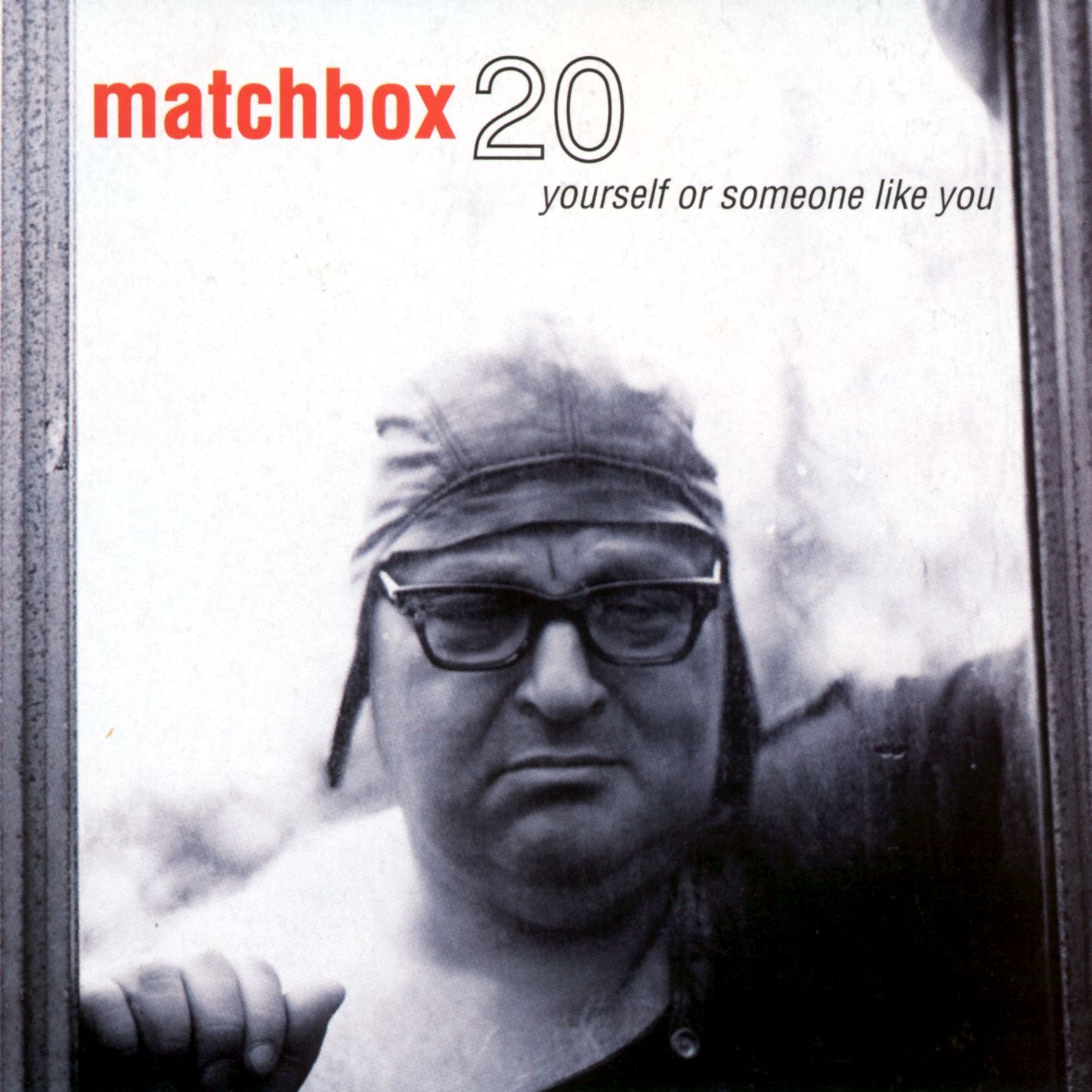
Thomas went off with the rhythm section from Tabitha's Secret to form a new band, and they almost called themselves Big Shoe Spiders before wisely deciding that Matchbox 20 was a better name. Serletic helped Matchbox 20 get signed to the Atlantic subsidiary Lava and produced their debut album Yourself Or Someone Like You. On the exact same October 1996 day that the album came out, Atlantic decided to shut down Lava. "Long Day," the band's first single, was widely ignored, and the album only sold a few hundred copies in its first week. That could've been it for Matchbox 20's big-stage dreams, but fate intervened.

A few months after its release, Matchbox 20's Yourself Or Someone Like You was commercially dead in most of the United States, but it sold pretty well in Birmingham, Alabama. Atlantic figured out that the Birmingham alt-rock station WRAX was playing "Push" and that, as one exec told SPIN, "the ratio of sales to spins was huge." So Atlantic released "Push" as a single, commissioned a video, and gave the song a real marketing, uh, push. Pretty soon, the rest of the country was just like Birmingham.

Rob Thomas and Matt Serletic wrote "Push" together when they were in New York to meet Lava Records boss Jason Flom. Flom couldn't make it to their planned meeting, which left Thomas and Serletic in a hotel room with nothing to do. They decided to try some writing exercises — opening a book, pointing to a random word, and then trying to write a song around that word, as Thomas told Genius years later. They ended up with the word "rusty," which led to the opening line: "She said, 'I don't know if I've ever been good enough, I'm a little bit rus-tyyyy." Somehow, that one line led them to come up with a sensitive growler about a toxic relationship.

For many years, the big rumor about "Push" was that it's about a guy beating up his girlfriend. Thomas later insisted that this whole narrative was driven by Matchbox 20's management, who wanted to get some attention from the controversy, and maybe that's true. In any case, the big chorus — "Ah waoww-na push you ayyy-rowwwn! Whell ah will! Whell ah will!" — is supposed to be Thomas singing about emotional manipulation. He has said that he was in a bad relationship with a girl who cheated on him. He told Genius that he was really singing about himself: "I switched it around so that it was me manipulating someone, saying, 'I want to push you around, and I want to take you for granted.'"

You can see how a listener might get the wrong idea. On "Push," Thomas radiates pent-up resentment. He sings about lying and cheating, admits that he's a little bit ang-gray, and evokes the kind of destructive co-dependence that drives so many ugly relationships. The song isn't especially loud or heavy, but Thomas bawls out that hook with such physical intensity that you can picture this guy's actual intention to do some non-metaphorical shoving. He might sound a little too much like he means it.

In any case, "Push" is not the glorification of abuse that some haters definitely wanted it to be. Instead, it's a yawp of pain about the difficulty of connecting with another person, no matter how much you want to be in it with them. That's why Thomas belts out the song with such vein-popping vigor, and it might also be why he makes those absurd Joe Cocker-ass facial expressions in the song's otherwise drab and forgettable music video. Oh shit, did Joe Cocker invent the yarl? Somebody should get to the bottom of this, but it should be someone who likes this kind of singing, so it won't be me.

In that Stereogum interview, Thomas mentioned the bands that he saw playing big clubs when Matchbox 20 got their start: Live, Bush, Counting Crows, especially Toad The Wet Sprocket. As it happens, every last one of those bands has been in this column, and you can hear echoes of all of them in "Push." Matchbox 20 didn't just invent post-grunge butt-rock from whole cloth; they responded to what they heard around them.

Here's something that I can say for "Push": It at least has a bit more oomph than some of the ultra-forgettable uncanny-valley simulated grunge that followed. It has a chorus that sticks in my head more often than I'd like, and its shiny churn builds in a linear way that makes sense to me. Also, it's kind of fun to imitate Rob Thomas. I definitely wouldn't have called "Push" a pop song when it was huge, but that's ultimately what it is. It's a power ballad, more or less. The problem is that it's the sleepiest, most turgid kind of power ballad I can imagine.

Even why I actively try to engage with "Push," it turns into pure wallpaper, and not even the good kind of wallpaper that adds a little bit of color to the room. It's oppressive slate-gray wallpaper. Even when it hits its climax and Thomas truly pushes his delivery to cartoonish extremes, the song is boring. If anything, it's even more boring in retrospect because I know that it laid the path for so much more boring shit. I am really doing all I can to be fair here, to not hold Rob Thomas personally responsible for all the marble-mouthed growlers that followed him in the same way that I don't hold Eddie Vedder personally responsible for Rob Thomas. But old grudges die hard.

"Push" only topped the Modern Rock chart for one week, but the song was on that chart for six solid months. In its time, "Push" crossed over to mainstream rock, adult contemporary, and pop radio. If it had been commercially available as a single, "Push" probably would've enjoyed a serious Hot 100 run. The fact that it wasn't available as a single probably helped Yourself Or Someone Like You sell in absolutely bananas numbers. (Thanks to iTunes sales and streaming, "Push" went triple platinum in 2023.) Before the song even reached #1, the album was platinum, and it was just getting started.

Yourself Or Someone Like You never made it to #1 on the album chart, but it lingered near the top of that chart for a long time, and it kept steadily selling for years. A bunch of that record's other singles caught on, too. Matchbox 20's next big song was "3AM," which dated back to the Tabitha's Secret days. (If you didn't click play on that Tabitha's Secret video embedded earlier in this article, it's them playing "3AM" at some kind of Florida-specific music awards show.) If anything, "3AM" blew up even bigger than "Push."

With "3AM," I can at least say that I get it. It's a song. It's just as corny and overwrought as everything else Matchbox 20 ever did, but it's got a bigger hook and a decent little swamp-choogle riff situation. I can hear Rob Thomas' affection for Toad The Wet Sprocket. I can't believe I'm using that to praise the song, but there it is. If it's fun to imitate Thomas on "Push," it's way more fun to imitate him on "3AM." ("3AM peaked at #3, appropriately enough, at the tail-end of 1997. By that time, Yourself Or Someone Like You was triple platinum, and it was still just getting started. And I said, "Bay-beh! It's '3AM,' I think it's a 6!")

At some point, Matchbox 20 went out on tour with Third Eye Blind, the other big alt-rock radio breakout band of summer 1997. They did not get along. Like so many other people Rob Thomas fucking hated 3EB frontman Stephan Jenkins. In 1999, Thomas told SPIN, "He made fun of me — called me a fat guy. Screw you! He has no soul whatsoever... He and his band got into a fight once because he wanted to put just his picture on their T-shirt. I just think, 'You are walking, breathing, living cheese!'" (I can't source it, but based on a Reddit thread that I found, Jenkins apparently responded by saying, "He's obsessed. He won't shut up about me. I don't know him... I don't have any idea what he weighs.") Gotta say: Team Rob Thomas on this one.

Over time, Matchbox 20 became less present on alternative radio, and that's probably because the band kept crossing over and getting bigger on a mainstream level. Their single "Real World" only reached #13 on the Modern Rock charts; it did better on pop radio. But Matchbox 20's alt-rock connection allowed Thomas' cazy-huge Santana collaboration "Smooth" to get some airplay on those stations — enough, in any case, that it reached #24 in 1999. Right before that happened, Yourself Or Someone Like You went diamond. At this point, the album has sold 12 million copies in the United States alone.

At some point, Matchbox 20 changed their name to Matchbox Twenty, which I hate and refuse to acknowledge. They finally got around to releasing their sophomore album Mad Season in 2000. Lead single "Bent" was the last Matchbox 20 song ever to appear on the Modern Rock chart, where it peaked at #16. But that same song went all the way to #1 on the Hot 100. I guess that's proof that Matchbox 20 are the rare band to get too big for alternative rock, or maybe that they never belonged there in the first place. Alt-rock stations never stopped playing U2 or the Red Hot Chili Peppers, but they were ready to let Matchbox 20 go.

Do people still use the term "alternative rock" to describe Matchbox 20? I honestly have no idea. I'm not a part of those conversations, and that is just fine with me. The band has continued to have a big career, going platinum even with late-period albums that nobody cares about and touring huge venues to this day. Where The Light Goes, from 2023, was the first Matchbox 20 album that didn't go platinum at least once. Just last week, the band played the Illinois State Fair. While swinging his mic stand around, Thomas absolutely walloped the shit out of guitarist Paul Doucette, smacking him in the side of the head and shattering his in-ear monitor, to the point where he was picking plastic shards out of his ear for a long time.

Rob Thomas didn't do that on purpose. It was a mistake, and they laughed about it onstage right after it happened. From what I can tell, Thomas seems like a truly solid dude. I have no particular ill will toward him. I don't blame him for damn near crushing his bandmate's skull, the same way that I don't blame him for ruining alternative rock radio forever. It's just something that happened.

GRADE: 3/10

BONUS BEATS: Through sheer coincidence, we're getting consecutive two late-period Ryan Gosling Bonus Beats appearances, between "All Too Well" and this. Here's the genuinely funny scene in the 2023 Greta Gerwig picture Barbie in which all the Kens achieve peak happiness by warbling acoustic-guitar covers of "Push" at all the Barbies:

As far as I know, none of the actors in that scene have any Modern Rock chart hits, but god knows I'm probably missing something. By the way, Rob Thomas was not insulted at the way that Barbie used "Push." After the movie's release, he told USA Today:

I did this thinking I’d be the butt of the joke, and I was fine with that. I’m pretty thick-skinned. But Julie Greenwald [from Atlantic Records] came to the Hollywood Bowl a month or two ago. She had just seen the movie and was like, "You come out of it loving Ken and loving 'Push.'" And I was like, "Aww. All right, really good!"

Then he went on to talk about having a crush on Greta Gerwig. Who among us. Anyway, here's the studio version of Ryan Gosling's "Push" cover:

GET THE STEREOGUM DIGEST

The week's most important music stories and least important music memes.