
When Sasha-Frere Jones went on about the whiteness of indie rock, and on-line scribes gave the New Yorker more html space than it had since the Internet was invented, we found the most convincing and colorful counterarguments via Playboy blogger Tim Mohr. In what appears to be an attempt to become the Dale Peck of rock 'n' roll, Mohr's back (thanks again for the tip, Ningun), this time with his sights (and site) set on David Brooks's NY Times op-ed piece "The Segmented Society," wherein Frere-Jones is mentioned, as is Steven Van Zandt, who it turns out, isn't as generous as his Against Me!-loving boss in his opinions of today's youth. Get off my lawn, you damn kids, etc...

[Brooks Pic via PBS]
Brooks's main thesis is that "we live in an age in which the technological and commercial momentum drives fragmentation. It?s going to be necessary to set up countervailing forces ? institutions that span social, class and ethnic lines .... Music used to do this. Not so much anymore." Sounds familiar. Of course, we need to look to a time when things were rosier, more communal, more '70s. To quote Mr. Brooks:
The 1970s were a great moment for musical integration. Artists like the Rolling Stones and Springsteen drew on a range of musical influences and produced songs that might be country-influenced, soul-influenced, blues-influenced or a combination of all three. These mega-groups attracted gigantic followings and can still fill huge arenas.
But cultural history has pivot moments, and at some point toward the end of the 1970s or the early 1980s, the era of integration gave way to the era of fragmentation. There are now dozens of niche musical genres where there used to be this thing called rock. There are many bands that can fill 5,000-seat theaters, but there are almost no new groups with the broad following or longevity of the Rolling Stones, Springsteen or U2 ... Technology drives some of the fragmentation. Computers allow musicians to produce a broader range of sounds. Top 40 radio no longer serves as the gateway for the listening public. Music industry executives can use market research to divide consumers into narrower and narrower slices.
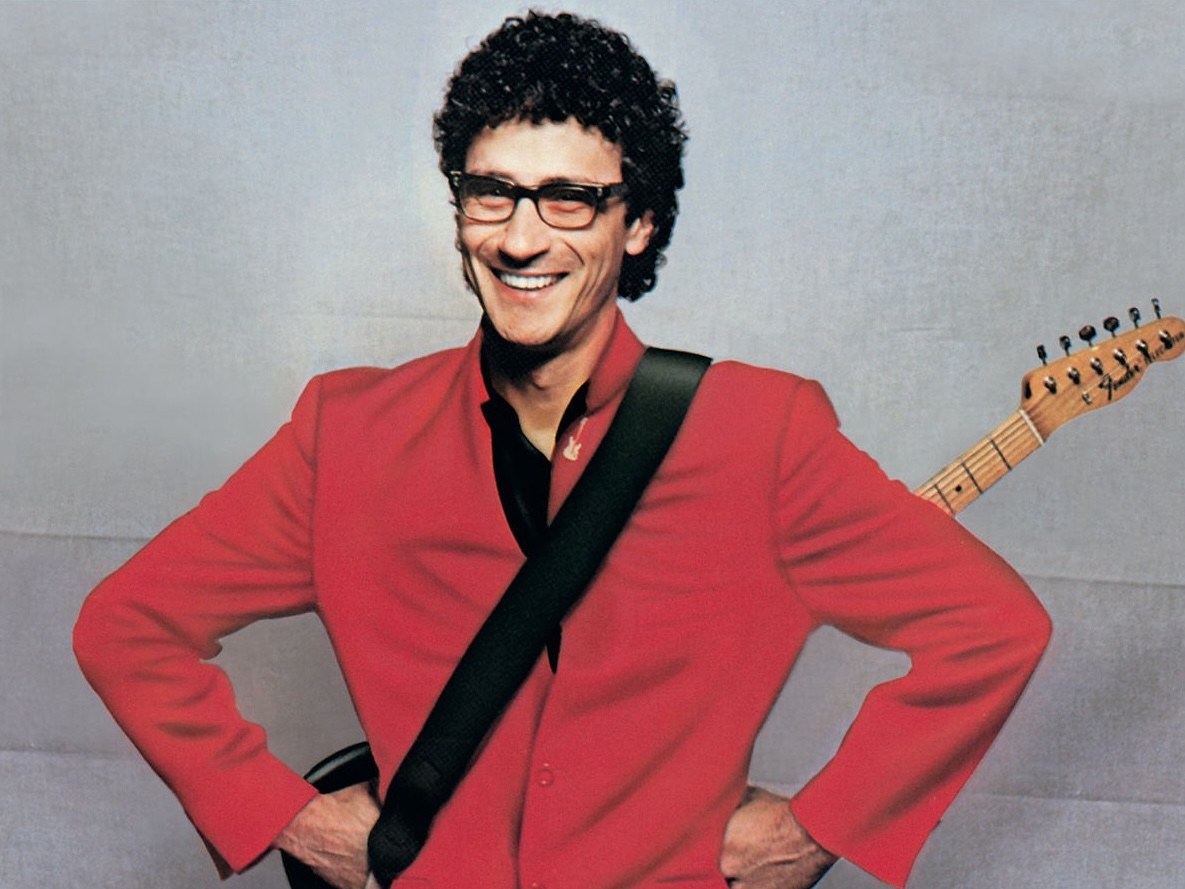
And onward into miscegenation rock and all that. Van Zandt, head scarves and all, shows up as a guitar-toting example to illustrate Brooks's thesis:
[Van Zandt] argues that if the Rolling Stones came along now, they wouldn?t be able to get mass airtime because there is no broadcast vehicle for all-purpose rock. And he says that most young musicians don?t know the roots and traditions of their music. They don?t have broad musical vocabularies to draw on when they are writing songs.
As a result, much of their music (and here I?m bowdlerizing his language) stinks.
He describes a musical culture that has lost touch with its common roots. And as he speaks, I hear the echoes of thousands of other interviews concerning dozens of other spheres.
What to do besides bowdlerize? Van Zandt's plan is to weave American musical history into the high school curriculum. This way the kids learn about "Muddy Waters, the Mississippi Sheiks, Bob Dylan and the Allman Brothers." Right, all those bands that influenced some Boomer rockers. As Brooks notes, "He?s trying to use music to motivate and engage students, but most of all, he is trying to establish a canon, a common tradition that reminds students that they are inheritors of a long conversation." But who's canon is it? This is where it's fun to turn to Mohr, who in an article called "Clueless," right off the bat brands Brooks a jackass. And now we quote Mohr at length to seal the deal:
"People who have built up cultural capital and pride themselves on their superior discernment,? Brooks asserts, ?are naturally going to cultivate ever more obscure musical tastes.? This is one of those broken-record complaints of the square. People without a clue about music console themselves with the false notion that people who do are just willfully obscurist. (Just as geeks console themselves with the false notion that all jocks are dumb.) In reality, it?s just a question of whether you are open to new music or not. If your tastes ossified when you exited the frat house basement upon graduation, you will be damned to write pieces about thirty and forty year old bands and how great everything was in the old days because for you, everything going forward is obscure, and becomes more so each year removed from the last time you actively listened to new music. Naturally, if you continue to listen to new music, you?duh?listen to new music. The music isn?t obscure; it?s obscure to David Brooks and others of his ilk for whom music is set in aspic.
For people who are open to new music, this is a golden era?the greatest era, in fact. Fragmentation hasn?t been foisted upon us by marketers or music corporations. Nothing could be further from the truth. (The incessant whining of the music industry and the closure of the Tower records chain might have alerted a more astute journalist to the fact that the changes underway are not industry-driven.) The major music labels would love to be able to continue flogging diamond-selling LPs on the buying public forever; segmentation is the last thing they want. Fragmentation has been achieved despite marketers and the industry.
In the past, the industry functioned as a valve. On one side of the valve new music bubbled around in a relatively small and impoverished underground. On the other were record buyers?that was where the big money was. The valve itself was controlled by the few major music conglomerates?they decided what and how to market to buyers. That set-up began to show signs of vulnerability with the re-emergence of independent record labels in the 1980s and into the 1990s. And now, with digitalization, that constricting valve?which was only possible because of the limitations of physical distribution?is a useless relic.Consumers and musicians can get in touch directly, meaning there is no longer any distinction between underground and mainstream. Combined with the plummeting costs of recording, sequencing and mixing, this has caused a thrilling proliferation of new music?but stokes fears among those who are unsure how they will discover new music now that they must be much more self-reliant in this area (not to mention the fears it stokes in the industry, which can no longer extort fans to buy albums from what are really mostly singles artists).
Which is to say, Brooks has it exactly backwards. Whereas he bemoans marketing as the source of all this evil fragmentation, the opposite is true?he is at sea because marketers are no longer able to consolidate the music market to create albums capable of selling ten million copies.It hardly needs saying, but for anyone who loves music, this is a good thing?and one certainly hopes Little Steven, who, quoted in the Brooks piece, also champions little-known garage bands of today as well as bands from bygone eras who were unable to navigate their way past the industry gatekeepers, feels the same way.
But perhaps not, judging by the article?s next egregious point. Brooks attributes to Little Steven the idea that ?most young musicians don?t know the roots and traditions of their music. They don?t have broad musical vocabularies to draw on when they are writing songs.? This is a perfect example of the way baby boomers are blinded by their self-absorption. Yes, Keith Richards knew Bo Diddley, Chuck Berry and Jimmy Reed. But it?s not as if the possible antecedents for music stopped with Chicago blues. Take the contemporary new rave scene. David Brooks may not be aware of the Prodigy, but the Klaxons sure as hell are, and those are the roots of their music. (The Prodigy were also assimilating a number of influences themselves, especially hip-hop and acid house.) Same goes for Gang of Four and their legacy among the angular guitar bands of the last few years, like Bloc Party and Franz Ferdinand. And even for acts from the same baby boomer era Brooks addresses?whether they were non-rock like Serge Gainsbourg or experimental like Silver Apples?who became part of the musical vocabulary of later generations. Today?s rockers are not ahistorical, they just don?t over-inflate the importance of baby boomers? canonical history, as the boomers themselves do.
One of the greatest things about pop music is the way it changes. And its transience is something to be celebrated, not decried. Pop has never operated in a vacuum; it?s always been tied to youth culture niches. Sometimes it?s trivial??The Twist,? ?The Humpty Dance,? Soulja Boy?s ?Crank That.? Sometimes it feels more substantial?the songs that soundtracked the Summer of Love, anti-Thatcherite protest music, Eminem?s anti-Bush ?Mosh? released during the run-up to the 2004 election. And even rock addressing seemingly timeless themes like young love is rooted in time and place?think about the difference between the Beach Boys? ?Surfer Girl? and Janis Joplin?s ?Me and Bobby McGee,? despite their having been recorded just a few years apart in the same state.
Songs and styles mark ephemeral moments in time. And time did not stop when boomers? listening habits calcified. The evolutionary course of pop is inexorable?and should be. God forbid we get stuck listening to the Eagles, Pink Floyd and Boston (to name a few artists with the diamond-certified albums Brooks seems to cherish). Man, I lived through classic rock radio as boomers like Brooks spent the 1980s remembering their glory days. If they?re the ones defining it I say screw ?this thing called rock,? as Brooks describes it, and fuck their need for self-affirmation through mass shared experiences like a Bruce Springsteen arena show.
Damn? We disagree that "The Humpty Dance" was trivial, but otherwise, some really great points.