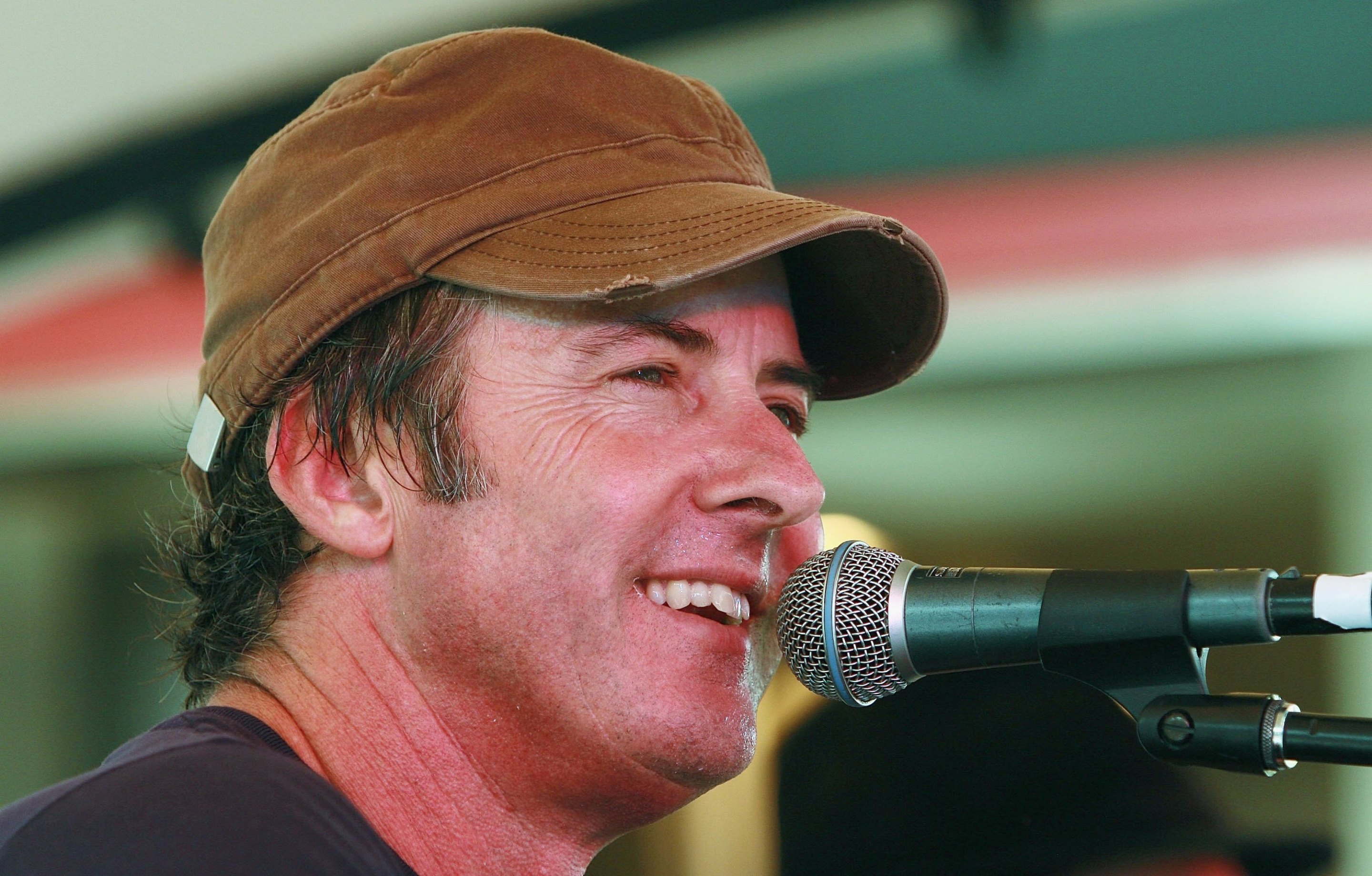
Rob Hirst, the founding drummer for Australian new wave greats Midnight Oil, has died. Hirst died due to complications from pancreatic cancer. "After fighting heroically for almost three years, Rob is now free of pain — 'a glimmer of tiny light in the wilderness,'" Hirst's Midnight Oil bandmates write in a statement on their socials. "He died peacefully, surrounded by loved ones." In a separate statement shared to ABC, the band writes, "We are shattered and grieving the loss of our brother Rob. For now there are no words but there will always be songs." Hirst was 70.
Hirst was born in 1955 in the southwest Sydney neighborhood of Camden. His first public musical endeavor was a teenage band called Schwampy Moose with guitarist Jim Moginie and bassist Andrew "Bear" James that mostly played Beatles covers. When the members headed off to college, the band stayed together and changed its name to Farm, a sly acronym for "Fucking All Right Mate." With an ad in the Sydney Morning Herald, they recruited singer Peter Garrett in 1975. By the next year, they'd changed their name to Midnight Oil.
Midnight Oil's high-energy surf-rock sound eventually evolved into a form of nervy, anthemic new wave informed by the members' burgeoning progressive political interests, including nuclear disarmament, Aboriginal rights, and environmentalism. After their self-titled debut album in 1978 and sophomore album Head Injuries in 1979, James was replaced by Peter Gifford on bass. By 1981's Place Without A Postcard, they were signed to CBS and recording in England with producer Glyn Johns, who clashed with the band.
The band's breakthrough, both at home and abroad, would properly begin with 1982's 10, 9, 8, 7, 6, 5, 4, 3, 2, 1, recorded with another acclaimed British producer, Nick Launay. As they moved on to 1984's Red Sails In The Sunset, Midnight Oil's profile continued to rise, including through participation in high-profile benefit concerts and Garrett's run for political office. With new bassist Bones Hillman in tow, 1987's Diesel And Dust was the big one, spawning signature hit "Beds Are Burning" and turning Midnight Oil into worldwide stars. They kept kicking out hits with 1990's Blue Sky Mining; "Blue Sky Mine" and "Forgotten Years" topped the US alternative chart in 1990.
Hirst's playing was a big part of Midnight Oil's appeal. As the great music journalist Michael Azerrad put it in a post today lamenting Hirst's death, "Wow, he was great: played with immense flair and power, a sonic embodiment of the band's righteousness." Hirst also boasted songwriting credits on basically all of the band's biggest hits, which earned him multiple honors from the Australasian Performing Right Association (APRA).
Midnight Oil continued regularly releasing albums up through 2001's Capricornia, but Hirst began to expand his musical interests quite a bit. In the early '90s, he formed the band Ghostwriters, which remained an ongoing concern for two decades. In 2000, he joined the pre-existing blues rock band Backsliders. With Backsliders' Dom Turner, he formed the experimental rock duo Angry Tradesmen. In 2006, he released an album with Olympic athlete Paul Greene as Hirst And Greene. And in 2010, he formed surf-rock combo the Break with bandmates including Violent Femmes bassist Brian Ritchie. He later collaborated with his eldest daughter, Jay O'Shea, of the country duo O'Shea.
All along the way, he continued his political and philanthropic efforts. His book, Willie's Bar & Grill, chronicled Midnight Oil's experiences touring the United States following the 9/11 attacks. When Midnight Oil became a going concern again in the 2020s with new album The Makarrata Project and Resist, Hirst was still there, bringing his usual skill and bravado to the drum kit.
Below, revisit some of Midnight Oil's classics.