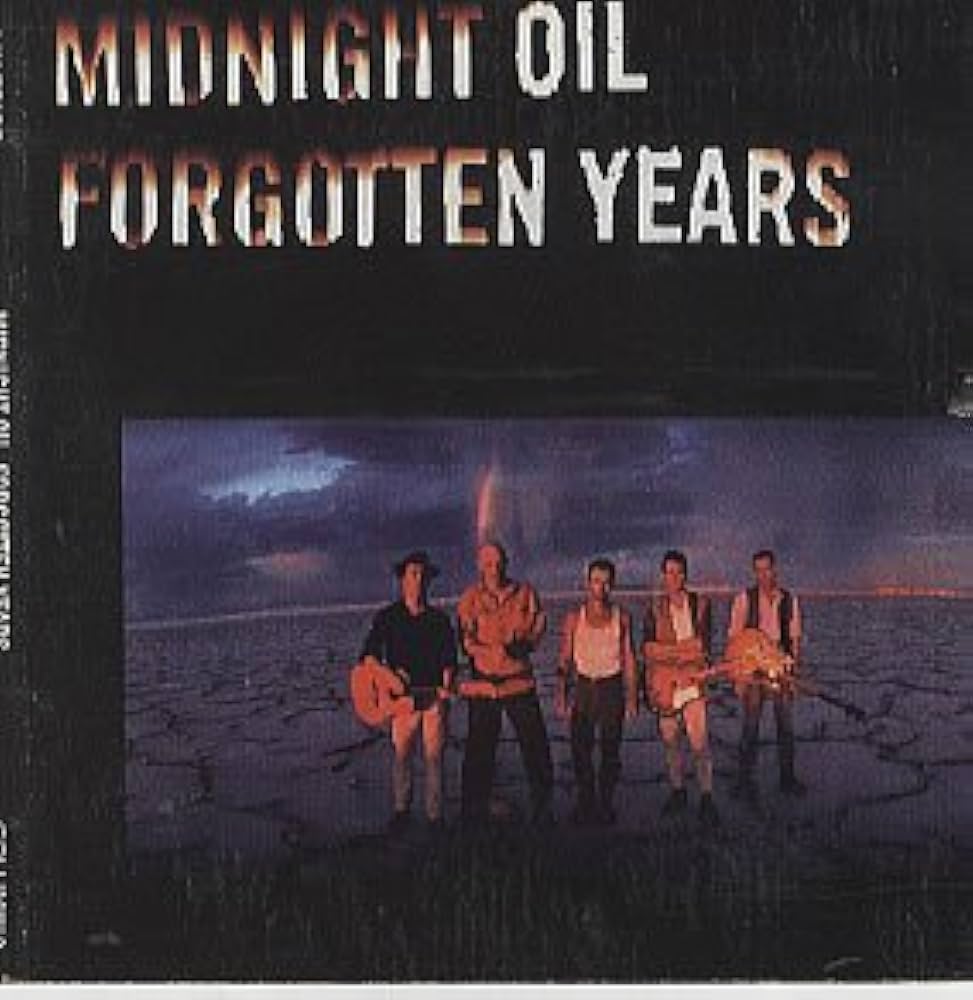
May 19, 1990
- STAYED AT #1:1 Week
In The Alternative Number Ones, I'm reviewing every #1 single in the history of the Billboard Modern Rock Tracks/Alternative Songs, starting with the moment that the chart launched in 1988. This column is a companion piece to The Number Ones, and it's for members only. Thank you to everyone who's helping to keep Stereogum afloat.
For the first half of the 20th century, global geopolitics really fucked Australia. The country technically became independent from the British Empire in 1901, but it remained part of the Commonwealth of Nations. That meant Australian soldiers fighting in British wars, suffering and dying all the way across the world from their homes. During World War I, Australian troops went through unimaginable hell in Gallipoli and the Middle East. In a country of five million people, 60,000 soldiers died. Eric Bogle's classic 1971 folk song "And The Band Played Waltzing Matilda" depicts the Australian experience in Gallipoli in vivid, horrifying detail. The Pogues' version of that song really fucks me up.
Another 40,000 Australians died in World War II -- in North Africa, in Italy, in the Pacific Theater. Many faced starvation and disease in Japanese prison camps. Australian civilians never had to face anything like the London Blitz, but hundreds were killed in Japanese bombing runs and in one submarine attack on Sydney. Australian troops fought and died in Korea and Vietnam, too. None of these wars were theirs. Theoretically, Australia could've sat out all of these conflicts, safe in the knowledge that nobody would invade. But that's not how geopolitics work.
By 1990, Australia had really limited its involvement in global conflicts. Australian troops were on the ground in the Gulf War, but none were killed. Still, the horrors of past decades existed within living memory. When Midnight Oil recorded "Forgotten Years," their tribute to the soldiers of past wars, World War I veterans still walked the earth. John Campbell Ross, the last surviving Australian veteran of that war, died in 2009. He was 110.
That's what "Forgotten Years" is about -- not John Campbell Ross specifically, but the idea that these older generations had fought and died so that their kids would live in relative peace. Midnight Oil were a fiercely, fervently anti-war band, and I'm sure they understood that you can't earn peace through war. The War To End All Wars did not end all wars. But "Forgotten Years" isn't a song about cause and effect. It's about a kind of emotional truth. It's about surviving through dust, blood, and fire, and then looking out, in your old age, on younger generations who will never have to endure what you endured -- the swirl of triumph and bitterness that must come out of that. I don't know how Midnight Oil turned that idea into a motivational fists-up arena-rock anthem, but that's what they did.
It must be so fucking weird to be a socially conscious rock star. Rock stardom, as an institution, is about indulgence, excess, hedonism. You're supposed to live on the edge, drugging and fucking and accessing the animal part of your brain that allows you to become a wish-fulfillment figure for the downtrodden masses. But when you get famous while singing protest songs about those downtrodden masses, then you have to find some other way to channel that vainglorious grandeur. Responsibilities come with that. It's kind of an incoherent position, and you can see its contradictions at work whenever, for instance, Rage Against The Machine reunite and then immediately break up again.
Midnight Oil ascended to global rock stardom in a strange moment, though a series of circumstances that nobody could possibly replicate. They earned that stardom. Midnight Oil spent many years playing Australian bars and clubs, hardening their chops and building their goodwill. They wrote great songs, fire-eyed anthems about colonialism and oppression, and they delivered those songs with widescreen conviction. Midnight Oil hit huge around the world with "Beds Are Burning," their 1987 anthem about living on stolen Aboriginal land and feeling compelled to give it back. In America, where "Beds Are Burning" was a full-on mainstream rock hit, I can't imagine that more than a tenth of the song's audience understood its lyrical implications. It just sounded cool. That was enough.
"Beds Are Burning" came from Diesel And Dust, Midnight Oil's sixth album. (I can't see that title without thinking of Mad Max, and I don't want to.) By that point, Midnight Oil were seasoned veterans who understood what they wanted to say in the world. They led off their 1990 follow-up Blue Sky Mining with its sort-of title track "Blue Sky Mine." In America, that song topped the Modern and Mainstream Rock charts, and it cracked the Hot 100, too. American audiences presumably did not know the particulars of the people who died around the asbestos mine in Wittenoom, the specific subject of that song, but we could definitely tell that it was a protest song. The sentiment rang clear.
I have to believe that Midnight Oil released "Blue Sky Mine" first as an intentional statement. At least a few people thought "Beds Are Burning" was a sex song. Nobody could've made that mistake about "Blue Sky Mine." "Forgotten Years," the single that Midnight Oil released after "Blue Sky Mine," isn't really a protest song, though it does represent the feeling of responsibility that the band clearly always felt. Even if they weren't calling out the powerful for their sins, Midnight Oil were again trying to speak for people who might not have otherwise been heard. This time, they took on the mantle of Australia's aging veterans, the people who watched their kids living in a peace that they didn't get to experience when they were young enough to enjoy it. That's a heavy task. Most bands wouldn't attempt it.
Until researching Midnight Oil for this column, I had no idea that Peter Garrett, the band's big bald motherfucker of a singer, wasn't the one who wrote most of their songs. That's crazy. Midnight Oil are definitely one of those bands where you've got one vivid, distinctive singer up front and then a bunch of faintly anonymous dudes behind him. That dynamic repeats itself all the time, and it's not necessarily a bad thing. In every band, there's a division of labor, a set of roles that people fall into. Even in the most egalitarian unit, someone has to stand out front and forge personal connections with the people in the audience. It's usually the singer. In Midnight Oil, it's definitely the singer.
Peter Garrett was great at barking and seething and jumping around and projecting the sense that he was the voice of the voiceless. Maybe he was, but he usually wasn't the person writing the actual words that he delivered so passionately. Their Modern Rock chart contemporaries Depeche Mode had very little in common with Midnight Oil, but they had the same system at work, with Martin Gore writing the words that Dave Gahan sang. Must've been weird for everyone involved!
In the case of "Forgotten Years," the song's primary driving force was Rob Hirst, Midnight Oil's longtime drummer. Hirst's family had plenty of experience serving in World War II. His father fought in World War II. His grandfather fought in both World Wars. Hirst's wife's grandfather was buried in the Verdun cemetery where Midnight Oil eventually shot the stark black-and-white "Forgotten Years" video. That's what he was thinking about when he came up with the lyrics. Jim Moginie, Midnight Oil's guitarist and keyboardist, wrote most of the music, and Hirst and Moginie shared songwriting credit.
Peter Garrett apparently helped rewrite the lyrics so that he could summon the right fervor to deliver those words, but he didn't get writing credit. In 1990, Garrett told The Washington Post that the song "credits those who served, remembering that at times it was folly, as in Vietnam, and that at times it was survival, which is what World War II was." Garrett might not have written the lyrics, but he was still the one explaining those lyrics in interviews. Such is the life of the lead singer. But Rob Hirst was happy to talk about the song's meaning, too.
"Forgotten Years" sounds huge. If anything, I think it sounds even bigger than "Beds Are Burning," a song that sounded so big that MTV couldn't not put the Aboriginal-land-rights song into heavy rotation. The guys in Midnight Oil were all pushing 40 when they recorded Blue Sky Mining. They were done experimenting, and they'd figured out how to maximize the impact of their sound. If the song's lyrics capture conflicted feelings, the music does something similar without compromising its anthemic simplicity. "Forgotten Years" is a hard song. It's not that far-removed from early-'80s UK punk. I hear echoes of oi bands like Blitz and Cock Sparrer in its fiery force, and I don't think I'm just making that connection because of Peter Garrett's hair situation or lack thereof. But it's pretty, too.
"Forgotten Years" might be a folk song? There's definitely a whole lot of acoustic guitar on the track, and it's that strummy and propulsive kind of a acoustic guitar. There's a bit of an Edge-style twinkle-riff in there, too, and a blazing distorted lead that flares up every once in a while. But the guitars aren't the lead instruments on "Forgotten Years." The bass really carries the melody, busily but quietly burbling away and adding depth and resonance. It's a direct midtempo stomper -- a little simpler than the big stadium statements that U2 and Bruce Springsteen were making around the same time, and maybe a little less charismatic, but just as huge.
When Blue Sky Mining came out, some reviews complained that it was overproduced. The sound is definitely huge and slick, but I don't hear that as a problem. It's not like Midnight Oil went all in on the gated-reverb drums and blaring synth-horns of that era's pop music. Instead, the sound is just rich and catchy enough to contain Peter Garrett's overwhelming intensity. And Garrett sounds fired up on this thing.
There are moments on "Forgotten Years" where Peter Garrett, inhabiting the role of an aging military veteran, broadcasts a triumphant determination: "Our sons need never be soldiers! Our daughters will never need guns! These are the years between! These are the years that were hard fought and won!" He seems almost quietly awed when he says that Australia's shoreline, that his country was never in flames. But he also summons great bitterness when the narrator wonders why he couldn't have had a taste of that peace. "It ages like tetanus, it reeks of politics" -- he really spits that line out. Here and there, Garrett even sings notes, sliding into a clean out-of-nowhere falsetto during the ad-libs at the end of the song. You don't get many of those flourishes, but they make a difference.
The "Forgotten Years" chorus is genuinely inspiring -- another situation where you don't need to know the song's background or even its actual meaning to get the emotional gist of it. All the band members' voices come together, barking out the kind of chorus that demands a big-crowd singalong. There are some leaden and obvious moments on "Forgotten Years," and the song probably drags out at least 45 seconds too long. Still, that chorus can stir you. When I encounter that song at the right moment, I get goosebumps.
"Forgotten Years" gave Midnight Oil their second and final #1 hit on the Modern Rock chart, and it went #11 on the Mainstream Rock chart. I'm honestly surprised that "Forgotten Years" wasn't a bigger song. It was a minor Australian hit, and it barely scraped the bottom edges of the Billboard charts. These days, the song's Spotify streams aren't terrible, but they're way less than one tenth what Midnight Oil have racked up with "Beds Are Burning." Maybe Midnight Oil's moment was simply starting to pass. Maybe it's just one of those things.
Midnight Oil never topped the Modern Rock chart after "Forgotten Years," but they came pretty close with their next single. "King Of The Mountain," inspired not by some societal injustice but by the natural beauty of Australia's Mount Cooroora, is another grand anthem, and it peaked at #3. (It's an 8.) Midnight Oil filmed the "King Of The Mountain" video outside of Exxon's headquarters in New York while touring America that summer. In the middle of a three-night stand at Radio City Music Hall, Midnight Oil pulled up on a flatbed truck outside the Exxon building, playing a surprise set as a way of protesting the Valdez oil spill. Some Exxon execs, who either didn't know or didn't care that they were the targets of the demonstration, came out to dance, which certainly says something about the perils of commodified protest. Still, that's a good publicity stunt.
Blue Sky Mining eventually went gold in America, and it reached the #40 spot on the Pazz & Jop critics poll -- just high enough that the band got their name printed in that issue of the Village Voice, but nowhere near the acclaim of Diesel And Dust, which was way up at #4 in 1987. Midnight Oil returned with their follow-up Earth And Sun And Moon in 1993. The song's lead single "Truganini" was supposedly inspired by "the last surviving Tasmanian Aborigine," but it turned out that there were a bunch of Tasmanian Aborigines left, and they were pissed. The band apologized. (The song peaked at #4. It's a 6.)
I saw Midnight Oil when they were touring behind Earth And Sun And Moon. It was the WOMAD Festival in 1994, my second show ever. I was 14. That was Peter Gabriel's festival, but Midnight Oil still played last. (Gabriel and Live, another band who I saw that day, will eventually appear in this column. Arrested Development, the other big act on that extremely-early-'90s lineup, never had a charting Modern Rock hit, though I feel like I heard them on alt-rock radio every once in a while.) I was really tired by the time Midnight Oil came out, and I don't remember much about their set beyond "wow, that guy moves around a lot." By the time I saw them, Midnight Oil had already landed their last hit on the Modern Rock chart. ("Outbreak Of Love" peaked at #9 in 1993. It's a 7.)
Midnight Oil didn't have much to do with the American alt-rock zeitgeist as the '90s wore on, but they kept working. The band released three more albums, none of which had any impact in the US. In Australia, however, Midnight Oil remained huge. In 2000, they played "Beds Are Burning" at the closing ceremony of the Sydney Olympics, wearing shirts that said "Sorry" as a gesture toward Australia's indigenous people.
In the 1990 Washington Post article where Peter Garrett laid out the meaning of "Forgotten Years," he also talked about his failed 1990 run for the Australian Senate. He wasn't sure whether he'd ever run again: "I wouldn't rule it out, but I would only want to do it if a whole lot of people wanted me to do it because it's a dog's life surrounded by hypocrites and drunks. It's no way to spend the rest of your working life. I want a more instinctive and hopefully passionate sort of life." In 2002, however, Garrett left Midnight Oil, effectively ending the band, because he wanted to return to politics. This time, he was more successful.
In 2004, Peter Garrett was elected to Australia's House of Representatives under the Labour party. I don't know how the country's governmental system works, but Garrett stayed in office for nearly a decade, and two different Prime Ministers appointed him to apparently-important positions -- Minister For The Environment, Heritage And The Arts first, then Minister For School Education, Early Childhood And Youth. He retired from politics in 2013.
While Garrett was in politics, he got back together with Midnight Oil to play a couple of big benefit shows. In 2006, the band was inducted into the ARIA Hall Of Fame, and Bono sent in a videotaped speech congratulating the band and quoting their "Forgotten Years" lyrics.
In 2017, with Peter Garrett's political responsibilities all done, Midnight Oil got back together. They toured occasionally and released a couple more records, the 2020 mini-LP The Makarrata Project and the 2022 farewell album Resist. In 2020, bassist Bones Hillman, who'd joined up just before Blue Sky Mining, died of cancer at the age of 62. Until right before Hillman's passing, his bandmates didn't even know he was sick. In 2022, Midnight Oil played a 40-song farewell show in Sydney. I don't know that I could spot much of the band's explicit influence in the alternative rock that came after them. Their name isn't one that I see too often anymore. But at least in their own homeland, Midnight Oil will not be forgotten.
GRADE: 8/10
BONUS BEATS: In 2017, the Killers played the preshow for the AFL Grand Final, which I guess is the Australian rules football version of the Super Bowl. During their set, Brandon Flowers told the crowd to thank God for Midnight Oil, and the band covered "Forgotten Years." Here it is:
(The Killers will eventually appear in this column.)