
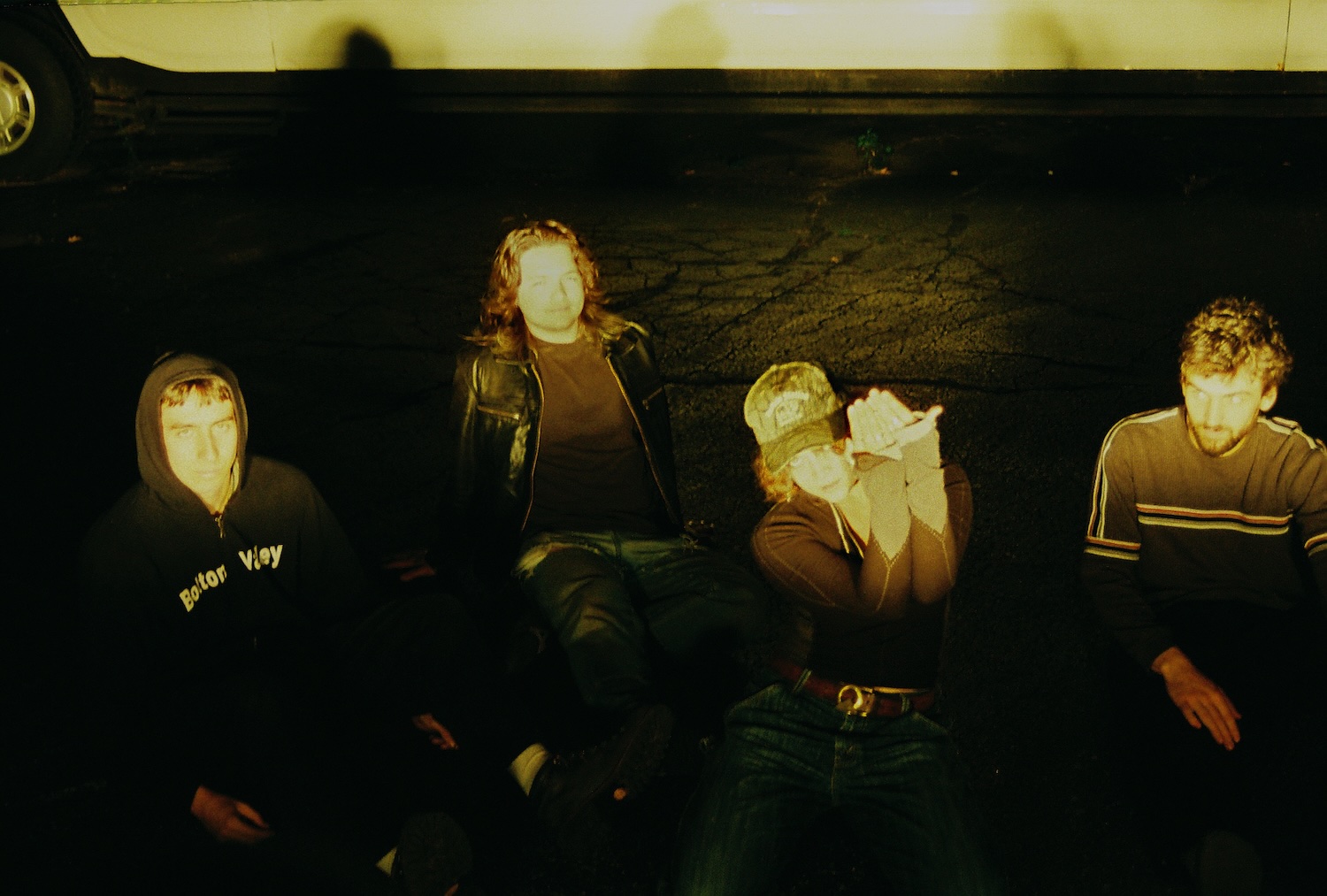
Robber Robber made their new album Two Wheels Move The Soul under some particularly stressful circumstances. One afternoon in 2024, vocalist Nina Cates discovered a fire had broken out in the apartment building where she and drummer/guitarist Zack James lived together in downtown Burlington, Vermont. Miraculously, Cates and James’ unit was left mostly unscathed; the pair continued living there as the rest of the building was gutted, enduring the constant rotation of construction workers, occasional trash left in common spaces, and a barrage of 7 a.m. demolition noises. “We were living in this place that we loved, but everything felt really unstable,” Cates recalls. Eventually, their landlord informed them it’d be in everybody’s best interest for them, the only residents left in this shell of a building, to move out.
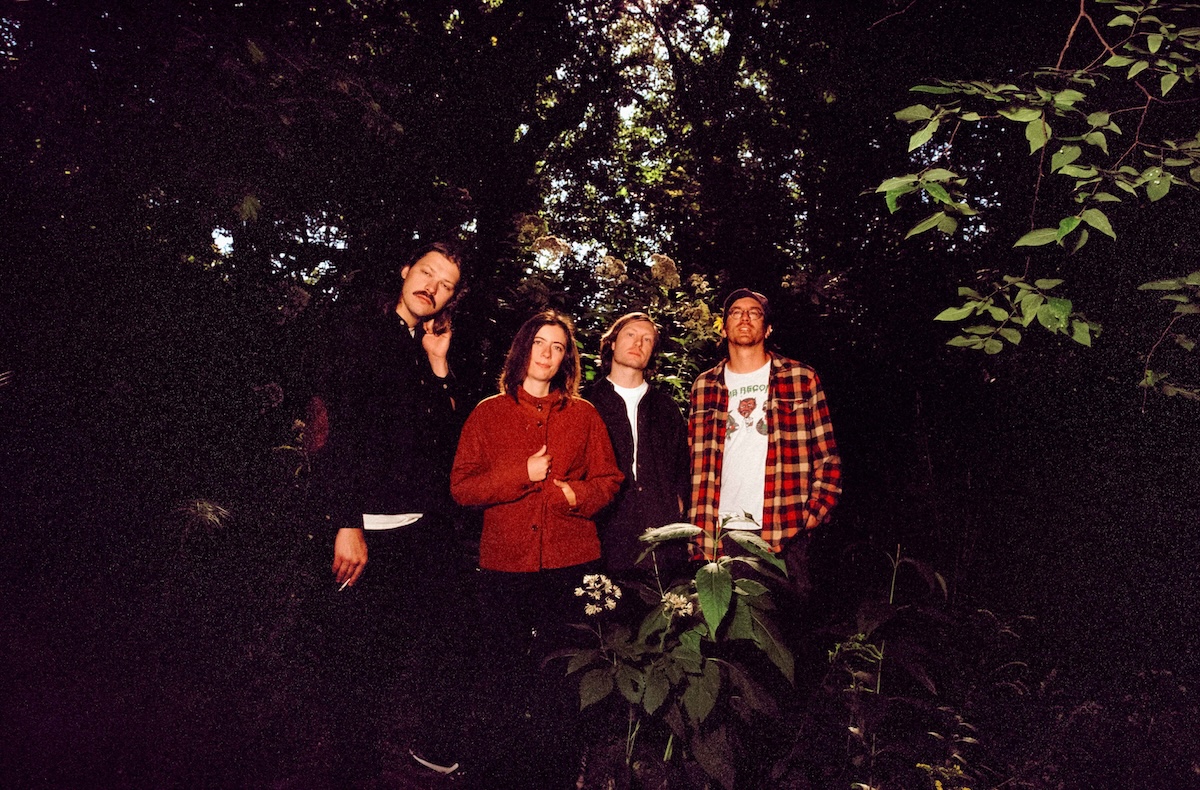
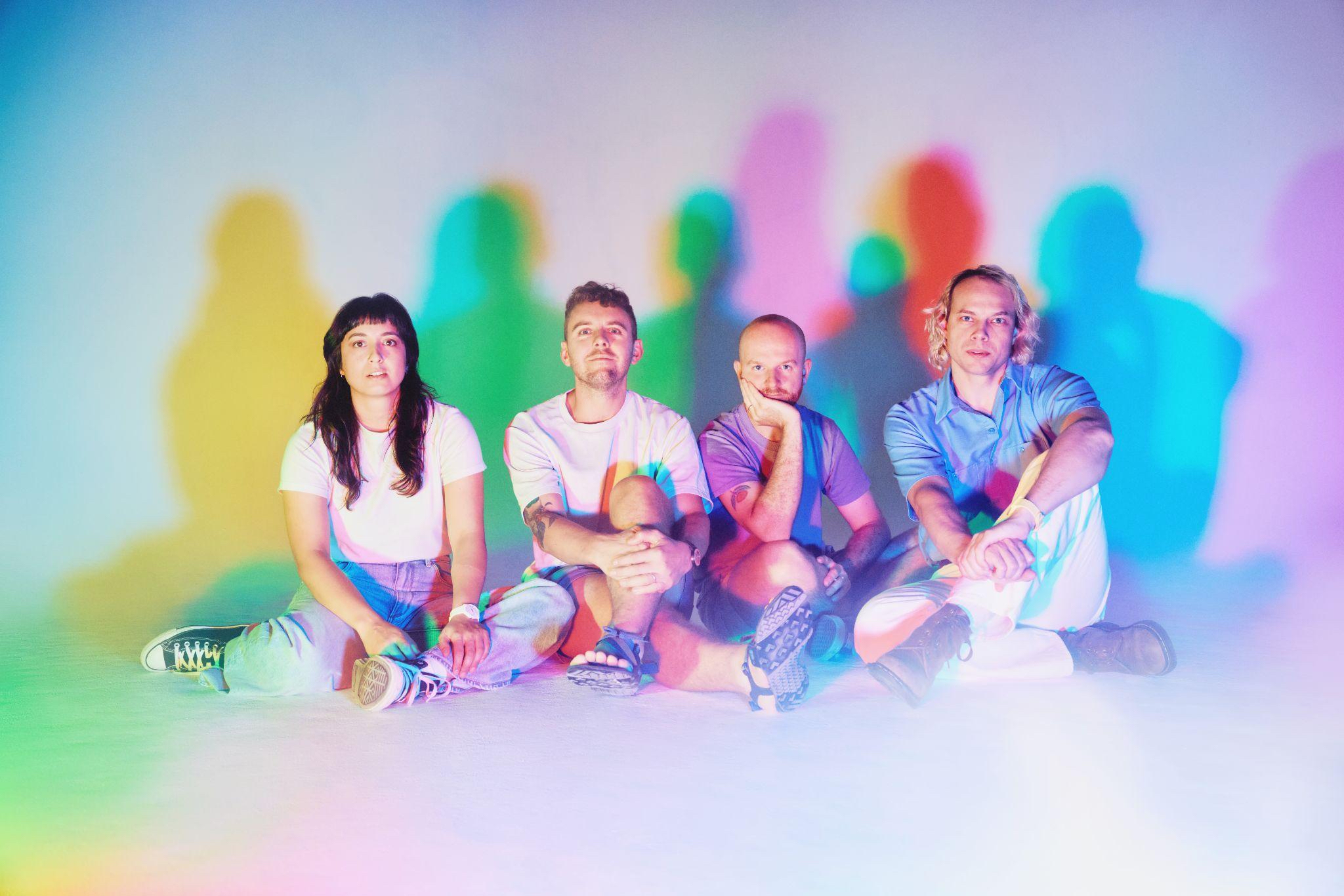
But it was hard to find a new home on the fly in Burlington, a tight-knit college town where the vast majority of apartment leases start and end in June. And so over the following few months, whenever they weren’t on tour, Cates and James squatted at various friends’ homes — including those of fellow Vermont musicians Greg Freeman and Lily Seabird. The couple moved around so often that they joked their cat was getting a taste of the touring musician lifestyle. At the same time, Robber Robber — which also comprises guitarist Will Krulak and bassist Carney Hemler — found structured reprieve in the studio, making their sophomore album Two Wheels Move The Soul. “The record has a lot of sonic unsteadiness and dissonance,” Cates tells me now in hindsight, remarkably nonchalant, via Zoom from the new apartment she and James moved into in June. “That’s kind of how we were feeling.”
Two Wheels Move The Soul does, indeed, feel more erratic and blusterous than Robber Robber's great 2024 debut Wild Guess. While brooding post-punk hooks are still at the core of the band's songs — just try to not bob your head along to "Pieces" or "Talkback" — these new ones are also laced with blasts of lightly-dissonant noise, holding on by a thread of just-barely-controlled chaos. Thematically, it's Cates unpacking her feelings in real time amid a period of constant upheaval, seeking not answers but some semblance of comfort in the uncertainty. Below, read our deep dive into the mess.
1. "The Sound It Made"
CATES: Breaking down the meanings of lyrics is pretty hard for me. I know I'm not unique in that way, but I feel like the stuff that I choose to write songs about are more complicated feelings that I'm not entirely sure where I sit on with them. So I tend to write a ton of different lyrics on huge paper sheets, physically, with a bunch of different options. Then I scratch them off, or ball them up and throw them — you know, sort of parse through it. I'll take the ones that I really like, and then I'll rewrite them on a new piece of paper with all the other ones. I’ll throw away handfuls of lyrics that don’t feel as resonant. Oftentimes it trims the fat of what the song is clearly about, and it becomes something a lot more convoluted. I think it's just kind of how my brain works, and it's sort of a mechanism of processing those complicated feelings. But "The Sound It Made" is very much in that world, and it was a lot of different pieces of, like, journal entries. It's very disjointed, and it's so many different ideas sort of just scrapped together in this overwhelming flow.
I feel like "The Sound It Made" is about like 15 different things. It's about so many different things just coming at you, receiving them, and it being overwhelming, and I feel like that kind of suited the music. We often write music before any of the lyrics. There are a lot of little lyrics about trying to connect with other people. The more I've been thinking about this song after writing it, the more it feels like a social media feed. We often scroll in the name of trying to connect with other people. Sometimes you'll see something that resonates with you and that's what sucks you in, but it's surrounded by all of this, like, fluff. I think maybe that's pretty representative of this song — the feeling of digging through so much slop and just trying to power through to get to the little moments of connection.
2. “Avalanche Sound Effect”
CATES: This one is about having a bunch of shit to deal with, like our housing situation, and then also being expected to still do all of the regular life stuff. I know that's just adulthood, and being a resilient human. But this is also the feeling of, like, "OK, whatever it is, we'll roll with the punches," but then eventually it is affecting you in the long run.
3. “New Year's Eve”
CATES: "New Year's Eve" is a little bit more straightforward, about hustle culture and the constant grind while there’s also this ominous, looming, deep unsteadiness that's going on in culture at large. We feel like all of our peers our age in a creative field like this are doing it on top of, like, 30 other things to be able to afford it and sustain it.
I like that the song is tied to New Year's Eve. I feel like that's an anxiety-inducing time of year for a lot of people.
CATES: Totally. I guess I could've made it a birthday song, too. But New Year's is kind of a universal marker of, “Oh, God, what did I accomplish this year?”
Zack and Will and I all play in Dari Bay as well. We were on tour in San Francisco in October, and there were all these billboards for AI companies saying, like, "AI doesn't request vacation time! It doesn't complain if you're overworking it!" And I'm like, "That's insane, but that is more versatile than my capacity as a human person." I guess the song is ultimately about work. I'm also watching my parents still waiting to retire and relax after they’ve already spent so long doing these things they aren't that fond of. And then there are people like us, who are like, "I'm gonna pursue music."
If you feel comfortable disclosing, what does Robber Robber do outside of the music world?
CATES: I am currently a janitor. I also make jewelry as a production assistant. I sell CBD at the farmer's market sometimes. I enter odd jobs with the premise of, "Hey, I might have to go on tour," and they have to be OK with that. Will works at restaurants. Carney works at a vape store, and Zack is now the drummer of Unknown Mortal Orchestra. I'm so excited for him. He's had enough work with that for the last handful of months that he's not doing another silly day job right now, which is cool.
4. "Imprint"
CATES: I don’t want to call this song out specifically, because I would’ve made it differently, but I’d heard this song that had this beautiful swell for the first 40 or 45 seconds. But then it kept going, and it was just another long song. I was like, “I wish the song ended there.” So we made this song with the idea that it’d be short, but it still had to be a song. Not an interlude.
A lot of the songs on the record are about reflecting on a moment in time and comparing yourself to others. “What is this/ A question of who earned it” is kind of about us being in the post-college phase — when we released Wild Guess, we’d just graduated college, and now we’re doing music while our friends are in grad school. But I think it's important as a musician to have non-musical friends. It gives you good perspective.
5. “Watch For Infection”
CATES: There are moments of the story in "Watch For Infection" that are real. "Propped up in the backseat reinforced by metal rods" — I was sitting in a car with people that I wasn't fully familiar with, kind of steeling myself to be in an awkward social situation. But the line "watch for infection" is basically saying to just take care of your shit. Little moments of bitterness and spite might affect you in the long run. Keep an eye on yourself and make sure that you recognize if you're going down those paths. I can be bad at that, so it’s a reminder to myself and others.
6. “It's Perfect Out Here In The Sun”
CATES: That song is about feeling like there are all these things that people are telling me to do, which is kind of a contradiction to the previous song. There’s not necessarily one big thesis to this album — it’s me, thinking about shit, processing what’s going on around me. Existing as a human right now is crazy. With “It's Perfect Out Here In The Sun” I was thinking about how the people who want to try to sell you things to upgrade your life and convince you that you’re missing something. But I think I landed on the sun as a motif, because the seasonal affective disorder is very real here in Vermont, and when it does actually come out, it’s uplifting.
It's probably the only song on the record that we had lyrics and an idea for before the music. The way that I write lyrics, sometimes it's kind of like a collage. Eventually it just sort of falls into place. I know some artists have an idea of a message, or something meaningful, or a deliberate story. But for me, it's trying to order some of the chaos and it winds up just being like a little bit different chaos. But I also think it's useful for me as a processing tool. Later down the road, I can listen to the song and be like, "Oh, that's totally reflective of what was going on with me at the time."
7. "Pieces"
CATES: “Pieces” is the longest time we’ve ever spent on a song. We wrote it before the fire. It came from a jam we were having with all four of us, which was exciting, and then Zack and I sort of arranged pieces from that jam session together to make this song. We’ve been doing that more for stuff we’re writing now, too. Lyrically, I think it’s about expectations being put on you and not necessarily feeling like you conform to them. I think we were experiencing that a lot after graduating college.
8. “Talkback”
CATES: One time I had a conversation with one of my bosses where they kind of snapped at me. It was an awkward moment. And then later on, I was fantasizing about what I should've said back, and then I was kind of making fun of myself for thinking that, too. That's not how interactions actually work. "Talkback" is about sort of ruminating on a moment and what you should have said. I don’t even remember what that boss said to me, but it just struck me as a thing that's happened to me throughout my life, thinking about how I could’ve handled a social situation better. It’ll probably keep happening throughout my life as I continue to say stupid shit.
9. "Enough"
CATES: This one is about being reminded of ominous or bad people from your past. The lines “He’ll come back again/ Guess we should’ve hid/ I am sick, but I’m working on it/ Give what I can give” are specifically about some gross guys that I used to know. You know when you have fucked up people from your past, and sometimes you think you see them in public and you’re like, “Fuck, is that him?” But I also think it’s in reference to all these things we’ve had to contend with in our lives lately. Besides the fire, it was also just a really chaotic time for us. We can only contribute so much to our art and our social lives. Is it enough?
I know we're talking about the meaning of these songs, but I think "Enough" is kind of an example of when I'm a little hesitant to break down songs too much. I feel like I've connected so much to songs in the past that I later learned what they're about, and I'm like, "Fuck, that's not what I was connecting to. I don't resonate with that as much anymore."
I think it's refreshing to hear songwriters say that. When the music is released, it's not always helpful to be so precious with it.
CATES: Totally. If anyone connects with my songs at all in any way, that's so much more meaningful to me. My thoughts are way less important than the human condition.
10. "Again"
CATES: I keep a note of lyrics that come to me throughout my daily life, and this one was parsed a little bit from that. “Saw it corrode, start bleeding out the mesh/ I care, you don’t, got infinite recycle" — that’s maybe my favorite lyric. We’re all trying to deal with our shit, but sometimes you see people process things in a different way than you do. I’m like, “We’re all in this storm together. Why aren’t you freaking out? I’m freaking out.” I think a lot of the songs on the album are about being in that storm, and doing our best, and coming to terms with the idea that maybe the way we’re going through life as musicians isn’t necessarily the easiest, as far as security goes. But also, what else am I gonna do?
11. “Bullseye”
CATES: This one is much easier than the others to describe. This is about the time that I was out at a bar in Burlington after playing a show with GIFT at Higher Ground. A fight broke out right next to us between these two bros, and it was really fast, and I was standing a little bit too close. I caught a stray, and one of them hit me in the face. I have photos of my black eye, but at the time, I didn't even really notice at first. I was like, "I think I just got hit in the face," and then I went to the bathroom and started crying. Justin from GIFT jumped right in there and pulled the fight apart and threw the guy out. It was so impressive. He found a fake fingernail in his pocket after. I went home and I was like, "What's this song going to be about?"
It's such a good album closer, too. It even ends with the words "gotta go."
CATES: Originally, we didn't even have this one sequenced at the end of the record. We were kind of confused about where to put it. And then I think Trevor from Fire Talk was like, "Let's put 'Bullseye' at the end." And I was like, "That makes perfect sense."
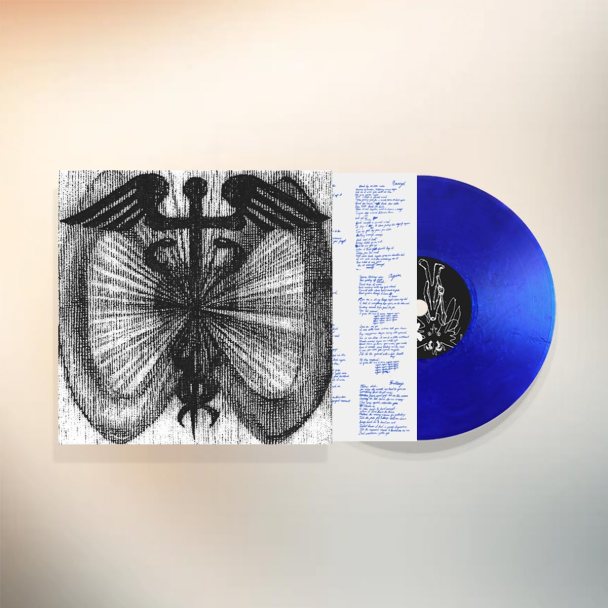
Two Wheels Move The Soul is out now via Fire Talk.