
Kevin Morby just released his masterpiece. Little Wide Open, out today, is the folk-rock singer-songwriter's greatest collection of songs to date. The album presents an interconnected batch of reflections: on Morby's Midwestern homeland and the adventures that have carried him far from it, on isolation and connection, on reckless youth and hard-won maturity, on how to navigate this life and what makes it worth living.
Written on tour and during long solo drives through the middle American expanse, the album is full of wise observations, vivid images, and clever turns of phrase. Motifs recur, piling up into an iconography: dandelions and butterflies, natural disasters and Bible Belt cowtowns, the open sky and the open road, riding shotgun while time careens forward. Morby's Dylan-esque delivery has never sounded more natural and lived-in, and his lyrics here are vulnerable enough to cut you open even as he maintains a certain poetic mystique.
The music casts those words in a gorgeous light. Morby recorded Little Wide Open with producer Aaron Dessner at his Long Pond Studio in upstate New York. Together they crafted a twilit sonic palette that amplifies each song's aching beauty, a hushed and rustic spin on the lush textures Dessner has always conjured in the National. It sounds just like the sun setting over Morby's Kansas City home, except when it sounds like that same sun coming back up and a whole world of possibility springing to life.
Further assists came from a wide range of contributors. Core influence Lucinda Williams beams into "Natural Disaster" like a visiting spirit. Longtime friend Meg Duffy's guitar heroics on "100,000" provide some fireworks over an often hushed, minimal terrain. Amelia Meath's voice returns repeatedly, sweetening and enlivening every track it touches. When Justin Vernon's inimitable voice pops up on "Badlands," it evokes a tornado siren by design.
When I hopped on a video call with Morby to discuss Little Wide Open, he was in Kansas City at the ranch house he shares with his partner, Waxahatchee's Katie Crutchfield, when they're not on tour or posted up at their other home base in Los Angeles. They hadn't gone public yet with the news that they're expecting their first child, but Morby's impending fatherhood makes perfect sense after hearing these songs. Little Wide Open is the work of a writer passing out of one phase and into the next, grateful for the luck and lessons that got him this far. I greatly enjoyed our conversation about it, and I hope you will too.
1. “Badlands”
From the title on down, there are a lot of wide open spaces on this album. Obviously that's part of being on tour in America. You also did solo road trips while you were writing. What drew you to that, to just kinda be out there writing in the great wide open?
KEVIN MORBY: I think a lot of this record came from going on tour, whether it be in America or anywhere else in the world — a lot of European touring and Australian touring — and just this juxtaposition of going to these certain places but then always returning to the Midwest. Sometimes it's this funny juxtaposition. Like I remember a couple years ago I went to Vietnam and Indonesia on tour. And then the feeling of landing back in Kansas City after those places is this very jarring culture shock. But also sometimes it feels like culture shock just by touring the West Coast and then coming home. So I feel like I was gathering a lot of ideas for these songs while traveling, and then I would come back to the Midwest, and the Midwest would just sort of end up being the backdrop to these things that I was talking about.
And in terms of “Badlands,” it's funny because I of course love the Terrence Malick film, and I feel like that's something that's a bottomless well of inspiration, a movie like that and an idea like that. And of course I love not only the Bruce Springsteen song “Badlands,” but I also love the song “Nebraska,” which was influenced by the film Badlands. It's funny 'cause on this record a couple of different times I've adopted these sort of American classic titles and tried to superimpose them over the Midwest or something. So I'm not singing about the actual Badlands. What I'm singing about on this song is the Midwest, and Kansas City more specifically. So I'm just taking that title and superimposing it over my day-to-day life in Kansas.
Is that the heaven in the song — your home, the life that you're living — when you sing about “Heaven is a place on earth”?
MORBY: This funny thing happened around the time of making this record where my girlfriend Katie and I, we bought this new house. It’s this cool midcentury house that doesn't have a basement, and not having a basement is sort of an anomaly in the Midwest. And you kinda need them just for protection from storms. And when we bought this house, when we did the walkthrough with my parents, my mom sort of protested and was like, "You know, I don't support you guys buying this house 'cause there's no safety from a tornado."
And we grew up around tornadoes my whole life, but I was like, "We never have actually been in the direct path of danger." So I said that, bought this house, and then I went on tour for a few weeks in Europe. And when I got back from this tour, I swear to God, it was like the third night, and I was really jetlagged, and the tornado sirens started going off in the middle of the night, like 3 in the morning. And not only is there not a basement in this house, it's also, like, a glass house basically. It feels like an aquarium or something. It's aesthetically pleasing, but definitely not very safe.
So Katie, not being from this part of the country, was like, "What do we do?" And I was like, "I don't know." Like I absolutely have no idea. There's no basement, so I don't know what we do. And so I told her to get in this closet, and I turned on the TV, and there's a meteorologist like, "If you're in this part of town, the tornado's headed your way." I couldn't believe it that it was actually happening. It was coming our way. Lluckily we were fine in that instance, but it was maybe like five or six blocks south of us. This church had its roof taken off. So the tornado got dangerously close.
So I feel like there's this thing happening in the song where I'm at once trying to talk about the beauty and serenity of the Midwest that at any moment can just change on a dime. And so the heaven and hell dichotomy, I feel like it's a heavenly place, but then at any moment it can feel — especially if you're not from the Midwest, and you come here, and you hear this loud thundercloud, it like feels like the hand of God coming down — it can feel like a hellish landscape, but it can also feel heavenly.
I'm calling from Columbus, Ohio, and strangely enough, this house also has no basement. And we had a similar situation a couple years ago. We were like, "Okay, there's some tornado warnings. Where do we go?" 'Cause we have a big wide open space out there that's like a living room and kitchen, and big windows. We were just like, "I guess we go in the closet.”
MORBY: Yeah, you go in the closet or the bathtub, if you have a bathtub. It's funny, when that happened, we’d just moved to this new neighborhood, and I really didn't know what to do. So I was like, "Katie, hide." And I went out into the living room and flicked the lights, as if I thought a neighbor would come save us. Like, "They're in trouble." But I was so jetlagged that it took me a full, like, 30 seconds to realize I wasn't in France. I was like, "Wait, the alarms are going off, but those are in Kansas and I'm in France." So it was this very unsettling thing.
Also, around this time, there was this viral video of some kid walking around his neighborhood, and he's like, "The tornado sirens are harmonizing!” Like, “They're singing in harmony." And I don't know the credibility of that. I don't know if that's real or not, but I remember it made an impression on me, just this moodiness of the Midwest. There's never a dull moment with it. And so I look at Kansas City as a place that I like to come to immediately after a tour to sleep and really get rest. But then it's funny that it's not a social life or partying is what's gonna keep me from getting rest. It's things like tornadoes.
It was a brilliant idea to have Justin Vernon be the tornado siren.
MORBY: Yeah, that was really amazing he did that. Justin and I have become closer friends in recent history 'cause we both sort of live in LA part-time, and we've been playing tennis together, which has been awesome. On Fridays we get together with a few people and play tennis, which is really great. And he's obviously collaborated with Aaron a bunch. So when it came time to, like, "How are we gonna create this siren?" Justin was sort of a no-brainer. And it's me, him, and Amelia Meath. Amelia sounds awesome on it too.
She's all over the album, right?
MORBY: Yeah, it kinda just happened that way. She came in just to sing on one thing, and she's just such a force. And I keep envisioning her in the vocal booth, she had all these moves, she just got so into it. Like, “Goddamn, this is amazing. You wanna sing on another song?" So that's kinda how that happened.
2. “Die Young”
It's a beautiful thing to be in the midst of dark times and be able to look around and feel grateful. That was what connected with me about the song personally.
MORBY: It's funny, someone was asking about it the other day and was like, "Do you feel like you're experiencing survivor's guilt with a song like that?" And I was like, "I actually think it's the opposite. I think it's more something like survivor's gratitude." I'm 38, which in some ways feels old, and in a lot of ways still feels very young. Obviously depending on who you ask, they'll say either 38's old or young. But I think what I'm really singing about there on that song is my twenties and just sort of my reckless behavior of my 20s — my friends and the circle that I ran with, all of our reckless behavior. Not everyone made it out alive. A lot of us did, but not everyone. So it's sort of a song for both everyone who survived those times, but also didn't.
Obviously Katie has talked in interviews about her own sobriety. It sounds like your lifestyle is a lot different now than it used to be back then.
MORBY: Yeah, for sure. I've been pretty blessed with not that addictive of a personality. So it's always been easy for me to — like I smoked cigarettes for a super long time, and it was easy for me to quit cigarettes. And my drinking habits have certainly changed. In like my early 30s, I was met at that crossroads that a lot of people are in their 30s, where you're like, “I have to start taking care of myself, or I can continue living how I've been living through my 20s, but I don't think that's gonna end very well.” So I feel like every new year, I get like more invested in my mental and physical health, which is a good thing.
3. “Javelin”
The groove on that song is really powerful. It's like happy “Sympathy For The Devil.” The line, "Remember when they asked us how it felt to be alone in the middle of America?” — is that based on an actual interaction that you had with someone?
MORBY: That's a good question. I haven't really meditated on that line too much. But thinking about it now, I think that comes from during the pandemic. I'm at this funny place where if I'm singing love songs, and I think the same is true for Katie, where it's like people know who they're about. So it sounds funny to be like, "This song I wrote about my girlfriend," but everyone knows who I'm talking about. But with “Javelin,” I think what I'm getting at is at that time in the pandemic, Katie and I were doing a lot of these things called the weekly rodeos on Instagram, where we were playing. And I think people seemed to really like those. It's kinda like we ran this talk show on Instagram or something for this brief moment in time, in this very strange moment in history. I think there was this weird attention on us during that time and people just being like, "You guys are in Kansas, and what's it like out there?" And getting asked about living in the Midwest, like, "You guys are hunkered down in Kansas. You're not even in one of these major cities. What's that like?" So I think it's kind of about those weekly rodeos.
This was the lead single. How did you decide that this was the way to introduce this project to the world?
MORBY: That's a good question because for the longest time we were gonna lead with “Badlands.” And then it's just one of those things that I realized every time I was showing the record to a friend, they'd get in my truck and I'd be like, "Let me play you a song off the album," I just found that I was showing them “Javelin” before “Badlands.” And I was like, “Well, if that's the case, then I think it should be the first song.” And my publicist really liked it as well, and it was actually kind of a last-minute decision. I think we decided the week before or something to flip it and go with “Javelin” rather than “Badlands.” I'm really happy that we did because that's a song that I'm loving more and more as time goes on.
4. “All Sinners”
I think this is the second song on the record, and not the last, where you talk about being a passenger, and how we're all passengers in this life. Can you talk about that theme on the record?
MORBY: I think with my last album, This Is A Photograph, I had this real idea that I was sort of battling time. This sense of mortality, where time and I were in the boxing ring, and I was waiting for, I guess, time to just sort of kill me, essentially. And I think in the years since then, I really love that album, but I think I've matured a little bit and started to see time from a little bit of a different angle. I don't know why time necessarily needs to be my enemy. Time can be this sort of travel companion. It's like you're traveling through planet Earth and through this life together. So I got this whole idea about riding passenger to time, and time is perhaps in the driver's seat, but we can be our own little Bonnie and Clyde. It doesn't have to be like I'm being held hostage or something.
As a lifelong Ohioan, I appreciated the “O-H-I-O” worked its way in there.
MORBY: You know, it's funny because this is by far Aaron's favorite song on the record. Like, from the moment we tracked it. And he's from Ohio. I actually even had a thought about maybe that made him a little biased towards this song. But he loved this song. It's not gonna be a single, but it was gonna maybe be a single, and the other day he texted me and was like, "Dude, I can't believe it's not gonna be a single."
Aaron's come up a couple times already. How did you end up working with him?
MORBY: This record more than any other album of mine that I can remember, I was really stumped on who to work with next. And I've had nothing but great experiences with all the producers I've worked with, but I just felt that these songs were different, and I wanted to switch it up, and I really didn't know how or when or where. And so actually, in 2024, that felt like the year that I should maybe have started to think about making my album. But I really didn't know who to do it with, so I just kinda said yes to everything that year. I was just procrastinating, so I was like, "I'll take every show offer I get," and just use that as an excuse to not be recording right now.
And one of those shows was opening for the National, who, I've never known their stuff. Like, for whatever reason, I just never had a moment where I sat down and listened to this band. But I'm aware that they're this big culturally significant indie rock band. And so opening for them was really fun. They were fucking awesome. And then the next day, I put them on my headphones, and I was like, “I wanna hear what everyone else is hearing with this band.” And I started listening to it, and immediately was like, “I really love the vocal sound.” And then in that moment that I was thinking that, Aaron texted me and was like, "Hey man, thanks so much for playing our show last night. I love your stuff. Would love to make some songs with you." And then I was like, “That's it right there. That's who I should work with.” So it just [happened] very serendipitously. And then I was happy that I said yes to all those gigs, 'cause had I not, then this wouldn't have happened.
The album has a lot of references to Christianity. You got “Bible Belt,” and then this song obviously is “All Sinners,” and you’re talking about heaven and hell and forgiveness. What's your relationship with spirituality in general, or Christianity specifically?
MORBY: It's very secular with Christianity. And with spirituality, kind of in the same way that I feel like I'm taking better care of myself, as I get older, I become so much more of an appreciator of planet Earth and respect for the universe. I feel like spirituality is becoming sewn into my fascination with all of that. So it's more about the natural world. But in terms of Christianity, it's very secular. I grew up in the suburbs of a mid-size Midwestern city, around evangelical churches on every block and crazy billboards and marquees out in front of churches. These sort of God-fearing things that are sometimes so intense that they're funny. And so I think the vocabulary's just made its way into my DNA, and I just wear it like a tool belt, and I use these words to express a feeling. Like in “All Sinners,” when I'm talking about sinners and I'm talking about “Jesus Christ forgive me,” I don't think I'm actually speaking to a Christian Jesus Christ. It's more like just the expression, I guess. And some of these words I find beautiful and evocative of a certain emotion. So yeah, my Christianity's sort of nonexistent, but my spirituality gets a little bit higher every day.
5. “Natural Disaster”
This is the big Lucinda moment. Did you write this with her in mind? What was that process like?
MORBY: As I was writing it, at some point I realized that this song, in some way I was really inspired by “Street Hassle,” the song by Lou Reed. And something I've always loved about that song is how he has this uncredited Bruce Springsteen moment, where Bruce Springsteen has a talking part in that. And you almost don't even know that it's him until someone tells you or you read about it. He's mixed low. But I was like, "Oh, man, that would be really cool to have something like that." Like, who would be my Bruce Springsteen?
And then I immediately thought of Lucinda, this hero. I had that thought because one of the last times I saw Lucinda, she was covering Bruce Springsteen. Obviously I'm such a huge fan, and one of my biggest north stars for Little Wide Open was her album World Without Tears. It was just one of those asks, where I was like, "I'll ask Lucinda, and if she says no, then I'll just do it myself. There's no one else I'd want to do it except for her." And I was so, so stoked when she said yes. And obviously, she has a lot of goodwill with Katie. And I've met Lucinda a handful of times now. We both played that Wilco festival a couple years ago in Cancun, and we had a moment sitting up at the bar and getting to know one another. And she's just the coolest.
That was, like, the last thing that happened on the record. She did it in Nashville, then flew it in to me and Aaron. We were getting ready to turn in the record, so we almost didn't get it in time 'cause of our schedules. But it was a really cool moment for the last thing to hear was her voice coming through. It was like, “Now we can put a period on the album.” It was really cool.
The part in this song about, "When I find a good thing, I'm not sure I deserve it," it's interesting. It puts a different wrinkle in the gratitude stuff you were talking about earlier, kind of like the anxiety of messing it up. There are a lot of simple universal sentiments like that on the album that really get to me, but I appreciate that they're stated plainly like that, and yet you still phrase them in a way that has a lot of power. Do you find that it hits harder when you say it plain?
MORBY: I think so. Something like that. As a writer, sometimes when you're working on a song, you'll have moments and sometimes things will seem a little too direct, and you'll wanna cloak it in something. But then sometimes, as you say it, I like to envision if a songwriter that I admired was saying that same exact thing, how would I feel about that? Like, if Nina Simone was saying that. And then I think, "Ooh, I like that a lot." But then there's times when I'm like, "Oh, I don't know if they would say that, so I don't know if that's a good thing." But yeah, I think that one is such a naked song where I just wanted to make all of it pretty stark, if that makes sense.
You’ve got more tornado talk here. There's a lot of thematic elements that recur throughout this album. Did you intentionally set out to make a body of work that was gonna be interconnected like that? Or was it a matter of, these were just the ideas that were rattling around your brain, and they kept working their way out?
MORBY: I think it's more of that second one, yeah. These were the ideas, and they kept working their way out. With any record, after a certain amount of time you're like, "Oh, there's like six songs here that are all sort of speaking to one another." And that's a really exciting moment when you realize that, 'cause you're like, "Oh, I think this is an album," you know? These songs, they're companions.
6. “100,000”
Near the end of it, this song rips open, and the guitars come spilling out. It seems like it's gonna rule to play that one live. Have you gotten to rehearse that at all?
MORBY: No, not yet. Just when we played in the studio. This is the one song that wasn't recorded entirely at Long Pond with Aaron. It was because of Meg Duffy, Hand Habits — who's a very close friend of mine, and longtime collaborator, and used to play in my band — and I wrote this song shortly after Tom Verlaine died. I remember being like, "I wanna write something Verlainey," you know? And the moment I wanted to do that, probably even before I wrote it, I knew I wanted Meg to be involved, because that's kinda like the shorthand we spoke, was like, "Let's play like Television and do guitar harmonies."
And so we actually tracked it. Meg really kinda spearheaded it. We got together a couple times in LA and wrote the song, and then Meg was like, "Let's go track this.” And this was like a year before I probably even worked with Aaron. And so we went and tracked it. Meg brought in this great drummer, Tim [Carr], who plays in Perfume Genius with Meg. And the three of us just did it, and then we had it sitting there. And when I was making the record with Aaron, Aaron just sort of Long Pond-ed it up and played on it. But yeah, that Meg moment at the end is just so powerful, and Meg is such a guitar wizard. It's really cool. I remember in the studio watching Meg do that at the end, and yelling from the control booth, "Yes, we did it!" So I'm really excited to play it live.
It feels right that you got the Metallica references into that one, the guitar riff song.
MORBY: Yeah, totally, totally. It's funny 'cause that lyric is based off these neighbors that we have in Kansas City. [Even though I refer to them as “Ugly boys, ugly brothers”] They're probably, like, good-looking young men. It's so hard to describe people that you talk about in a song, calling them ugly. But they just look like some good old boys, some good old Midwestern boys who always have their shirts off, working on their fucking cars. And in my mind, I like to think that they're listening to Metallica, but I think in reality they're probably listening to something more modern.
7. “Little Wide Open”
This is literally the centerpiece of the album. It's right at the middle of the tracklist. It's the title track. It's this epic eight-minute song. Is it supposed to be a manifesto for the record?
MORBY: Yeah, and you know what is the funniest part about that is that for the longest time, this album, from the moment I was writing it to the whole time we were recording, was meant to be called I Ride Passenger. The phrase “I ride passenger” just sort of carried the torch for the rest of the songs to follow. And every time I was talking to Aaron about it or anyone about it, or they'd ask, "Oh, I'm working on this record. It's called I Ride Passenger." I just really like that phrase a lot. The song is cool, but my favorite song on the album is “Little Wide Open,” or maybe the most important song.
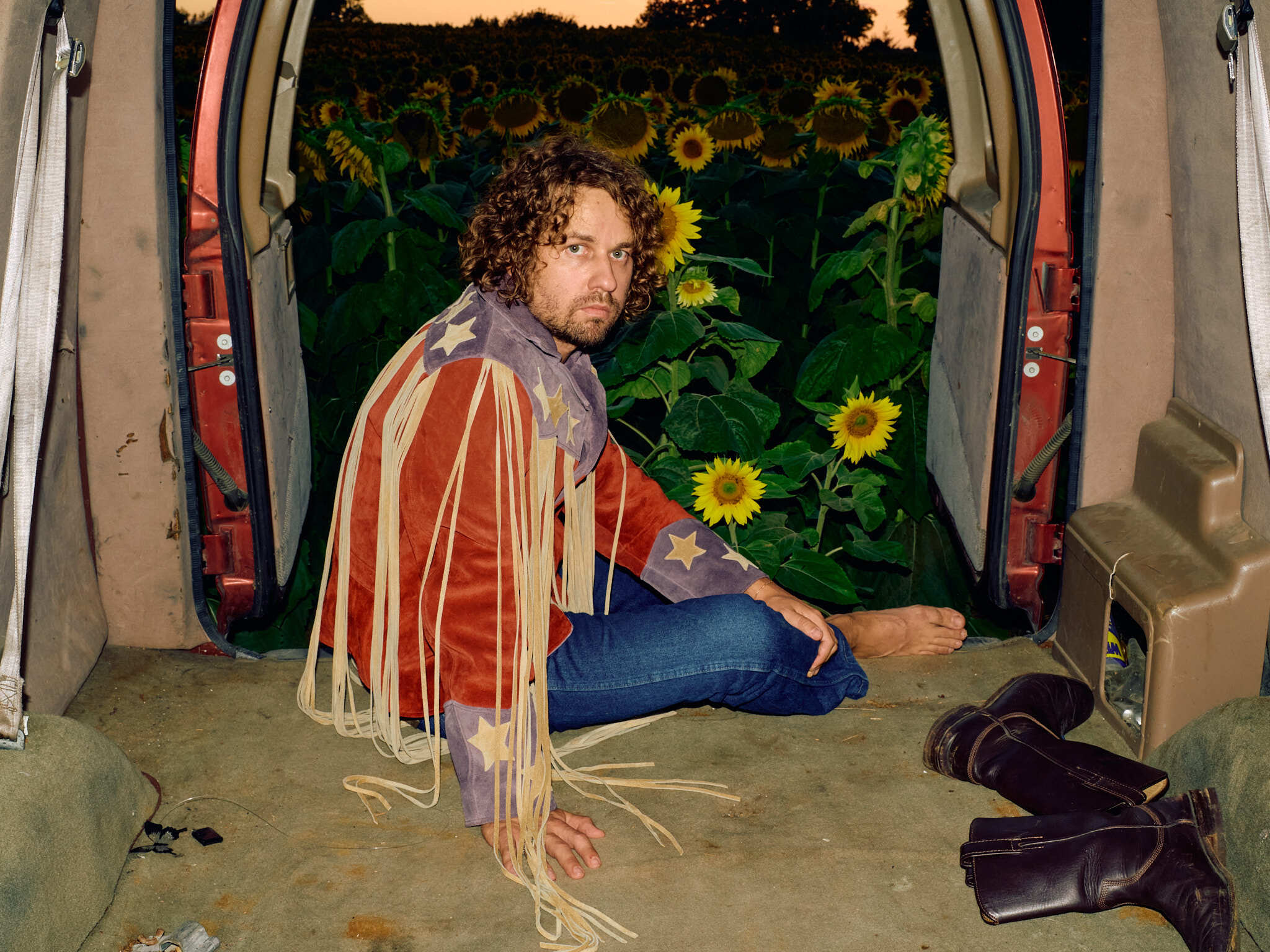
So anyways, it wasn't until we shot the album cover and I was looking at the cover where I was just like — it's almost like people's stories when they have a kid and they decided the kid's name is John, but then the kid comes out and they're like, "Oh, no, it's Clay.” So this is one of those moments where I was like, "Oh, wow, this album is — it’s a Little Wide Open. Of course. It's always been a Little Wide Open." I just think that that song, and where it lies in the sequence and everything, is sort of like the heart of the album. I also think that the record leading up to it and the record after it are kind of two different things. And so I just really love the song.
Do you care to elaborate on the difference between the first half and the second half?
MORBY: I kinda feel like the first half is more, I guess, drum-heavy and full-band heavy. I like to think of it as, you put the record on in a city or in a small town or something, and by the time you've driven out of the small town is midway through “Little Wide Open,” and then you're out in a vast expanseness for the rest of the album. That's kinda how I look at it.
That's interesting. I was hearing it almost like there's twilight over the album, and then in the second half you kinda hear the sun going down, completing the sundown. But I can definitely sense that division on the record. So that's cool that it was intended.
MORBY: That's a cool take. I like that.
8. “Cowtown”
And I feel like with “Cowtown” you really get that too. The music on that one really conjures a mood. I know you wrote in your Substack about working with Aaron and what the process was like at Long Pond, but can you tell me a little bit about how you guys worked together to build the songs out?
MORBY: I would go into this booth, and we'd track every song, me and acoustic guitar, usually in one to three takes maybe. I would just sort of sing it with this acoustic guitar, and a lot of times we ended up using that. And then I would watch Aaron and Bella [Blasko], his amazing engineer who engineered this whole album and mixed a lot of it. The two of them just work so much at Long Pond on so many different things, it's this well-oiled machine. And Aaron then walks around the studio and just picks up various instruments and is like, "I could hear this, I could hear that,” and just kinda lays them down in real time. Like, very quickly you have a thing.
I think a big thing that Aaron did for me on this record was to sort of restrain me. Because I can be pretty fast and loose in the studio, and I love making those records, but I knew that these songs weren't that. But I think I was a little afraid of not throwing big string arrangements and not throwing a bunch of tricks at it. And Aaron was really good for staying true in that mission. And on this song, as a great example, I say this one line about, "No one's making a sound except for me and this guitar." And then I do this little ditty on the acoustic guitar.
Yeah, I love that part.
MORBY: Thank you, yeah. I was like, "Aaron, we should do this thing where there's feedback and, like, a crazy electric..." And he's like, "No." He had a lot of moments like, "Kevin, no." He would say this great thing to me that I really appreciated where he'd be like, "You can do that live, but this is what the record's calling for." And he'd be totally right in those moments, because I was picturing sort of later-era Tom Petty or something like that, such a simple — just an acoustic guitar and some flourishes around it, but nothing too crazy, and just really making it about the song.
And the other thing about this song that I love is the opening line, "It's so hot around and the school's let out, so the pools will flood," or whatever. "Write my name in mud." It's a line that I wrote when I was 18. And I always wanted to use it for something. Like, I tried a million times, and I could never get there. And then I like that at 38 it's coming out 20 years later. And I almost envision that line as, like, had I never left Kansas City. 'Cause the song is maybe the only character on the album. It's from someone's perspective that never left their small town or something like that.
That one and “Bible Belt,” the one that comes after it, for the longest time, we weren't gonna put them on the record because we thought the record was too long. And then, sort of in the 11th hour, we're like, "No, let's do this. It can be a 13-song longer album. It'll be okay." I've been doing all this press, and people keep bringing up “Cowtown,” so I'm really glad that I kept it on there because it is a cool song. And yeah, it's a 13-song record. I got self-conscious about that, but then World Without Tears is 13 songs, which is such a big inspiration.
And then another huge inspiration to that song and this whole album is Paul Westerberg's Stereo, which has been one of my favorite records since I was, like, 14, and I think is a Midwestern masterpiece. And I was like, “That record was on the other day when I was on a long drive, and I didn't question its length.” I was like, “I bet it's 13 songs,” and it's 13 songs.
9. “Bible Belt”
I was struck by the vocals on this. I don't know if they're doubled or tripled, but the way your voice is produced on that one is different. Can you tell me about that?
MORBY: Yeah, I think we doubled it on that. It was a classic studio move, where we were like, "Let's just get two takes," and then we're listening to the double, and then we were like, "Oh, or it could be double. This is kinda cool." And we ended up keeping it.
That song I think is technically the first song that I wrote that ended up on the record. I wrote it on my tour bus. You probably saw this in the press bio, but I was on tour in 2021 right after the pandemic, and there was this couple who was on a drive from Santa Fe to Denver to come see the show, and they got in this really tragic accident, and one of them passed away. And this song ended up being this thing that I wrote in the back of my tour bus with that in mind, with him in mind.
It was like this funny thing because I was on tour for the first time in like a year and a half because of the pandemic. It was a really strange thing to be back out on the road, and I was in a bus. And because of that pause in touring, because of the pandemic, I think I was scared of being back in a moving vehicle after having not been on tour in so long, and just sort of acutely aware of how strange it is to get in a thing and travel 500 miles every day. And there were gas fumes coming into the bus. I was just like, "God, being in an automobile and the highways are fucking crazy." And then I got that news, and it hit me at this time where I was already feeling sort of fragile on the road and in these traveling automobiles.
I'd bought this shitty little guitar for like 200 bucks in Portland, Oregon, and it was something I would go into the back room of the bus and work on every now and again, so it just became this song.
10. "I Ride Passenger"
You said this was gonna be the title track. Is that because, as we talked about, the idea kept coming back up again? Or what?
MORBY: I just liked the phrase, and it spoke to this whole theme of riding passenger to time. I think it's a cool song, but I don't think it's the song that I want to represent the whole record, which is essentially why I ended up pivoting. But I do think it's a cool song, and this idea of riding passenger to time. Traveling at all expenses, no matter the risk, is sort of the idea of the song. I've actually never thought about the fact that it comes right after the song "Bible Belt," but now I'm realizing that.
And for whatever it's worth, you know the Larry McMurtry Western epic, Lonesome Dove? If you know that book well, there's a lot of Easter eggs of that book in this song, where I think I was just really influenced by that book as well.
I haven't read Lonesome Dove. It feels like it's been having this big resurgence lately.
MORBY: Oh, really? That's cool. I read it for the first time maybe 10 years ago, and it's one of my favorite books now.
Yeah, I don't remember where I read that. I don’t think it’s a BookTok thing, but I guess I couldn't rule it out. [Editor’s note: It is a BookTok thing.] But anyway, that’s what I heard.
MORBY: I do recommend it. It's one of those funny books that when someone recommends it, they're like, "Just give it the first 400 pages, then you'll be hooked." And you're like, "Okay..." 'Cause it's like 1,200 pages. But it is fucking worth it. It's an amazing, amazing book.
11. “Junebug”
You’ve got Tom Moth on harp here. How do you end up with harp on a song?
MORBY: I wrote that song on piano, and then we tracked it with Aaron playing piano, and I think he'd just done something with that, with that Florence [And The Machine] harp player. He'd just done the Florence record with that harp player. And a lot of these songs on the album are about traveling, and some of them are kinda sinister or sad, like “Die Young” is sad and maybe “I Ride Passenger” a little sinister. But this is one that is really just sort of this wondrous, nice song that's just an appreciation of being able to travel, and an appreciation of coming back to where I'm from. So I think we wanted to give it this airy, heavenly, warm quality or something, and the harp was the perfect instrument to get that across, I think.
12. “Dandelion”
This song seems to be about resilience, and it doesn't necessarily strike me as a song that has to be written to your partner. Was it written to someone in particular?
MORBY: This song I see as a sort of series of vignettes. I was explaining this to someone the other day, and I don't know why, but there was this moment where I was driving through Oklahoma on a solo road trip, and I saw this gas station that was illuminated in these neon lights, and it was this hot, stagnant night. And for whatever reason, I had this idea of, like, teenage kids, or kids in their 20s loitering in that parking lot and writing a song. And I was like, "I wanna write a song that someone would write in this parking lot." I don't know why. But I wrote “Dandelion.”
That first line is about my dog running through these dandelion fields and watching these dandelions kind of explode all over her face. I visited New Orleans around that time, so I think that's where that line about the waterline on a highway sign comes in. I don't know, I just wanted this very human-feeling song, like, almost like if an alien discovered — there's just something about when I saw that gas station. I just had this moment of clarity of, like, “We're existing in outer space in this way.” Where everything can be so simple, despite the fact that everything is so grand and just kind of insane if you think about it. But things can be as simple as this gas station. And so I just wanted to write about these different human moments in each verse, almost to an outsider. Like, if I was playing a song for an alien, like, “This is kind of what it's like to be human. Here's a bunch of different human things.”
13. “Field Guide For The Butterflies”
So much of the album is rooted in this idea of being in the Midwest, and this feels very much about going out into the world, having adventures. Is that a correct read on that?
MORBY: Yeah, that's exactly right. And for the longest time, this was gonna be the first song of the record, and what I planned and envisioned being the first song. I have this demo of this song, and amongst all my demos, this was always the demo I'd show to people first, you know? Like, "I'm really excited about this collection of songs I'm working on. Here's kind of the vibe," and I would play them this. And I'd always pictured, like, the record opening its eyes was this song. And then at a certain point in the process, Aaron proposed it as the last song. And for whatever reason, that just felt really right. And I think it's kind of a mission statement. This song captures most of what the whole album's about. So yeah, I don't know. There's something adventurous that I like about it, and it's about being an entertainer, and having a dream and a vision, and chasing that, and taking that out into the world no matter the cost or the risk.
And the other thing I really like [about] this song. I was on this solo drive across Arkansas, and butterflies became this big theme or emblem to me after my last album, 'cause I started singing about butterflies in relationship to Jeff Buckley. So I just started to be very aware of butterflies whenever they're around, and I was hitting all these butterflies on this drive. And it was... I don't know. I felt bad, you know? I hated the fact that I was killing all these butterflies. But I think, like, the story of the couple on “Bible Belt,” and the behavior of people that I'm singing about on “Die Young,” thinking about musicians and all young artists as butterflies out on the highway.
I don't know, I was just having all these thoughts about butterflies. And then I stopped in Fayetteville, Arkansas, and I went into this famous used bookstore there called Dickson Street Books. It's really cool. And I went in, and the first thing I saw was Field Guide To The North American Butterfly, this vintage cool book. So I bought that book, and it all kind of came together in this cool serendipitous way.
There was a time when you weren't out in the Midwest, but you've returned to it, and you're kind of planted there. You must have somewhat of an affection for it. You could probably live wherever you wanted, but you choose to live in Kansas City. Can you talk about how that hangs over the rest of the record?
MORBY: Someone once told me this thing about wherever you're born, it sets your body's clock, I guess, in that time zone or something. And for the rest of your life, you're sort of in that time zone. I don't know how true that is, but even if that's not true, I think just as an idea, or spiritually, I think something like that's sort of true from where you come from. And so I have a complicated relationship with the Midwest just because it's where I'm from. It's a love-hate thing. But if you take me out of it, I really will feel like a very strong pull back, and it's like I have to come back. And even now we're splitting our time between here and LA, and maybe if there's more time spent in LA, I still always really need to come back here, and there's a lot of great things about being here.
And so, it's funny, whenever I talk shit on Kansas City — like, if someone else talks shit on Kansas City, I'll get pissed. But I'm like, "No, I'm from there, so I can talk shit on it." That's the relationship, you know? Like, I reserve the right to talk shit on my hometown because it's my hometown. But I do really, really love it.
When we first got our house in LA, it was right before the fires, and we literally drove out there, spent like a week and a half, and then the fires happened. And we weren't in the direct path of danger, but we were close enough to where there was toxic ash falling on the house. And we'd just driven out there, and we were planning to be out there for a long time. But we're like, "I think we just gotta get in our car and drive back to Kansas City.” And I remember that feeling. I was so upset to have to leave this new life we just set out on. But the moment we hit the rolling plains of the Midwest, I do feel my body just sort of relax in this way. So I think no matter what, I will always return here and always wanna have some roots here.
So you’re split half and half between LA and there now?
MORBY: Yeah. Maybe it's like a little 60/40 LA. We're kinda learning as we go. Because the truth is, we have this third place we live, which is tour, so. I really love being in Kansas City before and after tours. I'm here now because all my stuff starts here in a few weeks, and so it's the best place to come and decompress and really wrap my mind around, “I'm gonna be out on the road.” And then similarly, when the tour's over, it's the best place to come and process everything that just happened. But then, LA exists as a lot more of a community. A lot of my closest friends are living out there. So it's nice out there to have a social life.
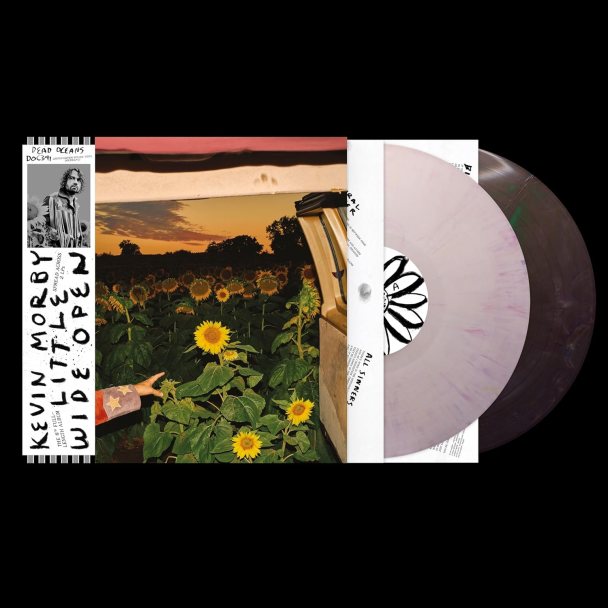
Kevin Morby - Little Wide Open [2xLP]
Little Wide Open is out now on Dead Oceans.