
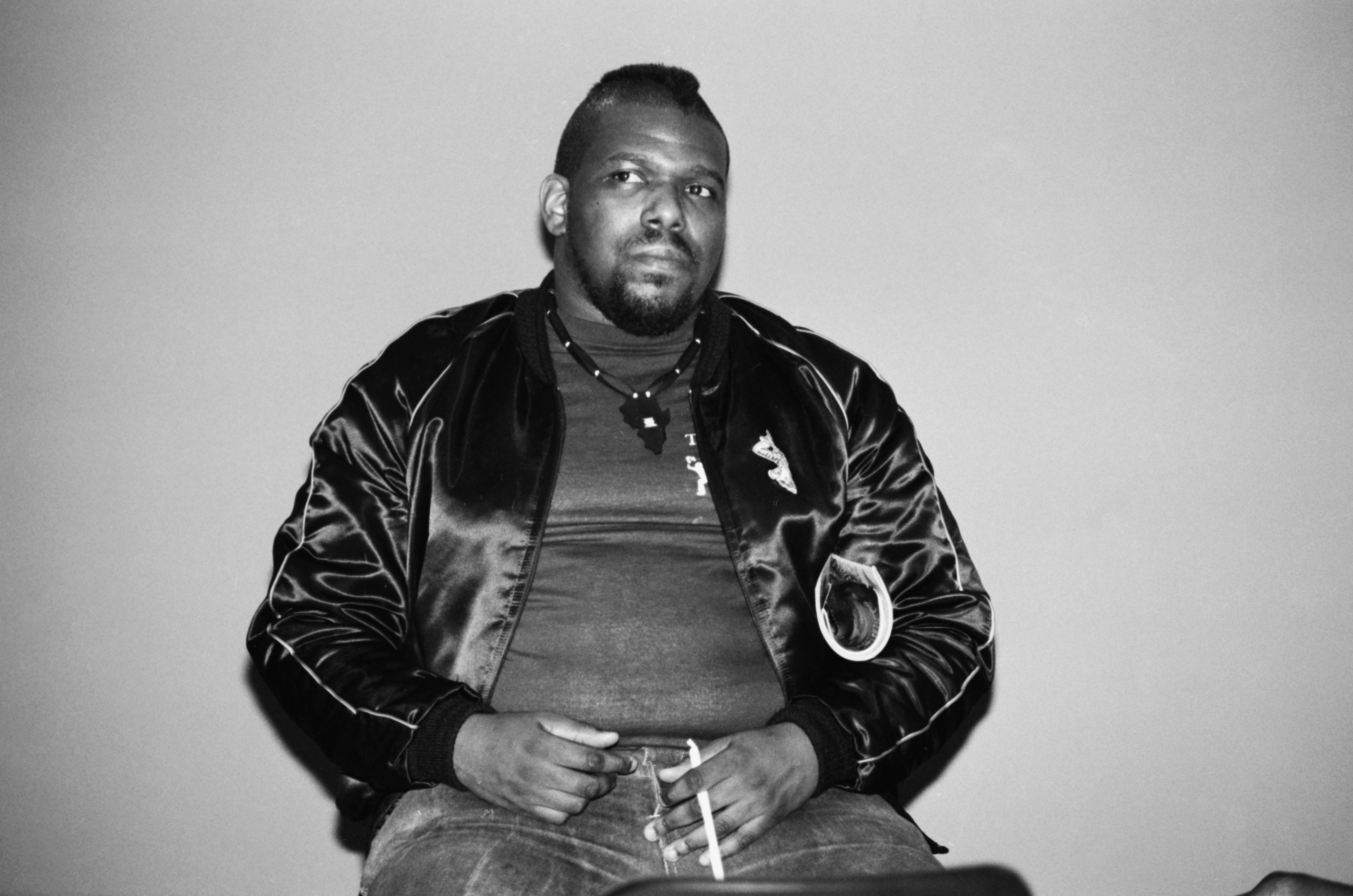
Afrika Bambaataa, the hip-hop pioneer who was successfully sued for child sex trafficking later in life, is dead. Bambaataa died around 3 a.m. today in Pennsylvania due to complications from cancer, TMZ reports. He was 67.
Bambaataa is one of the great confounding figures of rap history. For decades, he was a mythic figure, and he stood as one of the foundational figures of rap, electro, and hip-hop culture as a whole. His aesthetic advances moved the music forward and introduced many different sounds to many different audiences, and his Zulu Nation organization helped create the conditions for the music to spread outward to the world. There's also plenty of evidence that Bambaataa was a sexual predator who managed to cover up his crimes for decades. The accusations against him will always hang over any discussion of his accomplishments.
Afrika Bambaataa, born Lance Taylor, grew up in New York's Bronx River Projects; his parents were immigrants from Jamaica and Barbados. In the '70s, Bambaataa was a teenage member of the Black Spades, a street gang active in the South Bronx, and he rose to the rank of warlord, a leadership position. After winning a trip to Africa in an essay contest, he founded the Universal Nation, a community group that united members of a number of rival Bronx gangs under the banner of Black liberation. He was also among the first figures who hosted and DJed at hip-hop parties in the South Bronx.
As a DJ, Bambaataa served as the mastermind behind rap groups like Jazzy 5 and Soul Sonic Force, and he expanded the young genre's sonic perspective by integrating electronic music from European groups like Kraftwerk into his sets. After releasing a pair of cult favorite 12" singles in 1980 and 1981, Bambaataa worked with Soul Sonic Force and producer Arthur Baker to make the Afro-futuristic, Kraftwerk-sampling 1982 touchstone "Planet Rock." The song was a #4 R&B hit, and it crossed over to the Hot 100, reaching #48. It's a key text in the evolution of electro, house, and techno.
From the success of "Planet Rock," Bambaataa expanded outward, performing at punk and new wave clubs that never booked rappers. He released more hits like "Looking For The Perfect Beat" and "Renegades Of Funk," which were sampled and covered for many years afterwards. He appeared in the 1984 movie Beat Street and collaborated with figures like James Brown and John Lydon. As rap established itself as a cultural force, he became a memorable talking head in a number of documentaries. In 2012, he accepted an appointment as a visiting scholar at Cornell.
The sexual abuse allegations against Bambaataa didn't become public until 2016, when Zulu Nation member Ronald Savage accused Bambaataa of molesting him as far back as 1980, when Savage was 15. Bambaataa denied those accusations. Eventually, at least a dozen men came forward with more accusations, painting a picture of Bambaataa as a predator who used his prominence to intimidate victims to remain silent. A John Doe sued Bambaataa for child sex trafficking in 2021, accusing him of molesting and trafficking him for four years, starting in 1991, when the alleged victim was 12. Bambaataa lost that lawsuit last year. His legacy died before he did.
If you or someone you know is undergoing sexual abuse, please visit rainn.org or contact the National Sexual Assault Helpline at 1-800-656-4673.