
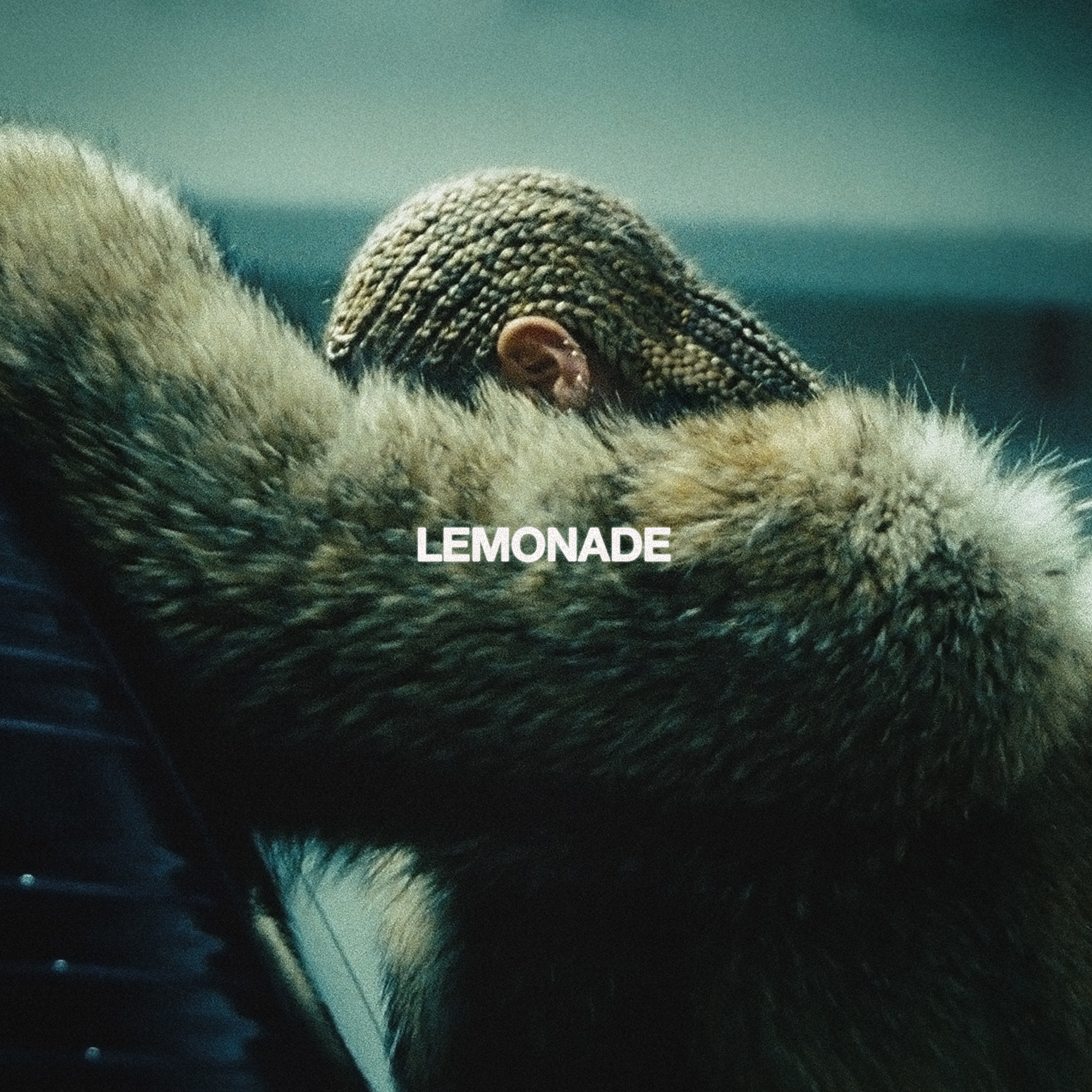
- Parkwood/Columbia
- 2016
Everybody loved it. Not just the usual suspects, either. I distinctly recall hearing praise from relatives and acquaintances outside Beyoncé's core demographic — middle aged straight white dads who have sometimes shrugged or scoffed at her, declaring that this new one was "actually pretty good." And from those already accustomed to bowing before Queen Bey, the acclaim was overwhelming.
Lemonade, released 10 years ago today, occupied a vaunted space within pop culture. Plenty of fans and critics have since cooled on it, and any assertion that it's Beyoncé Knowles' best work is bound to be disputed — quite reasonably, considering how many showstopping albums her catalog contains. But in its moment, the world stood in awe of this high-concept flex: a genre-jumping opus that flipped juicy celebrity gossip into a story that worked as memoir and cultural treatise, blown out in scope by a companion film that functioned as an album-length music video. It's a staggering achievement, one that would have seemed unthinkable a few years earlier.
For years, Beyoncé made hits. Ever since her Destiny's Child days, she'd been steadily churning out radio and MTV staples, recordings that saturated and sometimes shaped pop culture. "Say My Name," "Bootylicious," "Crazy In Love," "Irreplaceable," "Single Ladies" — these are not just songs, they're colossal entities that firmed up phrases in the lexicon, left behind indelible images, and became part of the fabric of society. Beyoncé had so many of these kinds of songs, and they were more than enough to make her a legend. Yet as time went on, she showed interest in becoming an album artist too.
This was a fascinating balance to strike. Bey adopted an alter ego for the 2008 conceptual double disc I Am... Sasha Fierce, but the hits overshadowed the gimmick. Her 2011 LP 4 was her most accomplished and acclaimed body of work, but its singles didn't become inescapable monoliths. Beyoncé disappeared into the background for a while, and some of us had the sense that she was transitioning out of her imperial phase as a recording artist. In actuality, she was working hard behind the scenes, preparing to change the game with that digital drop.
Beyoncé's self-titled album, released without notice one night in December 2013 with music videos for every track, redefined her career. Backed by a dumbfounding assortment of performers, producers, writers, directors, and even Nigerian literary giant Chimamanda Ngozi Adichie, Beyoncé had created not just an album but a densely layered multimedia project. Arriving at a time when critics and hipsters were taking pop stars more seriously than ever, the album validated the idea that pop could be the vanguard, and its rapturous reception altered Beyoncé's trajectory. She didn't stop making hits, but she became the kind of artist for whom hits were secondary, who specialized in luxurious statement albums that dominated the cultural conversation regardless of where they charted. She was now a critical darling, a bold innovator, an untouchable larger-than-life figure.
Among tastemakers and cultural commentators, the Beyoncé visual album was such a coup that the only way to follow it up was to go bigger. With Lemonade, that's exactly what Beyoncé pulled off. The album would once again be released by surprise, once again incorporating an army of noteworthy collaborators, once again with visual accompaniment for every song. But this time the songs would tie together into a complex, cohesive story, and the videos would combine into a longform film, premiering on premium cable without advance word about what the album was about or who was involved. And even more than the prior project, it would capture the attention of what seemed like the entire world.
When Lemonade premiered, in primetime on a Saturday night, the rapt viewing audience discovered in real time that Beyoncé had created an album about the betrayal that wrecked her marriage and the healing that restored it. This was a seismic development. Jay-Z and Beyoncé are essentially American royals, the subject of endless public fascination. The tabloids had been full of unconfirmed rumors about his infidelity, and security footage of his altercation with Beyoncé's sister Solange in an elevator went viral in 2014. To this point, Bey had not commented on the situation beyond a cheeky reference to the elevator incident on the "Flawless" remix. And on "Formation" — the album's triumphant epilogue, released as a standalone single months earlier — she'd declared, "I'm so possessive so I rock his Roc necklaces," a loaded statement that suggested whatever had transpired was now in the past. Now, she was confirming the stories and addressing it all head-on, albeit in highly controlled, heavily curated fashion. Lemonade would offer a glimpse of our protagonist's pain, confusion, and anger as she moved through the stages of grief, and it would turn that experience into literal cinema.
As pop music theater, Beyoncé's performance of her own emotional journey is captivating. Few singers have controlled their instrument with such strength, agility, and personality. In the album's opening stretch, you feel as though you're riding shotgun as she proceeds from despair ("Pray You Catch Me") to indignance ("Hold Up") to fury ("Don't Hurt Yourself") to disgust and steely resolve ("Sorry"). These are nuanced songs about a complex tangle of feelings, and so much of that nuance comes from her ability to shift between delicate and ferocious, between goofing off and bottoming out. The moment-to-moment variation within each track is dazzling. Every lyric is optimized for maximum impact, every line delivery carefully considered and expertly delivered.
Even on "Love Drought," which is necessary to advance the story but is otherwise the least essential track, Beyoncé puts on a clinic, shifting between playful, conversational vocals and fluttering fragility. Similarly, a piano ballad like "Sandcastles" might have been cloying under different circumstances, but Beyoncé redeems it by singing lines like "Bitch, I scratched out your name and your face/ What is it about you that I can't erase?" with startling rawness. And if her virtuoso performances can elevate the weaker offerings, they're dumbfoundingly great within exceptionally constructed tracks like "Sorry," where she cuts loose with vocal acrobatics worthy of a Grammy, an Oscar, the whole damn EGOT. She's always had an ear for meme-able phrases, and in this case her disdain-dripping read of "Becky with the good hair" was an instant hall-of-famer. Her distinct variations on "I ain't thinkin' ‘bout you" alone are worthy of close study.
So yes, Lemonade wrings real pathos out of a voyeuristic celebrity confessional. But in this phase of Beyoncé's career, mere autobiography would not suffice. Threaded with poetry by Warsan Shire and featuring a parade of accomplished figures like Serena Williams, Quvenzhané Wallis, and Zendaya, the project also became a larger meditation on the experience of Black women in America: their tenacity, their style, their resilience in the face of abuses and indignities. Themes, allusions, and Easter eggs were elaborately woven into Lemonade's audio and visual components, providing fodder for endless analyses and even a college curriculum. Though it worked as popcorn entertainment, it allowed you to go as deep as you desired.
The bigger-than-Beyoncé dimensions of Lemonade came to the fore most clearly on the climactic "Freedom," with a thunderous Just Blaze beat possessed by gospel fire and a refrain that found Beyoncé defiantly pressing onward: "I break chains all by myself/ Won't let my freedom rot in hell/ Hey, I'ma keep running/ 'Cause a winner don't quit on themselves." The film explicitly connected "Freedom" to the emergent Black Lives Matter movement, depicting the grieving mothers of Trayvon Martin, Michael Brown, and Eric Garner with photos of their late sons, juxtaposed with Beyoncé's cries for liberation.
It's fair to be cynical about these kinds of gestures, to dismiss them as vague and opportunistic, the same way some have flinched at Beyoncé performing in front of the word "FEMINIST" in all caps at the VMAs. And yeah, maybe she could have been more specific about what kinds of changes she was calling for. I don't have a sophisticated response for those who see a billionaire playacting as a revolutionary, or who view the "I got hot sauce in my bag" of it all as a quaint relic of 2010s identity politics, or who recoil at the memory of a moment when some people seemed to frame celebrity worship as a form of activism. But, as an outside observer (read: white, male, Midwestern) who found this album enthralling, it did strike me as meaningful that Beyoncé began to emphasize her Black Southern roots at the same time she rebranded her music as high art. And a global superstar shining a spotlight on injustice has to count for something, even if she left open the question of what justice might entail.
For better or worse, there's no doubt that the lack of precision in Lemonade's politics contributed to its big-tent appeal. Although primarily by, for, and about Black women, Lemonade was remarkably successful in appealing to people beyond that demographic. Some of that had to do with the way it wove myriad genres into its narrative. Long before Cowboy Carter, Beyoncé laid claim to country music on "Daddy Lessons," and any potential forthcoming rock album has been preceded by the smoky roadhouse throwdown "Don't Hurt Yourself." Inspirational piano ballads, dark R&B, sleek electronics, deconstructed dancehall, New Orleans bounce, screwed Houston hip-hop: Lemonade successfully bends all to Beyoncé's will without ever feeling like an incoherent jumble.
Lemonade had one other clear target audience, which helps to explain why people like me found so much to love about it. This was prestige entertainment. It literally premiered on HBO, and its credits were strewn with the kinds of acclaimed superstars and indie favorites who, like HBO series, tend to command media attention in outsized proportions. Anyone claiming Beyoncé was pandering to bourgeois critics had plenty of ammunition.
That said, on behalf of the bourgeois critic population, the amount of talent she assembled here was completely nuts. Jack White, the Weeknd, Kendrick Lamar, and James Blake all get spotlight moments, and they all show out, applying their respective special sauces the way superstar guests are supposed to. Burrow deeper, and further delights unfold. This is an album that samples Isaac Hayes and interpolates Animal Collective on the same track, that sets a Jon Brion string arrangement against the horns from "SpottieOttieDopaliscious." You could build an incredible festival lineup out of the team that made "Hold Up," a roster that includes Father John Misty, Soulja Boy, Diplo, Ezra Koenig, MNEK, and — thanks to that borrowed "Maps" chorus — all three Yeah Yeah Yeahs.
Given the deeply personal nature of the material, the way it spoke to broader societal issues, the ambitious nearly feature-length video, the star-studded supporting cast, and Beyoncé's bravura performance, it's no wonder Lemonade was such a critical sensation. Rolling Stone, Billboard, Entertainment Weekly, The Guardian, Complex, Wired, US Weekly, and dozens of other publications named it the best album of 2016, a year brimming with landmark albums. So did this website, though not without some internal squabbling about whether the crown actually belonged to Frank Ocean's Blonde. Those discussions were the first time I remember encountering anything but elation where Lemonade was concerned, the moment I first noticed the collective euphoria surrounding the album starting to dissipate. That's for the best. Give me a clear-eyed assessment over hagiography any day. But if the lovefest that initially greeted Lemonade went slightly overboard, the album absolutely deserves its place in the pantheon. Big-swing superstar pop albums don't get much better than this.
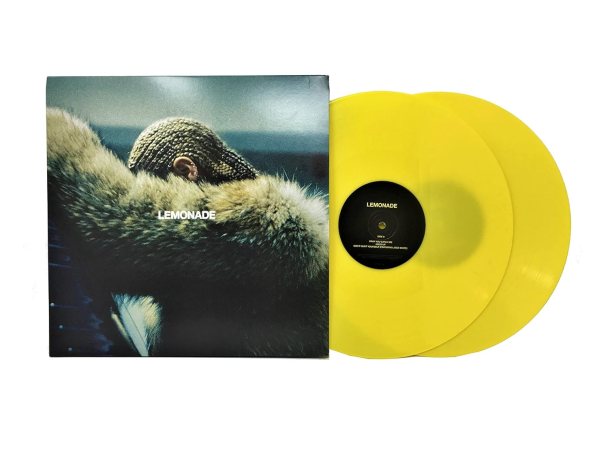
Beyoncé - Lemonade [LP]