
The prolific Philly musician on Hour's stirring Ghost Bridge, his recent solo EP, and co-running one of the best labels in indie music
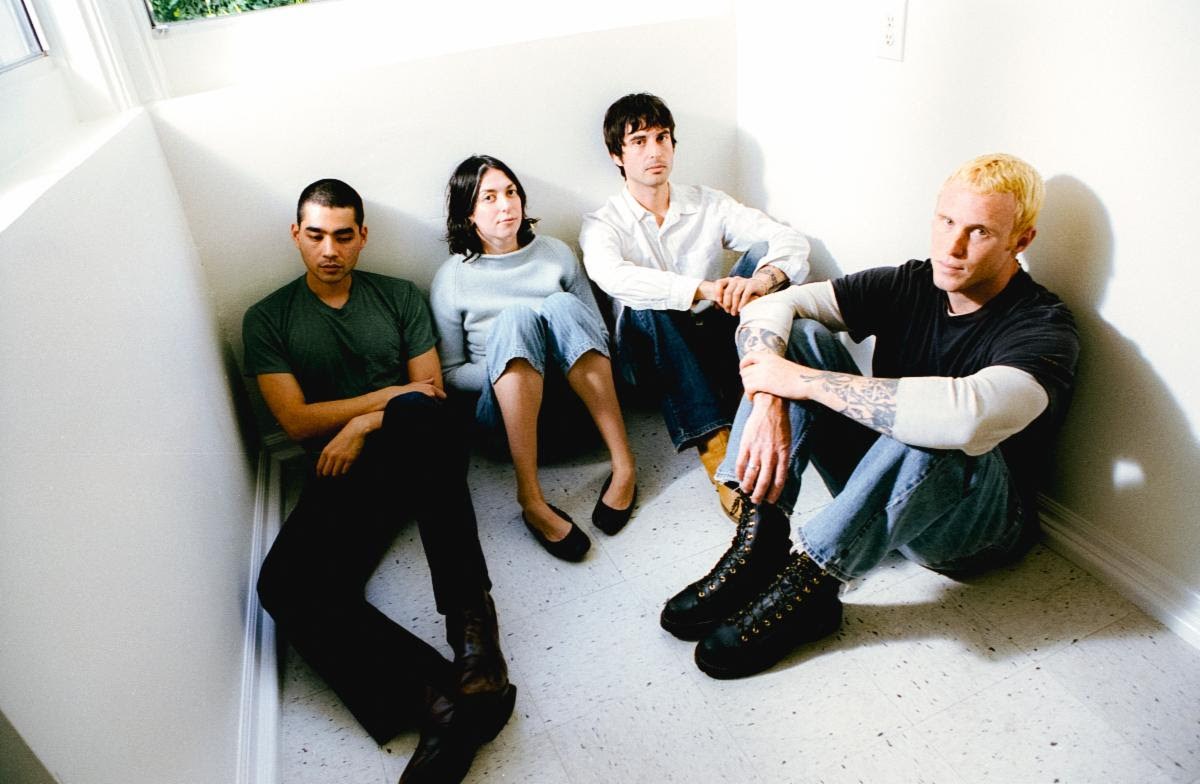
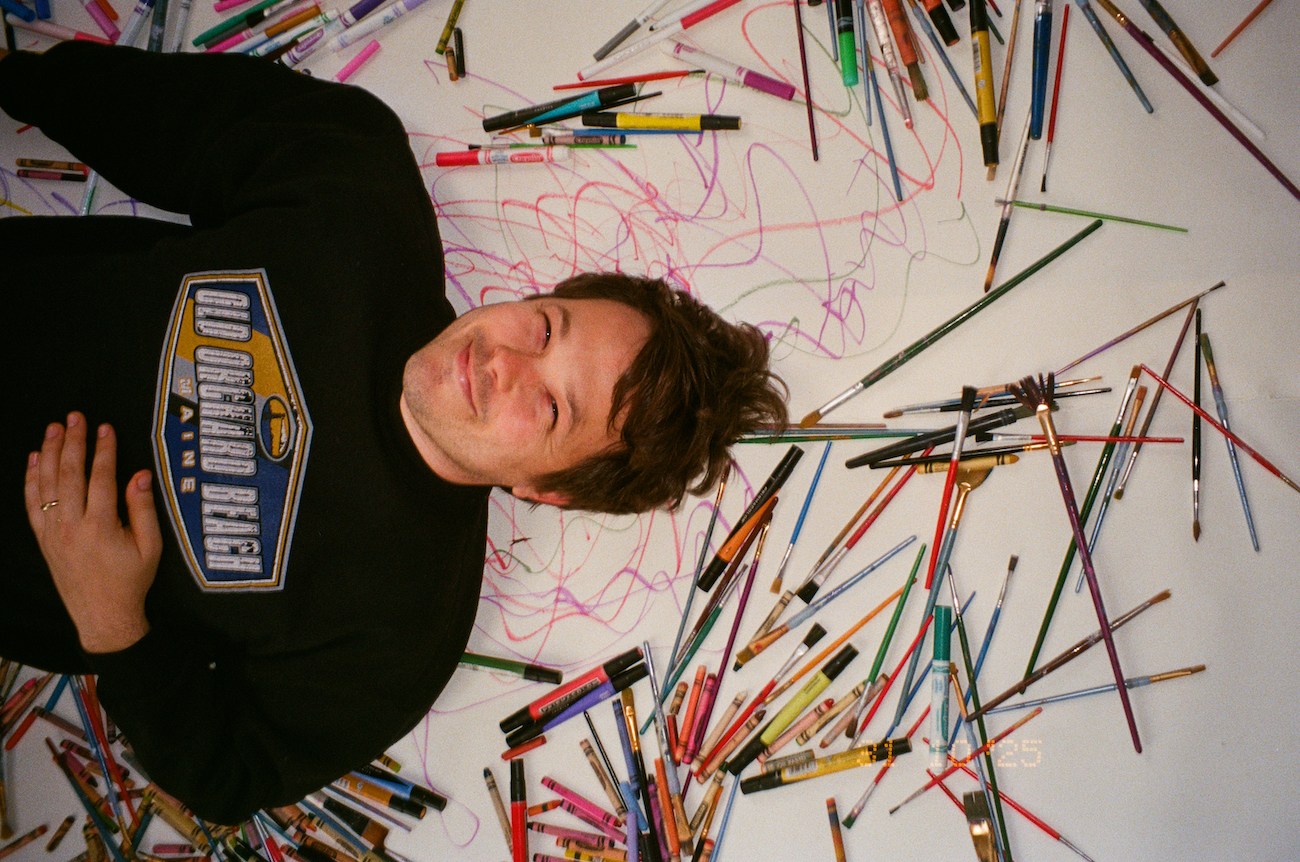
Michael Cormier-O'Leary has been involved with some of my favorite music of this decade. The Philadelphia musician is the composer for Hour, the basement-DIY chamber-pop ensemble whose spellbinding new album Ghost Bridge drops this Friday. He's also the longtime drummer for Friendship and 2nd Grade, two of the best bands in indie rock, and he co-runs Dear Life Records, a label whose catalog includes brilliant releases from MJ Lenderman, Wendy Eisenberg, Fust, Florry, Styrofoam Winos, Thomas Dollbaum, Armbruster, Little Mazarn, Nina Ryser, Shane Parish, and more. Oh yeah, he put out a new solo EP this year, too.
Ghost Bridge was the occasion for my recent interview with Cormier-O'Leary. The album expands Hour to 13 members, giving him ample resources for conveying the melancholia and preemptive grief that inspired so much of the music. It's a gorgeously plaintive collection of tracks, elegant in a way you wouldn't normally associate with basement recording sessions by artists rooted in the punk scene. With each successive listen, I'm more impressed.
Last week, Cormier-O'Leary spent an hour discussing Hour, plus his recent solo EP Proof Enough, the backstory of Dear Life Records, his intersecting creative communities, and more. Listen to Hour's new single "Sky Is Blue" — the only track on the album with vocals — and read our conversation below.
You went six years without a new Hour album, and now you’ve put out two studio albums and a live album between 2024 and now. Was that just a matter of inspiration striking, or were there some more mundane logistical delays? Why is this band becoming a prolific force again?
MICHAEL CORMIER-O’LEARY: The pandemic does fall in there, a not insignificant two-year stretch. I also moved to Maine from 2021 to 2023, and that is how the band grew to include some folks from up there. The first shows after the pandemic were with a Northeast version of the band. And I was writing stuff that whole time. I just didn't feel the urgency. I was in the band Friendship, which has kept me busy for a decade now. And the first two Hour records came out in the same year. They were both in 2018. So I guess it takes time to put it all together, and it is a large band to organize. I think I need natural lulls to regroup and get more material actually written.
This project has just become increasingly elegant and moved away from the improv side of things into the realm of compositional chamber pop. What's your background as a composer? Is this something you studied? How did you get into it?
CORMIER-O’LEARY: I studied music in college. I went to Ohio Wesleyan University, right near you. I studied music there for about a year and a half, and it wasn't a particularly exciting music program. At that time, I was interested in combining compositional passages with improvised sections, and I didn't really have a huge support network within the music program to do that. There were a lot of folks who were trying to be teachers or classical performance musicians, and I felt pretty out of place doing that, but I did learn. I learned theory, and I feel like I got some good building blocks, at least, from that.
I moved to Philly after graduating and was coming up in the DIY scene, which, obviously, this kind of music wasn't really happening. But the West Philly scene ended up being really supportive of all sorts of impulses. A lot of my friends, I'd say, “Oh, now they're trying this sort of thing.” And so after a few years of doing basement shows here, I was like, “You know what, I think I can write this.” I have written a lot on guitar, and I was like, “I think I can do this in a basement.”
Our first show was in a basement, and that was the starting point of introducing compositional writing but still playing with — I mean, I was playing with just some of my favorite people in the West Philly scene. Only one of them at the time, Jason Calhoun, was classically trained in any way. So the music was, in a way, simpler in arrangement. The structures of the pieces were still pretty fixed, but there was definitely improvising happening within that. I'd say if anything now, while it has gotten more composed, the improvisational moments that happen are more expansive. We do deeper in improvising than we did in those days, and it's more charted. It's the marriage of the two, which was what I was always hoping for.
And the band keeps getting bigger. I think Ease The Work had nine musicians, and now this record has 13. Is that just a function of being connected to so many musicians and you feel like you can pluck people from wherever? Or the vision's getting more expansive?
CORMIER-O’LEARY: Yeah, definitely both of those things. Again, that move did precipitate a different version of the band. When I moved back to Philly in 2023, I had already written a lot of this work and was not wanting to lose the contributions of the folks from the northeast, and I missed what the Philly people used to bring to it. So I just combined them, and that's basically been the band since then. But this record, I knew exactly who was playing, whereas Ease The Work, the group was still coalescing. This time around, I could write a proper record for exactly the instruments I knew were available. I compositionally was trying to reach more for a few different things. I was definitely inspired by a lot of soundtracks for film, and then also what I call a pop orchestra, the kind of groups that would back up Frank Sinatra back when the music industry was such that you could be a singer and the record label would get you a whole orchestra to play behind you. I love when an orchestra is used in pop settings. We're not close to an orchestra yet, but we can reach for those gestures a little easier than you can with a four-piece band.
Writing this record, I took to heart that impulse even more, although this record's way less romantic and swoony compared to Ease The Work. It's definitely exploring some darker impulses, but I think that music would be put together compared to even Ease The Work, which still included a lot of on-the-fly arranging.
What appeals to you about that orchestral pop sound? What makes you want to compose in this style?
CORMIER-O’LEARY: I would use the word color. When you add the whole range of instruments that you get from a small orchestra — a lot of film scores are not full orchestras, it's like maybe 20 or so players — you just get this color from how you can arrange all the different instruments in their distinct timbres. There are rock bands that I think can pull off that coloring of the music, but it's really hard to do. You throw some strings in there and the way strings blend with wind instruments, and it has this really rich effect that I'm so obsessed with. I think it adds to this world-building quality, too, where the different types of instruments can really flesh out a world. When I hear really thoughtfully arranged larger group music, it has this transportive quality that I've always tried to go forward with in our music because music takes you somewhere else, just by the nature of the combinations of sounds.
You’re not doing this at one of the fancy old-school recording studios Sinatra would be recording at. You're doing it in a basement. Does that present any extra challenges, or does that make it easier because it’s the world you're used to operating in? How does that impact the experience?
CORMIER-O’LEARY: It's very hard. It is the world I'm used to. I would love to not be used to it. I would love the ease of a lot more time to rehearse and then a lot of time in the state-of-the-art facilities to record and whatnot. But we don't have that, and I do think there is something to be said about using the limitations that you have to make something that — you know, there's no universe where we would ever sound like an orchestra backing Frank Sinatra. It's just not going to happen. But I like reaching for it, and I think in the failure of reaching for that, we become the band that we are.
This record was extremely hard to make, and I would say basically all of the credit goes to Lucas Knapp, who recorded all of it and made it sound like it was not recorded in a basement — even though it was a basement and the living room. To be clear, the piano was in the living room. But the rest of it was a basement. I wouldn't have even tried to do that without Lucas because I knew he is so capable of having these extreme limitations and still making something that feels very clear. The goal with this whole record is that the instruments sound pretty unadorned and exactly how the instrument sounds.
I think we maybe found the limit to what anyone should do at this scale. It really just took a long time. There's a reason a lot of more classical music, a lot of film music, is recorded by professional musicians in professional studios. There weren't rehearsals, per se. I had charted the music out, but everyone was learning the music while we were recording, and that is less than ideal. Everyone involved is, A, extremely talented, and B, we basically all have some amount of punk background, so we don't bristle at the scrappy nature of making these records. But man, it would sure be nice to do them a little more above the board. But that's how we keep making them. I don't know if this scale is necessarily what we're gonna go for again, for a bit.
Relatedly, you just took Hour on a short tour. What was that like?
CORMIER-O’LEARY: That was great. All these new ones I had just written out, most of the parts that I was feeling pretty nervous to try to do them in a smaller setting. We did this tour with six people, which, by regular band standards, is still a large band. But it's not even half of the instruments that are on the recording, so I was nervous. And then — this always happens with me, it's why the band has been able to grow and shrink and it always works — you remove players, you remove parts, and it really gives a lot of space to hear what remains, and the piece adapts to that. It's all very adaptable. So even though I went into it thinking, “There's no way we can play the new stuff live,” we did, and it felt great.
I love the sparser arrangements that came with playing with the six-piece. I don't know why I was surprised to learn that because everything works that way, where I'm like, “What will we do without this violin part?” But what happens is if there's a part that really feels like it's missing, a different player just plays it, and then it's there, and that keeps it really exciting. It's why we've kept some of our oldest songs in rotation, because the band has changed since the first records. We can play those songs now, and they just feel different than they did in 2018. I don't know why I went into this one thinking that wouldn't also be the case, but it remains the case. It's very adaptable music.
How's the experience of touring with Hour different for you compared to when you tour with Friendship or 2nd Grade?
CORMIER-O’LEARY: I mean, more people. Which, interpersonally, is fun. But there's an ease with touring with Friendship because we're 11 years into doing that. We understand each other. We understand what each other needs on tour. Hour wasn't really a touring band until 2023. We would play in Philly, maybe a stray New York show before COVID. But anytime you go on tour with people that you haven't toured with, you all have to learn what each other needs on tour. And we've now done enough touring that I feel like Hour has settled into that place, as well.
But the music of Hour is more dynamic. There are nights where it's like, “Whoa, we took this one to a place that we haven't taken it before.” There's a freshness every night with playing the Hour music. That's not to say with Friendship that's not there, but the music is not improvised in Friendship. We settle into a set that we can really dig into, but I wouldn't say one night I'm like, "Wow, we took ‘Tree Of Heaven’ to this place I've never conceived of before.” And same in 2nd Grade, which is obviously very song-based. The improvisation element of Hour keeps each night feeling like, “Oh wow.” We had a particularly good show in Yellow Springs, I guess last year. And it makes me think of it, like, “Oh man, that set from Yellow Springs had this character that the set in Cincinnati didn't have,” or that had a different character. And then, just the logistics of trying to get six people to the van at the same time.
We talked about doing chamber music in the basement. We’re also talking about taking chamber music to — I'm assuming it's small rock venues, and maybe they're not used to running sound for this kind of music. I don't know if there's any learning curve for the venues when you roll up and play an Hour show there.
CORMIER-O’LEARY: Yeah, some people get really surprised. We send a stage plot, but still some people get very surprised. And then others, I'm often impressed by how they just roll with it and they know what they're doing. It really helps that most tours we've done, we've done with Lucas, who records the music. He also is the synth player, and he is a working sound person. Sometimes, you get to a place that does not remotely have anything that you need, and luckily again, because it's not super amplified music, if we can't run the strings through the system or something, we are able to just play to the volume of the string players. We've definitely done that a lot. Lucas has definitely helped some sound guys out in a pinch and made the lift a little lighter, to make sure all the inputs are running and whatnot. But I don't know, I see rock bands that have all sorts of convoluted setups, too. We're not running pre-recorded tracks, and we don't have pedals. Essentially, none of us use pedals, so I feel like it's just making sure that they don't let the clarinet feed back or something. That's normally the worst thing that can happen when doing sound for us, clarinet feedback.
You mentioned the new album Ghost Bridge explores darker impulses. Can you expand on that? Would you say it's an album about anything or that there were clear inspirations for it?
CORMIER-O’LEARY: In a super broad stroke, I was just thinking about grieving. Literally, it's about grieving and death. But neither is as dour as — there was an imaginative quality to it. I've never died, and I don't know what it's going to be like. Once I do, I'm not gonna be able to report back. Some of the stuff, especially the title track “Ghost Bridge,” the idea is an image of a bridge that disappears, as if it itself were a ghost. But also it could be the bridge that a ghost crosses over. I think it works on both levels. There are these really abrupt, almost angular harmonic twists and turns in it that feel as unnerving as a physical bridge suddenly disappearing. But the piece has this longer arc that also feels reflective of starting a journey on one side and ending up on a really different side that isn't where you started out from.
The first track, “So Long Without A Word,” was really the grief song that I was picturing. It starts with this huge stab of the shock of loss, but it goes through a lot of different ups and downs, and I think the whole record has that. The record ends with a song that I wrote right before recording that I named after my kid. I felt like an album where I was mainly thinking about death and then ending it with a newborn song, something about that decision I think explains the general approach to this stuff. I wanted to look at the darkness and not get consumed by it, but not avert my eyes, and let my imagination still have a place in thinking about this stuff. There's not a ton of grief that feels particularly direct. It really zigzags. It ebbs and it flows. And I think this music is trying to embrace the zigzag nature of grieving.
Were there specific instances of loss that you're willing to talk about that were drawing you towards the direction of grief?
CORMIER-O’LEARY: I wouldn't say that there's a straight line between a particular person that I've lost and this music. I have lost people that I've loved. More than that, there was a skin-thickening quality to it. There are sure a lot of other people that I love that I don't feel prepared to lose yet. So while I have lost people, I think there was more of a dress rehearsal quality to, like, who I will lose. Slightly evasive answer, but no, it's not a specific loss.
It's something that I think about. I think a lot of the music that I've written, that I've been a part of, is about loss. It's about things not lasting and trying to preserve what you can of the thing. But there's always a knowledge that it's a somewhat futile thing to attempt. The loss will occur. But you can hold on to parts of things, and I think that's always worth doing. I'm just fixated with loss. I think it's a throughline through a lot of my music, so this feels just like a different angle of that.
Having the band be so big, even though it's very much your music that you wrote, it feels like this big community project in a way. Is that fair to say?
CORMIER-O’LEARY: Definitely, yeah.
There's an aspect where all these people are chipping in to make this one thing happen, it's like a microcosm of this creative community that you're a part of.
CORMIER-O’LEARY: Yeah, absolutely. I feel like it’s a real Venn diagram of creative community. Because not all of those people were a part of the same creative community, but I definitely I think it's representative of multiple communities that I've been very inspired by or have literally been a part of. And what it's become now to me, it feels like it has these tendrils that are connected to multiple creative communities, and I find it really moving. My role is, I'm doing a lot of the logistics, and I write the music, which hasn't always been like, “Everyone play this exact part.” There's always been a lot of room for everyone's voice.
Every player has generally some idiosyncratic quality that I just can't imagine not having. Like the way Matt plays viola. He's the one on the title track “Ghost Bridge.” We ran his viola through some reverbed unit, but we really blew it out. The really haunting distorted wailing sound is Matt's viola. Record after record, he's always brought this really haunting quality to his playing. He doesn't play the viola like anyone I've ever heard. I could just continue with anecdote after anecdote about each player having something in their voice.
Abi Reimold is the other electric guitar player, and I think every single record they have been the one to record towards the end if we've been doing it piece by piece. Every record, I think Abi has played a part that I couldn't have ever imagined without them. They play it, and now it's like, when I don't hear it, I feel like the song is missing a huge important thing. And that’s idiosyncrasy. All these players just have a really unique approach to their instrument, and I try to make sure that that is not lost, even on this record where I did write more for them. I tried to still leave room for their distinct approach to cut through. It absolutely feels like a community project. I think that's a safe way to put it.
Earlier this year, you put out a solo EP that was released under your own name. What was the story with that project? I think I read that it was blurring together biography and fiction. When you're releasing it under your own name, the natural assumption is that it's “more personal” or whatever.
CORMIER-O’LEARY: I love songs. For me it's the impulse to write a song that has words, and the impulse to write this Hour music is not quite as drastic as maybe it seems. But obviously there's something different once there's a voice singing, and words do add a huge layer to music that you don't have to navigate when there are no words. I've either done hyper-specific, true to my life songs or totally fiction songs, and that EP was a hybrid of those impulses, where some of it is about a 5-year-old named Marilyn. I don't know a 5-year-old named Marilyn, and I wasn't a 5-year-old named Marilyn. But I wrote that song, and I felt like I understood what this character was really feeling, in a way that I don't often get to think about commiserating with the emotions of a 5-year-old. But it was nice. I feel like I could explore a certain kind of loneliness, and then what you do to alleviate loneliness yourself. And that's telling that story. I don't know if I could have landed on that emotion if not via a story like that.
But then the same EP has a song that I wrote shortly after getting married. I mean, a wedding day is such a kind of psychedelic high of a day. Obviously, there's a lot of stress and anxiety that can go into the days leading up. But the day itself, you're basically just floating above the ground. I remember probably two days later being like, “I feel like the crash happened.” I still was in love with my wife, but I just felt like being surrounded by friends and the whole intoxication of the event, I was just like, “Man, it's done.” So I wrote a song that was very much like, "I hope I remember what that was like." And two days later, I did remember what it was like. But the song was like, "Time will keep going, and life will keep happening, and you gotta do what you can to hold on to those moments that you were floating above the ground." That was a very personal song.
That EP ended up being this half-and-half, going down some fictional rabbit holes and drawing from some pretty specific details of my life. That EP has a version of the song “Sky Is Blue,” which appears on this Hour record, but the one on the Hour record is the one that I wrote first. I wrote it on piano, and when I went to try to play it on guitar, I couldn't. So I wrote different chords. The melody is largely the same, and the chords are basically entirely different. And I really love having two literally re-harmonized versions of the same song. But the version on the Hour record, my friend Heeyoon Won is the lead singer, because I was really picturing it like an Astrud Gilberto song or something, and Heeyoon has a voice that reminds me of Astrud.
A lot of what you release, including Ghost Bridge, comes out on Dear Life Records, the label that you co-run. At a certain point, I realized that Dear Life was putting out so many of the new albums that I was excited about, so I wanted to ask you a little bit about the label too. How did it get started?
CORMIER-O’LEARY: I started it in 2019. This is a pretty good segue from your previous question. I started it literally because I was writing songs and I had this Hour music, and I was like, "It'd be nice to be able to put out both." I hated having to explain myself like, “Hey, here are some songs about the fuzzy memories of my childhood,” and then also, “Hey, here's this instrumental band.” I started the label in 2019 so I could put out both impulses. And then, obviously, COVID lockdown situation in 2020. I was working at a pizza shop, making the dough. I suddenly was getting paid more money than that job was paying me to stay home. And so Dear Life grew a lot during lockdown, specifically.
Friendship had played a lot of shows with Kath Bloom, and she had been working on a new record. That's basically how I got connected to Frank [Meadows], who at the time was sort of soft-managing Kath. The first vinyl release that Dear Life did was Kath Bloom's record. I was talking to Frank every day, working on that. We're both in our houses. And by the end of that record, I was just like, “Man, Frank, you should run this with me.” It was just a tape label when I started it. I was having fun with it, but if I had kept doing it alone, I would have stopped years ago. Because as orders picked up, I wasn't super into — the first time you go and you mail out an order to someone, it's really exciting, but the 10th time you do it, and there's 25 to 30 separate things you're sending out… I was already burning out running a tape label. But Frank brought this incredible — Frank is just one of the most Energizer buddy people I've ever met, so working with Frank gave the label a real kick in the pants.
Meanwhile, Jon [Samuels] had been designing a lot of the early artwork. So it was in 2020 where the three of us were like, “Well, we could just all three do this thing.” We've been talking about it lately, just because the label has released such a range of music, but I feel like — and we didn't set out to do this — the label, when we reflect on it, is really about good writing. I think that's what we've landed on. We all three really care about good writing. That doesn't always have to be lyrical music. A lot of what we've put out is very well written, and the writing is \integral to the process. So all these years later, it's fun to look back like, “Wow, we've put out…” I mean, we're putting out the Sammy Weissberg album that's a fully classical string quartet, brass quintet. All the music we've put out, with Jake [Lenderman] and Fust and the alt-country revival thing. It feels disperate, but then if you look at it, it's like, “Oh wait, it's all just really well written music.” So that's where we're at with it. We've learned a lot in a relatively short amount of time. I didn't set out to be a record label guy.
Are you consciously seeking out “good writing” at this point now that you’ve defined that? How do you know a Dear Life release when you hear it?
CORMIER-O’LEARY: We've definitely become more intuitive with what that means. Definitely we didn't start out with that. I think the first two releases I put out that weren't me were instrumental nylon guitar albums. So that's how it started, ’cause I love that music. But now, there is some sort of — it feels annoying to be like, “It's intangible,” but sometimes it is just clearer if it would fit with what we've done. We've only put into words the good writing thing in the past year, so I think we're a little more aware of that. It was something we knew we liked earlier than that, but at this point it's sort of a feeling. I think there's still room for the definition to expand. I don't think we've really found, like, “OK, these are the working parameters of what a Dear Life release could be.” Clearly not, because I do think the Sammy record is very distinct in our catalog. I'm excited that music like that can be included now. It's still being defined, but certainly we are closer to defining it.
You had a big hit with MJ Lenderman’s Boat Songs. Did that allow the label activity to expand a little bit?
CORMIER-O’LEARY: Yeah, by the nature of just keeping up with that record, we became a bigger thing. We were definitely thrown into the deep end. That record sold out before street date. We had made 500 copies of it, and it was sold out before the album was out. Just a detail like that, of we didn't know how many copies to order, and then just keeping up with the pressings, and then as Jake was touring more, making sure that he had copies to sell. The label just grew inherently because of that. It did literally afford us the ability to release more music than we probably had, or more music at a larger scale.
I feel like Boat Songs did graduate us out of being cassette label, while we had been dipping our toes into a stray vinyl release here and there. And in 2021, vinyl turnaround times were [long]. I remember we did a Shane Parish record on vinyl earlier that year. I think we waited 11 months to get those records, nearly a full year. So we were really hesitant to get into that stuff anyway. But then after that Jake record, paying for vinyl felt less daunting. Then things normalized again, and you could get records in three months instead of 11. That record definitely took us all for a ride.
You mentioned that you didn't like aspire to be a record label person. You've got all these different musical projects you're juggling. How much of your time has to be devoted to running a record label now?
CORMIER-O’LEARY: It's less time than it used to be, but we also do fewer releases than we used to. The most we did in a year was maybe 13 releases, and that was largely tapes. That's still far too many releases. We're down to like six. I think next year, we're doing five. Granted, those five have a lot more going into them now than than the 13 had going into them. So I don't know, it's definitely a job's amount of work at this point.
The labels I was inspired by starting out were Orindal, which Owen Ashworth runs, Lily Tapes & Discs, which my friend Ben Lovell runs. There's a label called Cry Like Donna that my friend Theo [Krantz] runs, and then Will Kennedy from 22º Halo and Joey Degrado used to have a little West Philly label called Sleeper Records. They were the four inspirations for me to be like, “Oh, a record label is kind of like an art project in of itself, and then a cool way to connect to people you think are making good music.” Those were all cassette labels except for Owen's, who, even still, I feel like Owen keeps Orindal at — it's just him, and he does just the exact amount he knows he can take on. We've definitely grown beyond that in terms of the lift, but there are three of us, which is the difference between all those other labels and us.
As work goes, I find a lot of the work that comes with running a label is satisfying. I like organizing stuff. I like having things in folders. I like spreadsheets. So a lot of the day-to-day minutia of running a label, I find fun. I've met people whose career is working for a label, and that type of person is still new for me. I think everyone I was inspired by was a musician, as opposed to someone coming at it with more industry knowhow and experience.
You mentioned having five Dear Life releases coming up next year. Is there anything you can tease, or do you have to keep it all under wraps?
CORMIER-O’LEARY: I'll have to be a little coy, but four of them are repeat artists. One of them in a mode that is pretty different from the other release we put out. And the fifth one, I think everyone's gonna be really excited about. The one, that we haven't already released their music. I think people are gonna be pretty excited. It feels like it's a long time coming.
Ghost Bridge is out 10/9 on Dear Life Records.