
CONTENT WARNING: Sexual violence, sexual assault, and discussions of trauma.
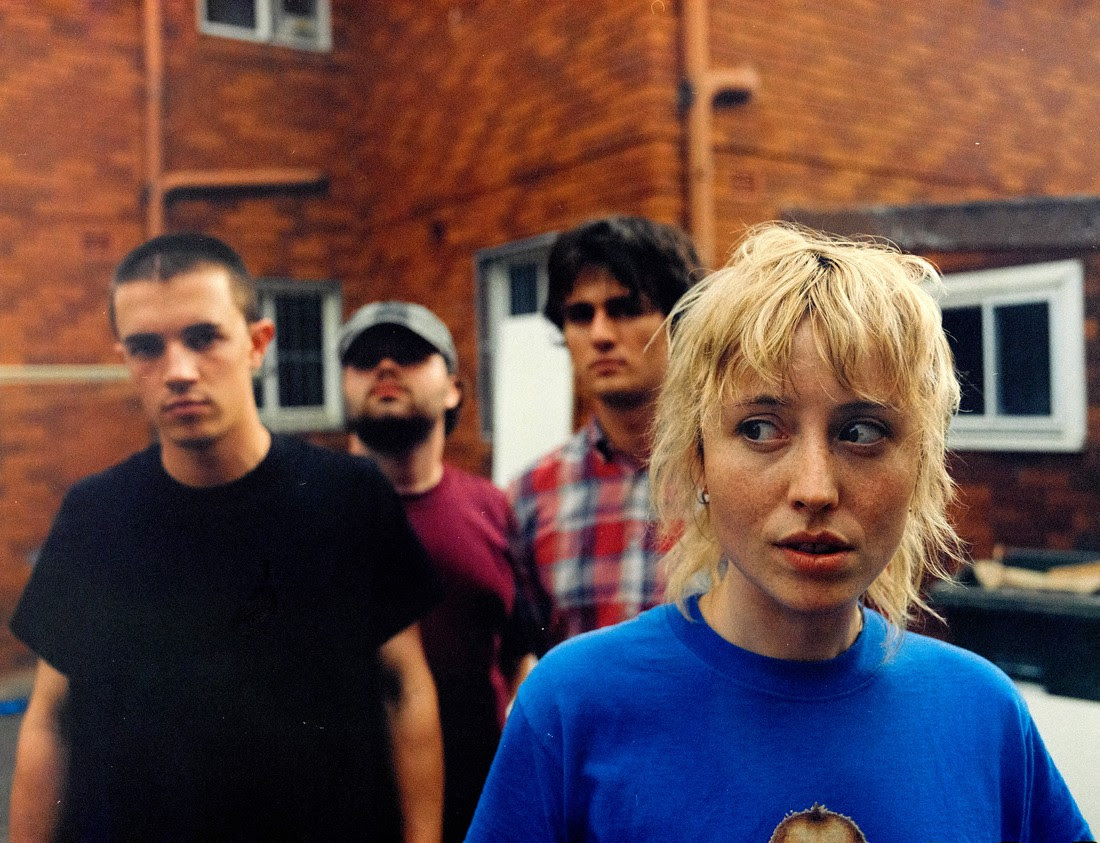
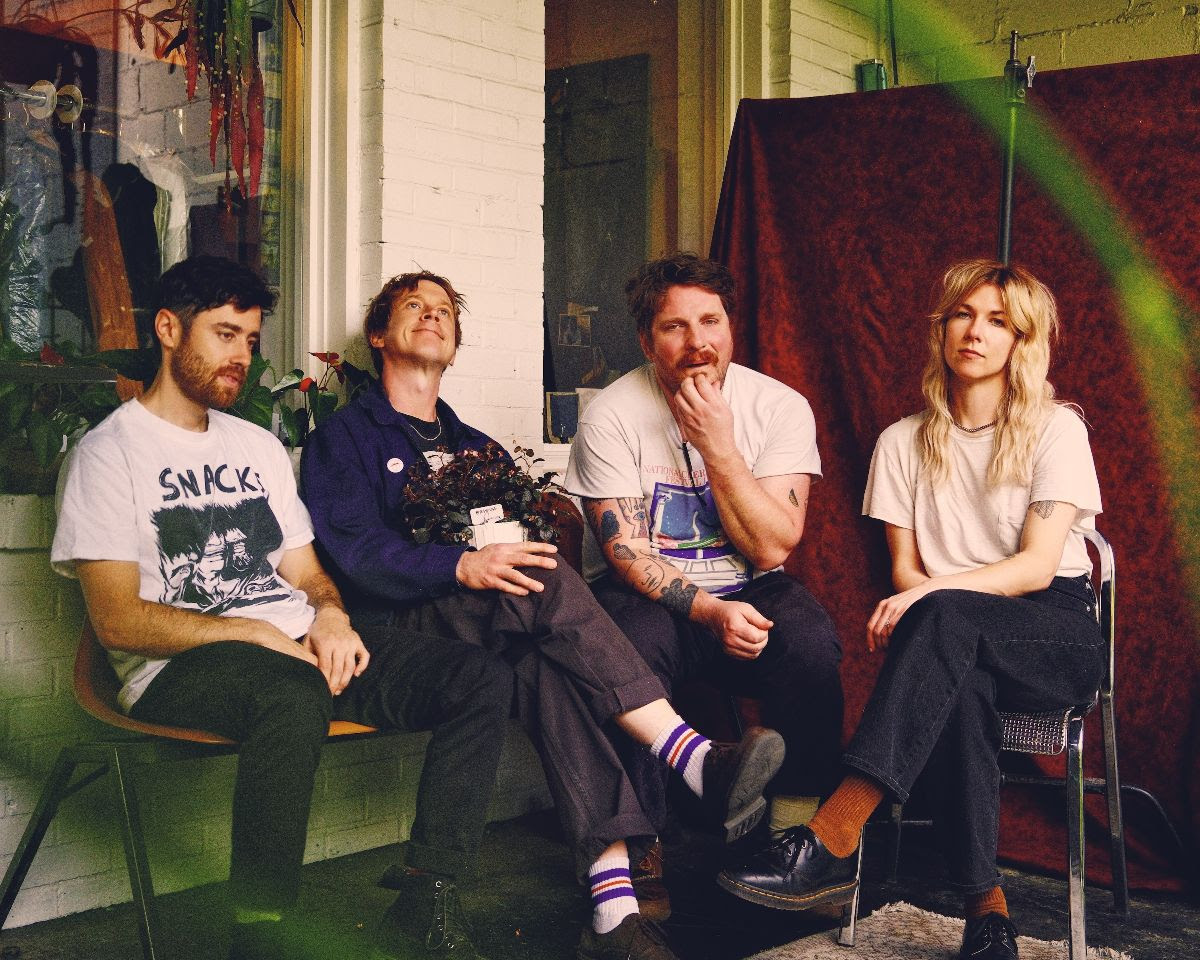
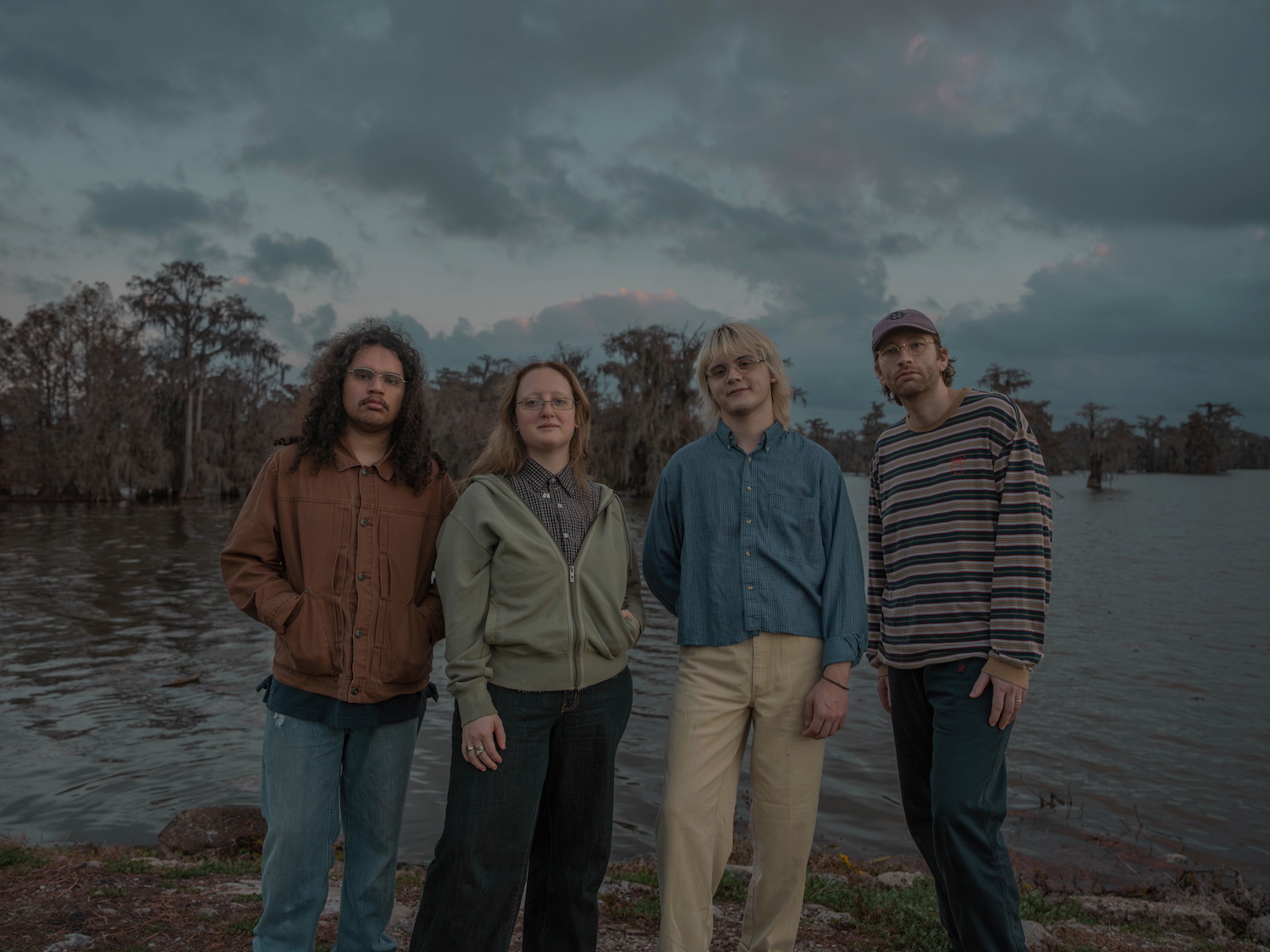
When is art successful? That’s obviously meant to be a ridiculous rhetorical question. But Vancouver quartet PISS — vocalist/lyricist Taylor Zantingh, guitarist Tyler Patterson, bassist Gavin Moya, and drummer Garreth Roberts — and their debut album you made me / skin on linen, have got me thinking some big, ridiculous things. Why do a gnarled scream and grating guitars sound so good? Why do we turn pain into sound? Why do we feel pain? Why do we inflict pain? What do I get from seeing someone else’s pain? These are only a very minute fraction of the difficult questions that PISS’ music brings to mind.
you made me / skin on linen stopped me in my tracks. It’s an assemblage of guttural yells, engrossing poetry, samples of feminist thinkers and activists, grueling bass, unyielding drums, and landmine guitars. In just over 30 minutes, the album articulates the evolution of personhood in a world that seems to welcome sexual violence, the societal norms that have allowed such violence to continue throughout history, and the oppositional viewpoints on how to move forward and prevent that injustice from continuing.
Each sample feels like a doorway to some new level of both understanding and unraveling. The album opens with children's voices expressing what they want to be when they grow up. On the following track “i wanted to be a singer,” Zantingh relays one line about how everything, any idea of the future or who can be, changes based on another person's abhorrent actions: "I wanted to write romance novels/ Now I need perfect control over my victim narrative/ The story of a girl who was silent and powerless/ But it's cliche to write about being powerless as a girl." The album then shifts between recordings of different feminist voices: Andrea Dworkin on her argument of pornography as a human rights violation; Manon Garcia discussing the Gisèle Pelicot case and the vastness of sexual violence; Toni Morrison speaking on morality, self-forgiveness, and grace.
PISS expose the different ways to deal with pain and injustice. It’s more than just noise. It’s violent sound about violence inflicted on a body, a person, a future, a life. It’s a piece that’s about contradiction and tension, and how life moves forward as a result of constant friction.
For two years, PISS performed the same set. Now, a version of it has become their debut album for Sub Pop. What began as a project built around a specific artistic vision has become part of a larger conversation about personal autonomy and systemic violence. It feels silly to write about such a standalone work, and I was reminded while chatting with the band over Zoom, just before they headed out on a nine-hour car ride for tour, that it’s also silly for me to request explanations for something that feels most powerful when experienced — whether live or blasted through headphones. One could argue that’s when art is most significant.
Preview you made me / skin on linen below and read an edited version of our chat below.
Are you excited to go on tour? When was the last show or shows you guys played?
TAYLOR ZANTINGH: We did a weekend trip in Toronto, and we were supposed to play a festival in Windsor as well. Or not Windsor. Where was it? Kitchener, Ontario. Both in Canada. But I lost my voice at the first show, so I'm a little nervous. But I've been doing tons of vocal exercises and trying to stay on top of my health, not get sick. I love being on tour, but it's a constant state of hyper vigilance concerning — I'm always listening to everyone's breathing, like oh, someone's sniffling. If I hear someone cough, I'm just like, "Ahhhh!"
Your vocal athleticism is so fricking cool. I’m always in awe of people that can scream. It takes such stamina. So I'm curious to hear about your background and your journey to find your voice as a performer.
ZANTINGH: I never did any training or vocal training. I took singing lessons when I was a kid, but then very quickly my singing teacher was like, "Oh, we need to teach you guitar." So she was secretly teaching me guitar when I was supposed to be doing singing lessons. But I think for me, it's the journey to discover my voice is like it always felt natural for me to be loud. I guess very early on I was in my high school boyfriend's punk band when I was like 16 years old, and I was screaming back then, and I just really enjoyed it. In this band, all the years of not thinking too critically about things and letting myself reach a flow state on stage, coupled with all the really intense thinking I had been doing about words and lyrics when I was doing my undergraduate degree in creative writing, came together so that this project, my approach to voice is very intuitive. There's not a lot of thought that goes into delivery. The thought goes into everything else, so that I don't have to think that much about voice.
But it has been a really interesting relationship with my body as an instrument in this project, because on one hand, my voice has allowed me to unlock this life for myself and express all these things and connect with all these people. It's a huge tool for empowerment for me, but it's also extremely humbling because when I lose my voice, it all just goes away. When I reach my limits, I think humbling is the only word I could use to describe it because I can't take my body to a shop and get it re-strung or you know whatever if my instrument breaks. The obsession with my voice, the obsession with my body, like vocal warm ups and vocal cool down exercises when we're off tour physiotherapy massage therapy, regular therapy, like taking care of my body. It's been a very interesting experience because the project is so much about my body too, right?
I was just thinking that it’s an interesting parallel of again this tension of the body versus the mind and how they're constantly battling each other, but also can be in harmony with each other at certain points. I'm in love with the record because it so eloquently talks about such difficult things, but at the same time. I love music that can feel like it's about to break, but at the same time is so strong and it's controlled chaos in a way.
ZANTINGH: Oh, thank you. I really enjoyed when we were writing the record, and even the ongoing process of playing the set over and over again, thinking about the relationship between the music and myself as a character. You know what I mean? So when we were writing the record, it was thinking about the music as the environment in which I exist, telling my story. So that's why the music feels so violent sometimes. But when we're playing on stage, we put a lot of effort into making sure that the the music is dialed in, and even when we have technical difficulties, we do not stop a song unless it's absolutely necessary and keep going so that I can feel the security to not have to think when I'm performing, and I can get into that place that allows me to actually connect with people in a sort of... I don’t want to say spiritual, but you know what I mean, like connect with them in an energetic way.
Even when we're on stage, things have to feel safe enough for me that I can start to think about the instruments in real time as dangerous for me. There are times when we go on stage and I'll take my earplugs out for certain parts of the song, and it's very important to me to protect my ears because like I need them as a musician. But in certain moments, it just makes sense and feels right for me to do that because it's an important part of the set for people to watch me hurting — which sounds fucked up to say, but that's what people like about it, you know?
This album has really made me think a lot about performance of a narrative and how people are supposed to receive art. One question that I had for everyone in the band was if there's art or albums that are so important but they're so difficult to listen to every day. There's this tension between recognizing something is really important and sacred, but also at the same time knowing that you need space from it, and it can't be something that's just purely enjoyable all the time.
ZANTINGH: Yeah, I think the closest thing that I could relate to people on that feeling is the record A Crow Looked At Me, which is the Mount Erie record about when his wife passed away. He does talk a lot in that record about refusing to let that experience become an object for somebody else in a way. Like he's making art about it, but he's really pissed off that he even has to. I think in that direct address of, hey, you're listening to this in the comfort of your bus seat on your way to your work, but this is like tearing apart my entire life. And when I first heard that record, I was just like, "holy fuck," because it does multiple things. It forces you to sit with him in a moment in a way that you wouldn't necessarily otherwise. You would think about your own life when you're listening to a song, but he's like, no, I am here, and that's what this record's about, and I think that sort of feeling really inspired me when I was making this record of refusing to let something be commodified in the way that art sometimes is.
GAVIN MOYA: I don't know. I was also thinking about Mount Eerie, but I can't really think of another example. Maybe Carrie & Lowell, by Sufjan Stevens, is another one about grieving someone. It hurts to listen to in a way that is not for everyday listening.
I would love to hear more about your experience in the tension maybe between releasing or exorcising these emotions and also putting it down in a creative aspect in order to contain it or maybe make sense of it, or maybe to put it outside of yourself. But then to also have to like again revisit that as a touring musician.
ZANTINGH: Yeah, yeah. I mean, it's all of those things you said at one time sometimes. I think being in this project, I have learned to completely detach myself from any sort of expectation of what things should feel like or what I should be experiencing, and understand my role in this as a completely unique thing that is what it is in that moment. If that makes sense? There are times when we're driving and we've just had a big laugh because something is so funny and we're in a beautiful city and I'm looking out the window and I'm just so joyful and grateful, and then there are times when we're about to leave for tour and my knees have been hurting since the last tour and I'm worried about my voice, and I'm stressed out, and I'm crying myself to sleep because I don't want to go on tour.
And there are times when I'm terrified because there's very strange parallels between the experience of getting on stage and telling a bunch of strangers this thing that happened to me, and what happened? What actually happened to me? And when I was trying to communicate my story and have people receive my experience and my truth, and the parallels between very valid art criticism and having your experience criticized or your story criticized — it's so many different things at once that you have to learn to get comfortable in a constant place of tension and to just let things go, let go of control. Which is very hard for people who have experienced trauma, [laughs] letting go of control, understanding that I can't control how people receive the project. I can't control how people talk about the project. I can't control how people perceive me, how they relate to me, what they say to me, what they do at my shows.
The only thing that I’ve found that has started to make it easier for me is somatic therapy and learning to just sit in a feeling without constantly needing to be like, "Oh, what does this mean? What does this mean?" Because so many things have happened. There's a backlog where I'm still processing things in this experience that have happened to me months ago, and then there's new things being added to the queue, and it's hard to think about what's happening right now when there's still all this other stuff that's — what I'm trying to say in a very long-winded way is that it's an ongoing and organic, living, evolving process, and I have to see it that way in order to function.
I think that's really beautiful as well because it sounds you're inhabiting the project as well as interacting with the structure with which the project exists in. The idea of sound collage is really cool and super effective, and it feels like everything is constantly in conversation with each other. I wanted to know more about your relationship with collage and why you felt that that was an important way to structure the album.
ZANTINGH: Yeah, I really liked the idea of this assemblage as a metaphor for creating yourself and the way that like environment changes you or helps you or changes the way or influences the way that you grow, especially as a child, and I like the idea of assemblage/collage with literal objects and how that feels when you're using that as a device to talk about an experience within womanhood, especially. Then to further that, the idea of object and fragments and collage and assemblage when you're a performer, the other layer of a performer that exists as a different thing inside everyone's mind, but is constantly resisting like objectification while you're doing all that, I was attracted to that as something where the piece never has to be finished.
You say collage, but when I was writing the record, I was thinking of assemblage art, which is like a type of collage, right? That's just the word that I prefer to use. But it was one of those things where when I started thinking about how to talk about the things that I wanted to talk about without slipping into cliches, it made sense to work with as many different things as possible, an amalgamation of all the different things that influenced me and helped me and challenged me.
And that's why I think sometimes some people perceive the things as being in conflict because maybe they're newer to the conversation. They're not used to how two very influential feminist thinkers can be in direct conflict with each other, but yet both their ideas are essential for us to move forward as a movement, and at the same time for us to exist and have that duality within ourselves of we were deeply harmed and victims, but at the same time, we're capable of hurting others, perpetuating that harm, perpetuating harm upon ourselves, of being complicit in our own harm.
I think that constant contradiction and how we are made up of all these different things. I don't know. It's it's very hard for me to explain in words because, like, I made the record, right, because I don't know how to just say it in a sentence. If I could just be like, "Yeah, this is what the record's about, and this is everything," then I wouldn't have made the record because it would have just been something that's easy to describe. So I hope there's something in there that you can paraphrase and something that makes sense. But that's kind of where my head was at.
From what I've read, it seems like sometimes the samples change within your live sets. Is that true?
ZANTINGH: The samples don't necessarily change in the live set, but they did change on the record because of legal issues. We ran into quite a few legal issues because when we started, we were just a little punk band, and we were like, Howard Stern is not going to care. But no, Howard Stern does care, and his team sent us a letter letting us know that he cares and that we absolutely cannot use his voice on our record. There were quite a few changes that had to be made on the record. So the samples that are on that record, most of them are the same as what we originally did, but there are three that changed because of legal issues. We couldn't clear or afford them.
That's really interesting. Has that made you change your relationship with the album?
ZANTINGH: Yeah. I had spent so long, and even before I was in the project, kind of saving YouTube videos of clips that I found particularly interesting or evocative, or that were kind of in the same conversation as the things that I liked to write about. I had continued to do that while we were making the record, and some of the samples that we ended up putting on the record were — well, one of them in particular, I had been saving for the next record, and the next record lives in the same universe as this one, obviously. So that sample in particular, sometimes I like to get frustrated, but we didn't have any time. It was literally like, "Oh, we have a week to clear this sample, and this one has a clear pathway to clear it, and it does make some sense on the record," but I find it a little bit underdeveloped personally, only because I know what I had planned originally to do with it in a second record.
I think it's a huge sore spot for me personally [laughs] because I had spent so long picking samples that I felt were perfect for the record, and then also the idea of the spectrum of responses to violence and the difference in ideological perspectives was really important to me. But we had somebody who elected not to be a part of the record because they thought — they were an estate manager for somebody else, and they thought this person was very staunchly nonviolent. And I wanted to include people who were all across the spectrum because I think that it's important for us to get really comfortable with discomfort, in order to progress as or progress as a movement.
She elected for her relative's voice to not be a part of it. But then, what ends up happening when you take the voice of those advocates for nonviolence out? Then it does start to skew more the other way. She didn't want to be involved in it because she didn't want to be involved in a project that was advocating for militant activism. But without your relative's voice, then it does really start to sound like it's advocating for militant activism. So I don't know. It's very complex how they all fit together like puzzle pieces in a way.
Yeah, that's so interesting. And again, it brings me back to that theme of everything is always in conversation with each other, whether you want it to be or not. Everything is ping-ponging off of each other, reacting, and so that’s interesting in a weird counteractive way, I guess, counterintuitive of what you were trying to do.
ZANTINGH: Yeah, but I think that what we ended up with, it was as good as we could manage, considering the logistical hurdles that we had to overcome. And everybody else seems to think it's perfectly fine. I just know what I wanted to do and was unable to do that because of things that would not have affected us if we weren't in this awesome position of being signed to Sub Pop, using samples that you haven't cleared through.
You mentioned that you’re already thinking about writing the next record. I was curious what your conversations as a band have been like to creatively move forward when this started as a project that was really just to create one specific idea or one album? How do you move forward collaboratively as a group when that's been done?
ZANTINGH: We will only proceed the same way as we did with the first record, which we have been playing around with stuff sonically, which has been very exciting and personally inspiring. But subject matter-wise, we're all on the same page that, for me as a writer, I need a lot of peace and quiet and solitude in my life in order to make things that I think are actually interesting. I could sit down and write songs, but I'm not gonna like them, and they're not gonna be any good. So I think we're definitely not in a rush to make something. I think good things take time, and I'm not going to write something if I don't feel like it should be written, if that makes sense. I think we're just focusing on touring this record, and then trying to find a cutoff point where I can have a lot of space and go back to reading a lot and sitting with my thoughts and making a lot of bad stuff so that I can make good stuff after.
At this point in the conversation, the full band gathers on the couch post-coffee run.
When you guys first came together as a group, what was the thing that made you all think, "Okay, this is gonna work"? What was your first clicking conversation or touchstone?
ZANTINGH: I want to say when I made the document.
TYLER PATERSON: Yes. Yeah. I don't know if Tay went over this already, but Tay and I met initially, and then after kind of bringing Garreth and Gavin into the band, Tay had created this outline of what this entire album was going to be, with a lot of abstract terms, being like, "Okay, this song is maybe conceptually this vibe, and this one who's giving this energy," and different prompts to jump off from. That was when everything got a little more solidly glued together. But also getting into the practice room the first few times, I feel like you kind of know in a band dynamic and setting very quickly whether things are going to be good or bad. I think very quickly we all gelled really well together.
ROBERTS: Was the document made for the first time that we practiced?
ZANTINGH: Maybe with you, made before the first time we practiced with you, because it was over Halloween week when I went to go cat sit. And I was just alone for the week, and then we jammed for the first time in early November, right?
ROBERTS: Yeah.
ZANTINGH: In the beginning, Ty and I were writing all the songs together, and the last three or four songs that we wrote, we wrote all as a big group. But that was after we had already started playing shows together. I think maybe also a moment where we were all like, "holy shit," was when we played our first show and we saw the reception that everybody — like, it was a modest crowd, not too many people, but I was really overwhelmed by how many people were talking after and their experience of the set.
ROBERTS: That show and then also the Music Waste one I think are the two big ones at the start.
What's something the other members have introduced you to musically or otherwise that has changed your perspective on art?
ROBERTS: Whoa!
MOYA: This is an easy one for me. I never in my life would listen to noise music or [music] half as experimental as what Ty and Tay were wanting to cook up. When Ty sent me the playlist of what him and Tay were going for sonically, I'd never heard anything like it. I was like, "This is crazy." The first time we started jamming, Ty was like, "Bring every pedal you have." Immediately, I was like, "My god, I've never even thought in my life how to make sounds like this." And it was really, really exciting to just make disgusting noises that I didn't know were possible.
ROBERTS: I felt very similar, but then also I guess there's maybe specific artists too that I was just like, "Holy shite." Actually, really got into Women through because Ty and Tay are both big fans of Women and that was like a really really big one.
ZANTINGH: Women the band, Women the band. [Laughs].
I'll make sure to clarify that.
ROBERTS: The gender, the social instruction. [Laughs]. That was maybe one of the bigger ones, but there's been a few for sure. But yeah, I didn't listen to any noise music or anything in that realm.
PATERSON: For me, it was definitely going to Tay’s poetry reading. I think that was a really important moment because we had been writing in a more casual sense and jamming in my room before then, but I think that solidified at least an idea of a particular direction that we could really explore, and I feel like from that point, then the project just kind of exploded from there.
ZANTINGH: Ty's music taste is very broad, and I've discovered a lot of different artists that I wouldn’t normally listen to through being friends with him and collaborators with him. But also, it's been really exciting, especially in the early days. We just have extremely complementary skill sets where things that I have no idea how to even think about, and he would just be fluent in it, and then vice versa. I think it made it feel like learning in a fun way, rather than like, "Oh fuck, I have to learn this in order to make this song." I just have this artist who I respect so much, who is bringing all these things that I have been missing from my own practice, and I can just focus on doing what I do best, and doing that to the best of my abilities, and trust that this person who I've chosen to collaborate with is going to do the same on his end. That was exciting because it was the music language that he brought to the project that helped me unlock so much. Because I would just give him these weird abstract prompts, and then he would translate that into real sound.
This is, I guess, kind of a spicy one. But what is the most unexpected thing you've disagreed about as a band?
ZANTINGH: I think maybe you guys could say that because the thing is that we have a pretty clear structure for decision making. Like they might disagree with something, but not even really tell me [laughs]. Because if I'm like, "Yeah, I really want to do this," then they're just gonna say their opinion —
PATERSON: I can’t really think of anything off the top of my head.
ROBERTS: I think any actual disagreements are going to be about just like pop culture or liking bands or something.
ZANTINGH: And when we were writing, Gary wanted to use a lot more toms.
ROBERTS: Oh!
[Everyone laughs].
PATERSON: You snuck some in there.
ROBERTS: I did. I did. I don't even know if it was a disagreement though.
MOYA: It was a disagreement or a severe misunderstanding.
ZANTINGH: We were recording the last song on the record, and during the noise part, I had been listening to a demo over and over again where Gary did a specific thing with his drums during that part, and then he kept recording it, and I would go in and give notes and be like, "Oh, can you do this?" And he'd be like, "Yeah, yeah." But then he kept doing the other thing, so we had like a… fight in the studio.
ROBERTS: I just remember it you basically were like, "You've done it before this way. Like, I want you to do exactly like how we had been practicing it," and how we had been practicing it had changed from when that demo was. So I was in my head how we've been practicing. It was a completely different thing from what you thought we’d been practicing was. And so I and I didn't even know.
ZANTINGH: Gary and I have a Donkey/Shrek type relationship.
[Everyone laughs].
PATERSON: She did it.
ROBERTS: She did it.
ZANTINGH: Any disagreements that happen are between us, but then also I would not be able to function in this band without him. But we do butt heads a lot, just personality wise, I think.
MOYA: Yeah, usually by accident.
ZANTINGH: We’re arguing, and then I'm like, "Wait, we're both on the same side. Hey, we agree."
ROBERTS: Fifteen minutes in, we’re like, "Okay, well, let's just keep going."
ZANTINGH: Yeah, yeah. But other than that, there's not a lot of disagreements. It's a very harmonious project, at least for me.
ROBERTS: Yeah, I would agree.
How has making this album changed the way that you like to listen to music or experience art?
ZANTINGH: Yeah, it has definitely for me, but maybe not in ways that I expected. I noticed, for example, when we are on tour, we get to play shows with so many amazing bands and festivals, and for a long time I would be watching shows and be like, "Yes, this band is great," but feeling nothing. And then I went to a music festival just as a music fan, and I was watching this saxophonist called Jairus Sharif. He's from Calgary. He's playing in a church, and I was crying watching him. And then I went to see another Calgary band. This was Sled Island, so it's a Calgary music festival. I went to another Calgary band called Jed Arbor, and again, I was feeling so emotional, and I was like, "What the hell, do I like music?"
When I'm performing, I'm learning this now, but I have dissociated from my feelings consciously in order to get by. So it's been really hard to connect with art in the same way, only because we tour so much, and I live in a constant state of dissociation. So that's why I've been doing so much of somatic therapy and stuff like that to help me, because I want to feel all the things, but that's not always a conscious choice that you make. You have to work toward that.
PATERSON: Well, I was going to say the opposite. I think my approach to what I put into the project at the beginning and the songwriting process was kind of informed by the way that I'd been listening to music for a few years leading up to collaborating with the band, and in the sense where it was just searching for a little bit more and being a little bit more exploratory with the form of song and everything like that. That is what excited me at the beginning of this project, where you know Tay had this big document and outline for what the album could be, but there was a true freedom and of where we could pull sonically.
ROBERTS: I think being in a show environment so much, I would agree with Tay, how it just really affects how you experience it when you're then an audience member. I've been finding that I will go to shows, and in environments where I usually would like to really experience live music and be engaged with it, it's been harder to find those experiences. And it could just be from my music tastes changing, or really wanting to find performance and musicians that are doing something unique that affects me in a very specific way, or just from being constantly surrounded in that environment, that it sort of desensitized me to it. But I know that it can still happen though because I've been to shows this year that it's still been like, "Wow, yeah, it's not as common anymore."
you made me / skin on linen is out 10/30 via Sub Pop.