
In 2022, New York-born Anna Schwab released “4am,” her first song under the moniker sadie. It's a sleek, low-key bedroom-pop sprawl with a subtle trap beat and Schwab’s gently Auto-Tuned vocals singing about driving around with the windows down, talking to someone about mutual loneliness. It feels casual and cosmic at the same time, and the combination is addictive.
The sadie project has since leaned into the electronic side, leading to hyperpop allegations. 2022’s Nowhere EP and the following year’s Tides EP tap into the same emotional vulnerability while playing with vivacious beats, taking cues from Caroline Polachek. But sadie's debut album, Better Angels, does the opposite — it has Schwab picking up a guitar.
Out this Friday, the LP is the result of an artist whose decade-long relationship was ending in the midst of Brat Summer. Twinkly acoustic ballads are laced with sputtery beats and processed vocals; it finds a middle ground between sulking in solitude and dancing at the club. The electronic elements of the songs feel like adornments rather than the foundation itself, like on an Alex G track. What the songs do best is create an immersive, exquisite atmosphere and fill it with simple, sticky melodies. Like Polachek, Schwab’s voice is a weapon she wields with satisfying preciseness, and it elevates every track.
Stereogum chatted with Schwab via Zoom at the end of April. Read our conversation about Better Angels, her musical background, her digital upbringing, and more.
You were classically trained on the piano from the age of five. How did that happen?
ANNA SCHWAB: My mom is a musician and one of my dad’s best friends is a pianist. So they were very like… you know. When I was five, I wasn’t like playing classical music yet, but I was taking piano lessons. My house was always full of music. And my parents were like, “You take math, and you also take piano or whatever instrument. You have to take music until you graduate high school.” And luckily I liked it a lot, so it didn’t really feel like a chore. My parents had a really beautiful baby grand piano, so I was very lucky to get to play on that.
Was it always a given that you would be a musician?
SCHWAB: No, not at all. I always made music and in college I was in bands, but I was an English major and a psych major. I thought I would become a therapist. And then my boyfriend, who the album is kind of about, was like, “Why aren’t you taking music more seriously? You’re good.” And I don’t know, I never really… My parents were both artists, so I felt like I wanted stability in a way that they didn’t have. But he was right, and I’m happy that he convinced me to pursue it more seriously.
Wow. So you’re not allowed to be mad at him.
SCHWAB: No, I’m not. I don’t have anger at him.
Yeah, that makes sense. I was thinking about how even though the press release says it’s a breakup album, it doesn’t really feel like it is to me.
SCHWAB: I don’t think it’s just a breakup album. I had been with my boyfriend for 11 years, and we were talking about getting married, and I wrote it in a moment of transition. So it’s who I was during the during and after the breakup, and less about him and more like, “What do I want in life? Who do I want to be? Am I able to let go of regret at things I haven’t done?” I think I was sort of feeling like I could blink and my life would be over and I wouldn’t have necessarily experienced the things that I wanted to experience. So I think it’s more about me during the breakup than anything else.
You mentioned that you’ve always been making music. I’m curious about what you made specifically in your teenage years.
SCHWAB: When I was a teenager, I was obsessed with Regina Spektor, and I definitely made a lot of very Regina Spektor, singer-songwriter songs on the piano, never recorded any of it. I have journals of lyrics and stuff, but yeah I would mostly do that. And then in college, I started playing in rock bands, and then started experimenting with Ableton.
Need to hear more about this Ableton journey. It seems like it changed your life.
SCHWAB: Yeah. I mean, I liked being in rock bands, but I felt like sometimes I would hear sounds or hear things that my bandmates — who were all talented — couldn’t provide. So I was just like, “I need to start producing music.” And there was a girl at Wesleyan who was a producer, and I went to one of her shows, and I was like, “I want to do what she does.” And at Wesleyan we had a free subscription to Lynda, and it gives you free software tutorials. So I just started watching those and learning about modular synthesis. The barrier to entry feels so high, and I feel like men are way better at being bad at something for a while and pretending that they’re good at something. And I felt stupid in the beginning. I was like, “Oh, this is so hard. I’ll never be good at this.” But you really just have to make a lot of bad songs and then things start to click. You start hearing what different things do, what compression does, all of that.
When did it click for you?
SCHWAB: I think it’s still clicking. There’s still things I feel like I’m not great at in terms of production. But my friend Eric and I were making music together and there was a moment where I was like, “I’m hearing it this way,” and Eric was like, “You do it. Just take over.” And I did and I was like, “Oh, yeah, I could do this.” But also learning language about different elements of EQ and sounds makes you hear things differently.
It blows my mind that your first song was “4am.” I’m obsessed with that song. I’m curious about the beginning of the sadie project in general and how that came to be your first song.
SCHWAB: When I graduated college, I had put out one song. In college, I was called Ives — actually, I shouldn’t say that, because I don’t want people looking it up. But I put out one song, and then I was just like, “I need to become a really good producer and give myself time to make what I want to make.” And I felt very determined to do it myself. I didn’t want a guy touching my music and felt very stubborn about that. I had an EP and I played a show at Café Forgot — it was my first show as sadie.
And then this musician, True Blue — Maya Laner — was like, “I liked your set. Let’s hang out and get coffee.” And she introduced me to her friend, Joey [Valley], and Joey and I started making music together and I sort of let go of being like, “I need to be the only one.” And we finished “4am” and that EP together. And I put it out as the first sadie release. Joey was a huge part of that, but it is crazy when you put out music and guys reach out and they’re like, “Who produces for you?” or “I would love to produce for you.” Which is why I felt like my instincts to not want to work with anyone were correct, but it ultimately served the songs so I’m glad I did.
You’ve been called hyperpop, but I feel like it’s almost bedroom-hyperpop. What are your hyperpop influences?
SCHWAB: I was always obsessed with Charli and Sophie. I feel like I learned a lot about production from Sophie and A. G. Cook. And underscores, I love underscores. I love underscores' new album. But yeah, I don’t really feel like this album is hyperpop. I associate much faster BPMs with hyperpop. I don’t really make fast songs, not that that’s the only requirement. But if you use Auto-Tune, people are like, “Hyperpop.” But yeah, I feel like it’s more like alternative bedroom-pop, maybe.
How was your Brat Summer? Even though it was forever ago.
SCHWAB: Was that two summers ago? I think that I was not having the most Brat Summer because that was kind of when my boyfriend and I were like, “Are we doing this or are we not?” So I feel like my Brat Summer happened last summer.
You returned to recording acoustic instruments for this. What inspired that?
SCHWAB: I think it was that I was listening to a lot of bands that have acoustic instrumentation, so it was that my taste changed a little bit. But I was also feeling stuck and a little lost and there was something comforting about going back to writing music on the guitar rather than staring at a computer. I was feeling drawn to more organic sounds, even if they’re warped later. There was something that felt more pleasing to me at the time. I kind of feel like suddenly I’m in a phase now — the new music that I’m writing — where I’m back to electronic sounds. But yeah, there was something that I was feeling, like I was trying to slow everything down and get in touch with myself and feel more connected to the world around me. And that felt like a way to do that.
How different is the process between writing a song that’s more acoustic and one that’s more electronic?
SCHWAB: Well, it’s interesting because I’ll play a guitar riff then I would put it in Ableton and I would warp it, and then I would start to write the lyrics and stuff. So it still was very much like productiony. I’ve actually been trying to start songs now on the piano with just a chord progression. It used to be that lyrics and melody came last and I would do the beat and the instrumentation first and trying to reverse it now.
I'm trying to get myself out of my comfort zone. I’ve been trying to write lyrics in the morning and then try to put it together into a song, and then go to the computer and be like, “Okay, I’m gonna flesh the music out and put this new melody over it,” which is kind of the reverse of how I used to write.
That seems harder.
SCHWAB: Yeah. I was just noticing that when I start with a beat, it pigeonholes the emotion of that song. And so I think starting with the emotion and what I’m trying to say and then having that inform the instrumentation is what I’m trying to do right now. So we’ll see how it goes.
Water is a big theme for Better Angels — how does it serve as an inspiration for you?
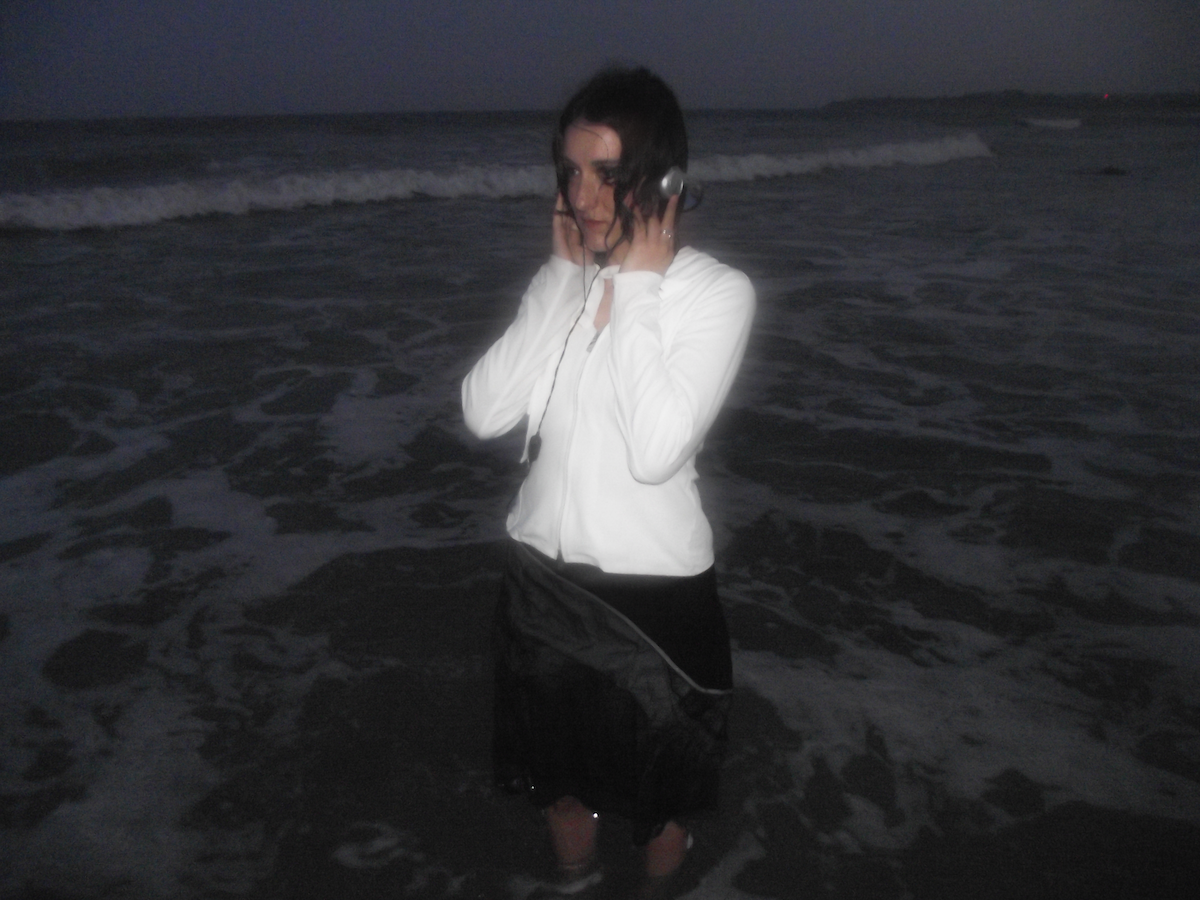
SCHWAB: I feel a deep spiritual connection to the ocean. I’ve been swimming in the Atlantic Ocean since I was a baby, and my friends and I do a polar plunge — we call it the “Swim of the Month Club.” We swim every month of the year. We’ve been kind of bad about it recently, but it’s like a lifelong thing with two of my best friends from high school. I’ve always been very inspired by the ocean. I use it in a lot of lyrics and the imagery, and my dream when I was a little kid was to be a marine biologist. Sometimes I feel like it’s too late to do that now, but you never know. But I have always been very obsessed with marine animals and just everything ocean-related. So, yeah, feels like a very spiritual thing.
Polar plunge sounds crazy, like in December. Did you ever get sick from it?
SCHWAB: I don’t think so. I really think that going in the ocean makes you invincible. The reason you sleep so well after you swim in the ocean is because it has magnesium and your body absorbs it better through the skin. So that’s why when you spend a long day at the beach you sleep really well — because your body just absorbed a ton of magnesium. I feel like it has healing powers.
I have so many shells and rocks. I have a big rock collection. The rocks that are part of the visual campaign, I’ve been going to that beach my whole life and I used to just bring a bunch of rocks home. Then I would bring them to college so I could put them around my room. I remember my dad moving me and he was like, “What is in this bag? Is it full of rocks?” And I was like, “Yes, it is.” And he was like, “Never again am I carrying your bags of rocks.”
I’m fascinated with the “Better Angels” music video. I want to hear more about your digital upbringing… Tumblr?
SCHWAB: I was actually never on Tumblr, but I loved Vine, and I’m obsessed with TikTok now. I also was obsessed with America’s Funniest Home Videos. My parents were weird about the computer and the internet. I had a very analog childhood, and by analog I mean reading books and playing the piano. I was a big soccer player, so I feel like I was actually less internet-pilled than a lot of my friends. But yeah, this director, Andrew [Theodore Balasia], has made other videos like that, and my curated catalog of my favorite TikTok videos is one of my biggest sources of pride.
That makes sense that you were less internet-pilled, because I feel like then you view it through a lens of appreciating it more.
SCHWAB: And now I feel like I’m more internet-pilled than a lot of my friends. I’m very online now. I’ll reference things that are going on, and my friends will be like, “What are you talking about?” But I just love that video, because I also felt like part of that song was about feeling isolated from people and isolated from one person in particular. And I feel like the internet is both isolating and also connecting. Like sometimes I’m on TikTok scrolling, and I love hearing about people’s lives and I feel connected. And then sometimes it’s the opposite experience. But you get to see a lot of the world that you would never have seen otherwise if you didn’t have the internet. So I appreciate that.
I’m kind of surprised that TikTok is still a thing, considering Instagram Reels, which I’m pretty addicted to.
SCHWAB: My Instagram Reels are so freaky. I do go on Instagram reels, but sometimes they’re so freaky. I’m like, “What is going on?”
I feel like that’s part of the charm. And I feel like your music video has that kind of vibe.
SCHWAB: It does. I definitely pulled some videos from Instagram Reels for that. No, I mean, listen, I love the freaky vibe. But sometimes I just want to look at kittens or — a lot of my algorithm is whales because I’m obsessed with marine biology. But, yeah, it’s different vibes. And I wanted to go into the meme-freaky zone.
Do you think the internet impacts your music in any way or influences it?
SCHWAB: I don’t know. I think that we’re exposed to so much more music now, so there’s more sources of inspiration all the time. And I think it’s made it easier for people to break through. I don’t really use the internet for my music like that. Maybe I should. But I just feel like it gives us access to so much more. I’m curious about how AI is going to be applied to production. Sometimes I’ll spend hours trying to get a bass sound or a synth sound how I’m picturing it. I would be curious to be like, “AI, make me a synth sound that sounds like a melotron but has XYZ and does whatever or is similar to the sound in this song.” Although sometimes when I’m trying to do that, on the way to getting to a certain sound, I stumble across something else that then inspires a different song. But sometimes I feel like I’m wasting an hour trying to get this sound.
You’re not wasting the hour. You’re on a journey.
SCHWAB: That’s true.
How’s balancing your day job with music?
SCHWAB: I am so lucky to have a schedule that’s very conducive to being an artist. I work at a high school and a middle school. I coach soccer in the fall and I coach softball in the spring. So I go in when the kids get off school, so like 2:30 or 3, so I can work on music in the morning. I don’t usually work on music after, but I get off work at like 7, have the rest of the night so I feel very lucky to have that schedule. It’s a great job. And being around kids is so inspiring, actually.
Do the kids know about your music?
SCHWAB: I’ve kept it from them, and one of the girls on my the softball team right now, I forget how she found it. I might have told her. I’ve coached her now for three years, and now she calls me Sadie. We give them a Bluetooth speaker to play music on the bus and she’s constantly playing my songs and I have to be like, “Stop!”
What’s your favorite song on the album? “Salt” and “Hit & Run” are my favorites.
SCHWAB: “Salt” is definitely one of my favorites. Rarely do I have an experience where I write a song and I feel like it changes me or I achieve a self-discovery through writing a song. When I wrote “Salt,” I’d actually just read How Should A Person Be? by Sheila Heti. In the opening of that book, she’s talking about envying other people and regretting life choices, and it’s all about making mistakes and on the quest to find out who you are. And I was feeling a lot of bitterness and fear at turning 30, like, “What have I done with my life? I’ve wasted so much time.” And in the process of writing that song, I was like, “I’m letting that go, I’m so lucky to live the life that I live.” It was kind of like shedding a certain layer of my skin while writing it. I don’t even know how the “Salt” lyric appeared, but it just sort of fell from the sky. And I was like, “Yeah, this is exactly how I'm feeling. I feel like I’m crossing a threshold right now.”
“Red Sky” is a very vulnerable song. I was curious about what it was like writing that song.
SCHWAB: The album was done, the mixes and the masters were submitted, and then I was just like, “I’m throwing this song on there.” I did it so quickly so I couldn’t regret doing it. I’d had that piano chord progression written for so long and there was one day I was playing it and I just came up with the lyrics and the melody. And I was like, “This is going on the album and I’m not going to give myself a chance to change my mind about it.” It felt different. I felt like the album needed a song without drums or any instrumentation. So I felt like it sort of completed the journey in a way.
To me that song is about the experience of grief and the magical qualities of it. I was experiencing this feeling for a very long time. My ex, when we were together, worked at a restaurant, and he would come in very late at night and usually I would wait up for him or I would start to doze. And after we broke up, I would dream that he had come back through the door and then I would wake up and be like, “Oh, no. This is my life now. He’s not coming back.”
Lastly, what’s your favorite song of all time?
SCHWAB: “Landslide” by Fleetwood Mac. I know that’s a cliche answer, but that is my favorite song ever and my favorite song in the time of life that I’m in right now. I just think that it’s such poetry. I feel like actually the themes of that song are kind of the themes of this album. I was listening to that song a lot when I was going through my breakup. Of just two people — you get to a certain point in your life and you turn around and realize how different you are, and people grow up and become different from who they were when they met each other.
Better Angels is out 5/8 via Bloody Knuckles. An album release show is scheduled for 5/9 at New York's Night Club 101.