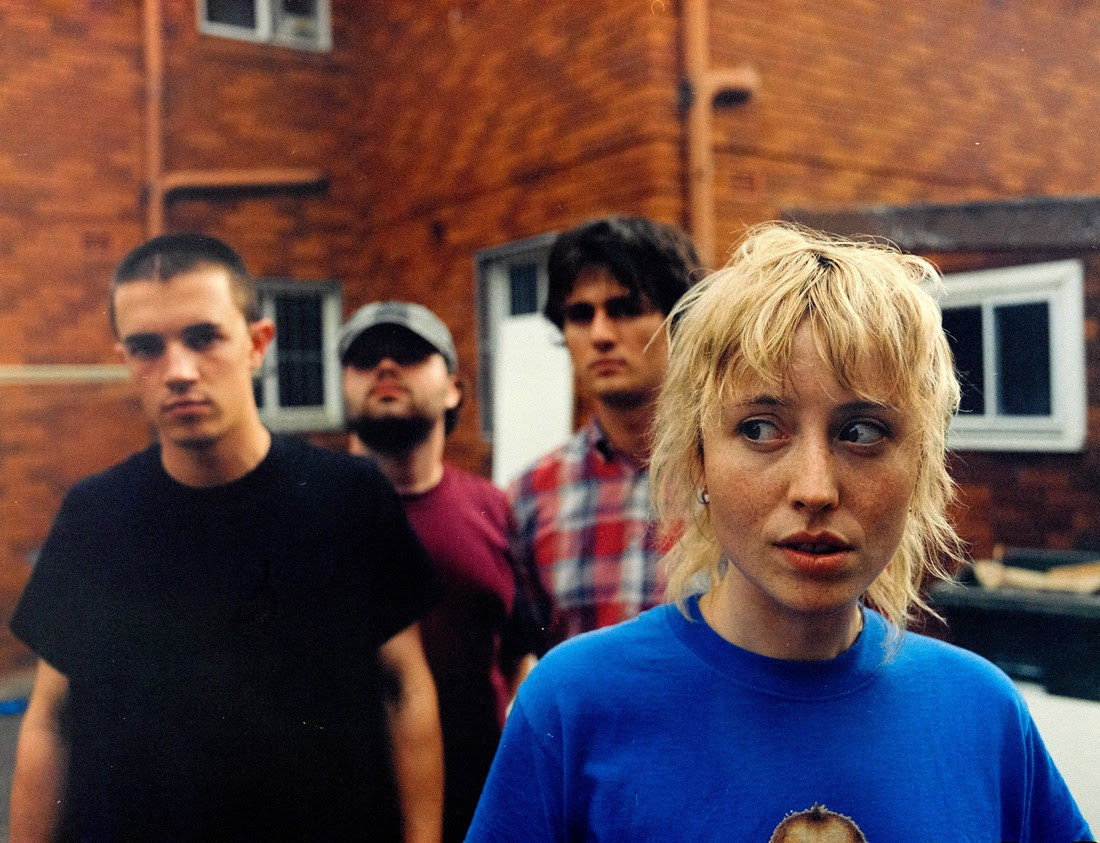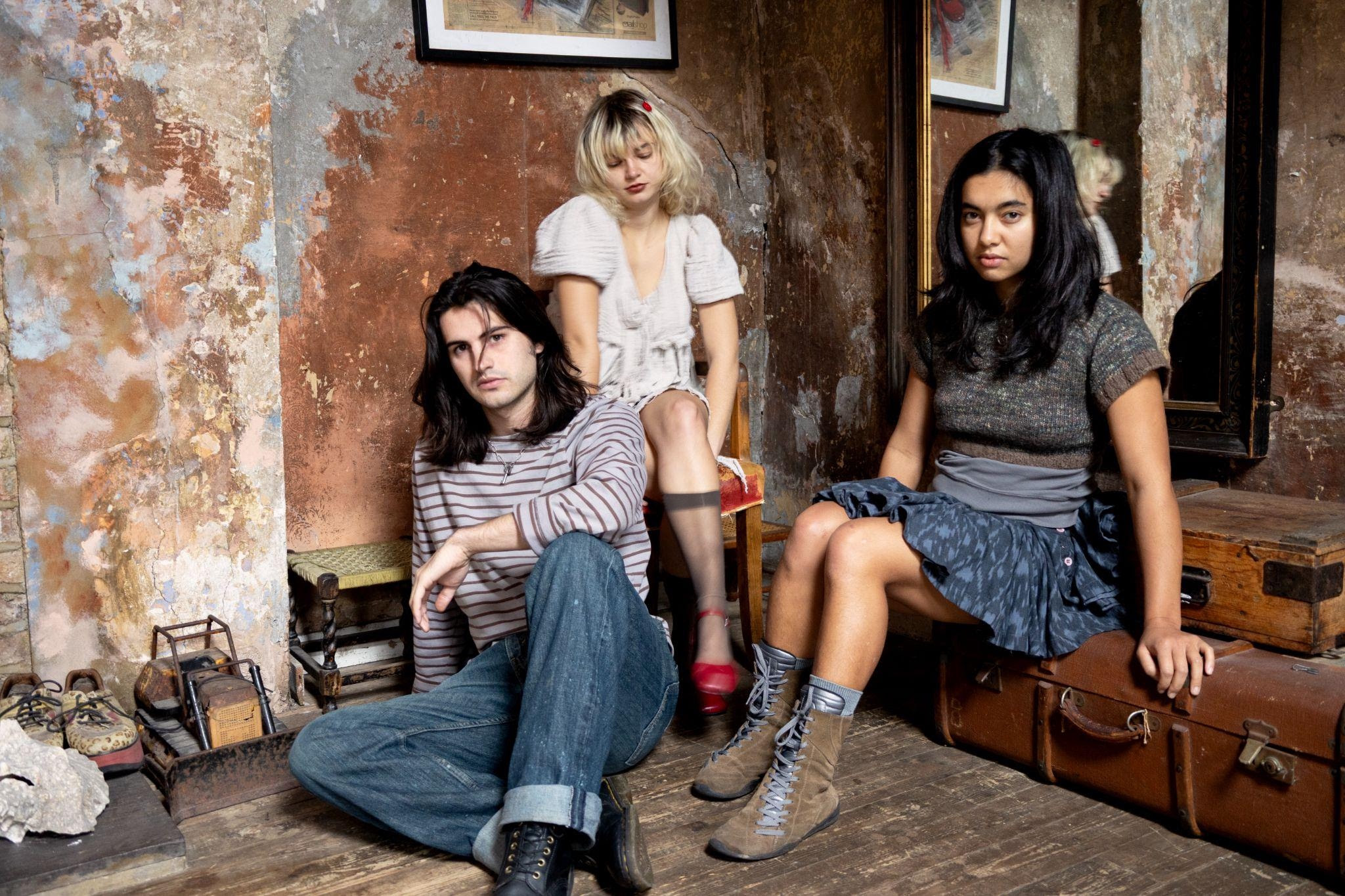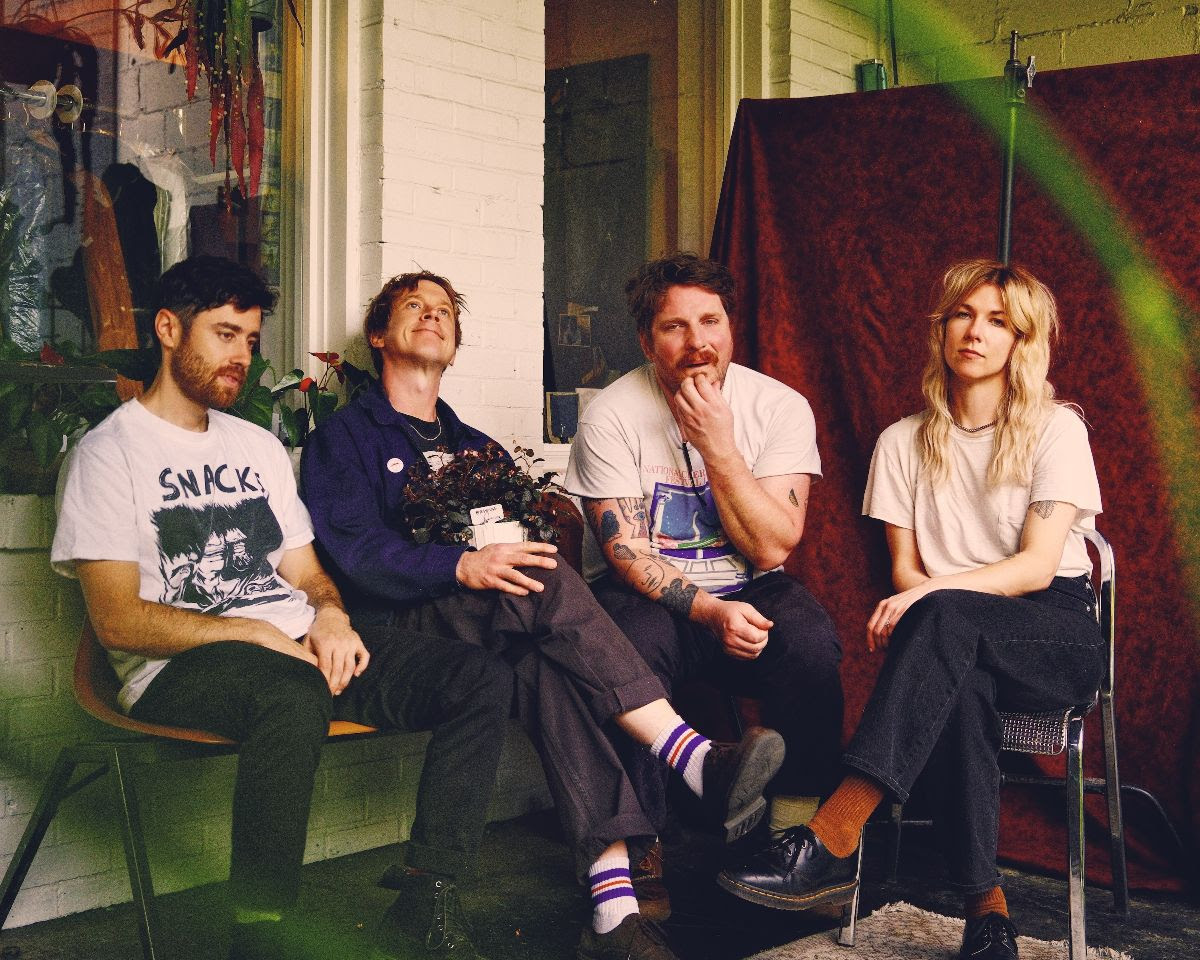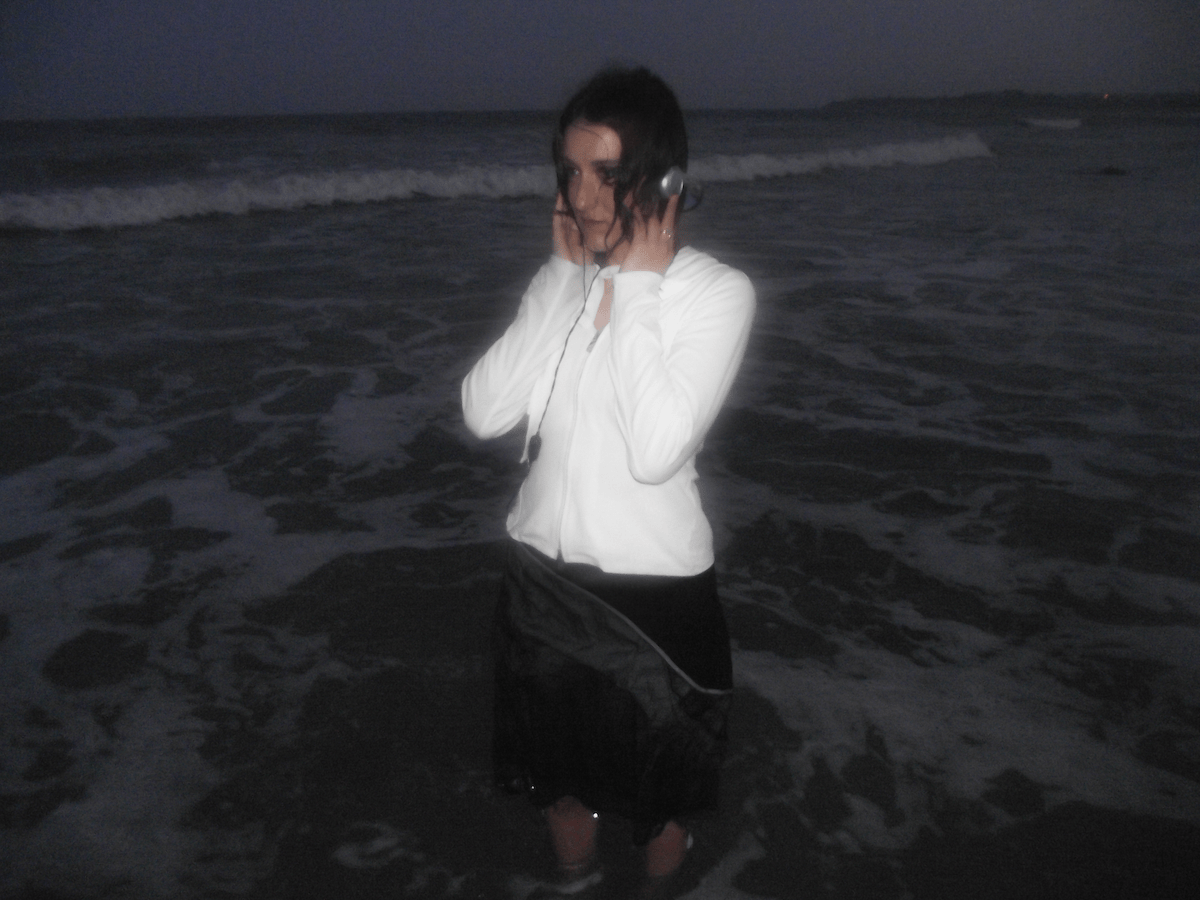

Cashier don’t make the type of music you’d typically associate with Cajun Country. As vocalist/guitarist Kylie Gaspard tells me over Zoom, most of the bands you’ll find in her hometown of Lafayette, Louisiana nod to the region’s rich cultural history — plenty of Creole zydeco, tons of jazz, a good amount of metal that’s trickled over from New Orleans. “Honestly, I feel like it was kind of easy for us to get started here,” Gaspard explains. “I feel like Lafayette is so community oriented that the people here are really quick to support anyone they know who’s making music.”
Cashier, who released their excellent debut EP The Weight last week, instead make pummelling, gritty alt-rock that takes cues from early shoegaze, post-hardcore, and grunge without ever mimicking those eras too closely. Gaspard, whose two cats circle around her the duration of our interview, seems less concerned about achieving the right type of guitar fuzz as she is about making solid rock music that can stand on its own: “I was listening to a lot of ‘90s emo, because the guitar playing and the way the harmonies interact with each other are just so precise,” she says when thinking about her primary influences, also citing the early-2000s Japanese noise pop band Condor44, Swervedriver’s full-bodied alt-rock, and the “formulaic writing” of The Colour And The Shape.
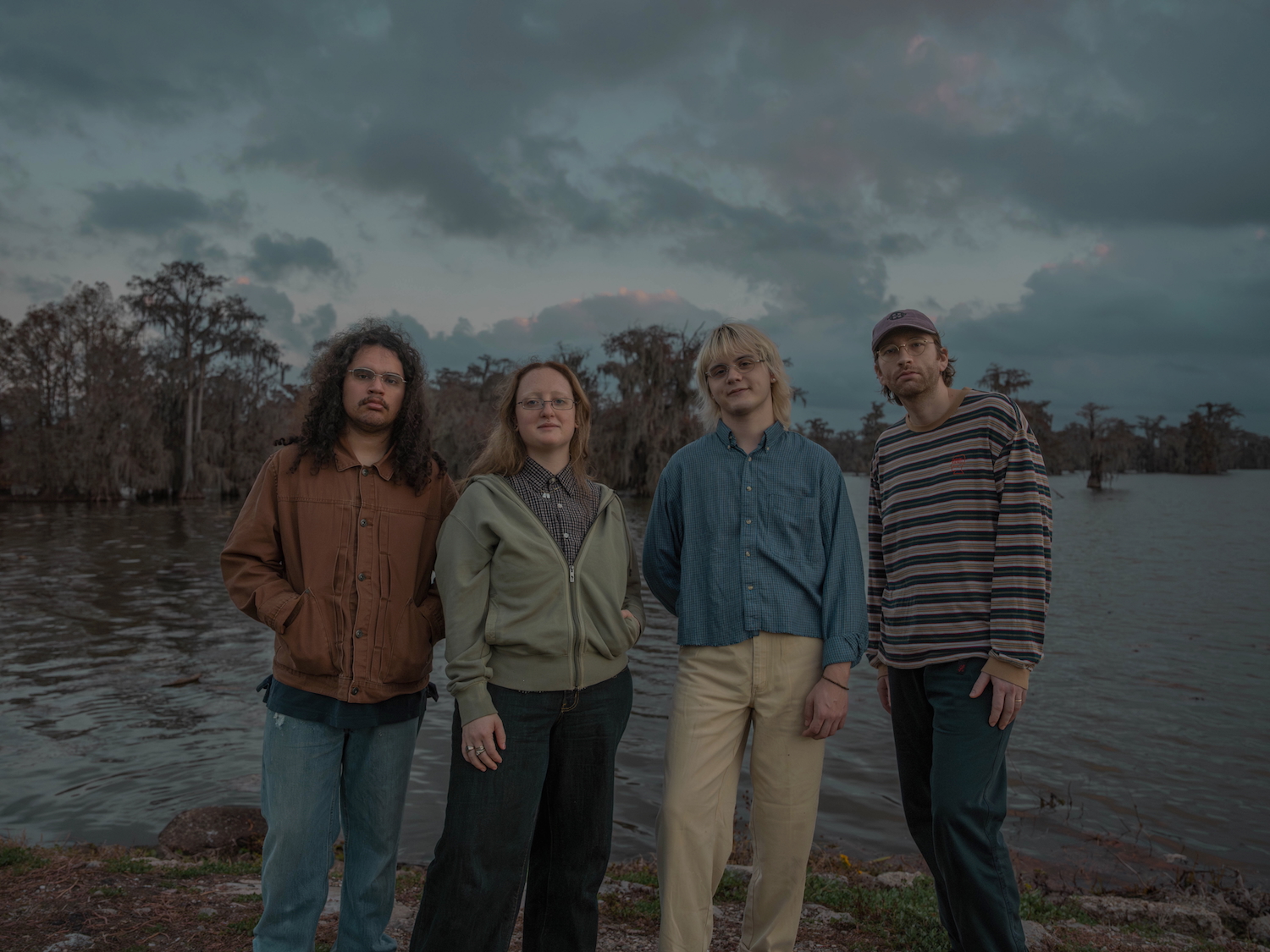
Gaspard is pretty sure that Cashier’s current iteration — which also includes guitarist Joseph Perillo, bassist Austyn Wood, and drummer Zachary Derouen — formed around summer 2022. Not long after that, they were playing a show when Gaspard’s phone started blowing up with texts notifying her that somebody named Frank had posted about her band. “I was like, ‘Who’s Frank?’” Gaspard recalls, and she quickly learned it was one Frank Ocean who had uploaded a photo of a car dashboard displaying Cashier’s song “Beginner” onto his Instagram story. “I want to move past the Frank thing,” Gaspard says, “but at the same time I’m extremely grateful. It really kickstarted the urgency to write a bunch of music, because we only had, like, two or three songs out.”
“The Frank thing” led to Cashier’s first major tours outside of the southern US, including opening slots for bands like Dinosaur Jr. and Whirr. They got a booking agent and signed their first record deal. They struck up a friendship with the folks at Julia's War, the Philly label founded by They Are Gutting A Body Of Water's Doug Dulgarian, before officially joining their roster this year. "I've got mad respect for J-War," Gaspard fawns. "What got me into this scene, really, was a lot of their bands, and it was so easy to connect with Doug. We have so much fun together, and I think that's contributed to us getting such a good response with the new songs. I keep manifesting — I say it as a joke, but not really — that we’ll be famous by the fall. Which is possible.”
Gaspard’s knack for music, to an extent, was inherited. Her father is the former media director of a local megachurch, which gave him access to a studio where he could record himself and others; nowadays, he’ll fill in on bass for Cajun or Zydeco gigs around the city. Gaspard’s mother, a real estate agent, moonlights as a cover band singer. “I guess my parents recognized that I had a natural ability to, at least, sing on pitch,” Gaspard says. “You know when you hear a little kid singing, and you’re like, waaait…”
When she was three years old, Gaspard’s parents put her in piano lessons. Her piano teacher was impressed, too, so much so that she suggested Gaspard get tested for autism. “I don’t have it, but it’s OK,” Gaspard says. “I understand the concern.” What Gaspard did have was perfect pitch, a gift that she says caused a rift in her ability to understand sheet music. “I realized that I could just get my teacher to play the piece for me, and then I’d be able to play it back,” she recalls. “And I’d never read the sheet music. So now I just suck at reading music.”
Gaspard began writing her own songs as a small child, eventually transitioning from the piano to guitar. By the time she got to high school, she admits to having become a “major slacker.” But she found a bit of incentive in her school’s music program, where she met her future bandmates Perillo and Wood; their teacher, Chad Viator, led the small class in writing and recording their own EP. Now, Viator has a home studio, where he produced and recorded The Weight. “He's kind of formed us as musicians throughout our career,” Gaspard says. “So when we started getting serious about recording, he was my obvious choice. He has the context of what kind of musicians we are and what we like and what we're into, because it's all the stuff he showed us when we were in his class.” When I ask Gaspard what happened in the meantime, she pauses and sighs. “Have you heard of Hillsong?”
Gaspard studied songwriting and composition at Hillsong College in Sydney, Australia, whose campus spawned from the eponymous Christian megachurch. Though headquartered down under, Hillsong has over 100 congregations around the world and are particularly famous for their contemporary worship music, with the church’s various musical collectives — whom Gaspard describes as “religious influencers” — having released dozens of albums among them. Unsurprisingly, the past few years have brought to light a slew of controversies involving Hillsong Church’s founders and leaders, contributing to a gradually waning presence of the church in the US.
“Being a student [at Hillsong] was insane,” Gaspard says somewhat solemnly. “They’re problematic. But I got to study a lot of theology, which I found really interesting once I stopped having, like, psychosis about it. I graduated when I was 21, and now I’m about to be 29, so I’ve had a few years now of healing and being normal. I’ve since deconstructed a lot of that religious stuff.”
Gaspard has had nearly a decade to distance herself from the charismatic evangelism of Hillsong, but what she does still retain from her education there are ways to write a compelling song. “A lot of worship music has these tactics or methods that kind of get the listener to feel emotionally connected with the music,” she explains. “Not that I’m gaslighting my listeners. But those songs still connected with me in a certain way, you know? So I was kind of thinking about how to bring those methods into the type of music that I want to write.”
As for the subject matter Cashier delve into on The Weight, you won’t find anything quite as direct or transparent as a Hillsong hit. Gaspard, instead, wants her lyrics to carry a sense of general relatability that lets listeners attach their own personal meaning. But if you ask her what Cashier's songs are about, she'll allude to the hiccups and miscommunications that come up in all sorts of personal connections. The Weight's title track, a slick head-nodder that best depicts the band's Foo Fighters appreciation, reckon with growing older and realizing the magnitude of the impact you can leave in other people's lives. The blistering "Like I Do" attempts to find common ground amid misunderstandings: "Will I ever know what feels right?/ Do you wanna know what feels like I do?"
“So a lot of the songs are about navigating life, connecting with people around you, trying to suss out another person or entity and how your energies interact," Gaspard says. That’s all everyone does all day, every day. I sing about fumbling throughout life, stumbling through connections, and just trying to make things work, which I feel like is relatable for every person who's ever existed. We're just trying to create something that's accessible to everyone and still rock."
The Weight EP is out now via Julia's War.