

March 11, 1989
- STAYED AT #1:1 Week
In The Alternative Number Ones, I'm reviewing every #1 single in the history of the Billboard Modern Rock Tracks/Alternative Songs, starting with the moment that the chart launched in 1988. This column is a companion piece to The Number Ones, and it's for subscribers only. Thank you to everyone who's helping to keep Stereogum afloat.
The Hold Steady's Craig Finn told me a story once. He'd been introduced to Seymour Stein, the late music-business legend who founded Sire Records and signed Madonna, the Ramones, Talking Heads, and a whole mess of other greats. I'm paraphrasing Craig's story from memory here, but he told Stein something like "Hey, I just wanted to thank you for..." Stein cut him off: "The Replacements?" Craig: "Yeah! How'd you know?" Stein: "Fuckin' look at yourself!" (The Hold Steady, incidentally, have a few songs that made the Adult Alternative chart, but none on the chart that we're talking about in this column.)
It wasn't just the Minneapolis connection that made Craig Finn's Replacemets fandom obvious. Seymour Stein must've learned to spot a Replacements head from a mile away. Famously, the Replacements thought of themselves as failures. They probably actively courted failure; there are way too many stories of the band intentionally antagonizing audiences by being the worst, shittiest bar-band dickheads you can imagine. And it's true that the Replacements never succeeded in making a seismic chart impact. But for a certain breed of fan, the Replacements were tragic heroes of woeful-dirtbag blues and graceful gutter-scuzz poetry. For some of those fans, I think, the Replacements' failures were more romantic than other bands' successes.
Some of those fans probably wish that Seymour Stein had never signed the Replacements. In 1984, the Replacements were right up there with R.E.M. on the list of the most critically beloved American independent bands, back in that moment when "American independent band" was a relatively novel category. But the Replacements didn't want to be indie cult heroes. They wanted to be rock stars, or they wanted to be dead, or some combination of the two. Really, they didn't know what they wanted, but fame was part of it. So the Replacements signed, and then they spent the second half of their career trying to make something like a hit. They never really succeeded, but "I'll Be You" was as close as they ever came.
I should say right now: I'm not one of those Replacements guys. The band has plenty of songs that I like, but they don't have any that I like well enough to imagine enduring the squawking obnoxiousness of any of those legendarily scattershot '80s shows. Bob Mehr's Replacements biography Trouble Boys is an excellent, moving, painstakingly researched book that mostly reveals the Replacements to be self-important, self-destructive dipshits -- a buzz band who believed their own hype and who also seemed to hate the people who loved them. In retrospect, it's remarkable that the Replacements ever managed to do anything even remotely commercial, since they had to be dragged onto the charts like screaming toddlers. But they did it. They're here, in this column.
In large part, that's a testament to the work of boosters like Seymour Stein -- no slouch himself in the self-destruction department. If you look at all the bands covered in Our Band Could Be Your Life, Michael Azerrad's awesome and canonical 2001 book about the titans of the '80s underground landscape, the Replacements are one of the only two acts that'll ever appear in this column. (The other is the Butthole Surfers, who will show up in a very different moment in the histories of both that band and the alternative chart.) The Replacements are also the only Our Band Could Be Your Life band who didn't drive their own fucking tour van. I wonder if that's a coincidence.
The Replacements were not self-starters. Left to their own devices, they would've probably played a few backyard beer bashes in Minneapolis and then called it a day. The band started in 1979. Guitarist Bob Stinson had a horrifyingly traumatic childhood, and he started the band after stays in juvenile homes and institutions. Stinson pressed a bass into his 12-year-old brother Tommy's hands, and the two of them jammed on classic rock covers with drummer Chris Mars in the Stinsons' mother's basement. Paul Westerberg, a local kid with big ideas, heard the noise coming from the Stinson house while coming home from work one day, and he was impressed. (At the time, Westerberg worked as a janitor in the office of one of Minnesota's two senators.) After getting an invitation from Mars, Westerberg joined the basement jam sessions. Bob Stinson called the band Dogbreath.
Paul Westerberg read music magazines and was into punk rock, which the other guys thought was weird and alien. Bob Stinson's favorite band was Yes, but he started to come around when he heard the guitar on the Damned's records. In any case, the Dogbreath guys liked playing fast and loud, so they practically arrived at their version of punk rock on their own. A few potential singers came in to try out, but Westerberg essentially chased them out, taking the band over for himself.
Dogbreath went through a few different names before settling on the Replacements, and Paul Westerberg convinced the band to record some songs that he'd written. He made a four-song demo tape, dubbing over his sister's Santana tape and scratching the word "Santana" out, and he handed the tape to Peter Jesperson, the manager of the local cool record store. Jesperson also spun records at the Longhorn, the only punk club in Minneapolis, and he co-founded the local indie Twin/Tone Records. Jesperson immediately flipped for the Replacements' demo, and he took the band under his wing, immersing them in the music of cult-hero types like Big Star and applauding loudly at every shambolic Replacements gig. In 1981, Twin/Tone released the Replacements' fast, ugly debut Sorry Ma, Forgot To Take Out The Trash.
The Replacements evolved quickly. On their first couple of records, Sorry Ma and the 1982 EP Stink, the Replacements played loud and fast and sloppy enough that they could almost qualify as hardcore. The Replacements nurtured a local rivalry with Minneapolis heroes Hüsker Dü, who took them on as an occasional opening act at out-of-town shows. Later, the Replacements said that they weren't too comfortable with hardcore and that they were mostly trying to keep up with Hüsker Dü. (Hüsker Dü broke up before Billboard started the Modern Rock chart, but frontman Bob Mould made it to #4 with his 1989 solo song "See A Little Light." It's a 7.)
Soon enough, Paul Westerberg was writing sad and scraggly rock 'n' roll barroom confessions that had more to do with the Rolling Stones and the Faces than with Black Flag or the Circle Jerks. The Replacements got off on alienating the punks in their audience. Westerberg sometimes alienated his bandmates, too; Bob Stinson was not into the Westerberg songs that didn't rock hard enough. (The elegantly heart-wrecked "Within Your Touch," maybe the most-loved song on Hootenanny, is just Westerberg himself, with synths and drum machines but without the rest of the band.) The Replacements' 1983 album Hootenanny won them a new audience: rock critics. Critics loved the Replacements. In that year's Village Voice Pazz & Jop critics' poll, the rock critics of America voted Hootenanny the #30 album of 1983 -- not a huge placement, but high enough to edge out, like, Eurythmics and future Replacements collaborator Tom Waits.
The Replacements hit the road, and they found their cult. Tommy Stinson had to drop out of 10th grade so that the Replacements could leave on their first East Coast tour; Peter Jesperson, who'd signed on as the band's manager, became his legal guardian. The Replacements quickly became notorious for shows that were either transcendent or shockingly terrible. (Often, the trainwreck shows were the ones where the band really needed to play well.) They would get shitfaced drunk every night, trash their accommodations, and generally act like assholes. People must've really loved that band's songs if they were willing to put up with all of that. But maybe the trainwreck thing was key to the band's appeal. Maybe people were coming just to see them fuck everything up.
In Our Band Could Be Your Life, Paul Westerberg says, "We had a fear of everything. We were all very paranoid, and I think that goes hand in hand with the excessive drinking thing. We'd get drunk because we were basically scared shitless, and that snowballed into an image." It was a weirdly effective image. The Replacements were good-looking kids with terrible habits, and those habits got worse when coke and heroin entered the picture. Band members would miss shows, or they'd suddenly decide to ignore all their own songs and just play shambolic classic-rock covers instead. R.E.M. took the Replacements on tour in 1983, and the Replacements intentionally pissed off the crowd every night -- something they'd do to every headliner that was ever nice enough to invite them out.
Despite the bullshit, or maybe because of the bullshit, the Replacements' cult kept growing. They became a genuine critical sensation with the release of their 1984 album Let It Be. Those sessions were as chaotic as always; R.E.M.'s Peter Buck, hanging out in the studio, played the solo on "I Will Dare" when Bob Stinson couldn't come up with anything. But the songs on Let It Be were a big step up. "I Will Dare" was a full-on college-radio hit, even though there was nothing remotely collegiate about the band. On the Pazz & Jop poll, critics named Let It Be the #4 album of the year -- behind only Born In The USA, Purple Rain, and Los Lobos' How Will The Wolf Survive?, and ahead of Tina Turner, R.E.M., the Pretenders, and Hüsker Dü.
The guys in the Replacements were terrible with money, and they were always broke. Between tours, Bob Stinson kept his day job as a line chef. On tour, they'd blow all their money on alcohol, drugs, and dumb hijinks. (After a show at UC Davis, the band did thousands of dollars of damage to a dressing room and had to hightail it out of town before the cops arrived.) The Replacements actively courted major-label deals, though they also sabotaged some label-showcase shows by being assholes. Eventually, they signed a deal with Sire and made 1985's Tim, a full-on classic record that might be their best despite an infamous dogshit-ass production job from Tommy Erdélyi, better known as Tommy Ramone. (There's a remixed version of Tim coming out next month, and they people who have heard it all swear it's amazing. They're all Replacements guys, though, so grain of salt.)
Tim only made it to #183 on the Billboard 200, but America's critics named it the #2 album of 1985 -- behind Talking Heads' Little Creatures, ahead of John Cougar Mellencamp's Scarecrow. Despite all that acclaim, the label had a hell of a time selling Tim. The Replacements didn't want to make any music videos; someone at Sire hit on the compromise measure of filming a "Bastards Of Young" clip that was just a static shot of a speaker playing the record for three and a half minutes. The Replacements got booked on Saturday Night Live as last-minute fill-ins for the Pointer Sisters, and they infuriated Lorne Michaels when Paul Westerberg yelled the word "fucker" off-mic. These guys just loved getting in their own way.
Plenty of people will tell you that both Let It Be and Tim are masterpieces. Plenty of people will say the same about 1987's Pleased To Meet Me. Before they made that album, the Replacements kicked out Bob Stinson and fired Peter Jesperson. Both of those guys were partying hard, and Paul Westerberg thought they were holding the band back. But Westerberg was partying hard, too. So was everyone else in and around the band. At one point, Bob Stinson tried to quit drinking, and Westerberg held out a champagne bottle during a show and demanded that he either drink or leave the stage. Bob Stinson died in 1995 at the age of 35; his body essentially just gave out on him after years of alcohol and heroin abuse. Anyway, Pleased To Meet Me. Good album.
By the time they made Pleased To Meet Me, the Replacements' sound had evolved into a kind of ragged, wounded power-pop. The band recorded the LP in Memphis with Big Star producer Jim Dickinson, and they made an album that the people at Sire and Warner Bros. were eager to sell. The label was high on "The Ledge," a churning rock song about teenage suicide, and the band made a video. But the song came out amidst national panic about teen suicide, and MTV rejected the video.
Instead, the big college-radio hit from Pleased To Meet Me was "Alex Chilton," the Replacements' ode to Big Star's frontman. Once again, the Replacements were hugely popular with a tiny slice of the population. The album went #3 on Pazz & Jop -- behind Prince's Sign 'O' The Times and Bruce Springsteen's Tunnel Of Love but ahead of The Joshua Tree. Still, it couldn't get past #131 on the album charts. The band found a new guitarist in Bob Dunlap, a married dad in his mid-thirties who worked a janitor job with Bob Stinson. It was too weird to have a second Bob in the band, so they started calling him Slim Dunlap instead.
As the Replacements soldiered on, Paul Westerberg was increasingly desperate and bummed-out. The guy really thought he should be a star. The band kept doing ridiculous things. One night, angry at the lack of royalty payments from Twin/Tone, they broke into the label's offices, with the intention of stealing their master tapes and throwing them in the Mississippi River. (They only succeeded in grabbing some backup safety masters.) But when the Replacements recorded 1989's Don't Tell A Soul, Westerberg was really trying to play ball. He figured that the album was his last shot.
The Replacements' first hit on the newly instituted Modern Rock chart didn't come from Don't Tell A Soul. Instead, the band made it to #11 with their shambling 1988 cover of the 101 Dalmatians song "Cruella De Vil," from a Disney tribute compilation. This is not a great Replacements song, but I guess it's noteworthy that they were willing to record it in the first place.
The Replacements recorded Don't Tell A Soul with Matt Wallace, a relatively polished hard-rock producer best-known for his work with Faith No More, a band who will eventually appear in this column. The Replacements didn't get along with Wallace -- they almost never got along with their producers -- but they made a much calmer, less rambunctious album than they'd ever managed. Tons of Replacements fans think that Don't Tell A Soul is the moment that the band fell off -- that it's soft and corny and overproduced. But the Replacements were trying to make something clean and polished enough that it could hang with the Fine Young Cannibals songs that were on the charts at the time, and it's amazing that they even halfway succeeded.
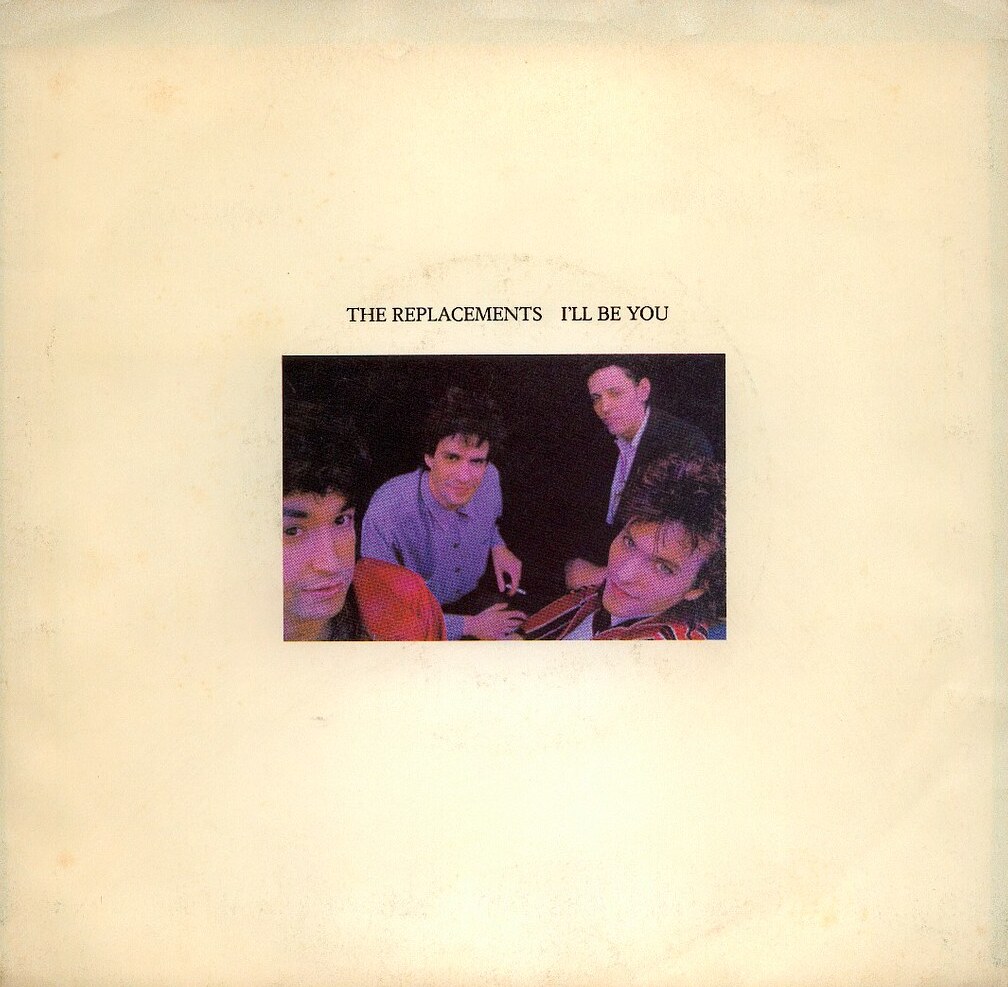
Warner Bros. executive Lenny Waronker thought that the twinkly, hangdog "I'll Be You" was the Don't Tell A Soul song with the biggest hit potential, but he thought it didn't quite sound finished. A few days later, though, Waronker heard a barely-altered version of "I'll Be You" and decided that it was good to go. Chris Lord-Alge, a guy who'd worked on lots of blockbuster '80s pop records, mixed Don't Tell A Soul, doing his best to make it sound like a blockbuster '80s pop record. The Replacements complained about that, but they agreed to make a proper video for "I'll Be You," lip-syncing for at least half of it before dispensing with the miming and just mugging and pratfalling for the cameras instead. Watching the "I'll Be You" clip, you can get some sense of why so many people thought the Replacements -- Tommy Stinson in particular -- were potential stars. Those are some charismatic young men.
Today, "I'll Be You" feels like a funny choice for a potential hit single, though it's not like the Replacements were exactly drowning in obvious radio-bait. There's no big, obvious hook on the track. "I'll Be You" is a midtempo rocker with a warm, likable chug to it. Paul Westerberg, sounding a bit like a Midwestern drowned-rat approximation of Rod Stewart, does his gravelly-throaty howl thing, tough and vulnerable in equal measure. He sings about feeling lost and purposeless: "A dream too tired to come true/ Left a rebel without a clue/ And I'm searching for somethin' to do." At first, he's playful, but he grows increasingly raw and desperate. The backup vocals, chipping in with the occasional "ohhh ya," almost sound like they're mocking him.
There's some magic in "I'll Be You." The guitars glimmer just as much as they crunch. I like the hesitation in Westerberg's cadences: "If it's! Just a game! Then we'll hold hands just the same!" Near the end, there's a slide-guitar solo so heavily treated that it almost sounds like a harmonica, or maybe a keyboard. The bar-band scuzz of the Replacements' early days is mostly gone, but by the time "I'll Be You" reaches its conclusion, they've replaced their old grit with a shiny howl that reminds me of the Smithereens or the Connells. Still, I don't think "I'll Be You" ever fully achieves liftoff. It's not an anthem. It's just a nice song. Replacements heads often feel different, but I'm not one of them.
"I'll Be You" topped Billboard's mainstream and modern rock charts, and the band got to hoping that it might become an actual crossover hit. Eventually, "I'll Be You" did become the only Replacements song ever to crack the Hot 100, but it stalled out at #51. In Trouble Boys, Paul Westerberg says that he thinks the label pulled its support because Warner exec Mo Ostin asked the band to play the opening of the Mall Of America, as a favor to a friend, and Westerberg said no. In reality, though, there are plenty of reasons that Warner might've gotten sick of blowing money on the Replacements. There was, for instance, the debacle of the Tom Petty tour.
In spring 1989, Tom Petty was riding high on the success of Full Moon Fever, and he invited the Replacements to tour as his opener. Benmont Tench, the keyboardist for Petty's Heartbreakers, was a Replacements fan who sometimes joined the band onstage for "I'll Be You." But the Replacements chafed against playing for Petty's apathetic fanbase, and they quickly decided that they wanted to get kicked off the tour. They played as abrasively as they could, trashed dressing rooms, and picked fights with the road crew. Petty was baffled, but he never fired the band. The line about "a rebel without a clue" on his 1991 song "Into The Great Wide Open" might be a quote from Westerberg's "I'll Be You" lyrics.
The other singles from Don't Tell A Soul went nowhere. "Back To Back" only made it to #28 on the Modern Rock chart, while the lived-in ballad "Achin' To Be" peaked at #22. Both songs did even worse on the AOR chart, and neither one went anywhere near the Hot 100. Don't Tell A Soul ultimately sold a few hundred thousands copies. It was the Replacements' best-selling album, but it didn't do the kind of numbers that would justify all their pain-in-the-ass behavior, and it didn't turn them into stars. The LP's clean production also cost the Replacements some of their cool-kid cachet. On the 1990 Pazz & Jop poll, the same critics who'd put the three previous Replacements records in the top five voted Don't Tell A Soul the #16 album of 1990. (This was still a couple of spots higher than Madonna's Like A Prayer.)
The Replacements struggled through the end of the Tom Petty tour, and by the time it was over, Paul Westerberg was ready to break the band up and go solo. But the Replacements weren't quite done. Westerberg was talked into one last Replacements record, and the goodwill surrounding the band remained. In the classic 1989 movie Heathers, for instance, Winona Ryder and Christian Slater stage their classmates' fake suicides at Westerburg High. (It's named after Paul Westerberg, but a studio exec insisted that they change the spelling because "Westerberg" seemed too Jewish. Today, a studio exec might've worried about many, many other things about Heathers before getting to the name of the high school.) Alternative-radio programmers still loved the Replacements, too. We'll see them in this column again.
GRADE: 8/10
BONUS BEATS: Here's "I'll Be You" soundtracking Tom Cruise's surprise party in Cameron Crowe's 1996 motion picture Jerry Maguire:
https://youtube.com/watch?v=dc3UqWbNY2E&ab_channel=Punk%26MetalonScreen


