
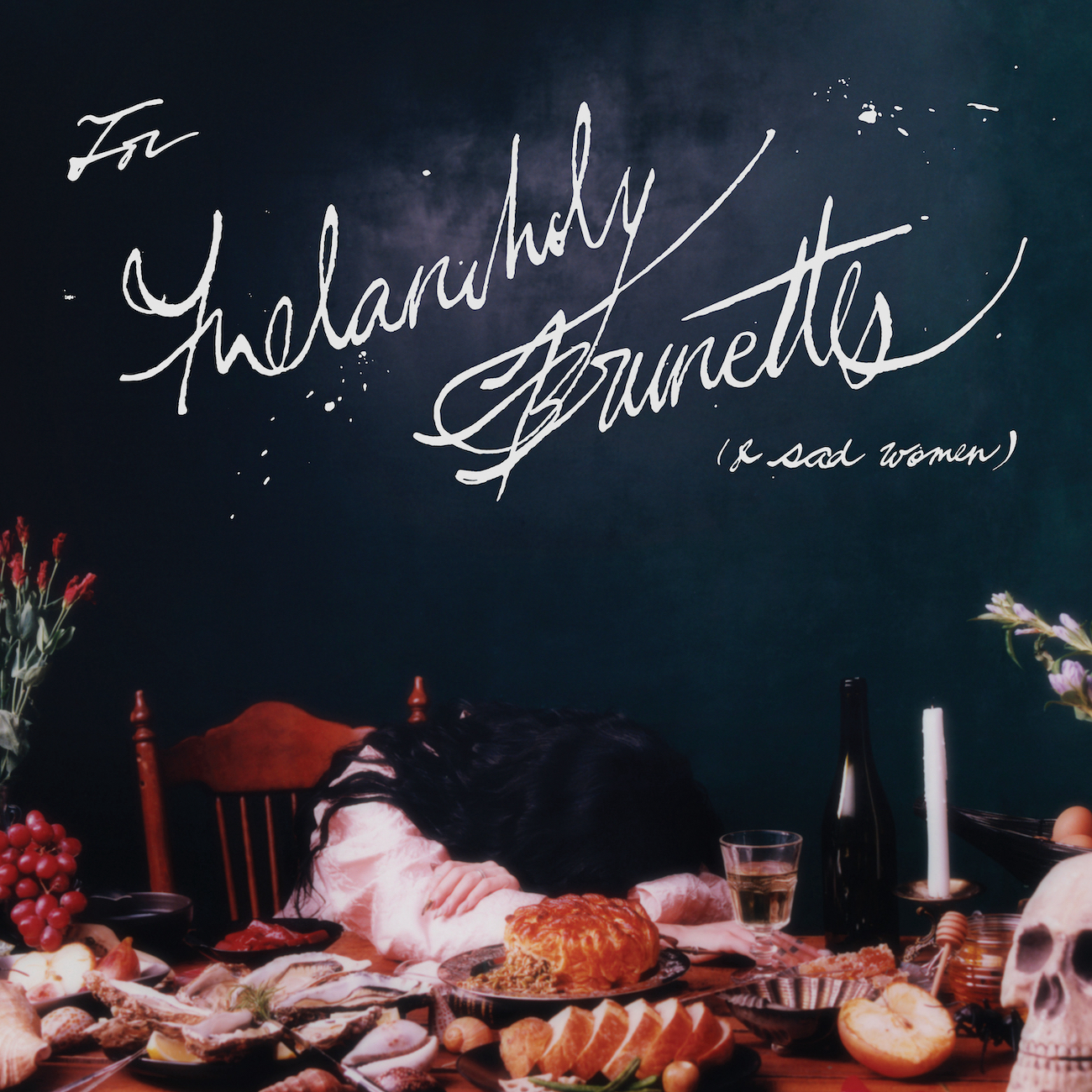
- Dead Oceans
- 2025
Melancholia has followed Michelle Zauner since she was very young. “I was haunted by nightmares and an intense paranoia of my parents dying,” she recalled of her childhood in her 2021 memoir Crying In H Mart. “I imagined robbers breaking into our house and envisioned their murders in horrible detail. If they returned home late from a night out, I was convinced they’d gotten into a car accident. I was plagued by recurring dreams of my father, impatient with traffic, attempting to navigate a faulty shortcut that led their car off the edge of the Ferry Street Bridge, plummeting them into the Willamette River, where they would drown, unable to escape through the doors due to the water pressure.”
For the past decade and some change, Zauner has channeled her spectrum of intense emotions into Japanese Breakfast, a solo project she began as a DIY punk living in Philadelphia. In 2014, the Seoul-born artist returned to Eugene, Oregon, where she was raised, to care for her ailing mother amid an excruciating battle with cancer. Her mother’s death served as a major theme of her lo-fi, shoegazy 2016 debut Psychopomp -- a record that unexpectedly slingshotted her towards indie stardom. But the grief was too fresh; revisiting the traumatic loss over and over again in a seemingly endless press cycle was too painful. So for Psychopomp’s follow-up Soft Sounds From Another Planet, Zauner looked outward to the world around her, the tribulations of love and loss easier to swallow in the context of an unfathomably expansive universe.
Then came Jubilee. Recorded in 2019 with its release delayed due to COVID, Japanese Breakfast’s third album accidentally arrived less than two months after Crying In H Mart hit shelves. Though it still embodied the guitar-forward dream-pop sound of her first two records, Jubilee was a stark contrast thematically, the pursuit of joy and euphoria at its center. It became Zauner’s first album to chart on the Billboard 200 and earned her her first two Grammy nominations. “Indie famous” was no longer the most fitting descriptor for Zauner: She was a proper celebrity. All her dreams had come true.
In 2023 it came time for Zauner to record her fourth album For Melancholy Brunettes (& sad women), out this Friday. Reminiscent of that paranoid child who’d conjure startling images of her parents’ grisly fates, the album deals with what Zauner has called an “anticipatory grief” -- a looming, less invasive sadness that's often difficult to pinpoint directly: “Dreaming of a daughter who won’t speak to me/ Running for her father coming home,” she muses on “Little Girl,” a lush and truly lovely singer-songwriter ballad that may or may not crib its name from one of Zauner’s early musical pseudonyms. Where Jubilee saw Zauner shake off the shackles of her past, For Melancholy Brunettes (& sad women) is more concerned with the future: Is it possible to tell you’re flying too close to the sun before it’s too late?
While Japanese Breakfast’s previous albums were made in more amateurish recording spaces, the one-two-punch success of Jubilee and Crying In H Mart allowed Zauner to make For Melancholy Brunettes in a proper studio with a cushy budget and a cast of esteemed session musicians. Rather than enlist an industry friend at the helm like she'd done previously, Zauner specifically wanted to bring in a producer who’d challenge her, who’d prioritize the quality of the work over her whims. She went with Grammy winner Blake Mills (Perfume Genius, Fiona Apple), who tracked the album with Zauner at the legendary Sound City in Los Angeles. Zauner was able to take her time with For Melancholy Brunettes, intent on creating something that was complex and unique in opposition to the pop-oriented atmosphere of Jubilee. You won’t find an immediate banger like “Be Sweet” here, but you can feel the deliberation throughout the record, from Zauner’s narrative songwriting to the music’s delicately intricate arrangements.
Before she really considered being a professional musician, Zauner wanted to be a writer. For Melancholy Brunettes’ title is a literary reference in itself, lifted from a John Cheever short story in which he fantasizes about the "melancholy brunettes" and "sad women" who make him want to ditch his wife. Zauner's wise enough to know that getting what you’ve always wanted -- Grammy nominations and bestsellers included -- risks turning you into an asshole, and so she doesn’t shy away from that possibility on For Melancholy Brunettes. The subtly dramatic lead single “Orlando In Love” pictures its title character falling victim to a siren’s seduction: “Like Venus from a shell/ Singing his name with all the sweetness of a mother/ Leaving him breathless and then drowned,” she sings over a romantic, classical-inspired instrumental, infusing her Pacific Northwest indie rock tendencies with a classical slant. Zauner, by her own admission, is a bit of an Orlando in this scenario -- lured by desire before fully considering its possible aftermath.
Later on “Men In Bars,” an unexpected duet with Jeff Bridges -- yes, the Jeff Bridges -- Zauner takes on the role of a woman who goes out to mingle with other men in an effort to escape her unhappy marriage, only to find her arms-wielding husband eager to shoot dead his competitors: “We built this/ And even when it falls apart, it’s ours/ But who could say that I’m to blame/ For wandering," the duo sing in unison, tackling the tricky balance ofOn the excellent early single “Mega Circuit,” Zauner observes the jaded “incel eunuchs” who make their female partners suffer as they fall in line with ill-informed role models. (Fans needn’t worry that Zauner’s marriage to bandmate Peter Bradley is on the fritz -- these fictional scenes serve as metaphors for the destruction that ensues in the wake of reckless self-fulfillment.)
As much as For Melancholy Brunettes pulls from Zauner’s personal reading material, there’s plenty rooted in her reality. On the gorgeous, sprawling opener “Here Is Someone,” Zauner feels the overwhelming weight of her own notoriety, anticipating the consequences should she ever put Japanese Breakfast on pause. “Quietly dreaming of/ Slower days but I don’t want to/ Let you down we’ve come so far/ Can you see a life where we leave this behind?” You don’t get the sense that Zauner actually wants to quit music -- if anything, this album shows she’s perhaps more inspired than ever -- but she achieves a careful, vulnerable balance of admitting that acquiring a life beyond your dreams isn’t a one-way ticket to unbridled self-satisfaction.
For Melancholy Brunettes (& sad women) feels as unique from every previous Japanese Breakfast as much as it feels like a culmination of Zauner's entire once-in-a-million career thus far. Rather than reinventing the wheel, Zauner zeroes in on the things that inspire her most: love, desire, and a good story. It almost feels like a tiny miracle, a Cinderella story of DIY punk who got everything she wanted and, somehow, didn't lose sight of herself.
For Melancholy Brunettes (& sad women) is out 3/21 via Dead Oceans.
We rely on reader subscriptions to deliver articles like the one you're reading. Become a member and help support independent media!