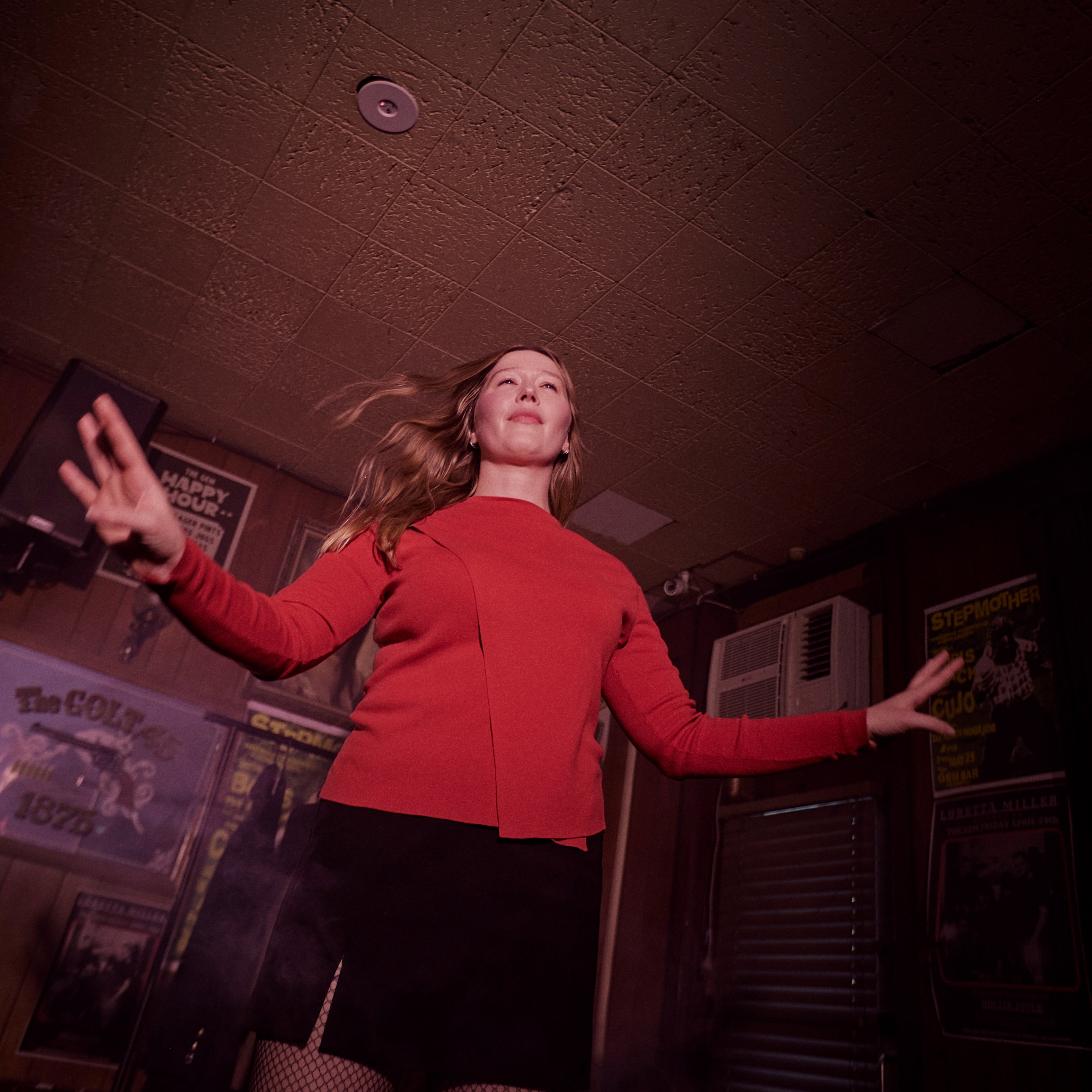

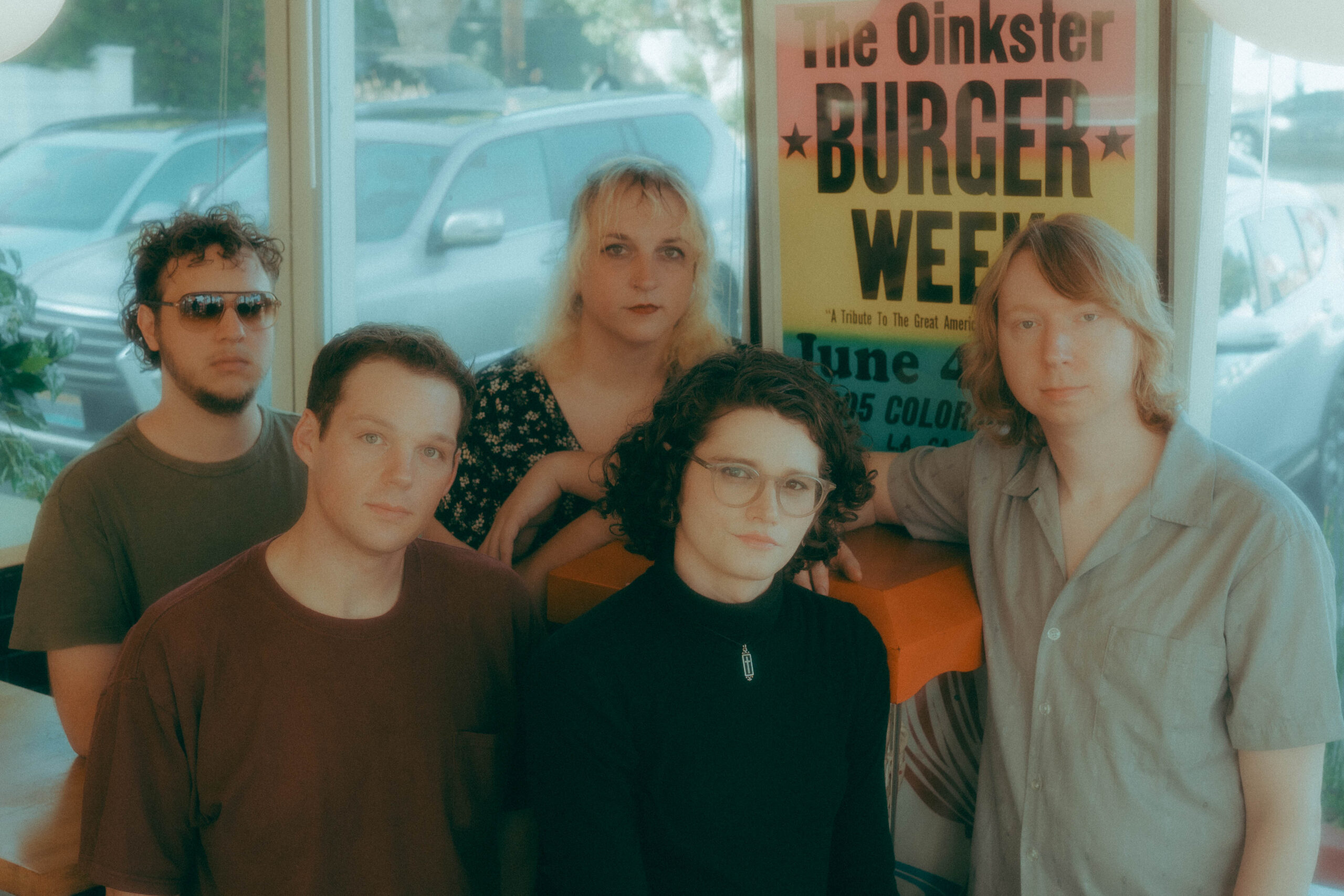
For years, Greet Death's music got better as their personal lives became more hopeless. The "suicide summer" incantations of their 2017 doomgaze debut, Dixieland, were downright cheery compared to the existential crises lining New Hell, the Michigan band's heavier, more poignantly pretty 2019 follow-up, which situated them at the forefront of the nascent shoegaze renaissance.
With their 2022 country-gaze EP, New Low, their outlook on life somehow descended even further. On the smoldering "Punishment Existence," Logan Gaval sang about coming home from work just to crawl into bed and stare at the ceiling contemplating death. His co-vocalist/guitarist, Harper Boyhtari, put her all-encompassing dread even more succinctly on the hauntingly beautiful "I Hate Everything," a song so riddled with apathy and numbness that if you received the lyrics in text form then you'd have grounds to call in a wellness check on whoever sent them your way.
A reasonable listener would hear New Low and wonder, "How could life possibly get worse for these people?" Well, it did. In the three years since its release, Gaval and Boyharti each endured a string of family deaths, forcing them to quite literally make uneasy acquaintance with the subject they've spent their whole adult lives singing about. For a while, they felt encumbered by the stark reality that all their relationships are terminal. However, mixed in with the unfortunate finales were a slew of new beginnings for Gaval and Boyharti. New jobs, new identities, new band members, and new realizations about the function they want their art to serve.
Die In Love is another new beginning. It's Greet Death's first full-length in six years, their first as a five-piece band, and the first record in their unyieldingly desolate catalog that its songwriters describe as vaguely hopeful. Naturally, Greet Death's version of optimism entails songs about being battered and bruised by love ("Die In Love"), faking smiles to hide the suffering ("Motherfucker"), and reflecting on "the terror of losing the people we care about," Boyharti explains of "Emptiness Is Everywhere." Still, the dire fatalism of their previous material has been tempered by a newfound existential tranquility. Sure, death is imminent, but if we have the opportunity to feel love and connection during our slow trudge toward oblivion, then maybe life's worth it after all?
"What I want our music to be is a light for people and make them feel better," Gaval tells Stereogum. "Not just to commiserate in our depression. Because what I've seen over the years of touring and connecting with our audience is that there's a lot of people out there that are struggling, and at some point you have to do something about it and decide to continue on. Life can be very bleak and depressing and miserable, but there's still a reason to get up in the morning and play guitar School Of Rock style and follow your passion and try to milk out as much joy as you can."
Clearly, Gaval's new gig "delivering smiles" has been doing wonders for his attitude. The band's hilariously cynical co-songwriter is Zooming in from his Amazon box truck in between drop-offs in Oxford, Michigan. "John Prine was a postal service worker and [Charles] Bukowski worked at the post office," Gaval says, setting up one of his many deadpan quips. "So I figured I'd be in good company with a miserable alcoholic and another guy that's dead."
In the other panel on our Zoom screen, Boyharti is seated in her Chicago living room, her roommate's cats intermittently flicking their tails into frame. She also has a more fulfilling day job since her New Hell days, but the bigger change in her life was coming out as trans prior to the recording of Die In Love. She clarifies that the record was entirely written before that decision was fully realized, giving her standout song on the record, "Country Girl" -- premiering today along with its horror film-inspired music video -- an unintentionally autobiographical twist. Her transition also provides a more nuanced perspective on much of the self-loathing and torment that encompassed her lyrics on previous Greeth Death outings.
"There's so much stuff that I can think about that probably was making me miserable," Boyharti says. "I was very trapped as a person with a very big emotional wall and a refusal to dig into it. I was a very angry kid, and I wonder how much of that was because of not realizing I wanted to be someone else…I wasn't a very happy person, and I think figuring out who I am brought a very profound peace to my life."
Written over the course of several years, Die In Love captures the liminal period between the unhappy doomers Boyharti and Gaval were and the functional, empathetic people they've grown into. Musically, it's also reflective of their temperamental shift, collecting sludgy shoegaze bangers ("Die In Love"), upbeat rockers ("Same But Different Now," "Country Girl"), dazzling slow-burners ("Motherfucker") and the prettiest acoustic song they've ever written ("Love Me When You Leave") all under one hood. It's simultaneously their most eclectic release and also a satisfying reassertion that Greet Death are the superior "heavy shoegaze" band in a sea of enterprising clones.
Below, Boyharti and Gaval talked about their personal evolutions, why singing suicidal incantations is bad for the psyche, and their staunch opposition to making Greet Death into a full-time enterprise.
Where you guys left off musically, New Hell and then into New Low, the things you were singing about were bleak as fuck. Has life gotten better since then?
LOGAN GAVAL: I think they got worse for a while, but I would say my life specifically is a lot better than it was, which is like half-reflected in the material on Die In Love. Most of it is still like coming from a painful place. I think I'm now in a lot better of a place.
How did things get worse at first?
GAVAL: I know my grandma died when we made New Low, and then I helped my girlfriend bury her grandpa and her uncle probably a year [after] that. A bunch of really stressful stuff happened all over the course of two years and I used to feel like I was underwater with most of that stuff. Basically all this stuff I went through since New Low came out, I feel like all of those things happened for a reason and now I feel like I have my priorities straight. It made me realize what was important in my life, which is mainly my family, my girlfriend, my girlfriend's family, and love -- for myself and others.
HARPER BOYHTARI: I feel like my big song on the record ["Country Girl"] is more of an internal reflection about self-love, which sounds corny, but I didn't really realize that's what it was gonna be about. It's an internal exploration examining like, why do you feel so alienated? Why am I struggling to connect with so many people on every level, romantically and otherwise, and it's just not working and I'm not happy. That song ended up meaning more to me than I thought it ever would, but it took a minute. So I think that big moment for me is actually a moment of self-love, which is another touchstone in a record of love songs.
Do you think the record is more uplifting than your previous ones?
BOYHTARI: I think all the other records for Logan and I are a pure meditation on misery and the monotony of daily life and like, "How do we do this?" And I feel like this record is the first one where we're done with that -- for now. It's still heavy, but there is some sense of responsibility forthe people around us and a lot more empathy toward the people around us that we care about.
GAVAL: It's not as nihilistic. A lot of the early stuff feels like sky-is-falling, doomsday, "What can I do?" But I think that love and loss are what contextualizes the rest of the things we feel in life. And the nature of any feeling is that it's fleeting, so you have to make the most of what you have while you have it. My grandma was like the matriarch of our family, and she was really funny and kind of like a gambling badass.
Every cliche that you hear about grief and loss… at some point you're going to be confronted with that, and then, if you're me, you're gonna feel like a fool for being on tour for so many years, missing every family function to go play for 10 people in a bar. And you're gonna think about -- this is how I used to think -- all the time that you wasted. You're gonna get very nihilistic and fatalistic about everything, and you're gonna think, like, "What's the point?"
Eventually you'll reach a point where you have to just hang out with your little brother and go make time for your mom and dad, because you know that it's a ticking clock at this point, and they might not be here tomorrow. And it's very, very easy, if you're an anxious person like me, to let that crush you. And I think I kind of let it crush me for two or three years, but now I feel emboldened by it and kind of strengthened by loss.
Did you guys feel bogged down by the negativity of your past records after having to play those songs for years and live with them?
GAVAL: I think singing a song every night called "I Hate Everything" is very bad for you mentally. I think singing about that every night, especially when you're not even feeling like being there, is very bad. It's just a very fucked-up thing to write a song about wanting to kill yourself and then having drunk people sing along to it every night and not feel like you're contributing to a problem. Doomsday stuff is everywhere, I don't think anyone needs more.
There's just something about chanting suicidal ideations every night that, for me personally, is bad. And what I think this record is is not being dismissive of darkness or bad times, but it's supposed to be uplifting. I'm sure people are gonna misinterpret that and say that it's another sad record, but it feels different to me. I feel like me and Harper are in very different places than we were when we made New Hell and New Low.
BOYHTARI: One thing I'll say is that for me, writing those songs was a way to give voice to the feeling. Because if not that, then it's just alone with me inside my brain. So there is a fanfare to the performance of those songs because there's a relief to getting that feeling out there and bringing people together with that feeling.
It's been six years since New Hell. What accounts for the gap between full-lengths?
GAVAL: I don't know, working a full-time job, living eight hours apart. There was a long period where I thought I wanted music to be my life, and I've since realized that that's whack. The career musicians I've been around, their lives are absolutely revolting. The only reason you would put out a record every two years is if you were trying to stay relevant, and I could give a fuck about that stuff.
Does not wanting to be career musicians tie into what you were saying earlier about realizing that family is what matters most to you?
GAVAL: I honestly think it's just meeting more and more professional musicians who seem miserable. I think touring is a degenerate lifestyle, and going from city to city and spending time away from the people that actually care about you is, for me, a very isolating experience. It's a fucking empty life. It's nothing. Music is beautiful, and at the end of the day I love playing music with my friends, that is my one of the truest forms of happiness that I have. But ultimately that's like one hour of the day [on tour]. I can't live my life that way. I can't function on that level.
It's interesting because you guys are in this genre right now, shoegaze, where a lot of bands really are trying to make a quick buck, and you have the opportunity to do so but are just not interested in doing that.
GAVAL: Maybe that's just my way of coping that some 23-year-old jacked my swag. But even if we played all of our cards right and then I'm a career musician, I wouldn't trade what we have for anything. Not that I'm a poster child for happiness, but if I woke up tomorrow and I was Chappell Roan, I would kill myself. If I woke up tomorrow and I was Billy Corgan, I would kill myself. There would be no choice. And we would have to get so lucky and write so many incredible songs for that to happen. We'd have to be so driven and do so much work, and at what cost?
You always wonder like, "I don't understand how this band put out three great records and now everything they make is fucking bullshit." It's like, dude because they have a gun to their head. They need to make songs because their mortgage is due. I don't ever want to be in that place with music because it ruins it. I want music to be an honest expression.
BOYHTARI: There is such a threat for life to become vacuous if you're not living a life outside of being a band on tour or making records. Because then what are you gonna do, just write records about things you don't actually feel? If we're not doing things outside of the band, whether that's exploring other interests or spending time with friends and family, it's not gonna be a genuine expression of who we are.
TRACKLIST:
01 "Die In Love"
02 "Same But Different Now"
03 "Country Girl"
04 "Red Rocket"
05 "Emptiness Is Everywhere"
06 "August Underground"
07 "Small Town Cemetery"
08 "Motherfucker"
09 "Love Me When You Leave"
Die In Love is out 6/27 via Deathwish Inc. Pre-order it here.