

In 2003, a short-lived supergroup recorded an LP that went largely unheard... until now
The early 2000s were filled with supergroups, as veterans of the '80s and '90s tried to carry on after their iconic groups had ended, often linking together with some surprising allies. There was Audioslave, of course (RIP Chris), as well as Velvet Revolver (RIP Scott). There was also Eyes Adrift, though you can be forgiven if you forgot that one, as it stopped before it really started. However, that led to Volcano, which didn't really get a chance to get heard…until now.
Let's back up a bit. In 1996, Sublime conquered the world in the name of Southern California good vibes, a bittersweet victory that frontman Bradley Nowell was not around to see due to his fatal heroin overdose right before the release of their self-titled breakthrough. The rhythm section of drummer Bud Gaugh and bassist Eric Wilson carried on with the Long Beach Dub Allstars; when that ended, Gaugh went in a surprising direction, linking up with Curt Kirkwood of indie rock legends the Meat Puppets to form Eyes Adrift.
The Meat Puppets were one of the most influential groups on the hallowed '80s indie label SST — formed by Black Flag guitarist Greg Ginn and home to Hüsker Dü, Minutemen, Saccharine Trust, Sonic Youth, Dinosaur Jr., and more — and also perhaps the least straight-up punk, mixing in Arizona country and acid-fried psychedelia. When Kirkwood received a call from Gaugh, the Meat Puppets had broken up, owing to his brother and band co-founder Cris Kirkwood's battles with addiction and eventual imprisonment. (They later reunited and continue to tour and record.) Kirkwood recruited Krist Novoselic for the power trio, as the pair had history — you'll surely recall that Nirvana covered two Meat Puppets songs for MTV Unplugged, even bringing the Kirkwood Brothers in as guests.
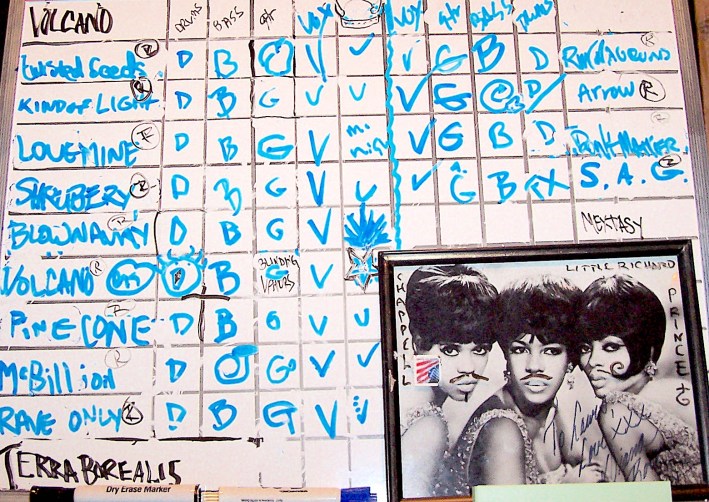
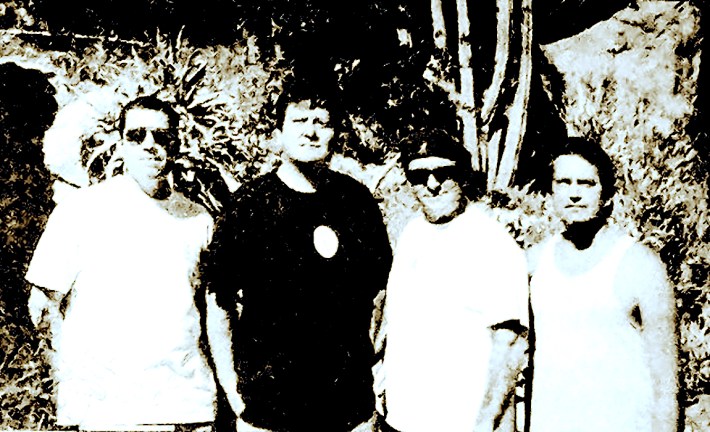
Eyes Adrift recorded a self-titled psych-y, grunge-y album, released in 2002, before Novoselic left to focus on politics. Kirkwood and Gaugh tried to keep the party going by forming Volcano, recruiting bassist Jon Poutney and Sublime associate/producer Michael "Miguel" Happoldt on guitar. Volcano made a self-titled album that skipped between ska-forward Cali pop and heady guitar workouts, but the band fell apart due to issues in Gaugh's personal life, and Volcano went largely unheard, an unusual state of affairs considering the resume of its creators.
But now the album is finally getting the push it never got two decades ago, thanks to the powerhouse New Jersey punk label Don Giovanni Records. You can check out the video for "It Don't Matter" below while reading our interview with Kirkwood and Gaugh about how this unlikely pair found each other, what they've been up to since, and what the new lineup of Sublime (featuring Bradley's son Jakob Nowell) have in the works.
[This interview comprises separate conversations with Curt Kirkwood and Bud Gaugh that have been edited for clarity and concision.]
Bud, on your very first album, 40oz. To Freedom, Sublime sampled the Minutemen. So I take it all three of you guys were about that SST life from the jump.
BUD GAUGH: Oh yeah. Loved all the SST bands, Minutemen, Meat Puppets, Black Flag, all those bands are great. They formed our musical adventures early on.
When did you discover the Meat Puppets, and what do you remember about that?
GAUGH: It was just phenomenal guitar playing. The early stuff was rough, raw, just trashy country, and so I dug all that. The writing was particularly interesting to me with the psychedelic lyrics. Stuff like that was very attractive to me. Up On The Sun, Meat Puppets II, those were some of my favorite early albums.
Bud, how did you first meet Curt?
GAUGH: My brother was doing merch for Curt's [solo] band. I had told my brother from a long time ago: "Hey, if you ever meet Curt, let him know that I'm interested in playing with them." And he kind of floated that to Curt, and he was like, "Yeah, give me a call." And so I called him. He picked up the phone, and this was towards the end of the Long Beach Dub Allstars. I called them, and we talked, and he's like, "Yeah, sure. Let's jam." So we decided to meet up in Austin. He was living in Austin at the time.
Curt, what's your memory of meeting Bud?
CURT KIRKWOOD: The Meat Puppets, I wasn't sure what was happening. I went out doing some solo shows, and I met up with Krist Novoselic, up around where he lives, and we're talking. He said, "Let's play some music." So I said, "Okay." Then, serendipitous, Bud's brother Jason called me up on my way back. I was driving back to Texas. I never met Bud. He said, "Hey, Bud wants to play music. Are you interested in that?" I said, sure. It's funny, because I just had been talking to Krist. So we formed Eyes Adrift, put out a record real fast. They came down here to Austin. We recorded the record, then we were doing tours for about a year there, and then Krist decided he wanted to do politics. So that band was, like, kaput. So Bud and I, we want to keep playing with each other.
Bud, were you looking for a new band at this time?
GAUGH: I was looking to expand my musical horizons. I didn't want to be pigeonholed as this reggae drummer or whatever. Being able to play with somebody who I admired, and to start something new. I just was looking for something new, you know.
Curt, what do you remember about meeting Bud?
KIRKWOOD: The first time I met Bud. I'm pretty sure he rode his motorcycle out here to Austin from LA. I got along with him from the get-go. He's just such a nice guy. Really easy to get along with and a really chill guy. We sat around that evening, and then we went into the studio the next day. We didn't rehearse at all, really, you know, "Here's how this song goes. Okay, roll 'em."
Bud, were you getting frustrated that people would only look to you for things that sounded like Sublime?
GAUGH: It was more of a personal, introspective kind of thing. It was just to show myself, "I can do something more than this," just to kind of get back to my roots, basically.
Curt, how familiar were you with Sublime before you met Bud?
KIRKWOOD: Oh, I loved them. I was very familiar. I had met Bradley, uh, funny enough. I had seen bumper stickers in Phoenix. Sublime was starting to kind of spread, and I started to see bumper stickers in Phoenix, because Phoenix is kind of like a lonesome suburb of LA sometimes. But [Butthole Surfers member and Sublime producer] Paul Leary said, "Hey, come over,you can meet them." He was recording with them downtown in Austin. So I went over to the studio, and I met Brad. I didn't meet Bud or Eric, though. I knew him from when they were recording that stuff off the… I think it was just called Sublime. That album with "Santeria," that good, good album. So I started listening. At that point, I listened to all of it, and I was well into it.
So how did Eyes Adrift with Krist Novoselic come about, and what was that time period like for you?
GAUGH: That was fun. That was the very beginning of this self-revelation, for me doing this, this thing. So, I called Curt, and when we talked, he's like, "Well, do you have anybody in mind for bass?" And I was like, "No, man, I'm just just fresh off of this Long Beach Dub Allstars thing and I just want to jam." And he was like, "Cool, I'll call someone." And he called me the next day, he's like, "Hey, what do you think about about Krist?" And I was like, "Yeah, I never met him. Sounds like fun. Let's jam, you know?"
So I loaded up my truck with my drums and drove out to Austin, and I met them at the San Jose Hotel. I check into the hotel, and then they had this little courtyard area with a little wine bar in it. And there's this guy with long hair, sitting at the bar. And I was like, "I know that dude. That's Curt." And he just walked up. "Hey, dude, how's it going? Right on, good to meet you. Krist will be here in a minute," and then next thing I see is this tall, lanky dude fucking walking through the the doorway, and, uh, it's Krist. It's like, "Wow, man, this is so surreal." I got these two players who I admire, just standing here right in front of me. I couldn't wait.
I was a little starstruck. I was like a kid in a candy shop. I just couldn't wait to unwrap all this stuff. It was Christmas.
Which is really funny, because there's plenty of people who, if they had been there, may be like, "Holy shit, it's the dude from Sublime." Are you aware of your own stature or is that kind of thing you have to not think about?
GAUGH: You know, I don't know. I'm just kind of a real person. I'm just me. What I do doesn't define me. And I try to stay humble that way. Somebody told me early on, as you climb up the ladder, don't be cutting the rungs on the way up because you're going to need them on the way down. So I always try to present myself that way.
I may not always be the drummer of Sublime. I have a lot of name tags. I'm a dad. I like to build cars and go camping and ride dirt bikes and things like that. I mean, my daughter didn't even know that I was a professional musician until she was like, eight or nine years old at a sleepover at one of her girlfriend's houses. And one of the parents was like, "What's it like living with your dad?" And she was like, "Dad, why didn't you ever tell me you were so famous?" It's like, well, you know, I'm just Dad.
When you think about you and Krist Novoselic, there are a lot of similarities there over losing a bandmate, and a great band cut down in its prime. Did you two ever talk about that sort of thing?
GAUGH: Not really. I mean, we talked about other ancillary things, but it wasn't really like a therapy session or anything like that.
I can imagine it's too heavy.
GAUGH: It's just kind of like picking a scab, I think, for me. So I figured, why would he want me to be picking his scab?
So you guys went straight to the studio. You didn't rehearse at all, it was just off the cuff?
KIRKWOOD: Yeah. I mean, they're pretty simple songs, and Bud's great. He knows what he wants to do, however he feels it. I wasn't saying how he should play like this. Same thing with Krist. I just go, here's the chords. And those guys are great. Both of them. That's how that happened. It was, "Okay, we got a take of that song." Maybe we have to go through it again. I mean, we'd play it a couple times, like, "Yeah, I think we got it. Let's let's do it while it's fresh."
So Eyes Adrift broke up after one album. What happened there?
GAUGH: There was a lot of things going on at the time, and Krist really was interested in politics, and he felt like he could make an impact that way, more so than music, and really wanted to give it a shot. So, he didn't think he could do both at the same time, I guess. So he kind of just stepped down. We were kind of upset about that. I mean, we understand, he's got his life, and he's got to live it up. But, you know, we were excited about this new project, and it just wasn't working out for everybody, obviously.
So that's when we put on our thinking caps. Curt and I were like, well, what do we do now? It's like, all right, let's get another bass player and see what we can do here. So, Jon Poutney was actually tech-ing for us, and I asked him to come along.
KIRKWOOD: We rehearsed for a day or two, and then we made a record. So that's how it happened. It would have been 2002, 2003.
Did you ever think about continuing Eyes Adrift with a new bassist, or did you feel like you had to start over?
GAUGH: It might have been Krist that came up with the name Eyes Adrift. It wasn't me. So once we decided we were going to add another guitar player, Miguel was my first thought because him and I were the bigger Meat Puppets fans in our group and I knew that he would be stoked to jam with Kurt. And so when we were adding two more musicians, it kind of seemed like it was only right to change the name.

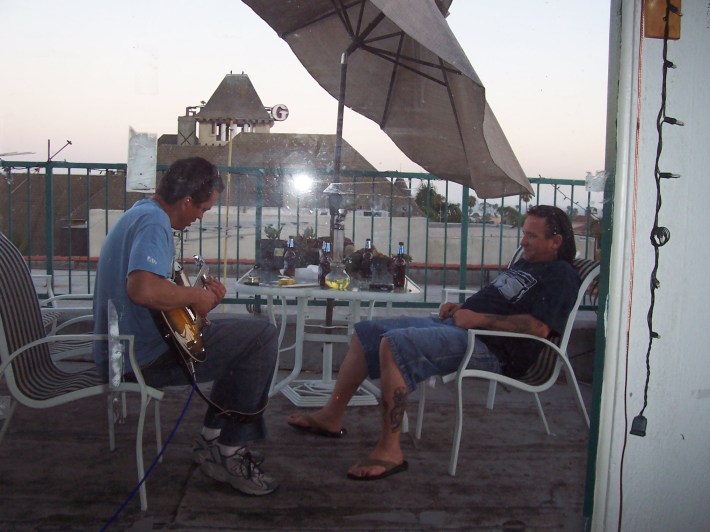
So Bud, you have your particular style, which comes from the ska dub world. And the Curt has this thing, the indie, psychedelic country rock. How did you two mesh as songwriting partners?
GAUGH: I think it was the psychedelic rock and the punk rock side of things, definitely. I grew up listening to classic rock. My parents were kind of hippies and in that sense, you know, rockers, and so I was raised on Zeppelin, Pink Floyd, Grateful Dead, stuff like that. I definitely felt the psychedelic side of things. And then, both of us being around the punk rock scene definitely clicked on that level, too. So I think the Volcano albums are more rock and roll than punk, you know? So it just kind of has the punk edge or the punk attitude in there, that was the intent, I guess.
KIRKWOOD: I didn't say, "This is this kind of song." If you listen to Meat Puppets, it's so all over the place sometimes. And definitely, a lot of times the country stuff stands out. I think it's because those are kind of easier songs for me to write. It's kind of more from my childhood, just basic stuff like that. And then as I got older, you start getting into Led Zeppelin and Black Sabbath. And by the time I get to Meat Puppets, you got punk rock. And you also have... I listen to a lot of jazz rock, Mahavishnu [Orchestra], P-Funk, whatever stuff. One thing I had never played was any ska or reggae. I mean, Meat Puppets, we listen to a lot of dub. Starting out, it was a huge influence, but more because of the Lee "Scratch" Perry stuff. It's fun to smoke weed and listen to good dub. And [Derrick Bostrom], our drummer, had a wonderful collection of just really, really obscure dub stuff from the time before we started Meat Puppets, but we didn't try to play it. I don't know why it never dawned on us, because we were kind of a punk rock band starting out.
But it's funny enough, at one point, just for about five minutes, Bud and I were playing and Krist Novoselic started doing a bassline, and we played reggae for about five minutes, and it was so fucking good. It was like, "Oh my God, we could do this too." I mean, if you want to make a good record, get drunk, get Bud to play drums. It doesn't matter, really, what kind of music you're going to play. He's a great fucking reggae player, though. And ska, and he's just an insane rock drummer. Whatever kind of stuff you want to play. So it worked.
There's definitely a couple of songs on the album where I feel you're bringing the reggae punk influence a lot with "It Doesn't Matter," "Blown Away," "Arrow." Can you tell me a little about what making those songs was like?
GAUGH: I was trying to move away from that kind of sound and stuff, so it was a little more uncomfortable for me. But it was fun still. I think that eventually it might have… the Volcano sound might have turned into a dub rock kind of vibe, I think that the psychedelic kind of side of the dub reggae would have carried over, and then it would have turned into something more like that.
The song "Rave Only" sounds like it would have been a K-Rock hit if it had been released in the '90s. How did that come about?
GAUGH: We just went into the studio and just started creating stuff, and a lot of the stuff Curt had written, we just kind of worked things out together in the studio. Definitely, I think if we had spent more time on production and stuff like that… I think it definitely could have had a different release. So, I'm excited to get this vinyl out right now. Hopefully a lot of people get to hear it.
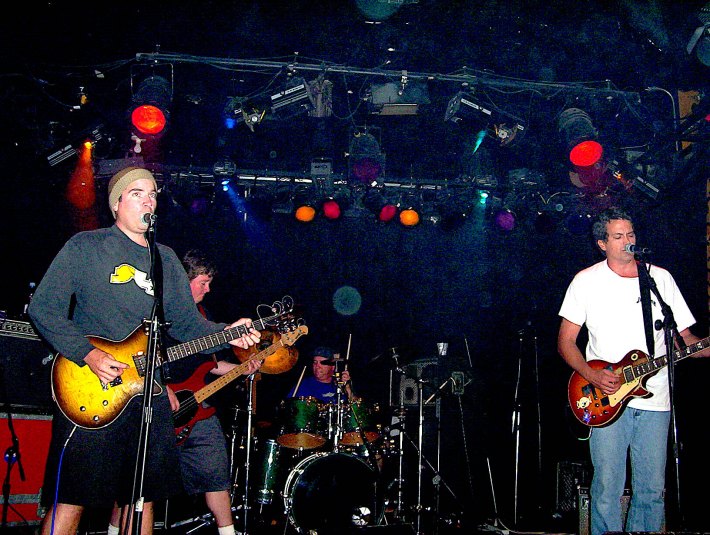
So the album was released in 2004, but you basically only sold it at shows. What happened with it, exactly?
KIRKWOOD: We printed like a thousand of them, and that's about the last I heard of it. We toured a little bit, we were unpracticed, and we were just winging it. So I think we did some shows in California, but I don't think we got out of California. It just kind of vaporized. And everybody was cool. Those guys are all pals. I still hear from Bud now and then. We still get along. It's a weird thing. It just kind of vaporized.
GAUGH: Well, we didn't have a distribution deal. We were just starting the reshaping the band from Eyes Adrift. We're kind of scrambling to get things going again. And then things ended. So, we were just working on getting a distribution deal in place and putting it out, and then touring to support it. And then, um, then things were, uh, shaken up in my life.
Do you want to say anything more about that?
GAUGH: Not really. It's personal, you know, some personal things that I was going through and some things that had happened in my life, losing family members.
Sorry to hear that. When you look back on this stuff, do you feel sad or frustrated that it didn't go how it could have been? Or do you try to be grateful that at least you had the experience of making this music with them?
GAUGH: At first, it was just kind of sad that things didn't work out. Timing is everything in life, and especially in music. It would have been nice to keep that ball rolling. But I definitely look back with gratitude, and I'm excited, like I said, that this album is coming back out again, and I can't wait to hear it. It'd be good to rekindle relationships with my brothers out there.
KIRKWOOD: I never have had a lot of aspirations. I saw right away with music… it's magic how it works. It works or it doesn't, and it works when it wants to. I'm sure a lot of people wish they could have a successful band or a successful record or whatever, but I've always just kind of taken stuff as it comes.

Now that the album is coming out, do you think there's any chance that you guys might continue to make more music together?
GAUGH: I mean, I would love that. I've learned never to say never in this industry. I'm always open to jam with Curt.
Bud, you've obviously been through a lot of ups and downs in this industry. How do you hold onto your enthusiasm for playing music?
GAUGH: By just playing what you want to play. If you don't sell yourself short, if you're not trying to do something for somebody else and you're just doing it for the love of music, then it's always a win.
Curt, what are you working on these days?
KIRKWOOD: Not much. I got my ass handed to me with COVID and pneumonia a couple years ago on tour, and it just about killed me. I was in the hospital for a month. It's nasty. Everybody got it in San Francisco on tour. We were out with Mudhoney, doing a bunch of shows, and everybody got it.
It sure fucked me up. I didn't know I was diabetic at the time, By the time we got back to Phoenix, driving back, I was a mess. And my brother said, "We need to take you to the hospital." They said, "Hey, do you know you're diabetic?" and then the pneumonia had already set in, and they had to go and just do a bunch of stuff.
Damn, I'm so sorry, Curt.
KIRKWOOD: I was in there for a month, and it sucked. So I've just been chilling. I've been like, what do I do now? I've never really taken a break. It's just that you get that inertia, and people are offering these shows. I've been with the same agent since the '80s, and they're like, "No, you take care of yourself." So like, yeah, maybe that's a good idea. I'm not a kid. So that's what I've been doing. I've been taking care of myself. I love playing shows. We like being in the van. The mobility of a van is great. Being in a bus really is restrictive. And, you know, because we like going to the state parks and national monuments and the odd 7-Eleven, it's hard to do in a bus, so we stick with the van. But I was like, goddamn, I don't want to go back and get in the van right away. And now sitting here, I'm like, I don't really want to get a fucking bus either.
How are you feeling these days?
KIRKWOOD: Feeling pretty good. I'm learning about diabetes. It's strange. You don't feel it that much. But, I hurt my foot recently and had hospital shit just this year — three different surgeries, and nothing real serious because I caught it in time. But it's diabetes-oriented, and so I'm just learning about that. It comes and goes. Just sitting around being reflective and just the general day to day, just enjoying my house. It's been a couple of years I've been doing that now, and I imagine I'll eventually do something, but I know that other guys in the Meat Puppets are probably sick of my shit, and they'd like to do something. I know my son is bored out of his mind, but I'm glad they understood too. I don't think I was well enough to do it for a couple of years there. Now, I'm getting there.
Bud, you've recently been playing with Sublime again with Bradley's son Jakob Nowell. What has that experience been like for you?
GAUGH: It's just been the gift that keeps on giving. Honestly, it's so cool to watch Jakob grow up, spiritually, emotionally, musically, all of the above, and being able to jam with him, it's just been a real treat, you know? It's a lot of fun. We just got out of the studio, and working in the studio together was a blast. Watching his creative mind work and participating in it jointly was just a real, real gift. I really feel blessed and humbled by the opportunity to jam together. It's just been great. I mean, rekindling relationships… this is what we've needed for a long time. I mean, the amount of healing and stuff that's been going on through this has been just truly incredible.
When did you kind of get the inkling that Jakob could not only sing Bradley's songs, but could also be a good person to write new music with? Did you know that going in that you'd be able to write new music, or is it just kind of hoping for the best?
GAUGH: When we first started this out... I think it was Eric who said, "Maybe we should all get together into a studio and jam." He's like, "I know I can jam with Bud and vice versa, but, you know, are we going to be able to jam with Jake?" So, early on, he didn't really want to play any of our music. He wanted to do his own thing. And I appreciated that, he was his own thing. That was like me, I didn't want to play classic rock. That's what my parents liked. And so I could understand him wanting to do something different, and, truly, I respected that.
And it was our boss... Jakob and I worked for the same company years ago, and we had the same boss, so it was for his 50th birthday. It was a party and Jakob's band LAW was playing out there, and we got to jam together. And he was more into the hard progressive metal kind of music and playing something different than what we were into. So when the idea came around that we were going to jam together, it was like, "Is this going to work out? I know he's got talent. Does he want to do this? Is he into it?" So there was a lot of questions in the beginning. And then, once we got into the studio together, then everything was just like, "No, this is the way it was supposed to be."
So how are things going in the studio? Are you guys done with the album or still working on it?
GAUGH: We're still working on it. We tracked a lot of basic tracks — drums, bass guitar, scratch vocals and stuff like that. We have basic tracks for several songs. We're going to go back and revisit them, maybe do some overdubs and add some finishing touches on the other ones. We have a song that's mixed and hopefully ready for human consumption here real soon.
We're working with Jon Joseph in the San Pedro studio, and then also Jake was working with Travis Barker, so right now we're self-producing and we've been working with some other people. We have a [Chris] Lord-Alge mix on this new song, "Ensenada," that we're possibly looking at our first radio single.
Is the Sublime biopic still happening?
GAUGH: Things are still moving. It's just, uh, you know, at a Hollywood pace, so.
You mentioned that your daughter didn't know who you were or that you are a rock star. Nowadays, when you play music for people with Sublime, is it all people around her age? What is that like for you?
GAUGH: It's weird. I mean, it's like I still feel like I'm in my early 30s. It's funny because the older I get, the older I get in my mind too. But I used to say, "I still feel like I'm 18. I still feel like I'm 21." Now it's like, "I still feel like I'm 30." It's great, though, because we see three generations of fans or more sometimes, it's insane. So we have a wide array of people at our shows.
The Volcano reissue is out 6/20 on Don Giovanni. Pre-order it from the label or at Bandcamp.