
- Columbia
- 2016
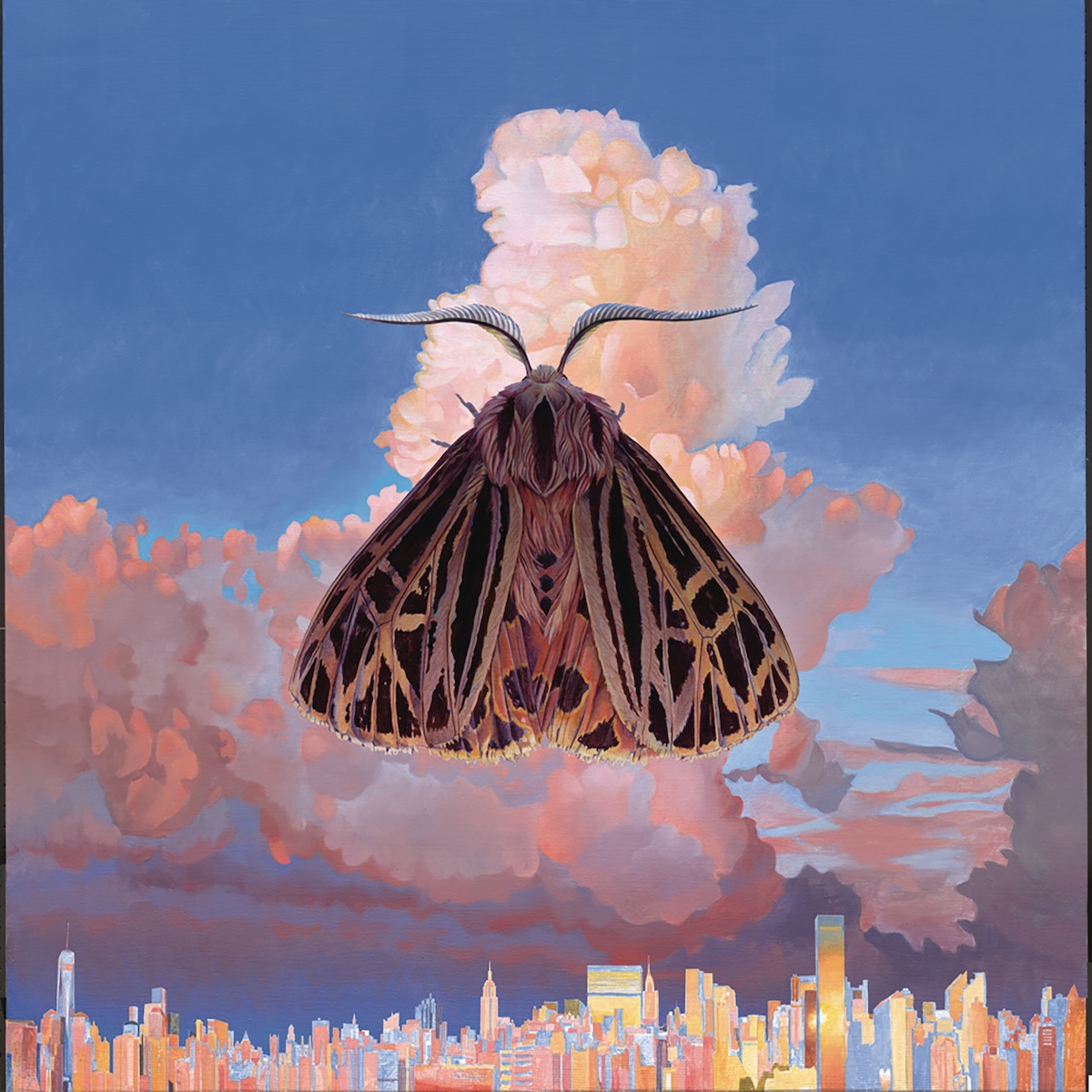
"I feel like everything up until now has been a form of training," Caroline Polachek said in a 2017 interview. Just a few months prior, she and Patrick Wimberly announced that they were pulling the plug on their beloved alt-pop project Chairlift. There was no bad blood between them — Wimberly simply wanted to be a full-time producer, and Polachek a solo artist. First, though, Chairlift were going to wrap up their tour supporting their third and final album Moth, which turns 10 years old today.
By Chairlift’s inception in 2005, Polachek had soaked up a smorgasbord of eclectic influences that’d inform her creative process. When she was little, Polachek’s family relocated from New York City to Tokyo. The striking melodies of the traditional Japanese songs she sang at school would embed themselves into her mind; meanwhile Polachek’s dad, a classical musician, introduced her to opera at home. When Polachek was seven years old, she was given her first synthesizer, the genesis of her longtime fascination with music production. The Polacheks eventually settled in suburban Connecticut, where Caroline would juggle opera singing lessons and a few short-lived high school bands while commuting into the city for hardcore punk and jazz shows.
Polachek spent her first two years of college at the University Of Colorado in Boulder and met Aaron Pfenning, a fellow musician, in an economics class. Polachek asked Pfenning if she could sing with him, and that became Chairlift. Though their sound quickly evolved into synth-pop, Chairlift began as a folksier duo, using loop pedals with acoustic guitars. Polachek transferred to NYU her junior year to study art, and Chairlift really began to take shape after firmly planting their roots in Brooklyn. Around that time, Polachek and Pfenning brought Wimberly on board.
Chairlift’s debut album Does You Inspire You arrived in 2008, and the punchy, bubblegum-synth-pop earworm "Bruises" was used in a commercial for the iPod Nano that same year; Polachek recalls checking emails in an NYU computer lab when she got a text notifying her about the sync. Before there was hardly any time to think about their sophomore album, Columbia Records scooped Chairlift up. Tensions were growing with Pfenning, who left Chairlift around that time to pursue his solo project Rewards.
In spite of the Williamsburg warehouse scene that platformed them, Polachek and Wimberly never seemed to mind being tied to a major label. Along with bands like labelmates/tourmates MGMT, Chairlift occupied a unique space where they were granted the freedom and coolness of "indie" stardom while apparently dodging most of the typical strifes that come along with major label authority: After Chairlift turned in their 2011 sophomore album Something, they were pleasantly surprised when Columbia quickly gave them the green light with little pushback. Chairlift had the best of both worlds, retaining artistic autonomy while still bearing adequate credentials to rub shoulders with capital-P pop stars — notably, the Knowles sisters.
Solange, who has a documented reputation for being tapped into the semi-underground, introduced herself to Chairlift after seeing one of their South By Southwest performances in 2009. "One day…she texted me saying, 'I think you should write for my sister,'" Polachek remembers. "I texted her back like, 'Uh, anytime. You've got my phone number.'" And so Polachek began writing and producing songs to pitch to Beyoncé: One of them, the glitzy, chillwave-pop tune "No Angel," appeared on her surprise-released 2013 self-titled album. Another one was "Ch-Ching."
Hearing Beyoncé’s full-powered vocal take on "No Angel," contrasted against the more delicate demo Polachek sent, was a strong guiding light for Moth. It prompted Polachek to resume lessons with her old opera teacher, and Chairlift decided that Moth would focus less on vocal processing; Polachek's voice has always had a nimble, elastic quality to it, though its uniqueness could sometimes get muddled amid the new wave sparkle of Something. "[On Moth] I wanted to be able to make more actual, physical sound with my own body, which I'd never been able to do before," Polachek said at the time.
"Ch-Ching," Moth’s lead single, daringly blends staccato horns, trap percussion, and subwoofer bass, but it leaves plenty of space for Polachek to soar: "Getting what you want can be dangerous/ But it's the only way I want it to be," she warns on the hook — a striking contrast from Moth’s new age-indebted opener "Look Up," where she laments that "all I want is to want nothing." Polachek's love for Japanese city pop is obvious on the ultra-sleek "Polymorphing," which suddenly transitions into the drum 'n' bass pummel of gym playlist staple "Romeo." Later on, the lustful, braggadocious "Show U Off" sees Polachek go pop diva by way of funk, itself a 180 from "Crying In Public" — a gently-staggering ballad that I still can't get through without crying, too. "I'm blaming all beauty upon you," Polachek sighs on the latter, "from the birds at my feet/ To the breakdancing boys and their boomboxes' beat." Maybe the only thing scarier than falling in love is the realization that potentially losing that person means losing all that beauty with them.
Moth is an album full of contrasts and asymmetry, and as Chairlift's final statement — they’ve sworn off doing "the LCD Soundsystem thing" — it feels like not just a culmination of all Polachek's inspirations, but a launching pad for the solo career she seemed to have manifested for herself. Over the years, Polachek tested the waters with a couple of albums on her own: the electronic-forward Arcadia under the moniker Ramona Lisa in 2014, a wordless ambient synth album under her initials CEP in 2017. But Pang, Polachek's 2019 debut album under her name, was — especially in retrospect — a victorious reintroduction that established her as the fringe, off-kilter pop star she aspired to be, one with a knack for world-building that milked all the advantages of having seized full creative control. Wimberly, too, has succeeded as an in-demand producer, working on smash albums like Solange’s A Seat At The Table, MGMT’s Little Dark Age, and Lil Yachty’s Let’s Start Here.
"I think you can only make a go at it in a big way by fully being yourself and taking risks," Polachek said in that same 2017 interview, hinting at her next steps post-Chairlift. "People can feel risks." With a decade in hindsight, Moth doesn’t feel very risky — it feels like a guiding light, having led its creators to exactly where they each wanted to be.