
- Dirty Hit/Polydor/Vagrant/Interscope
- 2016
I didn’t take them seriously. When the 1975 sauntered onto my computer screen with their 2013 debut album, they struck me as another prefab pop-rock boy band along the lines of One Direction or 5 Seconds Of Summer. That’s not to say I disliked Matty Healy and his guys. Just as I enjoyed songs by 1D and 5SOS, I had affection for some 1975 tracks — especially “Chocolate,” a sleek and fizzy bit of adult-contemporary teeny-bopping that felt like it arrived a couple decades too late for VH1 heavy rotation. That song unlocked a potent strand of nostalgia in me that I hadn’t realized was there. But no amount of superficial fondness for the 1975 dissuaded me from the notion that their music was well-made fluff.
The second album demanded a change of heart. The preening, the artifice, the self-indulgence — everything that made them seem like pure product the first time around was still readily observable. Yet those qualities were threaded into a project far more ambitious, adventurous, and audacious than I’d believed this band would even think to attempt, let alone pull off. It was pretentious, too, in a way that dared you to love or hate it. The chorus of the lead single was literally “Love me/ If that’s what you wanna do.” I did love them. I still do.
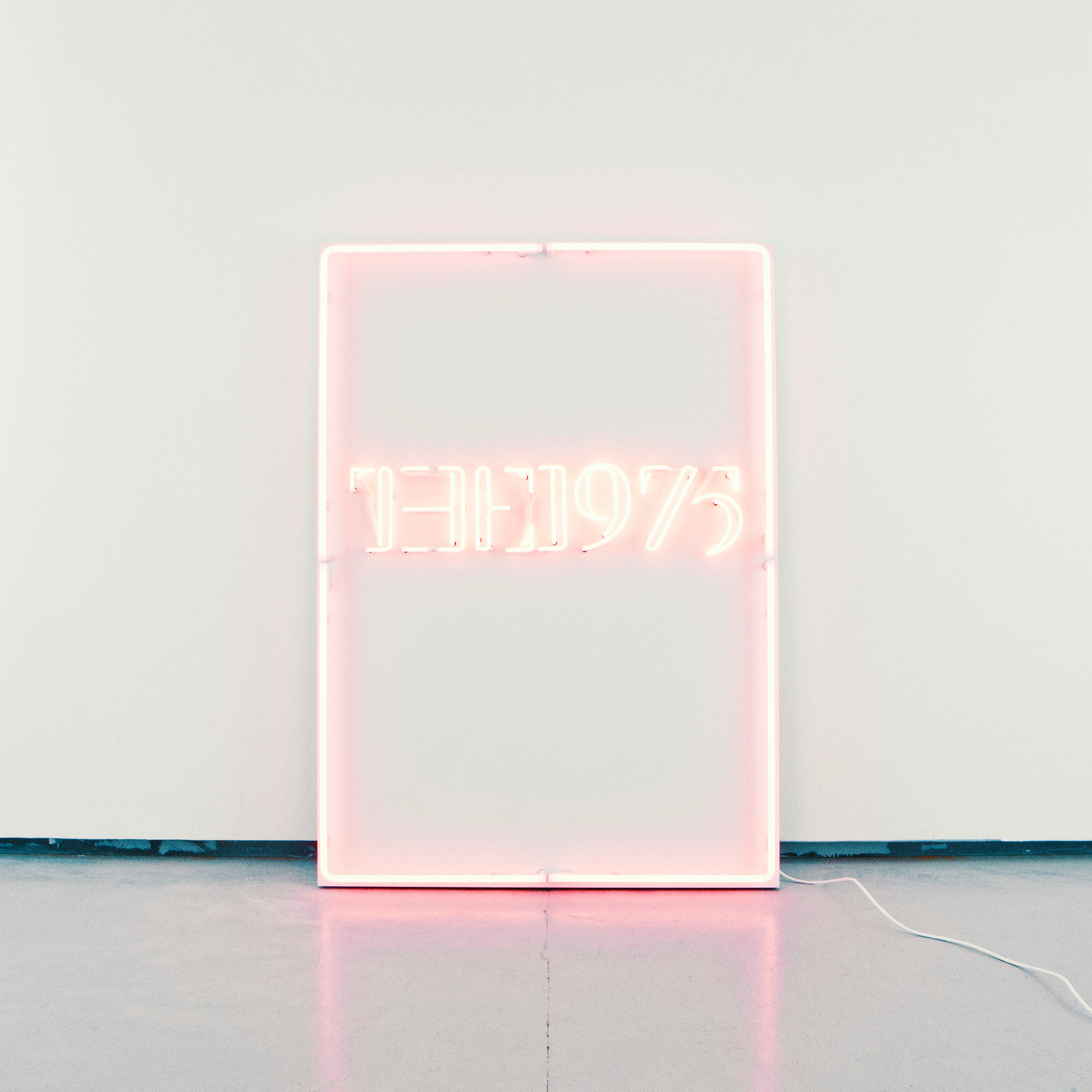
I like it when you sleep, for you are so beautiful yet so unaware of it. It’s a ridiculous title — grandiose, cloying, a little creepy — and it could not be more perfect for this ridiculous album. Released 10 years ago today, the 1975’s sophomore LP was a variegated sprawl, somehow both eager to please and desperate to confound. Though produced by the same trio that helmed the debut — Healy, drummer George Daniel, and alt-pop specialist Mike Crossey — this was a wildly different experience. It was as if the lads from Manchester had presented the world’s jaded music nerds with a portfolio designed to demonstrate just how many tricks they had up their sleeves — “I had a list of songs by other artists that I was going to rip off,” Healy plainly stated to the NME — while still catering to Tumblr teens in search of idols to stan.
That tension came across clearly in Healy’s self-aware performance of rock stardom, which at the time involved lots of leather pants and not many shirts. In interviews, he’d mention that he was sending up Mick Jagger and Marc Bolan because it was no longer possible to embody those old rock-star clichés with a straight face, but in the same breath he’d preach the importance of sincerity. “There's a misconception that we're a rock band… that we want to be a rock band and that we're telling people that we rock," Healy told Exclaim! at the time. “We're not. We play with the ideas of rock'n'roll, whether it be seriously or ironically. But we're a postmodern pop band that references a million things. I don't even know what my band is half the time."
The jumble of sometimes conflicting ideas was appropriate for an album full of jarring pivots in tone and texture. I like it when you sleep arrived as streaming was beginning to take over the music industry, and it’s almost exactly long enough to fill up a CD. But its all-over-the-place sensibility was forged in the MP3 era, from Napster’s wild frontier to the iPod’s sonic roulette to MySpace’s tendency toward shameless self-promotion and gaudy customized layouts. The 1975 could pass for an entirely different band from one track to the next. Taken as a whole, it made for a fascinating, exhausting, sometimes thrilling listen.
On an album full of fearless leaps, there were inevitably some faceplants, particularly on the acoustic ballads and some of the more meandering shoegaze passages. But the highest highs were immaculate: the wistful chillwave balladry of “Somebody Else,” the filter-disco jubilation of “The Sound,” the carbonated pop-and-lock squiggles of “UGH!” They channeled the plastic-funk new wave of Duran Duran and INXS and the otherworldly post-rock of M83 and Sigur Rós with equal aplomb. At times they tried out R&B, bloghouse, futuristic gospel, IDM, and various strains of synth-pop. They were showing off the depths of their record collections and the breadth of their skill as composers, producers, performers. Yet they seemed to take perverse pleasure in applying that talent and sophistication to some of the least venerated styles in music history right alongside the critic bait.
The stylistic twists and turns always led back to the elevated ‘80s cheese that was emerging as the 1975’s lingua franca. In addition to Healy’s tongue-wagging, hair-whipping Michael Hutchence routine, these soft-rock songs were what seemed to aggravate the band’s skeptics the most. But some of us were delighted by both the band’s expert craftsmanship and their button-pushing interrogation of taste. It was a logical endpoint for ironic millennial nostalgia, executed at such a high level that it transcended the bit to stand on its own as exquisite pop music. After years of hipsters excavating and rehabilitating seemingly every once-derided aesthetic in their parents’ record collections, here was music that fully eliminated the gulf between commenting on glossy, buoyant lite-FM pizzazz and earnestly embracing it — or should I say the Gap, given how appropriate these songs sound in mall boutique dressing rooms?
As for the lyrics, they’re not always deep — “And well, I think I've gone mad/ Isn't that so sad?” is the worst offender — but they’re all delivered with a no-holds-barred frankness that aligns with Healy’s stated belief that you have to really mean it. He matched the album’s eclectic palette with songs about a wide range of subjects including God, girls, his neuroses, and his grandmother. And just as I like it when you sleep revealed chintzy ‘80s pop as the 1975’s most formidable mode, the album’s most memorable lyrics are scathing social commentary that back up these guys’ early reputation as an emo band. I don’t hear much Warped Tour influence in these songs, but it’s definitely there in the amused, contemptuous way Healy addresses his partners. And maybe we should expand the definition of “emo” because however much barbed, Pete Wentz-style condescension there might be in these songs, there’s far more Aubrey Graham. As a writer, he’s on his best when he’s on his worst behavior.
Sometimes Healy was outright hilarious: “If she says I've gotta fix my teeth/ Then she's so American,” the young Briton remarks on “She’s American,” backed by squelching synth bass, percussive Nile Rodgers guitars, and lush keyboards and sax. Other times, he seemed genuinely dejected, like on the somber/proto-sombr “Somebody Else,” when he laments, “I don’t want your body/ But I hate to think about you with somebody else,” then bitterly quips, “I'm looking through you/ While you're looking through your phone.” The most brutal observations come on “A Change Of Heart,” on which he informs his companion, “And you were coming across as clever/ Then you lit the wrong end of your cigarette,” then chases it with, “You said I'm full of diseases/ Your eyes were full of regret/ And then you took a picture of your salad/ And put it on the internet.” He makes sure to get in some jabs at his own shallowness too — “I'll quote On The Road like a twat” — but the ladyfriend gets the worst of it. It’s a takedown worthy of “The Night Josh Tillman Came To Our Apt.,” speaking of 2010s blog stars who seemed to treasure rubbing you the wrong way.
The character sketches are vivid but also quite possibly grating in a way that dovetails with the music’s shameless embrace of ‘80s cheese. Those qualities, experienced at I like it when you sleep’s behemoth scope, marked the beginning of the too-muchness that the 1975 gleefully wielded like a weapon for the next several albums. In terms of hip-hop’s dominant assholes, they learned arguably even more from Kanye than they did from Drake. As with those guys, your willingness to put up with an insufferable persona impacted your willingness to engage with their work. Fuckboy tendencies offered 1975 haters one more excuse to write these guys off. But plenty of fuckboys have made incredible music, and with their scattershot sophomore opus, Healy’s band barreled forward into one of the most exciting artistic journeys of the past decade. Seriously.