
- Dress Up/Interscope
- 2006
"Torturous." Nick Zinner uses that word twice on the same page. The cover of Meet Me In The Bathroom, Lizzy Goodman's essential oral history of the rock 'n' roll hype machine in early-'00s New York, is a photo of Karen O spewing beer into the air. That wasn't the torturous part, though. That was the exciting moment that couldn't last; the torturous part was figuring out what to do next. Nobody has an easy time following a rocketship debut album, but the process behind this one seems especially rough. Torturous, even.
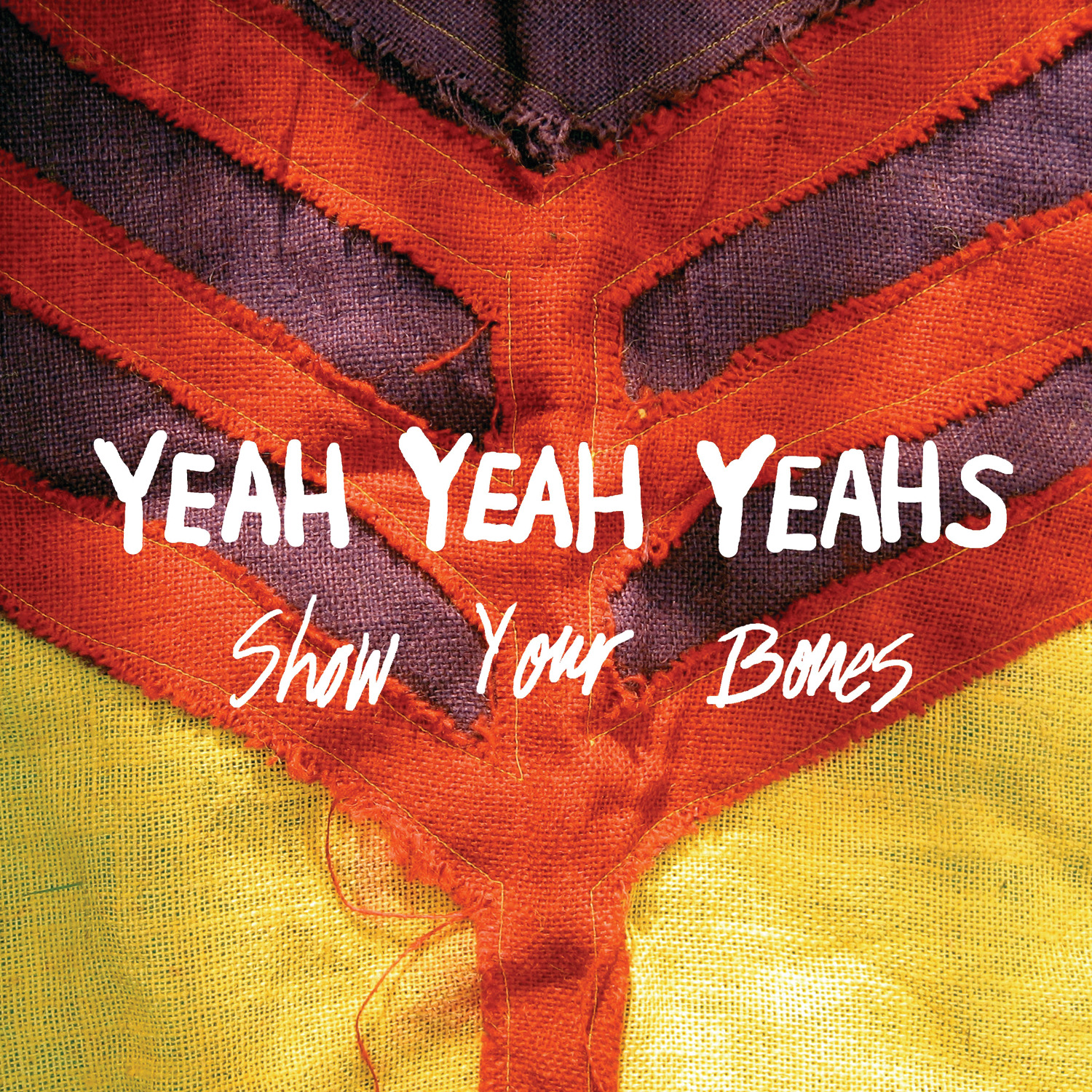
Here's some other stuff that Nick Zinner says in the chapter on the making of the Yeah Yeah Yeahs' sophomore album Show Your Bones (released Mar. 28, 2006 in the US, and a day earlier in the UK). "I was on my fifth nervous breakdown. It was the worst, darkest time imaginable, and I was freaking out, having intense panic attacks." "Why was it so bad? I don't know. Karen and I hated each other. We didn't trust each other." "Karen and I were like two thunderclouds rubbing up against each other."
From the outside, it doesn't seem like it should've been such a dark time. The Yeah Yeah Yeahs never really had to spend time in the underground trenches. They happened to come into being in the exact right place at the exact right time, and they were the exact right band for that place and time. New York was lousy with new rock heroes, and the press was ready to make icons out of a group with a larger-than-life leader and a sexily explosive guitar sound. The Yeah Yeah Yeahs were that band. They played the game on easy mode.
The YYYs' first gig was opening for the White Stripes in New York — not a big deal yet, but it would be soon. Their first EP was an instant critical buzz-machine. Before they released an album, they signed an Interscope deal that granted them full creative control. They got their buddy Dave Sitek to produce their debut, and nobody outside their bubble even knew who he was because TV On The Radio hadn't released their Young Liars EP yet. Fever To Tell got rapturous reviews when it came out, and then the band got famous when MTV pounced on the clip for their deeply atypical, deeply wounded love lament "Maps," now remembered as one of the best songs of that decade. Things were going pretty well.
Except no, they weren't. Karen O got famous by playing an exaggerated wild-out libertine version of herself, and she couldn't sustain that character. Before the YYYs even properly blew up, she learned that she couldn't keep getting wasted at every show, that her health simply would not hold up. Fever To Tell was a combustible frenzy of a record, and one of the things that made "Maps" stand out was how hard it zagged away from the rest of the band's spring-loaded screeching. And anyway, Karen wasn't sure that she wanted this version of success much longer. Other life options were opening up to her. She moved to Los Angeles while the rest of the band stayed in New York. She fell in love with Spike Jonze. She sang a goofy little lullaby in a Jonze-directed Adidas ad that won a bunch of awards, including a couple of Gold Lions at Cannes.
In Meet Me In The Bathroom, some of the people in the Yeah Yeah Yeahs' orbit say that they figured the band was just about to break up. The initial excitement surrounding the YYYs, and New York rock 'n' roll in general, was dissipating. Plenty of the bands that came up in the same hype-wave had already put out slightly deflating sophomore albums — records that weren't bad by any stretch but that didn't continue to advance the narrative that something new and exciting was happening. The Yeah Yeah Yeahs didn't know what to do next.
"It was terrifying because there was no groundwork for what anyone would want to listen to in 2006," Karen says in Meet Me In The Bathroom. "I knew I physically and emotionally couldn't make the same record — it's not in my nature, I have to move forward — but what I didn't know was what the fuck the next sound should be." She wasn't alone. Nobody knew, and nobody was on the same page. The YYYs wrote songs, and then they scrapped those songs. Everyone got mad at each other. Dave Sitek didn't produce the album — he's credited with "additional production" — but Zinner tells a story about Sitek locking Zinner in the studio and screaming at him to just play his guitar: "He listed off a thousand reasons why it wasn't so bad, and he totally saved my life."
Here's who did produce Show Your Bones, along with the band: Sam Spiegel, a guy who only had a few credits to his name. Back then, Spiegel went by the unfortunate moniker Squeak E. Clean. He's Spike Jonze's brother, and he'd been helping Karen with a never-released solo album. A few years later, he was one half of NASA, a duo who corralled a small army of extremely talented guests to make one of the worst albums I've ever heard in my life. (I shitted all over that record for Pitchfork, and I'd do it again in a heartbeat.)
In a SPIN cover story, Spiegel and Zinner talked about their oppositional visions for the LP. Karen and Zinner say that they're not friends, and then they sit uncomfortably and silently together in a Japanese restaurant. Given everything that happened during the making of Show Your Bones, the album should be an absolute clusterfuck. It should be a textbook sophomore slump. It's not. Somehow, these crazy kids figured it out. Somehow, they made "Gold Lion."
"Gold Lion" is not a towering classic on the level of "Maps," but it's an absolute motherfuck of a lead single. I remember hearing it for the first time and realizing that the Yeah Yeah Yeahs had truly unlocked something. It might be the first time they sounded like a band, rather than an art stunt that spiraled out of control. "Gold Lion" starts out with a Zeppelin-esque groove-stomp and an acoustic guitar, two things that never would've made sense on a YYYs song before that. Karen O's lyrics are pretty impenetrable — I'm only just now learning that the title might be a reference to the trophies that the Spike Jonze Adidas ad won at Cannes — but they're a great platform for the yelping and posing that she does so well. In the video, the YYYs rock out amidst a field of flames, looking staggeringly cool.
Show Your Bones mostly got good reviews when it came out, but some critics wrote that the album was pedestrian compared to what the YYYs had done with Fever To Tell. This was inevitable. The original sales pitch behind the band was that they were not the kind of group who would mess around with acoustic guitars or big riffs. "Maps" almost accidentally fell into alt-rock radio rotation, and you can hear why some people might've thought Show Your Bones was expressly made to keep the band in that space. It's bigger and sleeker than Fever To Tell. It rocks in more intentional ways. It doesn't have the same unpredictable cocaine-prickle excitement working for it. But it's got fire and ferocity and grandeur. It's got swagger and purpose. It's the reason that the YYYs were able to continue as a band.
With Show Your Bones, the Yeah Yeah Yeahs proved that they could play around with acoustic guitars without turning into folk-rockers. Karen O's lyrics don't mean much to me, but she belted out certain phrases in ways that stuck with me anyway: "Gold lion's gonna tell me where the light is," "Sometimes I think that I'm bigger than the sound," "You're something like a phenomena, baby." (She was paraphrasing Melle Mel on that last one, but Melle Mel — or LL Cool J, for that matter — didn't make it sound like that.) Zinner learned how to shape his scratchy eruptions into something more obviously anthemic. Rock-solid drum beast Brian Chase didn't really do anything different, and he didn't really need to; he was always that band's dependable backbone. It might've taken a lot to get them to that place, but they were locked in. They spoke the same language.
Auxiliary Beastie Boy Money Mark came in and played keyboards on a couple of Show Your Bones tracks, but that wasn't exactly enough to make this band into a radio-friendly unit shifter. With the Killers blowing up, the world was already learning how the real commercial-friendly version of early-'00s hipster rock might sound. Pretty soon, Kings Of Leon would get way bigger than all the New York bands who inspired them, and Show Your Bones would sound a whole lot better in retrospect.
Today, it's easy to hear Show Your Bones as a necessary transitional step in the YYYs' progress — the thing that got them from the raw wild-out sizzle of Fever To Tell to the big-stage synth-rock majesty of It's Blitz! The album doesn't have anything nearly as totemic as "Maps" or "Heads Will Roll." On its own merits, though, Show Your Bones is a prime candidate for rediscovery. It's just an extremely good rock record. Late-album bugouts like "Mysteries," which goes from quasi-rockabilly twee to noisy head-trip, are the work of a band still walking the tightrope without a net. "Phenomena" is still the funkiest thing that they've ever done, even if you factor remixes into the equation. And the gorgeously airborne "Cheated Hearts" still demands a spot near the top of anyone's list of the best Yeah Yeah Yeahs songs.
In August 2007, I went to see the Yeah Yeah Yeahs play New York's Webster Hall, a venue that was way too small for them by then. They made it feel bigger. They attacked that stage with the lived-in confidence of true rock stars. Karen O's shiny purple Zorro mask didn't look like it was part of a costume; it seemed like the kind of thing that a person like this would wear. I'd seen them a few times in their younger, messier days, but I hadn't seen them play like that. What I was getting was an early preview of the festival-headliner powerhouse that they would soon become.
By the time of that Webster Hall show, the Yeah Yeah Yeahs had already released Is Is, the 2007 follow-up EP that integrated their early noise-buzz intensity with their bigger rock gestures. Show Your Bones is still the sound of a band figuring out what they want to do next. The album sold and charted pretty well, but it wasn't as big as Fever To Tell, and it didn't have the same impact on the popular imagination. Is Is has none of that tentative quality. It's already there, fully realized.
Pretty soon, the band would release their real rock-star record, which remains the best thing they've ever done. Show Your Bones isn't that, but it's a banger, one that is still worth your attention today. Talking about the final product in Meet Me In The Bathroom, Zinner concluded, "You know, I actually love that record now." He and his band tortured themselves, but they got something out of it.