
Friday, the Club 2 Club Festival returned to New York for a second consecutive year. Founded in Turin in 2002, the music fest ventured into North America with a one-day event at Knockdown Center in Queens last spring, reprised this year at the same venue ahead of the 25th anniversary edition of C2C’s flagship Italian event this fall.
C2C bills itself as a showcase of both established tastemakers and up-and-coming critical favorites in the realm of experimental pop and club music. These genre markers are, of course, already tenuous, as most genre markers are — I don’t know what clubs people are going to where the DJs are playing Elias Rønnenfelt and Los Thuthanaka — but the looseness of terms like "avant-pop" (which C2C uses in their promotional copy) doesn’t leave their lineup feeling vague or incohesive. Instead, it lends the festival a note of curatorial expansiveness. Plus, I know I’m biased, but if a side effect is that the festival feels a bit like music critic summer camp, I’m okay with that, especially compared to influencer summer camp, which seems to be the default vibe of contemporary high-budget music festivals.
I don’t think anyone would think to describe Titanic — the collaborative Guatemalan-Venezuelan project of vocalist-cellist Mabe Fratti and guitarist I. La Catolica — as club music. But when I arrived for their set (my first of the evening), the atmosphere was hazy, dusky, and dancefloor-esque, people swaying along to muscular chamber rock on the concrete patio, illuminated by purple lights.
Technically, this was not my first C2C event of the day. That afternoon, I’d stopped by Brooklyn’s premiere independent radio station he Lot Radio, where C2C had taken over the airwaves with DJ sets from a handful of artists on their lineup. But when I arrived, midway through the takeover, the Lot was suspiciously dead — perhaps due to the pop-up underscores DJ set about to commence just a few L train stops away, for which I quickly abandoned the Lot, putting a pin in C2C till the evening.
By the time I was up against the barricade of the Knockdown “ruins” stage, named for the partially-roofed concrete slab structures surrounding it, the sky had begun to darken. I was shocked by the vastness of Titanic’s live sound, how tracks off HAGEN — a dense, stacked-and-packed album — seemed to unravel onstage, rocking harder than their thrilling but streamlined recorded renditions. Fratti’s voice soared and reverberated throughout the ruins; how swiftly she could turn her cello fingerplucked and percussive. In the live versions of tracks like “Lágrima del sol” and “Gotera,” her strings and I. La Catolica’s melded together in a manner that worms its way into your heart and shakes every vein.
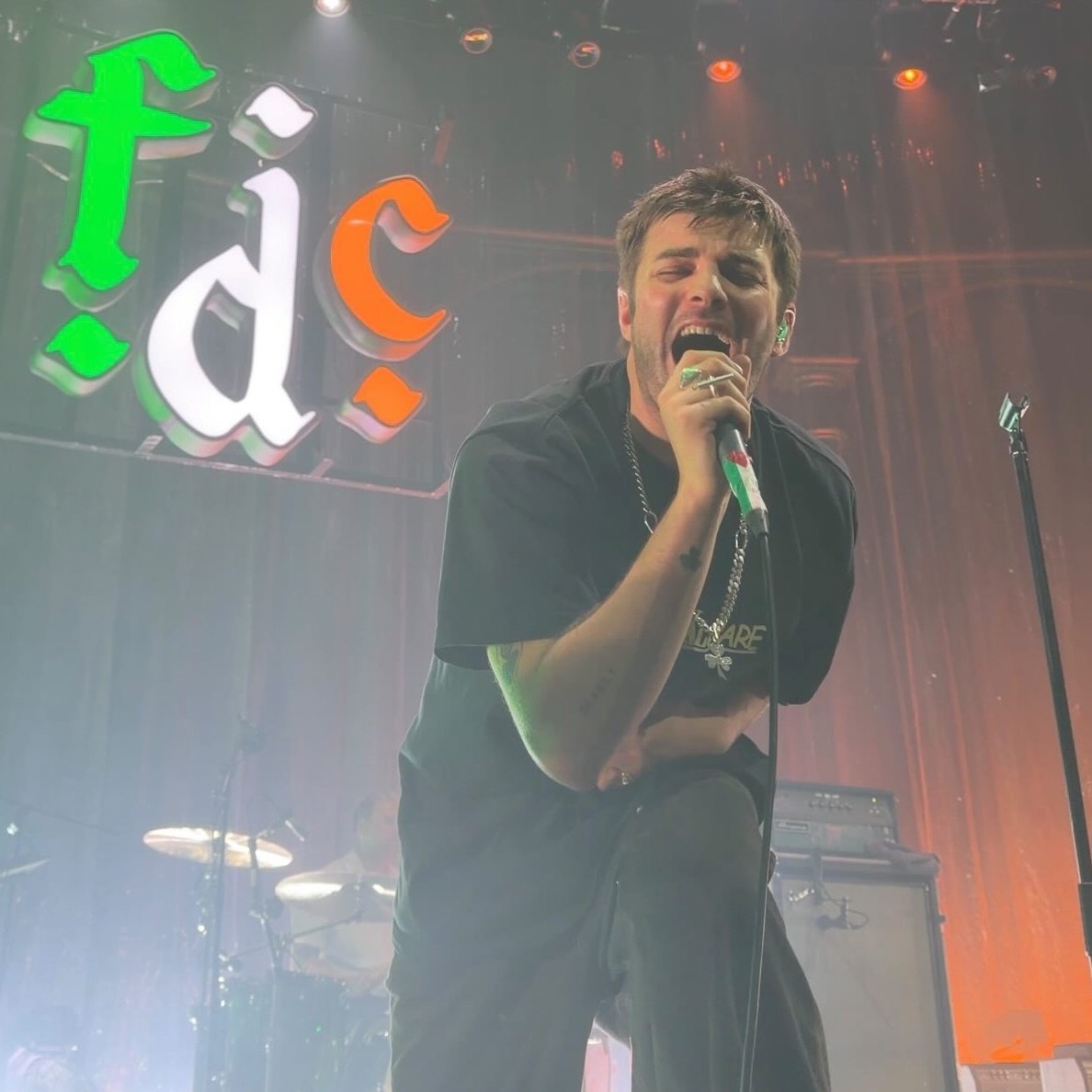
Elias Rønnenfelt’s set followed. Though I’ve enjoyed the Danish artist’s solo work in the past — particularly his album from last year, Speak Daggers, and his Dean Blunt-and-Vegyn-produced one-off single “tears on his rings and chains” — I’ve always preferred his work with Iceage, and had assumed a Rønnenfelt set sans Iceage might prove mellower than the punk band’s signature raucous live performances. Suffice to say, I was proven wonderfully wrong. Almost every song in Rønnenfelt’s discography, which is notably woozier and folksier than his Iceage work, rolled out at 1.5 speed or faster live, making for some wild renditions of “USA Baby,” “Mona Lisa,” and “Blunt Force Trauma.” Regardless of the project, Rønnenfelt’s stage presence is manic, tactile, and unpredictable. His voice and strings crackle like the sparks from a fire, never taking the same shape twice.
Local headfuck-punks YHWH Nailgun shut down the outdoor stage with an 11-minute set — yes, you read that right. I’d stopped at Knockdown Center’s “Champagne Room” before their set to take advantage of the about-to-close open bar, remembered that a friend had tipped me off to YHWH’s micro-set, and promptly hoofed it back to the ruins to get the only eardrums God gave me pounded by almost 10 minutes of entirely new YHWH material.
The new stuff proved even more battering and arrhythmic than 2025’s 45 Pounds, a record I loved for how it pushes the limits of danceability and what a “hook” even is. As a live band, YHWH are in incredible lockstep with one another, displaying a certain cacophony and chaos that only comes from immense and seemingly counterintuitive precision. When Zach Borzone and company left the stage, I heard a few people in the crowd wonder aloud if they might return for an encore and play some of the old stuff. Alas, there was no encore. When they said 11 minutes they meant a clean 11 minutes, not a second more.
As the ruins portion of the festival came to a close, my friends and I migrated indoors to catch a set from the English electronic producer Aya, an artist whose music I found myself connecting with more in a live setting (and that’s not just because I can’t look at the Hexed! album art without feeling like I’m gonna throw up). In some ways, her industrial sonics are even more abrasive in a live setting, embedding their hooks under your skin. On her records, the sense of dread is creeping; live, it’s already arrived.
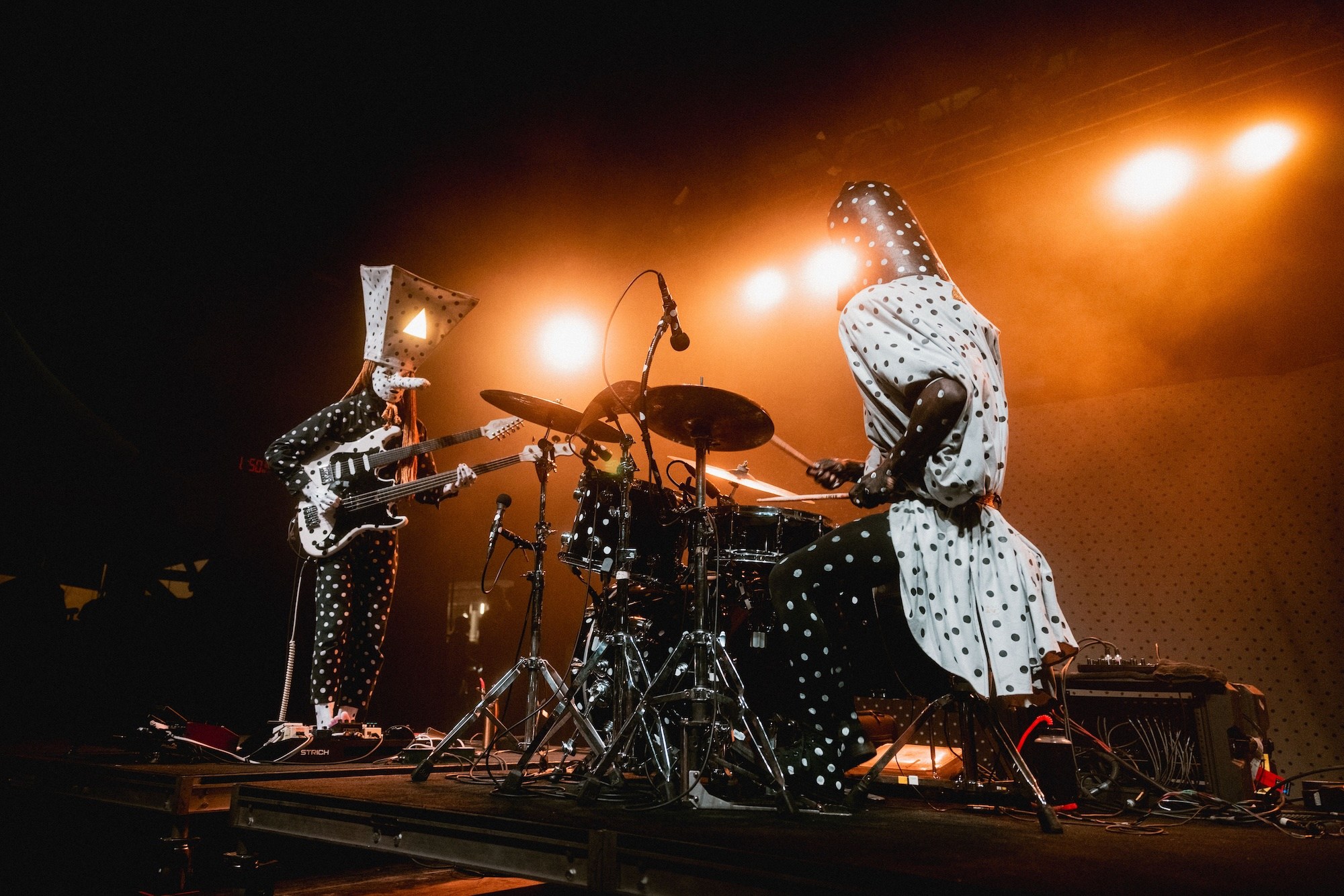
I’d lost track of time wandering around the courtyard and catching up with friends (again, music critic summer camp), which unfortunately made me miss almost all of Avalon Emerson’s set — a shame, since the New York singer-songwriter, producer, and DJ’s latest album, Written Into Changes, is a truly lovely work of earthy dreampop. I was, however, at the barricade for Los Thuthanaka, the sibling duo of Chuquimamani Condori and Joshua Chuquimia-Crampton, who became one of 2025’s farthest outside-the-box critical success stories with their self-titled, unmastered record.
I’d seen Los Thuthanaka live at the end of last year, which had really solidified their magic for me. There’s something about their music that feels indescribable in the way that time itself is. How would you explain what it feels like for an hour or a day or a month to pass by? Similarly, whenever I see Los Thuthanaka live, I find it easy to fall in with them playing what sounds like the same riff over and over again, unchanging in the moment, only to feel that, in its repetition, everything has changed. It’s music that lulls you into a trance and makes you wonder how you got to almost exactly where you started.
Prior to C2C, the first time I’d seen Nourished by Time was almost three years ago at the now-defunct Pitchfork Music Festival. Following the release of his 2023 record Erotic Probiotic 2, the Baltimore artist played an early-afternoon set that felt quaint, almost shabby chic, but also struck me as a sign of his budding star power. Watching Marcus Brown open a festival, I could envision a future where he was closing them. Flash forward to last Friday, Knockdown Center’s mainstage after midnight, and his retro-futuristic R&B filled the cavernous venue, tossing its sparkling sound all over the crowd like the dots cast by a disco ball. He opened with the speaker-blowing one-two punch of “Automatic Love” and “Idiot In The Park,” two of my personal favorites from last year’s The Passionate Ones. However, the real full-circle moment for me was “Shed That Fear,” the song that first made me fall in love with Brown’s music. Its chorus and booming bass felt like they were playing from a speaker inside my head; if I closed my eyes, the room became a brain-shaking silent disco.
Coming down from the high of Nourished By Time’s transcendent set wasn’t easy. At this point it was well past midnight and I’d been on my feet for the better part of 12 hours, running on adrenaline, peach-grapefruit tequila-Redbulls, and puffs from a friend’s vape that was purchased from the bathroom attendant for $20 and tasted like someone had sucked on a watermelon Jolly Rancher and then spit in your mouth. Dead on my feet as I was, I was determined to catch Arca’s headlining set. Her instrumental intro was nearly as long as YHWH Nailgun’s entire performance — guttural, cracking basslines rolling through the room like a brewing thunderstorm. It was a deservedly raucous introduction for the Venezuelan experimental electronic pioneer, whose stage presence is every bit as enrapturing as I expected.
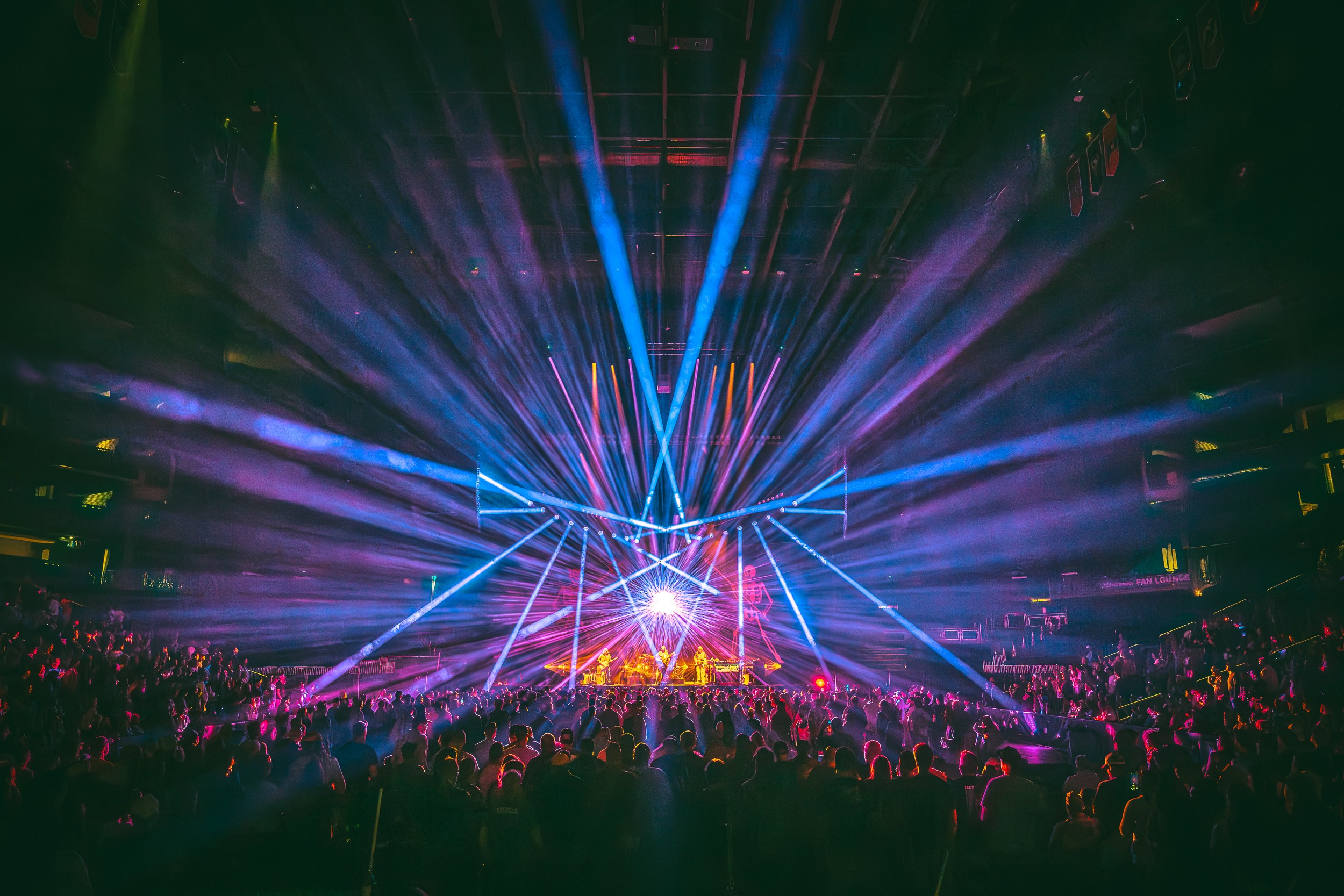
“Good evening, Nueva York!” she cried out, with what I can only assume was a wink. “I love you guys, have fun!” At her cue, the house lights dimmed and the room became dotted with columns of purple spotlight and a noxious beat cracked through the crowd, textural and varying in pressure. The mood of Arca’s set could turn on a dime from “abandoned factory rave” to “bat cave fashion week” to “what if there was a haunted house at the club?” — a real encapsulation of the festival’s musical malleability. Her set, indicative of the entire C2C experience, was a reminder that pop music can be whatever you want it to be.