
Skip to Content
Columns

The Alternative Number Ones: The Cure’s “Fascination Street”

May 6, 1989

  • STAYED AT #1:7 Weeks

In The Alternative Number Ones, I'm reviewing every #1 single in the history of the Billboard Modern Rock Tracks/Alternative Songs, starting with the moment that the chart launched in 1988. This column is a companion piece to The Number Ones, and it's for subscribers only. Thank you to everyone who's helping to keep Stereogum afloat.

It can be so easy to take the Cure for granted. They've been a band for longer than I've been alive. Robert Smith has not changed his personal style one bit since the first term of the Reagan administration, and his painted-up and tousle-haired face was staring at me from magazine covers before I had the slightest inkling of what alternative music even was. (I suppose I'm still not certain of what alternative music is, but that's a different story.) Smith's supporting cast has changed so many times that the Cure's always-revolving lineup has become its own blurry, mysterious constant. They've got songs that I've heard so many times that I don't always know how to hear them with fresh ears. The Cure have simply always been there.

But when you take a minute to dial into what the Cure were doing, it's immediately clear that they're a miracle band, a thing that could never be replicated. Once upon a time, these English guys were part of a whole movement of theatrically morose rock bands, a zeitgeist that the Cure themselves accidentally helped will into being. But the Cure outlasted all of those bands, and they became a different band themselves. A group who once made bleak and absorbing mood-piece albums shifted into becoming one of the great singles acts of the '80s, a decade that was not exactly short on great singles acts. The Cure's evolution was something like Joy Division, if they'd been able to gradually shift into becoming New Order, with no deaths or name changes. And then they made Disintegration.

To this day, it's slightly baffling that human beings made Disintegration. The album came out right around the time I started my pop-music awakening, so I'm not really cognizant of a time before it existed. It's like the Pyramids or the Empire State Building -- a landmark of human invention, created under circumstances that can only seem mysterious to those of us who can only marvel at its existence. Before the Cure made Disintegration, Robert Smith was worried that his band was getting too big, so he made the willful decision to scale things back, to alienate his audience. He wrote the kind of sprawling, atmospheric, fog-choked rock record that the band had made in its early days, thinking that it would shrink the Cure's audience and turn his career into something more manageable. But Disintegration was simply too good, and to Smith's horror, it transformed the Cure into a stadium rock band instead.

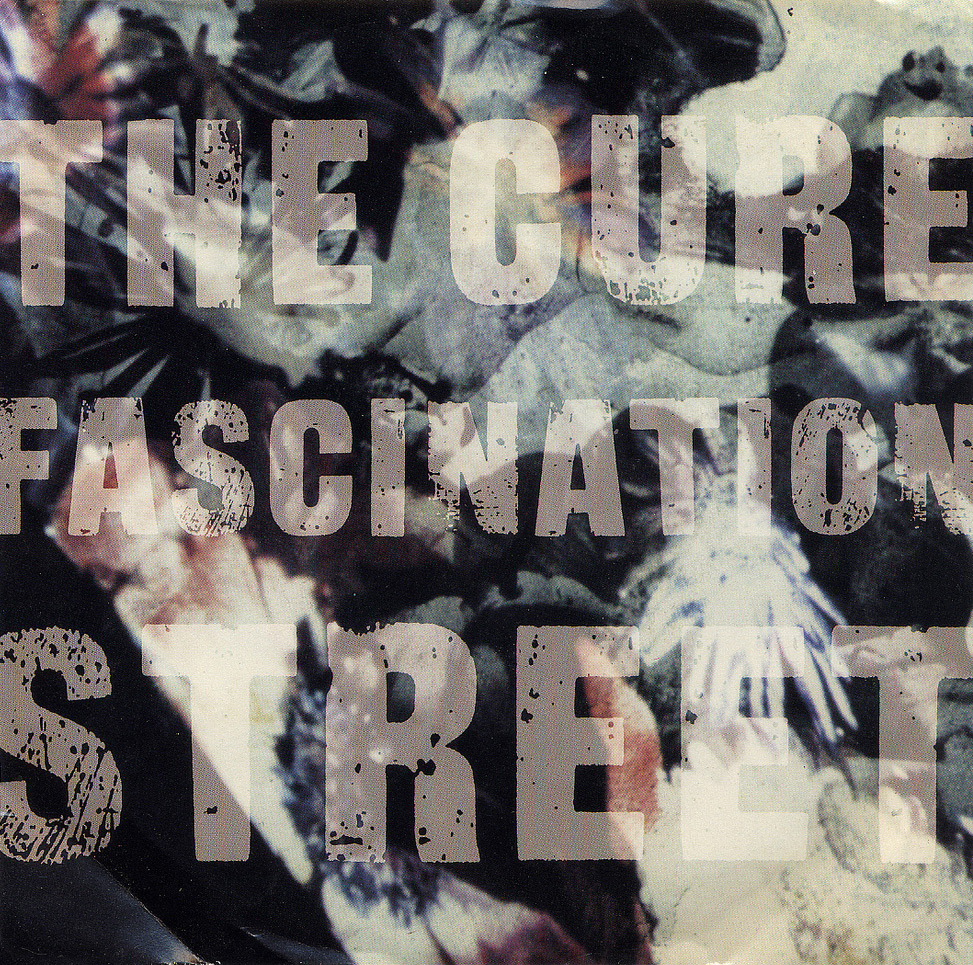
Disintegration is an astonishingly cohesive album, but the Cure were simply too great at being a singles band to stop making bangers. That's how you end up with "Pictures Of You" and "Lovesong" and "Lullaby," all on the same record. Somehow, though, none of those songs were released as the first single from Disintegration, at least in the US. This was the decision of the Cure's label, not the band, and that decision remains baffling. Rather than any of the perfect glittering classics on the record, Elektra opted to kick off the album's rollout with "Fascination Street," a tangled, drunk, angry dirge with studiously vague lyrics and no obvious structure. It still worked. "Fascination Street" is yet another banger from a band that, at least at that moment, couldn't make anything else. In its own way, it's another perfect, glittering classic.

The Cure were a band for a half-decade before they even solidified as the Cure, and they were around for another 10 years between that and "Fascination Street." Robert Smith was born in Blackpool, but he grew up mostly in Crawley, a sleepy little town around 30 miles south of London. As a kid, Smith loved Jimi Hendrix and Nick Drake and David Bowie. As a teenager, he fell in love with the Sensational Alex Harvey Band, a Scottish group who wore vaudeville rags and made a kind of immersive rock that was halfway between glam and prog. Smith was about 13 when he got a group of school friends together and started an Alex Harvey-inspired group called Obelisk; they played their first show at their middle school sometime around 1972.

Obelisk went through a bunch of name changes over the years, but the basic core of the group stayed together into the late '70s -- long enough for Robert Smith, like so many others, to get inspired by the UK's punk boom. By that time, Obelisk had become Easy Cure. Smith wrote most of the songs, but he didn't want to lead the band. Instead, they had a singer named Peter O'Toole -- not the Lawrence Of Arabia guy, though that would've been interesting. Easy Cure played pub shows in Crawley, and they won a contract with a German label in a talent show, but it fell apart before they released anything. Peter O'Toole left the band, and they held auditions for a new singer before Smith reluctantly took the lead.

In 1978, the Cure -- they'd dropped the "Easy" -- recorded a demo tape of a few songs that their German label hadn't wanted to release. Chris Parry, a New Zealand-born A&R guy, heard the tape and immediately made it his mission to sign the band. Parry had already signed the Jam and Siouxsie And The Banshees. He was one of the few people in the British label system who understood what was happening with punk, and Polydor let him start his own imprint, which he called Fiction. The Cure became Fiction's first signing and their flagship act, and they released their debut single "Killing An Arab" in 1978.

Forty-five years later, "Killing An Arab" still feels like it requires some explanation. Robert Smith wrote the song from the perspective of the Stranger, the eponymous dead-inside existential figure from the Albert Camus novel of the same name. (Smith was that kind of songwriter, even as a teenager.) In the song, as in the novel, the race of the person being killed is fairly incidental. What you're supposed to take away is that this guy just killed someone because the sun was in his eyes. "Killing An Arab" nevertheless drew National Front thugs to early Cure shows, and the band had to state, again and again, that they stood in opposition to all forms of racism. Smith has said that he regrets the song's title, but he's never disowned the track. Just this past weekend, the Cure played "Killing An Arab," the title now rephrased as "Killing Another," as the final song of their headlining set at Riot Fest in Chicago.

You can see how people would've been confused. "Killing An Arab" is a sharp, mean, nasty piece of post-punk; the first time I heard it, I thought of the Cramps. In an era when punk bands were still routinely wearing swastikas, a song like that was going to cause a band to be pegged a certain way. Not even the Cure's second single, the immortal jangly hiccup "Boys Don't Cry," could undo that impression.

"Killing An Arab" and "Boys Don't Cry" were not hits, which is strange to consider today. "Boys Don't Cry," in particular, has left a deep imprint on popular culture. This minute, the Florida sing-rapper Rod Wave's "Boyz Don't Cry," a completely unrelated song except for the title, is on its way to becoming one of the most popular songs in America. Chris Parry, who'd taken over as the Cure's manager, essentially compiled a bunch of tracks together without the band's input to make their debut album Three Imaginary Boys, which came out in 1979. (Later on, that same record, with a reshuffled tracklist, arrived in the US as Boys Don't Cry.)

Robert Smith didn't like how Chris Parry had slapped a bunch of his songs together, so he took care to exercise a whole lot more control over the Cure's second album, 1980's Seventeen Seconds. Around the same time, the Cure opened for Wire and Siouxsie And The Banshees, and those experiences taught Smith how much more overpowering a spectacle the Cure could be. Early on, Smith just looked like what he was -- a babyfaced provincial kid, up onstage in street clothes. Bit by bit, he assembled his stage persona, until he finally came to look like a bat who'd been slathered in sad-clown facepaint. When he found a look that suited him, he never, ever changed it. But Smith hadn't yet landed on that look when the Cure landed their first hit: "A Forest," a Seventeen Seconds track that made the lower reaches of the UK top 40.

The Cure's music grew heavier and more atmospheric, and Robert Smith definitely took inspiration from Joy Division, a band that shared stages with the Cure a few times before meeting their tragic end. Smith also got deep into psychedelics, and that also came to inform their records. (Pink Floyd were always a touchpoint.) That stage of the Cure's development culminated in the release of 1982's Pornography, their fourth LP. Pornography opened with Smith singing the line "It doesn't really matter if we all die," and it barely had any tracks that could stand alone as singles, but it still became the first Cure LP to reach the top 10 in the UK.

After Pornography, the Cure almost broke up. Most of Robert Smith's bandmates had left; for a while, it was just him and Lol Tolhurst, his oldest school friend, who helped write lyrics sometimes but who mostly stuck around because he was a good hang. Tolhurst started out on drums, but he wasn't a good enough drummer to play everything that Smith needed, so Smith had him move over to keyboards, even though he didn't know how to play. Smith might've been writing dark, heady songs, but he was also a guy who liked to drink and watch soccer, and he mostly kept his friends around him. People cycled in and out of the Cure, as far as I can tell, because Smith wanted to spend time around them, not because they were experts at their instruments.

Over time, Robert Smith got to be really good friends with Siouxsie And The Banshees' Steve Severin. When the Banshees, a band that's already been in this column, lost a guitarist, Smith filled in. He stuck around long enough that he became a full-time Banshee. Smith split his time between the Cure and the Banshees for a few years, and he played on the Banshees' 1983 cover of the Beatles' "Dear Prudence," which became their biggest-ever UK hit. Worried that his label was about to lose their biggest band, Fiction Records boss Chris Parry challenged Robert Smith to write an upbeat pop song. Smith returned with "Let's Go To Bed," which came out as a non-album single in 1982.

"Let's Go To Bed" never became a big hit, and Smith thought it was the dumbest thing he'd ever done, but the song still set the Cure on a whole new trajectory. They became a charming, giddy singles band, retaining some of the absorbing mystery of their early records but applying those skills to songs about the nervous euphoria of attraction. Robert Smith could write love songs. He'd been with the same girl ever since high school, and she evidently still had him shaking like milk. As they evolved, the Cure found a way to be deep and sad but also bright and catchy and goofy. Smith originally wrote another non-album single, 1983's "The Lovecats," about drowning a sack of cats in a lake. By the time it came out, though, that song was an absolutely charming monster-jam, and it became the Cure's first top-10 UK hit. Pretty soon, the Cure were busy enough that Smith had to quit the Banshees.

In the US, the Cure were always a cult act, but they were growing. Tracks like "Primary" and "Let's Go To Bed" did pretty well on the Billboard dance chart, and I bet it was amazing to hear those songs in clubs. In 1985, the Cure just barely eked their way onto the Billboard Hot 100, when "In Between Days," the first single from their album The Head On The Door, peaked at #99. I tell you what: There are probably plenty of songs as good as "In Between Days," but right now, off the top of my head, I can't think of any songs that are better than that.

"In Between Days" was a huge college radio hit in America, and the Cure's vivid, memorable videos also got a lot of burn in the early MTV years, even turning Robert Smith into a bit of an unlikely heartthrob. From what I've been told, the crowd at the Cure's mid-'80s American shows was an uneasy mix of downcast bookish dudes and screaming teenage girls. The Head In The Door eventually went gold on the strength of "In Between Days" and "Close To Me," a panting-romantic synthpop spell-caster so immediate and universal that it inspired an entire dancehall riddim.

By the time Robert Smith was 27, the Cure had enough absolute heaters to compile a singles collection that's known as both Standing On The Beach and Staring At The Sea, which served a beautiful no-skips introduction to a great band. I bought my CD copy when I was maybe 15, from a friend who was trying to sell off all her music. It was my first Cure record, even though it had already been out for nearly a decade. That was a lot of people's first Cure record, and it eventually went double platinum. The Cure followed Head On The Door with Kiss Me, Kiss Me, Kiss Me, a giddy and hyperactive 1987 double album that practically served as a greatest-hits collection on its own. That's the album that gave us "Just Like Heaven."

"Just Like Heaven" was an honest-to-god crossover hit that made it to #40 on the Hot 100. Not even underground rockers could front on "Just Like Heaven"; Dinosaur Jr.'s 1989 cover was a big part of that band's legend. (Dino Jr.'s highest-charting alternative single, 1993's "Start Choppin'," peaked at #3. It's a 9.) Kiss Me, Kiss Me, Kiss Me went platinum, and the Cure started touring American arenas. When Billboard instituted the Modern Rock chart in 1988, the magazine listed the Cure's word-of-mouth success as one of the reasons. Something was happening with bands like the Cure, and Billboard needed a chart that could keep track of it.

As their legend grew, though, the Cure remained a disorganized group. Robert Smith didn't take himself too seriously, and he maintained an entertaining long-running feud with Morrissey — someone who will appear in this column a bunch of times — even though Morrissey was his closest real contemporary. (That feud, near as I can tell, was mostly a personality-clash thing, since Morrissey did take himself that seriously. They're still beefing today, and I know whose side I'm on.) The Cure drank a lot; I was a little surprised to learn that alcohol is nearly as important to the band's story as it is in the sagas of the Pogues or the Replacements. By the time the Cure got to work on Disintegration, Smith's old buddy Lol Tolhurst's alcoholism had gotten so bad that he couldn't contribute anything. Tolhurst is credited with "other instruments," and he's got songwriting credits on every track, but he apparently didn't write or play a single note.

Disintegration, like most Cure albums, is primarily a Robert Smith joint. When Smith started building the album, he'd just gotten married, and he was about to turn 30. Smith was always obsessed with his own aging, and those life changes brought out his most pessimistic side. He worked on demos on his own, sometimes refusing to speak to his bandmates, and he went so deep into the gloomy heaviness of the early Cure records that Elektra was initially upset when he played Disintegration for the label. (Can you imagine hearing Disintegration and being alarmed?) Smith assembled the album with CDs in mind; he liked the idea of an unbroken listening experience where nobody would have to flip a disc or a tape over. The songs sprawled out to luxurious lengths, with intros that would keep building and building.

By all accounts, "Fascination Street" was inspired by a drunken night that the Cure spent out at Bourbon Street in New Orleans, which is funny to think about. I spent a very blurry New Years Eve on Bourbon Street once. (I think it was 2002, though my inability to say for sure probably tells you what kind of night it was.) Bourbon Street was already a tourist trap then, and it was probably on its way to becoming one whenever the Cure went there. But New Orleans is just a beautiful, majestic, singular city that the romance can almost overcome the vast throngs of drunk Southern yokels clogging the streets. I went in there as a drunk Southern yokel myself, and if you go in there with the right drunk-yokel mentality, I bet you can still have an amazing time on Bourbon Street.

The Cure were drunk yokels at heart, and I bet they were able to get lost in the swirl of Bourbon Street. But "Fascination Street" isn't a romantic song. It's surly and grimy. Bassist Simon Gallup is the closest thing the Cure has to a permanent non-Robert Smith member, and on "Fascination Street," he and drummer Boris Williams lock into a heavy, scuzzy groove while Robert Smith's guitars scratch and twinkle over the top.

Smith has said that he had the idea for the song while preparing to hit the town: "I was getting ready to go there, and I thought, 'What the fuck do I think I'm going to find?' It's about the incredulity that I could still be fooled into looking for a perfect moment." So "Fascination Street" isn't about transcendence; it's about the failure to discover transcendence. Or maybe it's about seeking oblivion, trying to drag your loved ones down with you. Smith sings the whole thing in that that inimitable delivery, halfway between a moan and a sigh, but a little bit of sneer creeps in there, too: "I feel it all fading and paling, and I'm begging to drag you down with me, to kick the last nail in."

There's an extended "Fascination Street" mix that stretches the intro out to four minutes. Even in the single version, the song goes for nearly a minute and a half before Robert Smith opens his mouth. The song has time to establish a paranoiac, churning mood. There's still mystery in there; the little pings at the very beginning always reminded me of bats chirping. All of Disintegration has a gauzy, out-of-focus quality; it's clear that Robert Smith and the Cure's regular producer Dave Allen worked hard to make sure there was just the right amount of echo and sustain on every drum hit. But "Fascination Street" works as a reminder that the Cure could rock hard when they wanted. The song comes drizzled with woozy washes of guitar and sparkly little keyboards, and it's beautiful. It's a bit playful, too; I love the power-chord that comes in when Smith howls the line about "let's move to the beat like we know that it's over." But the vibes are dark. Smith sounds like he believes something is ending.

That darkness made "Fascination Street" a curious choice for lead single of a big album, and Robert Smith was unsatisfied with the low-budget video that the band made for the song. (I'm not sure what he wanted. The video has the Cure standing around and looking cool in dry ice, and that's exactly what the song calls for.) But I guess the strategy worked. "Fascination Street" was the first Cure single to hit Billboard’s new Modern Rock chart, and it reached #1 on that chart. "Fascination Street" also went top-10 on the dance chart, did OK on mainstream rock radio, and reached #46 on the Hot 100. But the Cure's next single was the real hit.

Robert Smith wrote "Lovesong" as a wedding gift to his wife, and it's the one moment on Disintegration where he doesn't sound like he's drowning in hopelessness. "Lovesong" only made it to #2 on the Modern Rock chart, but it crossed over in a huge way. On the Hot 100, "Lovesong" also went up to #2, with Janet Jackson's "Miss You Much" keeping it out of the top spot. (It's a 9.) To this day, "Lovesong" remains the Cure's one huge American cultural-dominance moment, and it's wild to think that they ever became as big as they did, that they ever went head-to-head with peak-era Janet.

To me, the craziest thing about this moment of wild success is that "Pictures Of You" wasn't a big part of it. I finally thought of a song that's better than "In Between Days," and it's "Pictures Of You." I know that "Pictures Of You," in its album version, is more than seven minutes long, but it's about as perfect as a tragic-romantic song can possibly get, and I've definitely heard it on the radio plenty of times. Still, "Pictures Of You" only got to #71 on the Hot 100 and #19 on the Modern Rock chart, and I truly can't imagine why it didn't go higher. ("Lullaby," another Disintegration single, peaked at #23 on the Modern Rock chart.) By that same token, I don't fully understand why critics never fully embraced Disintegration. The album got good-to-mixed reviews, and it made the Pazz & Jop list, but it's way down at #39. That frankly baffles me. My older peers really thought Aerosmith's Pump and the Rolling Stones' Steel Wheels were better than motherfucking Disintegration? Why?

The release of Disintegration was not a victory-lap moment for the Cure. Before the album's release, Robert Smith finally fired his old friend Lol Tolhurst. Tolhurst tried to sue the Cure, lost badly, and cost himself millions. (He and Smith eventually made up.) Smith intimated, again and again, that Disintegration would be the last Cure album. Maybe that was a self-preservation thing. Maybe he had to think that way. In any case, Disintegration was about three months old when the Cure made it over to start the American leg of their tour. They were dismayed to discover that the first show on the tour was in front of 40,000 people at Giants Stadium, with Love And Rockets and the Pixies opening. When they played Dodger Stadium in LA, the crowds had gotten even bigger. Whether they wanted it or not, the Cure had become stadium rock.

Despite his best efforts, Robert Smith did not end the Cure after the Disintegration tour finally wrapped up. Plenty of the band's members went their separate ways, but Smith took a break and came back, and we'll see the Cure in this column again.

GRADE: 10/10

BONUS BEATS: My friend and colleague Chris DeVille says that I should include the first version of "Fascination Street" that he ever heard, which is the 1999 cover from the Christian post-hardcore band Stavesacre. That's a big blank for me, but sure, here it is:

BONUS BONUS BEATS: Here's the twitchy dance-rock version of "Fascination Street" that the British band Metronomy contributed to a 2009 Cure tribute that NME compiled in 2009:

BONUS BONUS BONUS BEATS: Here's fan footage of grunge supergroup Temple Of The Dog covering "Fascination Street," with the late Chris Cornell on lead vocals, at one of their 25th-anniversary reunion shows in 2016:

(Temple Of The Dog's one big Modern Rock hit, 1991's "Hunger Strike," peaked at #7 in 1992. It's a 9. Various Temple Of The Dog members will eventually figure into this column -- though I'm surprised to learn that we won't be seeing Soundgarden, who reached #2 three times but who never went all the way to the top.)

THE NUMBER TWOS: Fine Young Cannibals' swaggering Motown pastiche "Good Thing," a song that's been in the other column, peaked at #2 behind "Fascination Street." It's an 8.

The Cult's almighty mane-shaking fuck-rocker "Fire Woman" also peaked at #2 behind "Fascination Street." That one is a 9.

GET THE STEREOGUM DIGEST

The week's most important music stories and least important music memes.