Skip to Content
The Alternative Number Ones

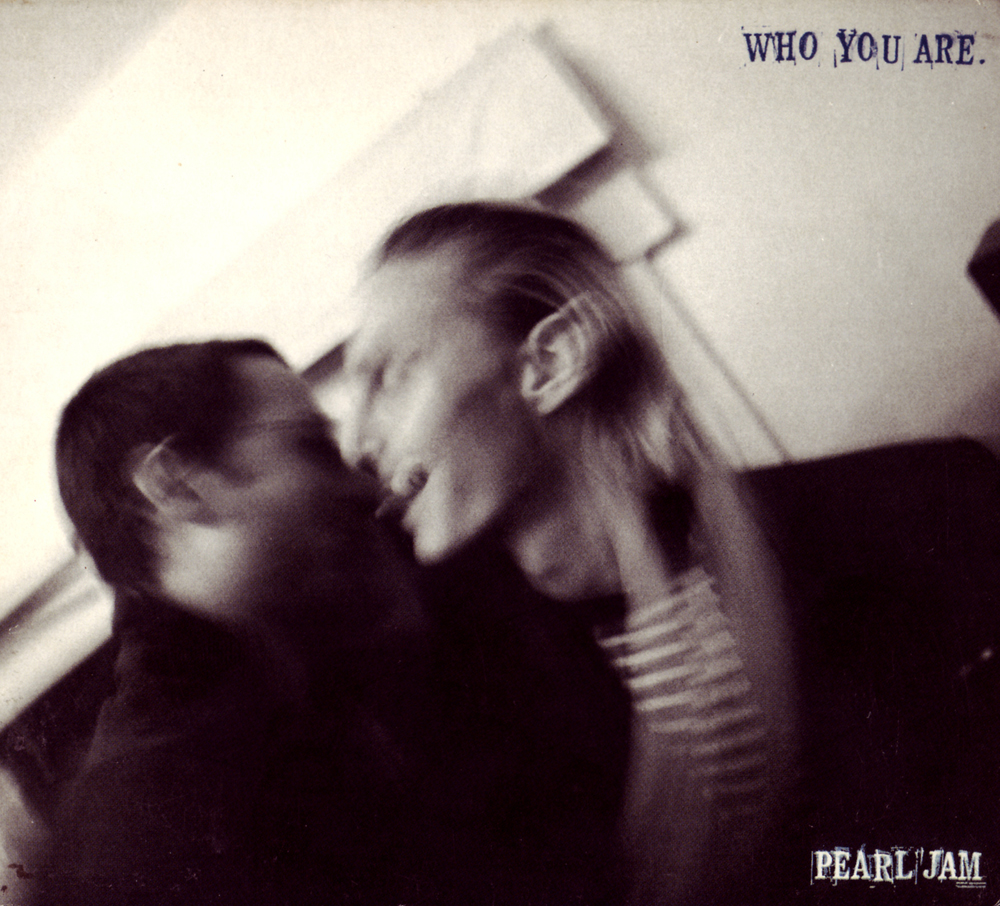
The Alternative Number Ones: Pearl Jam’s “Who You Are”

September 7, 1996

  • STAYED AT #1:1 Week

In The Alternative Number Ones, I’m reviewing every #1 single in the history of the Billboard Modern Rock Tracks/Alternative Songs, starting with the moment that the chart launched in 1988. This column is a companion piece to The Number Ones. The column is now biweekly, alternating with The Number Ones on Mondays.

This column is so fucking weird. Sometimes, I feel like I'm writing these things right from the pit of my soul, flashing back on songs that were omnipresent when I was in high school and that have either developed into canonical classics or into barely remembered historical blips. Sometimes, though, the Billboard Modern Rock Songs chart diverges completely from my lived reality, or at least from the stuff that I can remember. The divide is never more stark than when it comes to Pearl Jam.

Pearl Jam were huge! They were bigger than Nirvana! They were easily, by far, the biggest alt-rock band of the early-'90s alt-rock crossover moment! That's not just my memory. Numbers back it up. The sales of Pearl Jam's first three albums were absolutely out of control. Eddie Vedder was the guy who Time put on the cover when the magazine wanted to run a big story on what the "alternative rock" hubbub was all about. Pearl Jam's various ethical stances — their support of charitable initiatives and political causes, their refusal to make music videos after their "Jeremy" clip went supernova, their noble and failed battle against Ticketmaster — were gigantic news stories. My memory tells me that Pearl Jam were an inescapable radio presence for the first half of the '90s. The charts, however, tell a different story.

In their insane three-album imperial stretch, Pearl Jam only sent one song to the top of the Modern Rock chart: "Daughter," which got there for a week in January 1994. All of the other gigantic songs that they made in that run — "Alive," "Even Flow," "Jeremy," "Black," "Animal," "Corduroy," "Rearviewmirror," motherfucking "Better Man" — did relatively piddling chart numbers. I couldn't leave the house without hearing "Yellow Ledbetter" six times, but that song somehow peaked at #26 in 1994. It makes no sense! I don't get it!

Pearl Jam didn't make it back to the top of that chart until 1996's No Code, remembered almost universally as the moment where they fully split away from the mainstream-sensation status and became a big cult act with a devoted audience instead. Even weirder: The band's second #1 hit was "Who You Are," a dreamy dirge with no chorus and a melody that I can't retain in my brain to save my life. I must've heard "Who You Are" on the radio at some point, but I have zero memory of it. This song just floated past me, but here it is, amidst all these songs that will remain lodged in my brain until that brain rots into dust. It's beyond me. Pretty cool song, though.

For a minute there, Pearl Jam were struggling. At the time, plenty of people were cynical about every stance that the band took and about extracurricular stuff like the Grammy acceptance speech where Eddie Vedder said, "I don't know what this means. I don't think it means anything." (He wasn't wrong!) In attempting to circumvent Ticketmaster, the band was only barely able to tour, playing slapped-together shows at out-of-the-way venues. Pearl Jam fought to keep things cheaper for their fans, but the fans would roll eyes at the inconvenience of traveling out to the few venues that the band was able to book. Vedder was seriously spooked by a female stalker who supposedly believed that he was Jesus. The band fired drummer Dave Abbruzzese, reportedly because he enjoyed being a rock star too much.

In retrospect, it makes perfect sense that Pearl Jam retreated the way that they did. In 1996, Rolling Stone ran an investigative cover-story exposé on Vedder without talking to the man, and the point seemed to be that he was merely acting miserable and that he'd always been a canny music-business operator who maintained a firm grip on both his image and his band. Thirty years later, Vedder is the only frontman of a big grunge band who is currently alive. Something about the Pacific Northwest's specific cauldron of attention, jealousy, old-fashioned depression, conflicted punk rock ethics, and black tar heroin was toxic to the point of being lethal. Vedder found ways to cope with all of that, a feat that none of his peers accomplished.

Pearl Jam certainly seemed like the standard-bearers for the grunge era at the time, but the band actually steadily decreased in popularity in the early '90s. In their golden age, every album sold less than the one before it, but you couldn't really tell because they all still sold in ridiculous numbers. Ten: 13 million copies. Vs.: Seven million copies. Vitalogy: Five million copies. Those numbers were not sustainable, and Pearl Jam did not sustain them. Instead, they somehow found a way to transition into life as a working band. They figured it out. Even as a non-fan, that transition is pretty remarkable.

In 1995, released an EP called Merkin Ball, and they reached #3 with their song "I Got Id." (It's a 6.) Band members also got busy with side projects. Minus Eddie Vedder, the whole group backed up their hero Neil Young on his Mirror Ball album, though their band name couldn't be in the promotional materials because of contract stuff. Vedder sang a couple of songs with the late Pakistani Sufi devotional singer Nusrat Fateh Ali Khan on the Dead Man Walking soundtrack. Mike McCready played in the one-album grunge supergroup Mad Season with Alice In Chains' Layne Staley, and their song "River Of Deceit" peaked at #9. (It's a 7.)

Pearl Jam replaced Dave Abbruzzese with Jack Irons, an old friend of Vedder. Irons, a former Red Hot Chili Pepper, was the one who showed Vedder's demo to the other Pearl Jam guys in the first place, and he turned down an offer to join the band in the early days. The band's Vitalogy tour turned out to be a disaster that ended at a San Francisco show where a sick and struggling Vedder had to leave the stage after a few songs, with Neil Young filling in for him instead. They canceled their remaining dates and then almost immediately realized that they missed playing live, so they rescheduled as many shows as they could. Once those shows got rolling, they secretly booked studio time and started work on what would become the 1996 album No Code.

No Code was the beginning of Pearl Jam's middle period, the stretch when they cranked out a bunch of easily ignored albums that, if you listen to the die-hards, are secretly their best material. I'd never heard No Code before working on this column, and I'm just now diving into Yield and Binaural and all the supposedly great albums that followed. At this late date, I don't hear No Code as some late landmark, but it's a perfectly solid record. One might argue that that's all Pearl Jam wanted it to be.

Pearl Jam recorded No Code with producer Brendan O'Brien, their collaborator on the previous two albums. As with Vitalogy, the process was reportedly tense. Apparently, nobody told bassist Jeff Ament about some early sessions, and he briefly considered quitting. But the presence of Jack Irons was a steadying influence. Irons was slightly older than anyone else in the group, and he had a wife and kids at home in LA. (Irons' son's band Awolnation will eventually appear in this column, as long as I keep writing it for long enough.) Irons facilitated a lot of communication within Pearl Jam, and he's also the person who got the ball rolling on "Who You Are," the album's lead single.

The drums are the first thing that you hear on "Who You Are," and they really jump out. Irons plays a complicated, circular pattern that sounds vaguely tribal. The rest of the band builds on that beat, layering harmonies and minor-key guitars. Vedder plays an electric sitar, and that alone is a sign that a gigantic rock band is entering its middle period, messing around with Eastern modalities. Vedder told SPIN, "Everyone has written that 'Who Are You' was obviously inspired by my collaboration with Nusrat, but that's not where it came from." Instead, the song's core inspiration was a Max Roach drum solo that Irons heard when he was a kid, one that had a formative effect on him.

"Who You Are" doesn't sound like a single. It's a serene zone-out that doesn't even have a chorus, and the mix is full of tiny discordant notes. Vedder never really belts on the song. Instead, he sings in a sweet, soft baritone that sinks right into the instrumentation. Vedder, Irons, and Stone Gossard are the song's credited writers, but it's easy to picture the whole group figuring the track out in the studio. In a way, you can hear the band gaining confidence in the song in real time. It starts off soft and tentative. It never truly gets loud, but it does bloom outward.

Nobody has ever given a very satisfying answer to the question of what "Who You Are" is about. Lyrically, Eddie Vedder seems to be figuring things out, exploring moods rather than concrete meanings. He was always better at that, anyway. Pearl Jam songs could get leaden when they got too self-consciously meaningful, and they're often at their best when nobody knows what Vedder is talking about — see "Yellow Ledbetter," a song that has confused lyrical analysts for decades.

On "Who You Are," Vedder almost seems to be free-associating: "Come to send, not condescend/ Transcendent to consequences." One one verse, he sings of "trampled moss on your souls." On another, he sings about being "off the track, in the mud," and then he offers a quick clarification: "That's the moss in the aforementioned verse." I think that's so stupid, and I love it. This motherfucker was putting footnotes in his own lyrics and then singing the footnotes, and it still didn't mean anything that anyone else could discern. As near as I can tell, "Who You Are" is about a feeling of ambient rootlessness, about wondering what role you have to play in some greater story. But I don't really take meaning from the song. Instead, what I get is feeling.

On "Who You Are," Pearl Jam are beautifully locked in. Vedder's sitar, clichéd though it may be, adds some free-floating lift to the thing. The central riff is simple and repetitive in the best way; it moves with a mantra-like grace. I love the way the backing vocals well up behind Vedder. The drums are complicated enough that Pearl Jam stopped playing the song live for years after Jack Irons quit the band in 1998. The song comes together as a woozy, pretty little vibe. In 2013, my Stereogum colleague Ryan Leas named "Who You Are" one of Pearl Jam's best songs. I can't ride with Ryan on that one, but I respect the take. It's a cool little zag, a spacey piece of texture that seems designed as a self-consciously minor work. It's possible that I heard "Who You Are" on the radio tons of times but didn't register it because the song faded so easily into the background, as if that was the plan all along.

As you might imagine, Pearl Jam didn't exactly work hard to push "Who You Are" onto the public. They kept up their policy of not making music videos. They didn't perform the song on TV, either. They played on a commercial-free Letterman episode around the release of No Code, but they went with second single "Hail, Hail" instead of "Who You Are." ("Hail, Hail" peaked at #9. It's a 7.) They released "Who You Are" as a proper commerical single, going against the prevailing alt-rock wisdom of the time, and the song reached #31 on the Hot 100 and #5 on the Mainstream Rock chart. It rose to the top of the Modern Rock chart quickly, but it sank back down even faster.

If you look at the Modern Rock chart during the one week that "Who We Are" sat at #1, you can see a few different narratives at work. The dominant sound of that moment was the janky, ironic quasi-rap of the Odelay summer, which would soon merge with sunny SoCal pop-punk in garish and unpredictable ways, as we'll see in the next column. Grunge wasn't altogether dead, but it was definitely dying. That week, Pearl Jam's old buddies in Soundgarden were sitting at #4 with "Burden In My Hand," a song that had already peaked at #2. (It's a 7.) Stone Temple Pilots, a band that had previously come off as pale PJ imitators, were in there at #10 with "Trippin' On A Hole In A Paper Heart," which was on its way down from its #3 peak. (It's a 6.) And then there was a whole lot of stuff that couldn't have had less to do with Pearl Jam. The zeitgiest had moved on.

Like Pearl Jam's two previous albums, No Code debuted at #1. Unlike those other albums, it did not keep selling in absurd numbers after that first week. No Code only went platinum once, which means it only sold a tiny fraction of what those other records had done. Talking to SPIN a few months after the album's release, Eddie Vedder did not seem too bummed out about this: "It's great! We can be a little more normal now."

In the years that followed, Pearl Jam really did become a little more normal. They kept cranking out records and touring, an act that became a whole lot easier when they caved and finally agreed to do business with Ticketmaster again. Jack Irons left the band after a short tenure, and Soundgarden's Matt Cameron, who'd played with PJ at their earliest gigs, stepped in and filled that role for more than a quarter century before finally leaving last year. Pearl Jam had some terrible moments over the years, like the crowd crush at the 2000 Roskilde Festival where nine fans died. That wasn't the band's fault, and they continued on after considering hanging it up in the immediate aftermath. They just kept going. They always kept going. They're still going.

After "Who You Are," Pearl Jam remained a constant presence on alt-rock radio, but they didn't return to #1 for a solid decade. Still, they racked up hits. 1998's Yield went platinum, and the truly great lead single "Given To Fly" reached #3, while the follow-up "Wishlist" peaked at #6. ("Given To Fly" is a 9, and "Wishlist" is an 8.) 1998 was also the only time I've ever seen Pearl Jam live. They headlined the second night of the Tibetan Freedom Concert in DC, and the only thing I really remember about their set is that they let the Red Hot Chili Peppers use their gear to play a few songs at the end of the show. (The Chili Peppers were supposed to play the previous night, but the show had to end early after someone got struck by lightning.) In 1999, the band's one-off charity cover of Wayne Cochran's 1961 oldie "Last Kiss" became a random-ass crossover hit, reaching #2 on both the Modern Rock chart and the Hot 100. (It's a 7.)

PJ's 2000 album Binaural was their first to stall out at gold, and the spacey lead single "Nothing As It Seems" peaked at #10. (It's a 7.) They led off 2002's Riot Act, another gold record, with the satisfyingly folksy "I Am Mine," and that song peaked at #6. (It's an 8.) During that whole stretch, some truly egregious Pearl Jam imitators were all over alt-rock radio, doing the shittiest versions of Vedder's gargle-howl delivery, while the real deal were sitting right there. Eventually, though, alt-rock radio turned into an I Love The '90s situation, and all the remaining OGs continued to rack up chart-toppers. Pearl Jam were among their number, so we'll see them in this column again.

GRADE: 7/10

BONUS BEATS: Nobody really covers "Who You Are," so I had to look elsewhere. Here's fan footage of Pearl Jam trotting the song out at their own 20th-anniversary concert in 2011, with Glen Hansard, Liam Finn, and X's John Doe singing backup and with Mudhoney drummer Dan Peters on floor tom:

(X's highest-charting Modern Rock hit, 1993's "Country At War," peaked at #15. Mudhoney's only Modern Rock hit, 1992's "Suck You Dry," peaked at #23.)

GET THE STEREOGUM DIGEST

The week's most important music stories and least important music memes.