Skip to Content
The Alternative Number Ones

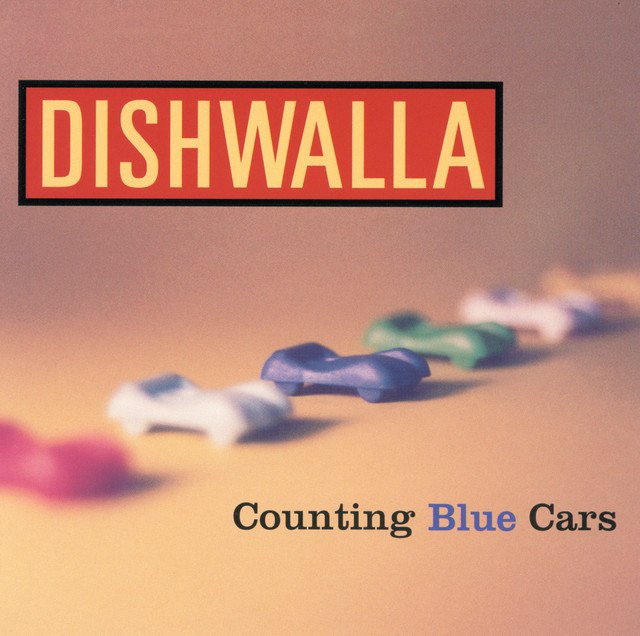
The Alternative Number Ones: Dishwalla’s “Counting Blue Cars”

June 29, 1996

  • STAYED AT #1:1 Week

In The Alternative Number Ones, I’m reviewing every #1 single in the history of the Billboard Modern Rock Tracks/Alternative Songs, starting with the moment that the chart launched in 1988. This column is a companion piece to The Number Ones. The column is now biweekly, alternating with The Number Ones on Mondays.

A humble request: Don't tell me all your thoughts on God. Don't tell me any of your thoughts on God. You probably have all kinds of thoughts on God. Most people do. In certain social situations, you may find yourself in the position where you want to tell me some or all of those thoughts. Don't. Restrain yourself. I don't want to hear those thoughts. I don't care.

The mysteries of the cosmos, the divine, existence itself — they have puzzled and troubled and excited human beings for eons, probably since before human beings became human beings. Every civilization has its own belief system, its own origin myth. Some of them are fascinating. I just don't want to hear you talking about any of them. Sorry. Nothing personal. I've just had some version of that conversation too many times. It makes me want to rip the skin off my face.

I have heard thoughts on God from pious true believers, from pinwheel-eyed youth-group-leader types, from stoned agnostics, and from condescending atheists. I'm sure I've been at least a couple of those characters in conversations with other people. But I can't remember the last time I enjoyed one of these conversations. Way too many times during my childhood, I would ask my dad a question about something related to religion, and he would launch into an ultra-Catholic half-hour soliloquy, as if he'd been waiting his entire life for someone to ask that exact question. (This is probably just like me when someone asks about '90s rap beefs.) I would immediately regret saying anything at all, and I would sit and nod thoughtfully while my brain detached itself from my body and went off on its own journey.

If you tell me all your thoughts on God, I will probably do exactly what I did when I had to listen to whatever my dad was prattling on about: I will replay the 1987 movie The Monster Squad in my head, trying to suppress my own laughter when I get to the "Wolfman's got nards" bit. If you ever find yourself telling me about anything even remotely metaphysical, you will be able to look me in the eye and understand that I am not hearing a single word you say. I'm thinking about the Creature From The Black Lagoon popping up from a manhole and crushing a cop's skull in its hands and walking very slowly toward Horace, the Chunk from Goonies character, and then Horace grabs the shotgun from the dead cop and bangs on a door for Brad from The Wonder Years to let him in and Brad won't do it and then Horace shoots the Creature and it dies (very easily) and Brad from The Wonder Years is like "hey fat kid, good job" and then Horace is like "my name is Horace" while he dramatically cocks the shotgun.

All of this is to say: I could not identify with the kid in the Dishwalla song "Counting Blue Cars." That kid's impulses were completely foreign to me. He wants to know all your thoughts on God? What a weird fucking kid. That's not the only reason why I always hated the Dishwalla song "Counting Blue Cars," but it didn't help.

Up until this moment, I have never devoted any thought to the band Dishwalla beyond my general antipathy toward "Counting Blue Cars" and the kid who wants to know all your thoughts on God. They were the band with the dumb name and the annoying song and the album cover, with the lady walking the dog, that was always in the used bins, and then they went away. That was it. I never had any further curiosity about anything Dishwalla-related. But now, I have written myself into this trap where I have to devote serious energy to generating thoughts on Dishwalla. This was a stupid thing for me to do, but it's where we are. I'm sorry to tell you that I now have thoughts on Dishwalla and that I'm going to have to tell you all of them.

So. Dishwalla. They're from sunny Santa Barbara, California, just like Katy Perry. Katy Perry voice: Cal-i-for-nya boys are counting blue cars, telling you all their thoughts on God. That didn't really work, did it? Well, I tried. Dishwalla frontman J.R. Richards once told Songfacts that his father and grandfather were both songwriters, but he did not elaborate, so I don't know what songs they wrote. Richards was simply taking part in a great family tradition when he became the guy from Dishwalla.

Dishwalla didn't start out as Dishwalla. The group started out as a synthpop trio called Life Talking sometime around 1990. That's how they described themselves, anyway. I have searched YouTube for Life Talking's demo, and I have found nothing. The LA Times profiled a then-unsigned Dishwalla in 1993 for some reason, so we now have a historical record of the group's name changes. Per the LA Times, they eventually picked up a bass player and changed into "a real rock band combining hip-hop, ‘90s funk, and grungy guitars." Yikes. J.R. Richards helpfully elaborates: "We stay away from the Chili Peppers’ funk thing — ours is more urban, slow and grungy." I could sit here for months attempting to describe Dishwalla's music, and I would never think to call them urban, slow, grungy funk.

When this band stopped making synthpop and started making urban, slow, grungy funk, they decided to change their name. First, they became Dish. I remember someone in the '90s complaining about ultra-generic band names, possibly on the radio or possibly in a zine. That person was like, "Bands will just name themselves, like, Fork." I thought that was an extremely funny line, and I probably repeated it to a bunch of people like I'd thought of it myself. But I would argue that Dish is an even vaguer band name than the hypothetical Fork. A fork is at least a specific kind of dish. (I am just now realizing that I really like the music of bands called Spoon and the Knife, so I guess I'm actually into it when a band is named after a specific kind of dish.) At any rate, Dish found out that there was already a band called Dish, so they needed to change their name again. Thus: Dishwalla.

Keyboardist Greg Kolanek explained the "Dishwalla" thing to the LA Times: "I was reading this magazine called Wired, and there was a reference to these guys in India called dish wallahs. They are entrepreneurs who sell cable television programs to culturally deprived areas in India. Apparently, India only has one channel, but now Santa Barbara is one of the most popular shows. So we dropped the ‘h’ and became dish walla." (That's how they spelled it at first: two words, all lowercase.) Great story. So it's like Slumdog Millionaire, when the game show host kept calling the slumdog millionaire "chaiwallah." This is how I learn that former Death Cab For Cutie guitarist Chris Walla is really a guy who sells Chrisses. Also, Walla Walla, Washington is where they sell Wallas.

This column is getting slaphappy. I don't even know what I'm talking about anymore. We're getting back on track here. Dishwalla made some demos, and they played around Santa Barbara lots of times before signing with A&M. The first thing that they did as a major-label act was cover the Carpenters. On the fondly remembered 1994 tribute compilation If I Were A Carpenter, Dishwalla showed up alongside actual cool bands like Sonic Youth and Shonen Knife. Dishwalla did "It's Going To Take Some Time." Their version is pretty bad. They were also on MTV's Jon Stewart Show before they had an album out. Tribute compilations and semi-obscure MTV talk shows used to be how you'd get the word out about your urban, slow, grungy funk bands. That world is gone now.

Dishwalla's debut album Pet Your Friends, the one with the old black-and-white photo of the lady walking the dog on the cover, came out in August 1995, and it included re-recorded versions of some of the songs from the band's demos. Dishwalla co-produced the LP with Phil Nicolo. Along with his brother Joe, Phil was one half of the production team known as the Butcher Bros. Starting in the mid-'90s, the Nicolo brothers worked on pretty-big alt-rock records like Urge Overkill's Saturation and the Mighty Mighty Bosstones' Question The Answers. I owned both of those. Joe, Phil's older brother, co-founded Ruffhouse Records, the Columbia rap imprint that had huge success with acts like Kris Kross, Cypress Hill, and the Fugees. I don't know why only one Butcher Bro worked on Pet Your Friends, but maybe Joe was too busy getting extremely rich from Ruffhouse. These days, Phil teaches college courses about music production at Temple. Turnstile/Title Fight producer Will Yip went to Temple specifically to take Nicolo's class.

I'd never listened to Pet Your Friends before starting work on this column — never even considered listening to it. Now that I've heard it, I wish I hadn't. This shit sucks butts. I truly dislike "Counting Blue Cars," but it might honestly be the best song on the record. I can't say for certain because I don't intend to give Pet Your Friends a second spin. I had a bad time with this one. There are lots and lots of moments where you can just tell that you're hearing fresh-faced major-label aspirants who are trying to jump on the alt-rock train, making the kind of glossy post-grunge that completely misunderstands the catharsis of the records that it imitates. Those moments are bad. In other moments, you can hear that Dishwalla really are trying to make urban, slow, grungy funk. Those moments are even worse. This is some truly flavorless VH1 churn-music, and I'm upset that I devoted a chunk of my afternoon to it.

Pet Your Friends was out for a while before it generated any momentum. The album's first single was a little number called "Haze," which has some of those unfortunate quasi-funk leanings. It sounds like clueless American session guys trying to make a Massive Attack record, but with a pedal-stomp chorus and discomfitingly clear choirboy vocals. The song didn't go anywhere, and neither did the album. But in 1996, "Counting Blue Cars" showed up in the movie Empire Records. There are a million songs in that picture, and "Counting Blue Cars" didn't make the cut for the pretty-successful soundtrack album, but maybe that placement earned the song some momentum. Honestly, I can't really tell you how or why this happened, but "Counting Blue Cars" started getting radio play in summer 1996, after the album had been out for nearly a year.

All five Dishwalla members have songwriting credits on "Counting Blue Cars," including one guy who wasn't in the band anymore when the record came out. But the song seems to be primarily the work of frontman J.R. Richards, who wrote it after having some kind of deep conversation with his neighbors' 10-year-old son. On the first verse, Richards sets the scene: "Must have been mid-afternoon/ I could tell by how far the child's shadow stretched out." What a great clarification. He couldn't tell it was mid-afternoon by looking at his watch? By having any internal clock at all? He's examining shadows to figure out what time of day it is? It's not like he's inspecting some old photo. He's there, watching this kid: "And he walked with a purpose in his sneakers down the street." Why did he phrase it like that? Nobody talks like that. Richards is also talking to the kid, who has many questions, like children often do.

So it's a story-song. It's J.R. Richards' narrator talking to this kid. Except maybe it's not. Maybe it's deeper than that. In the aforementioned Songfacts interview, Richards says that the song is really "a conversation between myself and the child within myself." So he is that kid. Richards even spells that out in later verses, singing that we have many questions, like children often do. That's the Tyler Durden twist. The kid is him.

Anyway, the song's possibly-inner child has a request: "Tell me all your thoughts on God 'cause I'd really like to meet Her." Hold on! Hold the phone! Richards used a feminine pronoun to describe his divine creator! That's deep! In the Songfacts interview, Richards says he got death threats for that lyric. Imagine being a big enough loser to threaten to murder the guy from Dishwalla for that "I'd really like to meet Her" line. Anyone who does that has way too many thoughts on God.

However! There's a 1996 Billboard interview where Richards says that he used that pronoun because his neighbors' kid, identified as "David," did the same thing: "David started asking me questions about God, but he referred to God as a 'She.' So that made me think about how ideas are spoon-fed to you when you're young." (Don't worry; he tells the Billboard writer all his thoughts on that. I'm just not quoting all of them.) So either J.R. Richards ripped his biggest song's most memorable line off from his neighbor's child or "David" is merely the name that he gave to the child within himself. I hope it's the latter. We should all assign actual names to our inner children and then write songs about the conversations we have with them.

We never really learn J.R. Richards' thoughts on God beyond the "really like to meet Her" thing. "Counting Blue Cars" isn't about finding answers; it's just about asking the questions. Richards and his inner child, who is possibly named David, are just running around thinking really deep thoughts, skipping cracks in the street, counting blue cars. Their shoes make hard noises in this place, their clothes are stained, and they pass many cross-eyed people. Every line on the song is almost unbelievably awkward, and they don't even rhyme. Maybe Richards could get away with this fake-deep bullshit if he mutter-growled every word like a proper grunge singer. But no, it's all bell-clear.

On "Counting Blue Cars," J.R. Richards sounds like a distant echo of Bush's Gavin Rossdale in the same way that Rossdale sounds like a distant echo of Kurt Cobain. You can hear Richards trying to smolder like Rossdale, and it's just completely beyond him. He also works in some Jeff Buckley/Shawn Mullins falsetto yips, and I wish he wouldn't do that. Musically, "Counting Blue Cars" starts off as half-decent replacement-level fuzz-rock, and I have a lot of room in my heart for competent mid-'90s major-label bullshit like that. But then the bands fucks it all up by layering in too many guitar sounds and sighing keyboards and adding emotional little quasi-blooz licks that do call-and-response things with Richards' voice. The backing vocals have the same too-slick qualities as Richards' lead. There's a hacky gutar solo and then a quiet bridge where the drummer switches to brushes so that it'll be more dramatic when the big chorus kicks in again.

At this point, I'm actively looking for things to like about "Counting Blue Cars." The bass sounds cool. I like the tambourine. The end of the song, where the guitar gets to jangle a bit, is OK. I'm twisting myself in knots here. This song should be right in my nostalgia sweet spot, and I have discovered latent affection for lots of hits that I hated when I was a teenager. Not "Counting Blue Cars," though. Instead, "Counting Blue Cars" is the worst-case scenario: a song that's catchy enough to get stuck in my head but bad enough that I hate it when that happens. When it was all over the radio, I wanted to drive to the studio, rip it out of the CD player, and break it over my knee.

Why did "Counting Blue Cars" blow up the way that it did? I have thoughts on that. I think it was just cool for people to have thoughts on God at the time. Bands like Live, iterating on the U2 model, framed all their songs as spiritual searches. Collective Soul weren't just the first true post-grunge band; they were also the first nebulously Christian post-grunge band. They actively denied the Christian rock label, but they always sounded like they were a few seconds away from transitioning into straight-up hands-in-the-air worship music. (Collective Soul's highest-charting Modern Rock single, 1995's "December," peaked at #2. It's a 6.)

Jars Of Clay, who as I understand it really are a straight-up hands-in-the-air worship music band, had a brief flirtation with alt-rock radio around this time. "Flood," their biggest Modern Rock hit, peaked at #12 a couple of months before "Counting Blue Cars" reached #1. But I think the real precursor to "Counting Blue Cars" is Joan Osborne's "One Of Us," which peaked at #7 in 1995. Let me tell you: Osborne had some thoughts on God. As in: What if He was one of us? Just a slob like one of us? Just a stranger on the bus, tryna make His way home? "One Of Us" is ridiculous, but its ridiculousness works for me, and I like it a lot better than "Counting Blue Cars." (It's a 7.)

Lots of people were telling us their thoughts on God in 1996, the year that Bill Clinton cruised to reelection despite the growing power of Pat Robertson's Christian Coalition. Maybe Americans were trying to figure out what they believed. Maybe they heard those confused feelings reflected back to them in songs like "One Of Us" and "Counting Blue Cars."

"Counting Blue Cars" stayed in heavy rotation on alternative radio for a long time, even though it only had a single week at #1. The song also reached #2 on the Mainstream Rock chart and #15 on the Hot 100, since this was one of those rare cases where the label actually did sell it as a single rather than forcing people to buy the whole LP. The single went gold, and so did the album. Then Dishwalla ceased to be a concern for me, since they never made another proper hit. Follow-up single "Charlie Brown's Parents" grazed the lower reaches of the Mainstream Rock chart, but alternative stations didn't play it. I'm grateful for that. It's bad.

Dishwalla released their second album in 1998, and they gave it the unbelievably annoying title And You Think You Know What Life's About. Their single "Once In A While" became their second and final entry on the Modern Rock chart, where it peaked at #20. That song got some mainstream rock play, too, but it faded away pretty quickly. In 1999, Dishwalla appeared on a Charmed episode and had a song on the American Pie soundtrack, but they parted ways with A&M and went independent after the album cycle ended. When I tried searching for Rolling Stone coverage of Dishwalla, the first thing that came up was the news that their 2002 record Opaline was the first album ever to be simultaneously released on CD and DVD Audio formats. Despite that extremely important historical distinction, Opaline didn't go anywhere.

After Dishwalla released a self-titled independent album in 2005, J.R. Richards left the band and started making solo music. He's had some songs in TV shows. In fact, I'm just learning now that Richards did the theme music for SAF3, a syndicated procedural that had Dolph Lundgren as its lead? I have never heard of this show, and it only lasted for a season, but it looks like the missing link between Baywatch and 911.

The other Dishwalla guys recruited a new singer named Justin Fox, and they kept going, putting out a few more records and mostly playing '90s-nostalgia package tours. If you go see Dishwalla today, the guy you're watching isn't even the one who shared all those thoughts on God with his inner child. It's a different guy, one who presumably has his own thoughts on God. This new version of Dishwalla continues to make new music, and they even scraped the Mainstream Rock chart with a 2022 song called "Alive." It's not a Pearl Jam cover.

At least theoretically, Dishwalla are an ongoing concern. Really, though, their one spotlight moment happens to coincide with the early days of the era when alternative radio stations would just play any fucking thing. Perhaps you could consider Dishwalla to be spiritual ancestors of the Creeds and Stainds of the world, the post-grunge bands that took over a few years later, except that J.R. Richards didn't sing in a Vedderian yarl. Dishwalla were just a one-hit alt-rock wonder whose one hit wasn't even any good. That's it. That's all my thoughts on Dishwalla.

GRADE: 2/10

BONUS BEATS: Here's the scene from a 2012 How I Met Your Mother episode where the gang discusses which of them deserves credit for putting the others onto Dishwalla:

GET THE STEREOGUM DIGEST

The week's most important music stories and least important music memes.