July 29, 1989
- STAYED AT #1:1 Week
In The Alternative Number Ones, I'm reviewing every #1 single in the history of the Billboard Modern Rock Tracks/Alternative Songs, starting with the moment that the chart launched in 1988. This column is a companion piece to The Number Ones, and it's for subscribers only. Thank you to everyone who's helping to keep Stereogum afloat.
It's never easy to pinpoint the exact border between punk and post-punk, if it even exists. But if the separation between those two arbitrary terms is real, then you can see the divide play out in the things that a man named John Lydon did in 1978. As that year began, Lydon was better-known as Johnny Rotten, one of the all-time great stage names. Rotten was the frontman of the Sex Pistols, the band that catalyzed the punk rock wave that swept through the UK in the late '70s. In one way or another, the Sex Pistols directly inspired almost every band that has appeared in this column thus far. They did not, however, inspire Johnny Rotten, the guy who was out front of that particular circus.
In January of 1978, Johnny Rotten essentially quit the Sex Pistols while onstage in San Francisco. He returned to London, reverted to his government name, and began planning a new venture -- one that, in his mind, would work as a deconstruction of the entire idea of the rock band. By the end of the year, Lydon was the leader of Public Image Ltd., and their scraping, deconstructionist art-rock sound represented a stylistic shift. In their early years, Lydon and Public Image Ltd. conducted business as experimental provocateurs, doing their best to yank back the curtain and expose the absurdity of the grinding gears in the music-business machine. Over the years, though, PiL went from conceptual art project to functioning band, and they did it while generally failing to function as a band.
The early years of the Billboard Modern Rock charts were dominated by first-wave punk rock veterans and by their immediate stylistic offspring. Public Image Ltd. were part of that. The group's lineup shifted constantly, as Lydon, who seems like a real pain in the ass, clashed with most of his bandmates and became PiL's only permanent member. Like many of his gen-one peers, Lydon also messed around with synthpop and '80s dance music, eventually settling on a sound that was halfway commercial. A little more than a decade after PiL's debut, John Lydon topped a Billboard chart for the first time in his life, and he did it with a quickly-forgotten song about being disgusted with all the people around him. It's hard to fit someone as messy as John Lydon into a tidy narrative, but as storyline twists go, that one seems about right.
John Lydon, the son of two working-class Irish immigrants, grew up in a busted-ass London neighborhood. As a kid, Lydon contracted spinal meningitis, which kept him laid up for years and which probably contributed to his permanent-outsider mentality. When he could, Lydon ran around and caused trouble with other street kids, sometimes living in squats. When his father complained about his long hair, Lydon chopped it all off and dyed it green. Lydon and some of his friends hung out at Sex, the freaky clothing store run by Malcolm McLaren and Vivienne Westwood. When McLaren decided to put together a band to manage, Lydon came through to audition, tunelessly singing along with an Alice Cooper record while wearing a homemade "I Hate Pink Floyd" T-shirt. McLaren made him the lead singer, and the Sex Pistols were born.
You don't really need a pocket Sex Pistols history here, do you? That band's story is everywhere. If you've ever had the slightest interest in punk rock, you haven't been able to escape it. The Pistols wore ripped clothes, snarled in photo shoots, cussed on TV, and made a big hit song about the evils of the monarchy. They bounced around from one record label to the next before finally managing to release their one album, the stone-cold 1977 classic Never Mind The Bollocks. They inspired a whole wave of kids who followed them around from show to show, starting fights and spitting on bands, and that led to a social movement that built on the dark economic realities of late-'70s England. The Pistols were the right band at the right time, and they caught on like a burning cigarette in a dry forest.
The Sex Pistols' actual sound wasn't revolutionary. McLaren cannily packaged the band as postmodern art-terrorists, but they were really just a fun, dumb hard rock band with big hooks and great riffs. If you liked rock music, then it wasn't too hard to grasp what they were doing. John Lydon didn't much care for the music that he had to present to the world. He was into dub reggae and skronky, discordant cult-rockers like Captain Beefheart and Can. Lydon couldn't really do anything that could accurately be described as singing, which paradoxically made him the perfect singer for the Pistols. Rather than carrying a tune, Lydon, hair all a mess and fire in his eyes, made majestically evil declarations, rolling his r's and gesturing at the back row like he was playing Richard III onstage.
The Pistols burned out as quickly as they possibly could. Lydon didn't get along with bassist Glen Matlock, so he had Matlock kicked out and replaced him with the friend who he'd given the nickname Sid Vicious. Sid didn't know how to play his instrument, but he had a great look and a great nickname, and Malcolm McLaren knew that both of those things would resonate. The Pistols toured America in the winter of 1978, skipping most of our big cities to hit smaller clubs across the South. The band played their final show at San Francisco's Winterland Ballroom, and Lydon finished their last song, a cover of the Stooges' "No Fun," by laughing mockingly at the crowd and asking, "Ever get the feeling you've been cheated?"
In the wake of the Sex Pistols' dissolution, the band's most famous member was Sid Vicious, who was already badly strung out on heroin and in a mutually destructive relationship with his American girlfriend Nancy Spungen. Sid and Nancy moved to New York together, and one night in 1978, Sid almost certainly stabbed Nancy to death. A few months later, Sid died of a heroin overdose. I have no idea why this sordid story made him glamorous to later generations of punk kids, but it did. Gary Oldman played Sid in the the 1986 movie Sid And Nancy. If you were even remotely involved in the punk subculture in the '90s or '00s, then you probably knew at least one girl with a pet rat named Sid. I think I knew three.
The former Johnny Rotten went off on a very different trajectory, though you could argue that he traded on the Pistols' tabloid notoriety just as Sid had tried to do. John Lydon, dissatisfied with the Pistols' hammerhead hard rock, got together with some old friends to make a better approximation of the kind of music that he actually liked. The new band started off as Public Image, and they changed their name to Public Image Ltd. to reflect the idea that they were a company, not a band. The band's incendiary debut single "Public Image" came out before 1978 was over, and it took shots Malcolm McLaren. In the UK, it was a top-10 hit.
For their first few years, Public Image Ltd. were in the art-stunt business. Their second album, 1979's Metal Box, was originally sold as three unlabelled 12" records in a literal metal canister. When I was in my early music-dork years, general critical consensus was that Metal Box was an untouchable masterpiece, and I tried and failed to get into it. The album worked as an interesting bad-vibes mood-setter, but it didn't exactly speak to me the way the Sex Pistols had done. More stunts: PiL famously incited a riot by performing a New York show behind a screen, ineptly playing along to their own record. When PiL appeared on American Bandstand in 1980, Lydon didn't even bother lip-syncing. He just wandered through the crowd and got people to dance onstage.
Before too long, John Lydon pissed off all of his bandmates, and they all left, one by one. Lydon replaced them, and PiL's sound gradually shifted in the direction of post-disco dance music. It couldn't be commercial, exactly, since the band really only made music so that Lydon could chant nasal provocations over whatever they were doing. But that conceptual shtick had its own audience, and PiL's 1983 single "This Is Not A Love Song" -- which, sure enough, is not a love song -- became their biggest-ever UK hit, peaking at #5 over there.
In the US, Public Image Ltd. got a fair amount of press attention, and critics named their song "Rise" one of the top-10 singles of the year in the 1986 Pazz & Jop poll. (None of their albums ever made the Pazz & Jop top 40.) "Seattle," a track from the band's 1987 album Happy?, was a pretty big college-radio hit, and some of their other singles showed up on the Billboard dance charts. But PiL were pretty much a commercial nonentity. Still, Lydon's name carried weight, especially as the whole modern-rock radio ecosystem developed. By the end of the '80s, PiL were fixtures on MTV's 120 Minutes. In 1988, they toured as the opener for INXS, a band that'll eventually appear in this column. The next year, they went out with New Order and the Sugarcubes, two more bands that'll be in this space, for the Monsters Of Alternative Rock tour. I truly cannot tell whether that name was a joke, but I bet those shows were great.
Public Image Ltd.'s lineup kept shifting. By the time they recorded their 1989 album 9, the group included guitarist John McGeoch, a former member of Siouxsie And The Banshees, and Neneh Cherry's ex-husband drummer Bruce Smith, a veteran of noisy avant-garde acts like the Pop Group and the Slits. (John Lydon, weirdly, was the stepfather of the late Slits leader Ari Up. Ari's mother, the German heiress Nora Forster, was 14 years older than Lydon. They got married in 1979, and they were still married when Forster died earlier this year.) Guitarist Lu Edmonds, a former member of the Damned and the Mekons, had to quit Public Image Ltd. just before they recorded the album because of tinnitus, but he still got songwriting credit on every track. The band recorded the album with producer Stephen Hague, who'd previously worked with groups like the Pet Shop Boys and New Order. The album has a bit of those bands' deadpan dance-rock style, but PiL couldn't pull it off anywhere near as well.
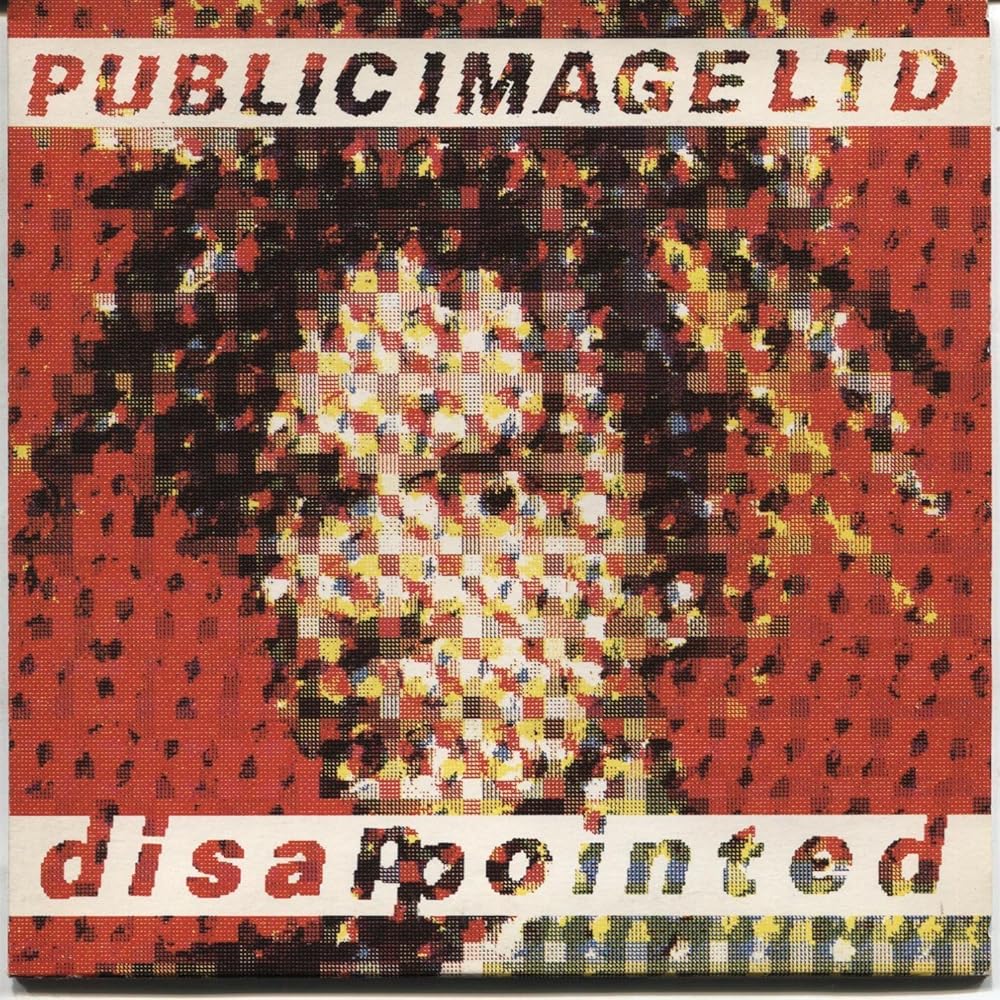
John Lydon has said that he wrote "Disappointed," the lead single from 9, about two original Public Image Ltd. members, guitarist Keith Levene and bassist Jah Wobble. (Jah Wobble's highest-charting Modern Rock hit, the 1992 Sinéad O'Connor collab "Visions Of You," peaked at #10. It's a 7.) In 2018, Lydon, talking to Billboard, described his feelings about his ex-bandmates with typically ugly flair:
They were poor sods. I wanted to help them. I put a lot of my own personal money into that. I think I helped them launch solo careers, and all they’ve done is turn around and criticize and moan like selfish, whiny spoiled brats, and that’s an awful thing, to see friends behave that way. They’ve not put a penny in my direction, never really helped me out at all. Not even the words thank you. And years later, I write songs like "Disappointed": "that’s what friends are for." Wow, I hope they’re listening.
It's a weird song, "Disappointed." The lyrics aren't exactly unexpected. If John Lydon wrote a song about the transformative power of a great friendship, that would be a left turn. Glowering negativity is what Lydon was born to convey, whether on record or in interviews. But "Disappointed" doesn't sound like a work of seething bitterness. Instead, it's almost pretty. The song almost seems to go for U2-style grandiosity. The guitars sparkle and ring, and the drums lock in hard. There are some glowing organs and some backup singers who sound like they got lost on the way to the "Sweet Home Alabama" sessions. So when John Lydon comes into that wailing about you "you're a really bad pahhhh-son," it almost feels more discordant than it would if he was yelling over the guitar-shards and dread-spreading bass of PiL's early years.
It's always fun to listen to John Lydon, and it might be more fun to hear him doing his spite-radiating thing in as unlikely a musical setting as this one. But there's something just powerfully sad about "Disappointed." Lydon makes grand proclamation about being "disappointed in you peeeee-pal," about your "useless defenses" and "when friendship reared its ugly head," and I just wish he had something good in his life. I have no doubt that Lydon really felt absolute contempt for his ex-bandmates, just as I'm sure they felt the same for him. Lydon seems to inspire that in people. Is that a complaint, on my part? I honestly don't know. The song just makes me feel bad.
John Lydon has a way of making that negativity compelling, both through his broad and gestural pantomime-villain singing style and through the way he puts words together: "All of the bastards the world despises, springing surprises in newer disguises!" Lydon doesn't always turn all those bad vibes into songs, though, and that's a problem with "Disappointed." The track doesn't have much structure, and it only barely has a chorus. In the video, Lydon wears a ridiculous suit and mugs for the camera. He played the clown, and I have to imagine that the pose was getting old.
It's hard for me to put myself in the shoes of a radio programmer who would actively decide to put "Disappointed" into rotation. I never heard "Disappointed" on the radio. If I ever heard any Public Image Ltd. at all, it was "This Is Not A Love Song," and even that was rare. Maybe "Disappointed" fits into the same category of Big Audio Dynamite's "Just Play Music," another track from a first-wave punk great who was trying to adapt his voice to late-'80s sounds. Both songs made it to #1 on the Modern Rock chart and then disappeared completely. I never heard either one on the radio. In the UK, "Disappointed" scraped the bottom of the top 40, which meant that it was PiL's biggest hit in years. Still, the party was almost over.
The next two singles from Public Image Ltd.'s 9 album didn't do anywhere near as well, though both of them still got radio play. On the Modern Rock chart, "Warrior" peaked at #16 and "Happy" at #15. 9 made it to #106 on the Billboard albums chart, which actually made it the highest-charting of all of the band's studio LPs. Soon after, PiL released the optimistically titled collection The Greatest Hits, So Far. At one point, I owned a used-cassette version of that one. I didn't play it very often. The compilation had one new track, "Don't Ask Me," which made it to #2 on the Modern Rock chart. (It's a 4.)
Public Image Ltd. released one last album, 1992's That What Is Not, before breaking up. The single "Covered" peaked at #11 on the Modern Rock chart. After that, Lydon sang on the dance group Leftfield's 1993 single "Open Up" and published a memoir that I read and enjoyed when I was in high school. Another thing I enjoyed in high school: The Sex Pistols' 1997 reunion tour. Lydon seemed to relish the contrarian sellout move of becoming Johnny Rotten again, and it was fun to hear those Pistols anthems echoing around a college-basketball arena. I think that might've been my first arena show, actually. When I saw them, the Pistols topped a bill that was otherwise as 1997 as it gets -- Gravity Kills on first, Goldfinger on second. The cynicism was baked in. It was almost a selling point. The crowd was extremely violent, and I spent an hour after the show waiting for my dad to pick me up, talking to a very sketchy metalhead guy who may have been hitting on me. Fun night.
The Sex Pistols reunion kept going for a while, but it was clearly a touring-act thing. They weren't going to put out any new music. They didn't want that, and neither did anyone else. In 2009, John Lydon got a late-period version of Public Image Ltd. back together, too. They played Coachella and released a few records that didn't make any kind of splash. Lydon found obnoxious new ways to troll the world, like joining the cast of the UK reality show I'm A Celebrity... Get Me Out Of Here!, lashing out at the other Sex Pistols, and making statements that seemed to nebulously support both Brexit and Donald Trump. That's a simplification, but it's also further evidence that John Lydon still works hard to get under people's skin. These days, that inclination seems unlikely to produce any more compelling music, but the man did have a hell of a run. "Disappointed" just wasn't a big part of it.
GRADE: 6/10
BONUS BEATS: Since "Disappointed" has left absolutely zero imprint on culture at large, we will have to look elsewhere in the Public Image Ltd. catalog. Here's PiL's 1984 single "The Order Of Death" soundtracking some awesomely cinematic business on a 1986 episode of Miami Vice:
A few months ago, stoner-rap great Curren$y and producer Harry Fraud released Vices, an album made up entirely of samples of tracks that showed up in Miami Vice episodes. Here's Curren$y and Rome Streetz rapping over an "Order Of Death" flip on "'86 Testarossa":