

Skip to Content
Columns

The Alternative Number Ones: The Psychedelic Furs’ “House”

January 20, 1990

  • STAYED AT #1:3 Weeks

In The Alternative Number Ones, I'm reviewing every #1 single in the history of the Billboard Modern Rock Tracks/Alternative Songs, starting with the moment that the chart launched in 1988. This column is a companion piece to The Number Ones, and it's for members only. Thank you to everyone who's helping to keep Stereogum afloat.

In the late '80s, the Psychedelic Furs took their shot at American arena-rock stardom. This was not as far-fetched a goal as it might appear. The Furs came out of the same early-'80s post-punk zeitgeist as U2; Steve Lillywhite produced both bands' early records. By the late '80s, U2 were stadium-status monsters. The Cure and Depeche Mode were on their way there. Why couldn't the Psychedelic Furs get there? They tried, and they fell short.

The Psychedelic Furs moved to the US in the early '80s, and their records became slicker over the course of the decade. For their 1987 album Midnight To Midnight, the Psychedelic Furs worked with late-period Rolling Stones producer Chris Kimsey and tried to make something approximating late-'80s commercial rock. The album charted higher than any previous Furs album, and it had "Heartbreak Beat," a genuine banger and top-40 crossover hit. But the move didn't sit well with the Furs. Midnight To Midnight didn't ultimately sell as well as the band's two previous albums, both of which eventually went gold. Critics hated the record. So did the band.

Furs frontman Richard Butler later claimed that Midnight To Midnight was "hollow, vapid, and weak." They'd used dance beats and squawking bar-rock horns. They'd gone through an expensive, painstaking recording process that felt unnatural to them, and it didn't get them anywhere. After that, it was time for a reset. The band could break up, a possibility that they considered, or they could go for a back-to-basics move. They chose the latter. In 1988, the Furs released the career-retrospective compilation All Of This And Nothing. For bonus track "All That Money Wants," original drummer Vince Ely returned to the band, and they worked with Smiths producer Stephen Street. The song brought the Furs' swagger back, and it became one of the first songs to reach #1 on Billboard’s brand-new Modern Rock chart. The Furs were on the right track, and they still had some gas in the tank.

It might've made sense for the Psychedelic Furs to record a whole album with Stephen Street. Ultimately, they did do that, but it took a while. Before getting back into the studio with Street, the Furs went for the swampy, gooey tone of a whole lot of that moment's alternative rock. When the Psychedelic Furs recorded their 1989 LP Book Of Days, I wonder if they thought they were still playing the game. The band's new direction didn't make them any more popular, but they did get another Modern Rock chart-topper.

The Psychedelic Furs' main collaborator on Book Of Days was Dave Allen, an Englishman who'd been producing records since the mid-'70s but who'd really come into his own by working with the Cure. Allen also produced records for gauzy-dreamy fellow travelers like the Sisters Of Mercy and the Chameleons, but he was really the Cure's guy. In 1989, Allen and Robert Smith co-produced the Cure's Disintegration, an absolute masterwork that also became an unlikely commercial blockbuster. (Allen has been in this column for working on "Fascination Street.") I wonder if the Furs listened to Disintegration and heard an opportunity. The next big job that Allen took was Book Of Days.

I should point out that I'm not accusing the Psychedelic Furs of biting the Cure. The two bands had been around for about the same amount of time, and before Disintegration, they'd found about the same level of commercial success. But I don't think anyone conflated the two bands. The Cure were weird wanderers who built a universe unto themselves, while the Furs were glamorous, raspy seen-it-all types. The Cure sounded like acid-heads, while the Furs, despite their name, sounded like they were into different chemicals. The Furs never came off as shy, and their songs showed up on a lot more movie soundtracks. But the sonic palette of Book Of Days is pretty similar to what the Cure did with Disintegration -- chiming guitars, snakily sinister basslines, echo slathered all over everything. It worked better for one band than it did for the other.

You can't just make your own Disintegration. Plenty of bands, including the Cure, have tried to recapture the beautiful misrerabilist sweep of that record, and nobody has been successful. If the Furs were trying to make their own Disintegration, then they might've been the first of many bands to fail at that task. The Cure made a sound that you could get lost in, while Book Of Days just flattened out the Furs' jagged edges and made them more indistinct. It doesn't sound like much of a progression, and it also doesn't bring back the urgency of the Furs' early records. It's a muddle.

That's not to say that Book Of Days is a bad record. It's not. The worst Psychedelic Furs album is still pretty good. The band's deep, heavy thrum is always mysterious and inviting, and Richard Butler is still, this very day, a great rock frontman. His voice is smoky and imperious, and he always sounds like he's grandly declaiming his lyrics like an ancient Roman governor. That's cool shit. That's a vibe. The vibe survived the beer-commercial sax-tootles of Midnight To Midnight, and it survived whatever they were going for on Book Of Days, too. But Book Of Days didn't give the Furs any kind of rebirth, and the songs simply don't resonate like the Furs' best tracks.

The Psychedelic Furs have hits. If you put on that band's singles, you will have a good time. "Love My Way"? "Pretty In Pink"? "The Ghost In You"? "Heaven"? Bangers. But none of the songs on Book Of Days really work as bangers. Maybe the band just wanted to knock something out quickly -- a stark contrast from the work that the Cure put into Disintegration. At least, that's the impression that I get from the Furs' 1989 120 Minutes interview, where they're just blathering about how Midnight To Midnight took "the vibe out of it" and how they mostly used early takes on Book Of Days. Richard Butler: "It's not good, but it's acceptable to make a few mistakes, as long as you get it sounding fresh, rather than spending ages getting it sounding perfect."

In that same interview, the Furs talk about playing smaller venues like CBGB, rather than the big, cavernous places that they toured while promoting Midnight To Midnight. The Furs talk about that as a choice, and maybe it was. But you can definitely tell that their commercial prospects were not what they once were. They probably knew that the world was not going to embrace Book Of Days like it was Disintegration. The songs simply aren't there. They talk about the production like they were out here making a Circle Jerks record, but that's not what Book Of Days is. It's just kind of pleasantly muffled.

The Furs led off the Book Of Days album cycle with "Should God Forget," which might be the hardest-driving song on the record but which doesn't really sound like a hit. They didn't really give the track a huge push; as far as I can tell, it doesn't even have a video. It's not a bad song, though. "Book Of Days" didn't get anywhere near the pop singles charts in either the US or the UK, but it did reasonably well on Modern Rock radio, peaking at #8. (It's a 6.) The Psychedelic Furs were running on fumes, but they still had the goodwill of alt-rock radio programmers.

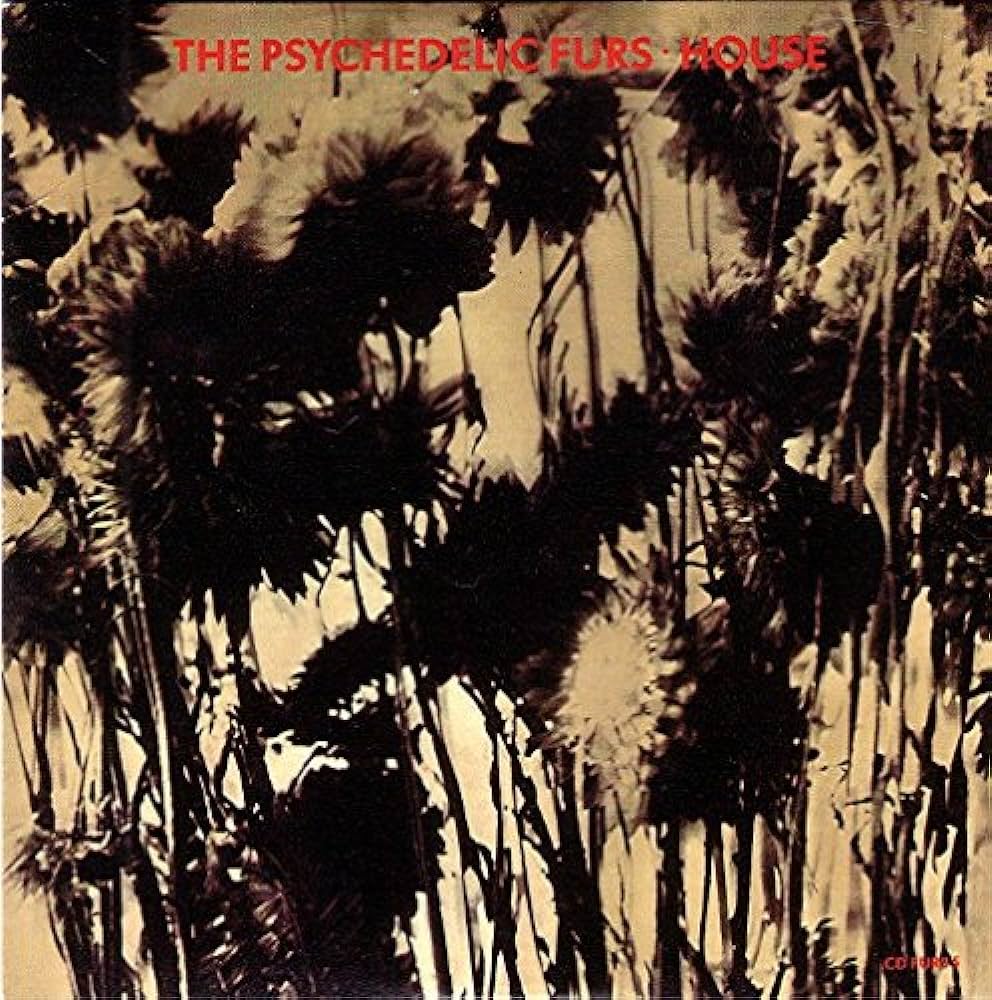
There's something almost willfully perverse about the Psychedelic Furs releasing a single called "House" in 1989. At the time, that was a loaded word, especially in the British music world. In 1988, rave culture swept across the UK, utterly changing the face of pop music. Around the time that was happening, I spent a year in London. I was nine years old, totally new to pop music, but even I knew that "house" meant weird, energetic, exciting songs with big drums and nonsensical rhythmic vocal blurts. (I don't think I understood what samples were yet.) Almost immediately, rock bands, including many of the Furs' peers, started playing around with the giddy samples, programmed beats, and sha-la-la neo-hippie aesthetics of acid house. Plenty of those experiments will appear in this column in the days ahead. But that's absolutely not where the Psychedelic Furs were going with "House."

That's probably a good thing. I'm sitting here and trying to imagine how the Psychedelic Furs' acid house toe-dip might sound, and I simply can't do it. I probably couldn't have imagined the Rattle & Hum-era U2 messing around with house music, either, but they made that style work for them. The Furs, on the other hand, were not interested. "House" is not a song about house music. Instead, it's Richard Butler doing his cryptic-poetic lamentation thing, talking about how your dreams and/or these broken words are not his life. The chorus, such as it is, is Butler repeating the phrase "shame will shake this house" a couple of times. Trust me when I tell you that the people making actual house music in 1989 were not worried about shame.

If anything, "House" appears to be a song about not partying. The bridge is Richard Butler painting a picture of glamor, always ephemeral, fading away: "Now the party girls have gone/ I hear the rattle of their heels/ Before their footsteps fade/ Make promises pay." I don't really know what Butler is talking about, but I'd guess that there's some record-business disillusionment coming across in that line.

The sound of "House" is lush and full. There are all these cool, woozy walls of jangle. The bass almost serves as the lead melodic instrument, while the guitars add woozy accents everywhere. The song moves, but it doesn't exactly burst with energy. I wonder how drummer Vince Ely felt about coming back to the Furs, after years away, and then promptly being buried in the mix. There's also no real hook on "House." I've been listening to the track on repeat while writing this, and it just keeps fading not-unpleasantly into the background. I definitely couldn't hum you the song. It's just not memorable enough.

Not surprisingly, Book Of Days didn't do anything to turn around the Psychedelic Furs' commercial fortunes. "House" didn't cross over to the Hot 100 -- the Furs haven't been back on that chart since "Heartbreak Beat" -- and it peaked at #92 in the UK. Book Of Days barely charted on either side of the Atlantic. Still, the Psychedelic Furs persisted, even as peers like Echo & The Bunnymen were splintering. The Psychedelic Furs were closer to the end of their run than the beginning, but they weren't done yet. We'll see them in this column again.

GRADE: 6/10

BONUS BEATS: "House," like "All That Money Wants" before it, hasn't left any lasting cultural footprint. Once again, then, we've got to find our Bonus Beat from another point in the Furs' career. On the chorus of their 2020 song "Eternal Summer," the Strokes, whether intentionally or not, utterly bit the melody from the Furs' "The Ghost In You." The lift is direct enough that the Strokes had to give songwriting credit to the Furs. Here's "Eternal Summer":

(The Strokes' two highest-charting singles on the Modern Rock chart -- known as Alternative Songs by then -- are 2001's "Last Nite" and 2020's "Bad Decisions," which both peaked at #5. "Last Nite" is a 9, and "Bad Decisions" is an 8.)

THE 10S: The B-52's' soaring, ebullient walk-the-earth reverie "Roam" peaked at #6 behind "House." I hear a wind whistling air, whispering in my ear. It says: "Roam" is a 10.

GET THE STEREOGUM DIGEST

The week's most important music stories and least important music memes.