

Skip to Content
Columns

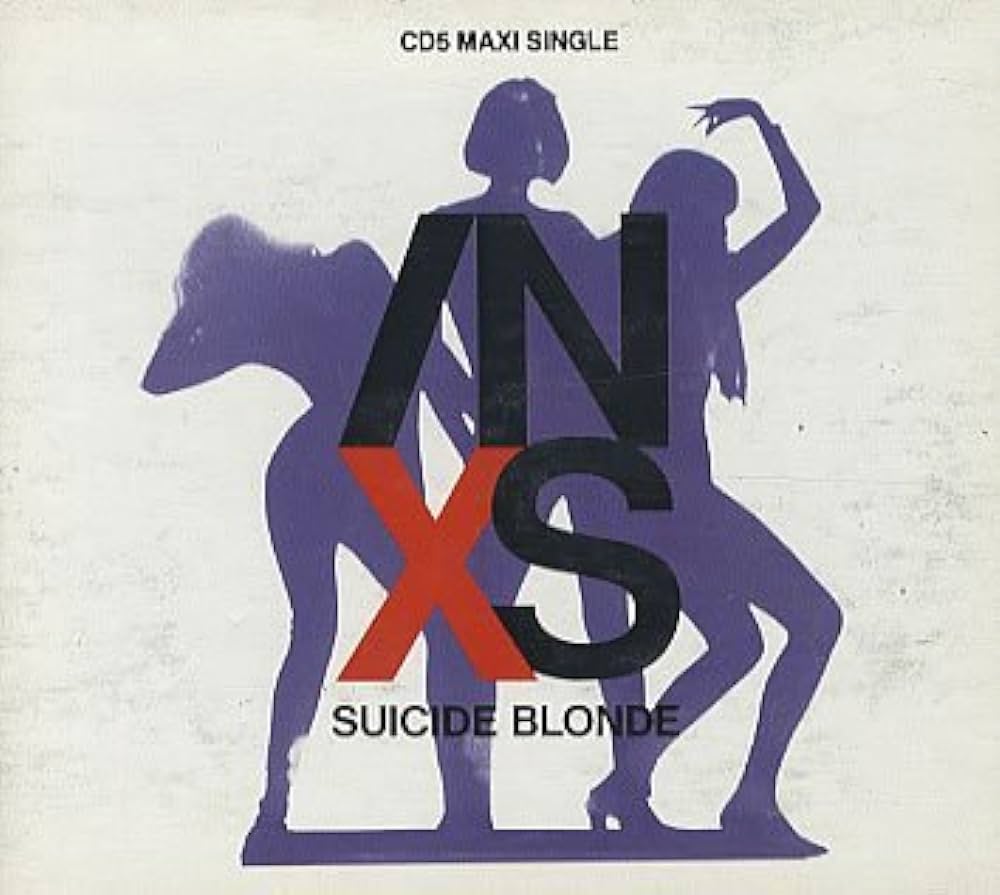
The Alternative Number Ones: INXS’ “Suicide Blonde”

September 22, 1990

  • STAYED AT #1:1 Week

In The Number Ones, I'm reviewing every single #1 single in the history of the Billboard Hot 100, starting with the chart's beginning, in 1958, and working my way up into the present. Book Bonus Beat: The Number Ones: Twenty Chart-Topping Hits That Reveal the History of Pop Music.

Officially, Michael Hutchence died by suicide. In 1997, the INXS frontman was found dead in his Sydney hotel room. Hutchence was going through a custody battle at the time, and he was reportedly depressed, drunk, and high. He strangled himself on his door with his snakeskin belt. Given all that, you'd think that the existence of an INXS song called "Suicide Blonde" would come off as an act of grim foreshadowing, like Nirvana's "I Hate Myself And Want To Die." But that's not how people tend to feel about "Suicide Blonde." I just had lunch with a couple of friends and mentioned that I was about to write a column about this song, and nobody got bummed out. What they said was: "Oooh. Good song." They were right. That was the correct response.

How can you expect anyone to get sad about "Suicide Blonde"? You can't. For one thing, plenty of people refuse to believe that Michael Hutchence really died by suicide. There's a persistent theory that his death was an autoerotic asphyxiation accident. When you're dealing with someone as sexy as Hutchence, maybe it's hard to believe that his untimely passing was anything other than a sex thing. And then there's "Suicide Blonde" itself, which is not a sad song. It's not about suicide at all. Like so many other INXS songs, it's about being horny. For that reason alone, "Suicide Blonde" must've stood out in the relatively sexless environs of circa-1990 modern rock radio. There were plenty of other reasons that "Suicide Blonde" would've stood out, too.

I'm not convinced that INXS ever functioned as an alternative rock band. They were an Australian pub act who went new wave, got into dancey funk grooves, and found their way to global superstardom. By the early '90s, INXS were filling stadiums around the world, and they had nothing to do with the stuff that filled most modern rock playlists -- the mopey, willowy British bands and their jangle-drunk American peers. Instead, INXS were considered alternative because of a marketing decision. In the '80s, the band's manager, faced with record-label disinterest, pushed INXS to American college radio stations. The ploy worked, and it built momentum for the band to become pop-chart conquerers. As we've seen with U2, modern rock stations never let go of the bands who crossed over to mainstream fame. If you were ever an alternative-radio band, you were an alternative-radio band for life. Maybe that's why we get to talk about "Suicide Blonde" in this column.

In the early days of alt-rock radio, the bands that tended to do well were the ones who had some intersection with the late-'70s UK punk boom. INXS fit into that category in only the most peripheral way. Some version of the band existed as early as 1977. Early on, they were known as the Vegetables, and they spent some time opening for Midnight Oil, a band who's been in this column a couple of times. Eventually, the two bands shared a manager, and it was a Midnight Oil roadie who suggested that the younger group change their name from the Vegetables to In Excess, which then became INXS. That guy did them a huge favor; the Vegetables was a terrible name. When the rechristened INXS released their 1980 single "Simple Simon," they kept "We Are The Vegetables" as their B-side. "Simple Simon" is twitchy new wave with a bit of Devo influence, and "We Are The Vegetables" sounds vaguely like an Australian pub rock band's version of punk.

The first two INXS albums only came out in Australia, but the band finally made it to America with 1982's Shabooh Shoobah. The album came out during Men At Work's brief time as a pop sensation in America, which probably helped sell people in this country in the idea of an Australian new wave band, and that's really what INXS were. Thanks to Michael Hutchence's exaggerated prettiness, they were an easy sell on MTV. They toured the US opening for fellow early-MTV acts like the Stray Cats, Adam And The Ants, and the Go-Go's. "The One Thing," INXS' American breakout, reached #30 on the Hot 100. Follow-up single "Don't Change" didn't chart as well, but it had some U2/Big Country-style sweep, which probably further endeared INXS to the people who would later make modern rock radio playlists.

INXS swung hard toward the American pop mainstream with their next album. They recorded "Original Sin," the lead single from 1984's The Swing, with super-producer Nile Rodgers, and Daryl Hall sang backup. These were not punk-adjacent guys. Instead, INXS were reaching for the plastic coke-funk of fellow Rodgers collaborators Duran Duran. The song wasn't a big hit in the US, but it earned INXS their first #1 hit in Australia. INXS were stars at home, and they were growing in America. Shabooh Shoobah went gold, and The Swing went platinum.

For 1985's Listen Like Thieves, INXS linked up with a big-deal producer. Chris Thomas had been an assistant producer on the White Album, and he'd mixed Dark Side Of The Moon. As a producer, Thomas' credits included a bunch of early Roxy Music records, the Sex Pistols' Never Mind The Bollocks, and the first three Pretenders albums. INXS already sounded polished, but Listen Like Thieves was a huge leap. For lead single "What You Need," the band stayed in the funky dance-pop lane of "Original Sin," and that song blew up huge, reaching #5 on the American pop charts. Follow-up single "This Time" only grazed the pop charts, but it was a college-radio hit.

Listen Like Thieves eventually went double platinum, which meant that there were big expectations for the next album. INXS went back into the lab with Chris Thomas for 1987's Kick, but when the band turned the completed record into Atlantic, their American label, the bosses hated it, at least according to the band's manager Chris Murphy. It didn't rock hard enough. So Murphy hired a team to push the Kick single "Need You Tonight" to college radio rather than top 40. The band toured American campuses and built up buzz that way.

Crazy thing about that: INXS were already huge, and then they made an album that was pretty much the Australian Thriller -- one year after Crocodile Dundee set off a random-ass wave of Americans loving Australian stuff, no less. When the label didn't immediately fall in love, the band's manager was like: Guess I better tell the world that this is alternative rock. And it worked! "Need You Tonight" gained steam with college audiences, and then it took off as a mainstream pop hit, going all the way to #1.

Kick became a juggernaut, one of the biggest-selling albums of 1988. It went platinum six times over and sent four singles into the top 10. College and alternative radio didn't stop playing INXS even after they became crossover superstars. When Billboard ran its first Modern Rock chart in September 1988, the great "Never Tear You Apart" was still hanging on at #28. It's hard to follow up a gargantuan record like that one, and Michael Hutchence took some time off in 1989, forming a side project called Max Q with his friend Ollie Olsen. Atlantic wanted another INXS record, so it didn't really push Max Q's self-titled album, but lead single "Way Of The World" still made it to #6 on the Modern Rock chart. (It's a 6.)

Before too long, the Atlantic bosses got the INXS follow-up that they wanted. The band named their 1990 album X because it marked a decade since their debut, but it could've been called Another Kick, Just Not Quite As High This Time. That's not even a knock. When you've made one gigantic zeitgeist-shattering record, it's natural to want to do all the same stuff again. The band recorded X with Chris Thomas, who'd done right by them, and they brought the same thotty swagger to the new record. Michael Hutchence was clearly enjoying his time as a global pinup type. He attracted tabloid attention by getting high, acting rowdy, and dating a succession of beautiful and famous women. He was a rock star, and he sounded like one. On X, he really brought that rock-star energy.

When INXS recorded X, Michael Hutchence happened to be dating one particular beautiful and famous woman: fellow Australian idol Kylie Minogue, who was then considered a squeaky-clean pop singer. She's the blonde in "Suicide Blonde," and Hutchence got the song title from her. Minogue starred in a 1989 movie called The Delinquents, and she went to the premiere with Hutchence. She showed up on the red carpet with her hair dyed blonde and cut dramatically short, and she said that she'd gone suicide blonde. (It's apparently supposed to be wordplay? Like, hair that's dyed by your own hand?) Hutchence heard a really cool phrase, and he and Andrew Farriss, the INXS multi-instrumentalist who served as the band's main songwriter, built a single out of it.

INXS had already found a lot of success by leading their albums off with funky, horny, hard-strutting dancefloor jams, and "Suicide Blonde" fits right into that lineage with "Original Sin," "What You Need," and "Need You Tonight." The guitars imitate the Nile Rodgers chicken-scratch style, while the bass hits the pocket and stays there. I've read some critics claiming that the "Suicide Blonde" drums were influenced by the acid house that was blowing up in England, which would mean that INXS hit that dance-rock fusion a year before U2's Achtung Baby, but I don't really hear that. INXS were always doing a dance-rock fusion. They understood syncopation long before many of their modern-rock-radio peers even attempted it.

The first thing that we hear on "Suicide Blonde" isn't a member of INXS. Instead, it's a wailing honk from noted blues-harmonica master Charlie Musselwhite. Musselwhite, a white Mississippi native, cut his teeth on the Chicago blues scene in the '60s. He played with people like Paul Butterfield and Elvin Bishop, and he supposedly served as the basis for Dan Aykroyd's Elwood Blues character. 80-year-old Musselwhite is still going today; he had an acting role in Killers Of The Flower Moon last year. INXS found out that Musselwhite was touring Australia while they were recording X, and they invited him to come in and play with them. Musseslwhite actually played on a couple of album tracks, but on "Suicide Blonde," the band sampled and rearranged his playing.

Australian bands really loved their blues-rock harmonica, didn't they? Midnight Oil were all about the harmonica, too. I find the harmonica on "Suicide Blonde" to be slightly cheesy and unnecessary, but that's how I tend to feel about most harmonica. Maybe it's a personal thing. Still, I don't think that blues-harp wailing cheeses "Suicide Blonde" up too much, since the groove is too strong and since shamelessness was always part of the INXS appeal. I love the hard-driving Zeppelin-style acoustic guitars on "Suicide Blonde," and I really like the expensive-sounding tingly-bell synth that comes in on the bridge, too. It reminds me of Hans Zimmer's Rain Man score.

As with many INXS tracks, the towering groove mostly exists to support Michael Hutchence while he gets very, very horny. There's no message to "Suicide Blonde"; it's just Hutchence growling and purring half-baked poetry about someone who's just as hot as him: "Suicide blonde was the color of her hair/ Like a cheap distraction for a new affair/ She knew it would finish before it began/ Whaaow, baby, you lost the plan." He's prancing and panting and losing his breath even as he intones. Hutchence sounds a bit like Mick Jagger and Jim Morrison at the same time, and that wouldn't be possible if that's what he was trying to do. But one of the things that we love about rock stars is their ability to lose themselves in a moment, to act on instinct without fear of looking or sounding ridiculous. That's what Michael Hutchence did. The man was nothing if not a rock star.

I don't think "Suicide Blonde" is a classic on the level of "Need You Tonight," but it's still pretty sick. It's got momentum and attitude, and there's just enough melody for it to get stuck in your head. The production gleams, and the rhythm section moves. It's a relic of an era when people still danced to rock bands, and when rock bands made music to facilitate that dancing. There were plenty of "Suicide Blonde" remixes, but you could imagine a club DJ throwing on the album version without clearing the floor. When a song can sparkle the way that "Suicide Blonde" does, I can forgive all sorts of clichés. In their moment, INXS almost never got any love from critics, who regarded them as lightweight posers and never voted them onto the Pazz & Jop poll. But maybe it takes a lightweight poser to make a track that moves like this.

INXS buddy Richard Lowenstein directed the "Suicide Blonde" video, bringing the same cut-up aesthetic that he used for the "Need You Tonight" clip. It's mostly Michael Hutchence smoldering while various hot blonde women strut around, but I like how the other INXS guys sport fashions that I could imagine Vanilla Ice wearing. Those early-'90s looks -- the round sunglasses, the leather hats, the stripey pants -- are fucking awesome. They're the best kind of ridiculous. INXS also looked cool when they performed "Suicide Blonde" at the 1990 VMAs, taking the spot between MC Hammer and Sinéad O'Connor. Now that I think of it, that's a nice little metaphor for the band's place in the popular culture of the day.

When "Suicide Blonde" hit alternative radio, I can't imagine that it sounded much like everything else that was getting airplay. Plenty of Australian bands have already appeared in this column. Modern rock radio programmers went crazy for British stuff, but they were also into Irish and Australian artists; maybe all of them seemed just a touch exotic. But INXS didn't sound like their Australian peers. They sounded bigger, and they shined brighter. "Suicide Blonde" is a song that's very much of its mainstream moment, and it predictably became a crossover hit, topping the Mainstream Rock chart and reaching #9 on the Hot 100. But even with pop success and without critical credibility, INXS remained an alt-rock radio staple for years.

INXS followed "Suicide Blonde" with the soulfully foxy "Disappear." On the Hot 100, that song did even better, reaching #8, but it only got to #10 on the Modern Rock chart. (It's an 8.) "Bitter Tears," their next single, wasn't a big mainstream hit, and it still found its way to #6 on the Modern Rock chart. (It's a 6.) X went double platinum, which was considered a disappointment. It sold about what Listen Like Thieves moved, but that was only a fraction of what they accomplished with Kick. Still, the band remained huge. In 1991, INXS played for a gigantic audience at Wembley Stadium and turned that show into the concert album Live Baby Live. "Shining Star," the one new studio song that they included on that one, didn't do anything in the mainstream, but it peaked at #4 on the Modern Rock chart. (It's a 7.)

INXS never made another Modern Rock chart-topper after "Suicide Blonde," but they were still in the mix as the zeitgeist shifted toward grunge. In just about every sense, the band's 1992 album Welcome To Wherever You Are was the big fall-off. While the world was getting into noisier and more stripped-down music, INXS got into sitars and orchestras, and people weren't feeling it. The album only went platinum once, and that was years after its release. Still, alt-rock radio remained on board. Lead single "Heaven Sent" went all the way to #2, and so did "Not Enough Time," a big piano-rocker with a great bassline. ("Heaven Sent" is a 6. "Not Enough Time" is an 8.) A couple of other Welcome To Wherever You Are singles made the top 10, too. One of those songs is "Beautiful Girl," which only reached #10 but which I really like. (That's another 8.)

INXS only took a year to follow Welcome To Wherever You Are, but 1993's Full Moon, Dirty Hearts was a full-on mega-flop in the US. Even the alt-rock radio programmers didn't get into the album much. Lead single "The Gift," which sounds a bit like a reject from an early-'90s U2 record and which has a very silly video, made it to #6. (It's a 5.) None of the other singles made the top 10.

After the failure of Full Moon, Dirty Hearts, INXS took a few years off. Michael Hutchence started working on a solo album that didn't come out until a few years after he died. Steve Kandell's Pitchfork Sunday Review of Listen Like Thieves opens with a brutal tale of INXS' downfall. Hutchence was a presenter at the 1996 Brit Awards, the peak-Britpop night where Pulp's Jarvis Cocker famously displayed his ass to Michael Jackson. Hutchence, referring to himself as "the alternative Michael," presented Best Video to Oasis, a band that'll eventually appear in this column, and he was excited enough to pump his fist and to kiss Liam Gallagher's cheeks twice. During their acceptance, though, Noel Gallagher said, "Has-beens shouldn't present awards to gonna-bes."

https://youtube.com/watch?v=DdFLO9GvepY&ab_channel=outherebrothers%28BlackpillDispenser%29

INXS came back with one more album, 1997's Elegantly Wasted. The title track was their last song to land on the Modern Rock chart; it peaked at #13. The album came out in April, and they toured America, playing what would be their final show with Michael Hutchence outside Pittsburgh in September. "Suicide Blonde" was the last song that Hutchence ever sang onstage. Two months later, he was dead.

INXS kept going with different singers for a long time. An American reality show, 2004's Rock Star: INXS, was dedicated to finding them a new frontman, and they ended up with a guy named JD Fortune for a while. While performing with those different singers, INXS never stopped playing "Suicide Blonde." Despite the tragic story of the guy who co-wrote and sang that song, nobody wanted them to stop, and I get it. "Suicide Blonde" never made anyone sad.

GRADE: 8/10

BONUS BEATS: Superstar rave DJ Paul Oakenfold did a couple of "Suicide Blonde" remixes for the clubs. Here's his Earth Mix, which honestly isn't that different from the original:

GET THE STEREOGUM DIGEST

The week's most important music stories and least important music memes.