

We've Got A File On You features interviews in which artists share the stories behind the extracurricular activities that dot their careers: acting gigs, guest appearances, random internet ephemera, etc.
In 2019, Sheryl Crow released what she figured would be her final album: the guest-stacked Threads. But as it turns out, Threads wouldn't be her last project at all -- in November of last year, the same day she was set to be inducted into the Rock And Roll Hall Of Fame, Crow announced Evolution. Relative to her previous 11 albums, Evolution has Crow being a little more hands-off. The glut of her best-known work -- beginning with 1996's self-titled and 1998's The Globe Sessions -- has been entirely self-produced.
Evolution, which features already released singles such as "Alarm Clock" and a cover of Peter Gabriel's "Digging In The Dirt" featuring Gabriel, is directly overseen by producer Mike Elizondo (Carrie Underwood, Fiona Apple, Mary J. Blige), who Crow sent demos to without even thinking that collection would become an album. And yet, here we are -- Evolution is set to come out this Friday.
A few weeks ahead of its release, Crow is Zooming in from her Nashville studio, which is appropriately lined with acoustic guitars. If those walls could talk, right? Crow acknowledges that, yes, she has seen a lot, but she's taking most of it to the grave. "My manager's like, 'Man, you have got to write a book,'" Crow says with a grin. "And I'm like, ‘I should write a book, and then somebody can publish it when I'm dead, so that if anybody that gets mad at me, it's too late. Sorry, Charlie.' But yeah, I've got some stories."
Below, Crow looks back on a remarkable career -- one filled with odd jobs, big names, significant collaborations, and (more recently) endearing mom moments.
Evolution (2024)
You hadn't exactly intended to make another record after Threads. That said, what were your main sources of inspiration for Evolution?
SHERYL CROW: My last record, which was called Threads, I said, "I'm never making another record."
I grew up loving records. I grew up pouring over album notes, and as my own producer, I always approach record-making, creating a whole sonic landscape at the beginning, a middle, end, blah, blah, blah. People don't listen to records like that anymore.
This record came together because I was writing so much. It's such a weird time to be alive. For me, particularly as an older mom, the only place I have felt like going to download what I'm experiencing and what I observe has been my back porch with my guitar and a cup of tea after school dropoff. I wound up having a bunch of songs and not wanting to go into the studio -- just not wanting to do what I always do. I didn't even want to hear me do me. I wanted to give this stuff to a friend of mine, Mike Elizondo, and have him make incredible sonic landscapes.
That's what he did. I sent him these demos and said, "What do you think?" He'd take a day or two and build this incredible movie around it. It was the greatest gift. Before I knew it, there were eight or nine songs and we were like, "Gosh, it's an album." But I wasn't thinking in those terms. I wasn't writing songs going, "This is going to be for the next project." After a few weeks of him tinkering around, I had a huge body of work.
So by listening to someone else interpret your demos, that inadvertently inspired a new chapter.
CROW: Yes. The very first thing that he did was "Evolution."
I sent him just the guitar and the vocal, which is what's on here, and he's like, "Give me a couple of days." Then I went out and he played it for me. Well, first I started crying. I was like, "Oh my God, I feel like I've gone to the moon." Then, part of me was like, "Oh, but I didn't play the bass." Well, he's the greatest bass player that ever lived, so of course you didn't play the bass, you idiot. So, there was part of me that was like, "Okay, I'm going to let go of the ego that goes along with being my own producer, of playing a lot of instruments and give myself this gift." Once I let go of all that, it did feel like a gift. It felt like, "Okay, I'm taking myself out of the angst. I am just in the story, and I want to give these stories the greatest director that ever was."
Next came "Broken Record." Initially I called Mike and said, "I want to do ‘Digging In The Dirt' because I'd done a guided mushroom journey." I said, "I feel like this song just holds so much meaning for me." He's like, "I'm on board." So, we did that and then sent it to Peter Gabriel, and he actually put himself on it.
There were so many moments. I sent him a piano demo, this song "Don't Walk Away," which I felt like was so sad. Who would want to hear that? And he's like, "Please, we have to do this." So there just was never a "no" from Mike. There was never a "Not feeling this." It was just, "Give me a day, give me a day."
Running All-State Track In High School (Early '80s)
Today, I get the sense that it's much more typical for high school kids to be involved in multiple extracurricular activities, with sports overlapping with the arts. When you were a student, though, was it tricky to exist in multiple worlds? Did you ever feel like a rarity, being interested in music and also athletic?
CROW: Well, first and foremost, I grew up in a very, very small town where every kid went to the same junior high and every kid went to the same high school. I also grew up with musical parents, so I was absolutely going to continue to take piano because that was a given. I was going to be in the choir, and I was going to be in the band, but I was also an athlete.
As we were getting older, I noticed that I was in a lot of different groups, but I was not the most popular. When my friends started drinking and smoking weed, I started getting left out. I mean, these are typical experiences. I even watch it with my 16-year-old -- the fact that he gets invited to different parties with different groups. I told him at Halloween, I said, "That is such a testament to the fact that you like all kinds of people. If you stay out of all the texting between girls and bullying and all that stuff, it's good to have a lot of friends because those people are the ones that ultimately you define yourself by."
So, for me, there were a lot of us kids that did everything mainly because of being in a small town.
Does your 16-year-old listen to you when you impart a little wisdom? Or is he just like, "Okay, mom."
CROW: I think he probably acts like he's listening to me, and then when I walk away, he's probably rolling his eyes now. My 13-year-old rolls his eyes at me. My 16-year-old does it when I'm not around.
Singing In Cover Band Cashmere While Attending The University of Missouri (Mid-'80s)
In your earliest music gigs, how did you envision yourself as a performer? Did you picture yourself as a member of a band, a solo singer, a backup singer -- or something else?
CROW: I never saw myself as a front person, not even for one day.
It's funny thinking about high school, I always played for the musicals. I never was in the musicals. In bands I was always the keyboard player. In the cover band I was in, actually the next two cover bands I was in, I was the keyboard player.
The last one that I was in, the front singer left to go be on Star Search. That's how long ago it was. This is pre-The Voice, pre-American Idol. I stepped into her role, and it was the first time I'd ever been a front person. I wouldn't say I was great, but I would say that being in a cover band was one of the greatest educations. I wish every kid could do it. When I moved to St. Louis, I got in a band. I was teaching school, I was singing in bands.
I don't know that I saw myself as being a front singer in a band, but more of a singer-songwriter. Because that's what I'd grown up listening to. I grew up listening to James Taylor, Carole King. I grew up listening to Stevie Wonder, although he's not a singer-songwriter, but certainly somebody who sits and writes their own songs. I saw that as what my journey was going to be.
Singing Jingles For McDonald's And Toyota (Mid-'80s)
An artist being involved with advertising is also perceived so differently today. I get the sense that most working musicians and composers would be delighted to contribute to an ad. There are just so many fewer ways to make a living as an artist. The ‘80s and ‘90s, however, were less forgiving around merging the two spaces.
As a young artist, did you ever feel any sense of conflict around being in the advertising space? Or was it just a means to an end? Did you embrace it for what it could do for you in terms of financial stability?
CROW: When I was living in St. Louis, I was teaching school. I was in a band. A producer came in and asked me to sing on a commercial that ultimately did go nationally, and it was a McDonald's commercial. It paid me in about 45 minutes of work, more than the two years of teaching. I wound up doing more of those, which afforded me the opportunity to go to LA. I took that tape around to all these different advertising agencies in hopes of being able to do some jingle singing. Then I wound up going on the road with Michael Jackson.
I think what I was thinking of more than anything else was trying to work as a working musician. It's funny though, it's like what you said, when I first broke, no one would have been in a commercial. No one would have been the face of a commercial or would've been the voice for a commercial until Bob Dylan and Sting. I think Sting did a Jaguar commercial, and then Bob Dylan did a Victoria's Secret [commercial]. Then, after that, it was like all bets were off. It was like, wait a minute. You got paid how much to be the face of that? And people started changing.
Also, I think that was the beginning of the industry changing into a commerce-based industry where suddenly albums and cassettes went the way of digital. A cassette was $1.99, suddenly we have these CDs and they're $15.99, and the record labels are making all the money. It was like a money grab, basically. Artists were like, "Wait a minute, we're the ones doing the work, and you guys are all making the money."
Now, we see it differently. Now we see it where the artists have figured out this influencing thing where you build up your persona, and then whatever you do with that -- whether it's "I'm going to write songs" or "I'm going to become a famous reality show person." We're seeing that individuals hold the cards and everybody else is trying to get in on that. I find it to be a very weird time. I am trying to still, I guess, rationalize what's the quality of music and art if the brand is so much bigger.
Then, compound that with "What's the longevity of an artist if your persona is built around this brand that you've built?" You are going to get older. You are going to get wrinkles. You are going to age out, just like me. I've been blessed to have been around when all of that hadn't started yet, so I've gotten to have 35 years. But I wonder, especially the pressures that are on women now to make sure you have the perfect lips and the perfect boobs and your skin is perfect. I wonder, what's that going to look like? And what are we saying to not only young women, but young artists across the board?
Doing A TikTok Susi Stitch (2024)
Well, on that note, I really enjoy your TikTok feed.
CROW: My TicTac?
Yep. It's great.
CROW: My kids were like, "You cannot be on TikTok, Mom. You just can't. You're too old. That's so cringey." They kind of like it now.
I noticed that since your music, on UMG, has been removed, you've been taking requests and playing classic songs live on acoustic guitar.
CROW: The recorded versions? Oh, not on TikTok. That's right. [Points across the room] Actually, Liz, who's sitting right there, does my TikTok. I'm like, "Is it not available on TicTac?" Yes. I think I did hear that about Universal. Honestly, with TikTok, I mean, that's what I do. It's sort of fun to be able to just sit and play songs. I don't feel like I'm out of my comfort zone by doing that.
You even did a Susi Stitch!
CROW: Actually, that was really fun. I had that crazy Grammy experience, but I've had so many crazy experiences. I could step into Susi Stitch's whole routine and have about 25 crazy [stories]. But some of the people [involved] would have to die first before I incriminated them, so I probably won't.
But yeah, some of it is fun. Some of it is an opportunity to let people see that you're a real person, that you're not just a serious tormented artist who anguishes over ... It's funny. I remember we did an Instagram thing around The Murdaugh Murders because I was obsessed. I needed to detox from those. The response to it, when I was in the kitchen cooking, it's like, do people not realize that you're a person that has a personality, a real life? That you actually do load and empty your own dishwasher, and you do fold your kids' underwear?
Sometimes it's fun to let people in.
Playing An Undercover Cop In Cop Rock (1990)
https://youtube.com/watch?v=-k3y0rECh9Y /wp:paragraph -->
https://youtube.com/watch?v=5IOXoyz2sdY /wp:paragraph -->
https://youtube.com/watch?v=-k3y0rECh9Y /wp:paragraph -->
A lot of your biggest songs get some really great covers -- one of my favorites is HAIM and Lorde covering "Strong Enough" in 2013. Is there an older cut of yours that you would love to see covered more by contemporary pop performers? Or an unheralded song that you'd love to give more shine yourself on tour?
CROW: I had a song called "The Difficult Kind" that was on The Globe Sessions. I've always thought, man, some great country singer could kill that song.
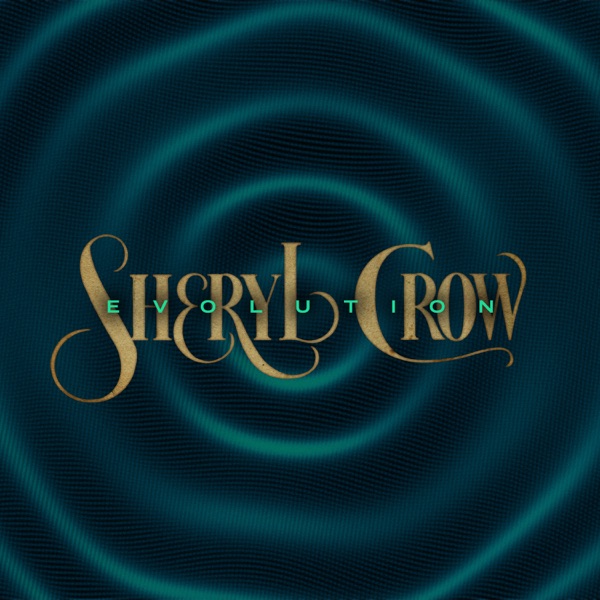
Evolution is out now via The Valory Music Co.