September 29, 1990
- STAYED AT #1:3 Weeks
In The Alternative Number Ones, I'm reviewing every #1 single in the history of the Billboard Modern Rock Tracks/Alternative Songs, starting with the moment that the chart launched in 1988. This column is a companion piece to The Number Ones, and it's for members only. Thank you to everyone who's helping to keep Stereogum afloat.
In the summer of 1988, British youth culture went through the kind of sea change that it hadn't seen since the early days of punk and Two-Tone. It was the fabled Second Summer Of Love, the moment when rave music, drugs, and fashion suddenly swept all across the UK. Over there, rave went from underground phenomenon to mainstream sensation so quickly that authorities couldn't mobilize to shut that shit down until years later. Out of nowhere, throngs of kids were getting high out of their brains, dancing to Detroit techno and Chicago house in fields and abandoned castles. Some of those kids started making their own versions of Detroit techno and Chicago house, and some of those tracks started crashing the British pop charts.
At the time, I was nine years old and living in London temporarily while my dad, a history professor, was on sabbatical. To me, these hyperactive and jittery digital tracks were pop music; I hadn't really known a world before. Looking back today, I can only imagine how strange that phenomenon must've been to anyone who was even just a few years older than me. The established rock bands of that moment, especially the ones who weren't all that close to the mainstream, must've looked on with fascination. I'm sure some of those bands saw rave culture as an existential threat. Others definitely saw it as an exciting new artistic possibility, a way to push into new sounds and feelings. Some others certainly saw it as a way to cash in and make a little extra money. Maybe the Cure saw it as all three.
In that moment, the Cure were riding high. Their 1989 album Disintegration was a total masterpiece and an unqualified success, both commercially and artistically. Robert Smith, the band's eternal leader and only real permanent member, tried to pump the breaks on his leftfield MTV-idol image by making something deep and dank and insular, but it was so fucking good that the world wanted in on it. Disintegration went double platinum, and the single "Lovesong" went all the way to #2 on the Hot 100, boxed out only by Janet Jackson's "Miss You Much." ("Lovesong" also peaked at #2 on the Modern Rock chart. It's a 9.) By summer 1989, the Cure were headlining American football stadiums.
There's an old trick that rock bands sometimes employ after they make their biggest albums. You don't want to rush headlong into a follow-up that doesn't have a chance of equalling the impact that you already made, but you don't want to disappear for years, either. So you throw something new onto the marketplace -- something that can keep your name out there while you formulate your next move. Bands can go a few different ways with that strategy: live albums, greatest-hits collections, one-off soundtrack singles. For the Cure, the next move was the remix album.
The Cure's 1990 collection Mixed Up is a fascinating snapshot of a moment. Maybe the record represents the Cure's attempt to grapple with the acid house revolution. Maybe it's just a quick little cash-in. Maybe it's both! On Mixed Up, the Cure reworked some of the biggest songs from their catalog, but those remixes mostly weren't the kinds of radical revisions that the moment might've demanded. The Cure didn't bring in big names from the rave world to remix their tracks, either. They mostly did it themselves, with the help of a few trusted producers who weren't necessarily raver types. The end result feels like a greatest-hits album that's just warped enough to make familiar songs sound unfamiliar. I wonder how many of the people who bought Mixed Up -- and a lot of people bought it -- realized what they were getting.
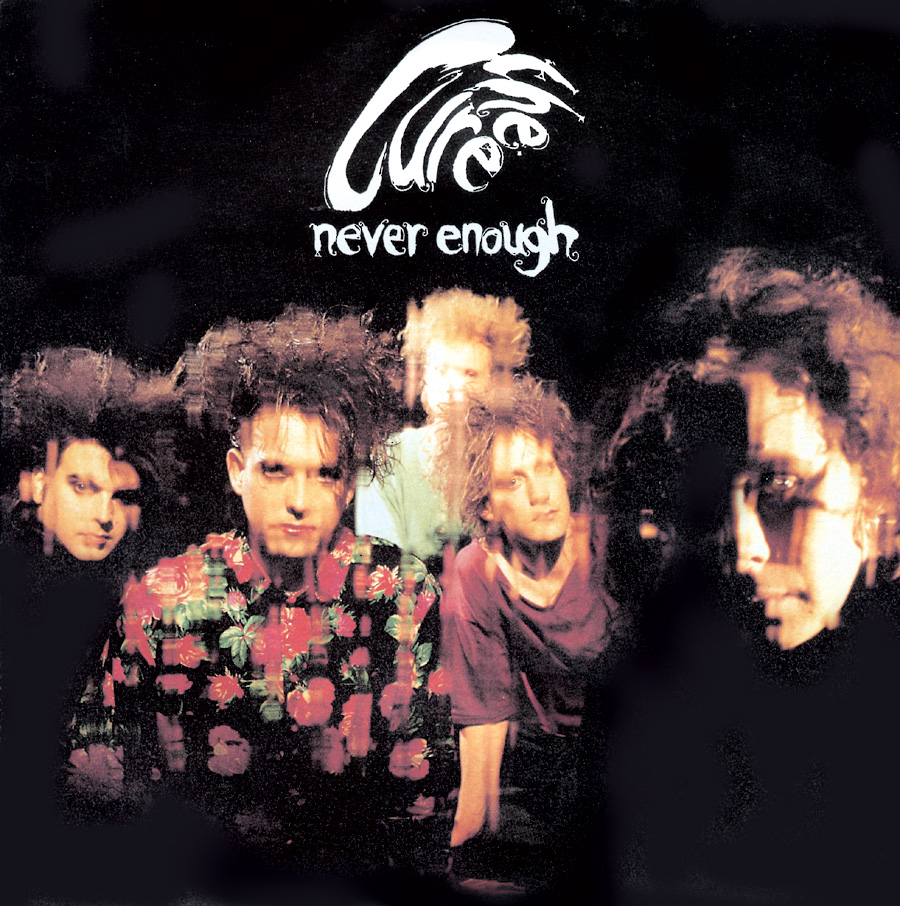
In putting Mixed Up together, the Cure pulled the understandable move of adding one one more new song, perhaps as a way of convincing die-hard fans to buy a bunch of new versions of songs that they already owned. "Never Enough," that one new song, is a departure for the Cure, but it still fits their overall aesthetic. "Never Enough" works as a howl of frustration from a reluctant rock star, and it's also a vision of what happens when the Cure go into the heavy-psych zone. It might also be the closest thing to a rave-rock anthem that the band ever made. Like so many other things that the Cure did, it contains multitudes.
I never owned Mixed Up or had much of a relationship to the record, but it makes for a pretty enthralling listen today. There was almost never any dance music in what the Cure did. The Cure did get play in clubs, and it's possible to hear a single like "Let's Go To Bed" as their take on the dance music of the moment. But there was no obvious connection between the Cure and acid house. That wasn't really the case for many of their peers. Depeche Mode always sounded futuristic, so they were able to ride the wave pretty well. New Order, a band that will eventually appear in this column, were all the way in on rave culture before it became a phenomenon; they probably deserve some of the credit for the Second Summer Of Love getting a chance to exist. But the Cure were a world unto themselves. They were not for the club. Mixed Up argues otherwise.
The adjustments on Mixed Up are fairly subtle. It's not an acid house record. Instead, the Cure tweak things here and there -- more echo in the mix, more drum-machine boom, longer edits to stretch tracks out. Some of the remix decisions are fully inspired. The 1985 single "Close To Me" was already a masterpiece, but I really like the new dimensions that come out of the track when you add in a gentle breakbeat shuffle and some New Orleans-style horns. The Closer mix of "Close To Me" was a top-20 hit in the UK, and while it missed the Modern Rock chart, it did graze the Hot 100, peaking at #97.
Plenty of the other reworkings on Mixed Up take other interesting turns. The songs become a lot longer and more echoey. The 1990 versions of those tracks don't necessarily sound more up-to-date, but they don't sound more dated now, either. This was a somewhat halfassed experiment, but it worked out well for the band. In America, Mixed Up charted as high as #14 and went platinum -- a clear sign that the world really, really wanted to hear more from the Cure in that moment.
"Never Enough" is the last track on Mixed Up, and it's the only new song. I wonder how much they liked it. Robert Smith has said that he came up with "Never Enough" when he was trying to write new songs for the Cure and banging his head against the proverbial wall. The band needed a new track for Mixed Up, but everything they recorded sounded "like crap." After a fruitless day, Smith wrote "Never Enough." He vented his frustrations about his own songwriting difficulties, and maybe also about his changing place in the world, into this strange, formless piece of music. Rather than structuring proper verses and choruses, Smith mostly just complained about how nothing was good enough: "However big I ever feel, it's never enough/ Whatever I do to make it real, it's never enough/ In any way I try to speak, it's never enough, never enough."
In that moment, Robert Smith had reasons to vent that went way beyond a bad songwriting session. He had serious issues with alcohol that only got worse during the Disintegration era. Original Cure drummer Lol Tolhurst, Smith's best friend from childhood, had an even worse drinking habit, and it got so bad that Smith had to fire him from the band in 1989. That couldn't have been easy, either. (Shortly afterward, Tolhurst sued Smith, claiming part ownership of the Cure's name. Tolhurst lost the lawsuit, and they've since reconciled.) Fame was a destabilizing force for Robert Smith, and he didn't necessarily love all the attention that it brought. When you're a hero to millions of depressed kids who you've never met, that's got to be a weird feeling, and it must involve levels of pressure that most of us can only imagine.
Frustration drips through on almost every aspect of "Never Enough," not just the words. Smith's vocal on the track is wild. He's always an expressive singer, but on "Never Enough," he does all sorts of weird shit with his voice -- stretching words out, grunting, growling, yipping, mumbling. The music is ferocious, too. Like "Fascination Street," the band's first Modern Rock chart-topper, "Never Enough" is the Cure in rocker mode. The drums kick hard, the bass churns madly, and the guitar squalls and squeaks and stutters.
In the guitar sound on "Never Enough," I hear echoes of Jimi Hendrix, Robert Smith's oldest and biggest influence. Smith first heard Hendrix when he was a little kid, thanks to his older brother. In 1970, Smith's brother took the 11-year-old to the Isle Of Wight Festival to see Hendrix -- one of the last shows that Hendrix played before his death later that year. (There's a story about Smith actually missing Hendrix because his brother locked him in a tent to sneak off with some girl, but I can't verify that right now.) The Cure covered "Foxy Lady" on their 1977 debut album Three Imaginary Boys. Years later, they tried another Hendrix cover. In 1993, the Cure contributed a house-inflected version of "Purple Haze" to the tribute album Stone Free, and it reached #2 on the Modern Rock chart early in 1994. (It's a 5.)
I think "Never Enough" sounds more Hendrix-damaged than almost anything else in the Cure's catalog, and it also sounds more like some of the UK rock bands who were clearly inspired by acid house. That seems like a contradiction, but it shouldn't be. The fashions in the Second Summer Of Love weren't too different from those in the first -- lots of tie-dye -- and some of the drugs were similar, too. Robert Smith had always been partial to acid. The low-end churn of "Never Enough" reminds me of Ned's Atomic Dustbin, a band that'll eventually appear in this column. The percussive attack sometimes verges on industrial, too. It's a fun, weird soup of a song, and I can't hear it without feeling just slightly high.
"Never Enough" is not a major work in the Cure's history, but as a one-off, I think it works really well. The track wouldn't have made sense in the context of Disintegration, but in isolation, it bangs pretty hard. It's drunk and surly and drowned in echo, but it's fun, too. Smith seems to get some real energy from his bellyaching, as if he's discovering just how much joy he can find in letting off steam. There's a beautifully ragged guitar solo in the middle of "Never Enough," one that reminds me of noted Cure coverer J Mascis. As the solo winds down, Smith lets out a sound that I'm not even sure how to describe. It's like he's swallowing his own scream. It sounds ridiculous, and it works as evidence that Robert Smith is having a good time.
The Cure were in a moment of transition when they recorded "Never Enough." In 1990, keyboardist Roger O'Donnell quit the band, and they replaced him with a guy named Perry Bamonte, who was already working for the Cure as a guitar tech. Bamonte didn't actually know how to play keyboards, but this was no obstacle. Instead, Smith had a tendency to recruit band members who he liked having around. (O'Donnell later returned to the Cure, and Bamonte has also left and come back.) Three other Cure members -- Simon Gallup, Porl Thompson, and Boris Williams -- got songwriting credit for "Never Enough," but it seems like the songwriting was mostly Robert Smith. Smith also co-produced the track with Mark Saunders, a remix specialist who'd done production work for Erasure, Neneh Cherry, and the Mission. I like how smeary and fucked-up it sounds.
The "Never Enough" video looks smeary, too. While they were on tour, a fan gave the Cure a model of a room that had little models of all the band members in it. Robert Smith was creeped out, but the model's weird sense of perspective gave him a visual basis for the "Never Enough" clip. In the video, the band members are carnival freaks, put on display by a barker who sounds like a muppet. (Maybe he represents the record labels getting rich off of the band.) The clip goes crazy with sound effects -- to the point where I'd suggest using this link to listen to the song instead -- but it's eerie enough to leave an impression. I bet it scared a lot of kids.
The Cure released "Never Enough" as a single, and they included another new song, "Harold And Joe," as its B-side. I'd never heard "Harold And Joe" before today, but that is a banger. "Harold And Joe" sounds way more like the Cure's take on acid house than "Never Enough" does, and I bet it would've been a hit if they'd given it a push. Maybe that's why they didn't give it a push.
"Never Enough" was a big enough deal that it reached #13 on the UK singles chart, it and also got as high as #72 on the Hot 100. Mixed Up, like the live albums that came soon after, made the Cure's discography more unwieldy and intimidating for those of us who were trying to get into the band in the '90s, but that's why God invented greatest-hits albums, and Staring At The Sea already existed.
Mixed Up did not herald a change of direction for the Cure, but "Never Enough" did have an effect on the band. In a 1992 Melody Maker interview, Robert Smith said that recording "Never Enough" made the Cure want to "become a guitar band again." I don't hear a ton of those moody, fucked-up guitars on the Cure's next album, but I do hear a band that's having more fun. Maybe that came through making "Never Enough."
Very soon after "Never Enough" reached #1, the Cure landed another random-ass song on the Modern Rock chart. The band recorded a goofy cover of the Doors' "Hello I Love You" for an Elektra Records anniversary compilation, and that cover made it all the way to #6. (It's a 4.) Everything about this particular cover is misbegotten; you really shouldn't attempt that song if you can't convincingly portray overpowering horniness. But the Cure sound like they're having fun on that one. They sound like a guitar band, too.
"Never Enough" fits squarely into the Cure's fuck-around period. They needed that. You can't just go straight from Disintegration into another major statement. But that next major statement eventually did arrive, and we'll see the Cure in this column again.
GRADE: 8/10
BONUS BEATS: At the 1991 Brit Awards, Roger Daltrey presented the Cure with the award for Best British Group. It's the only time that they won the award. Before that, they'd never even been nominated. The year that they won, the Cure beat out a strong slate of nominees: Soul II Soul, the Stone Roses, Talk Talk, the Beautiful South, and future column subject Happy Mondays. The performers on the Brit telecast were as follows: Adamski with Seal, the Beautiful South, Betty Boo, EMF, Status Quo, and -- hey, look at that -- the Cure. Here's the Cure playing a cool version of "Never Enough" at the Brits:
THE NUMBER TWOS: A song with a much more pronounced and obvious acid house influence peaked at #2 behind "Never Enough." Scottish band the Soup Dragons juiced their version of the Rolling Stones' 1965 B-side "I'm Free" up with a Donovan sample and a toast from dancehall great Junior Reid, and the end product is so joyously funky that I didn't realize it was a cover for years. It's an 8.
THE 10S: More acid house! UK dance duo DNA's previously-unauthorized remix of Suzanne Vega's a cappella story-song "Tom's Diner," given a proper release once it blew up in clubs, peaked at #7 behind "Never Enough." It's always nice to see "Tom's Diner." It's a 10.