

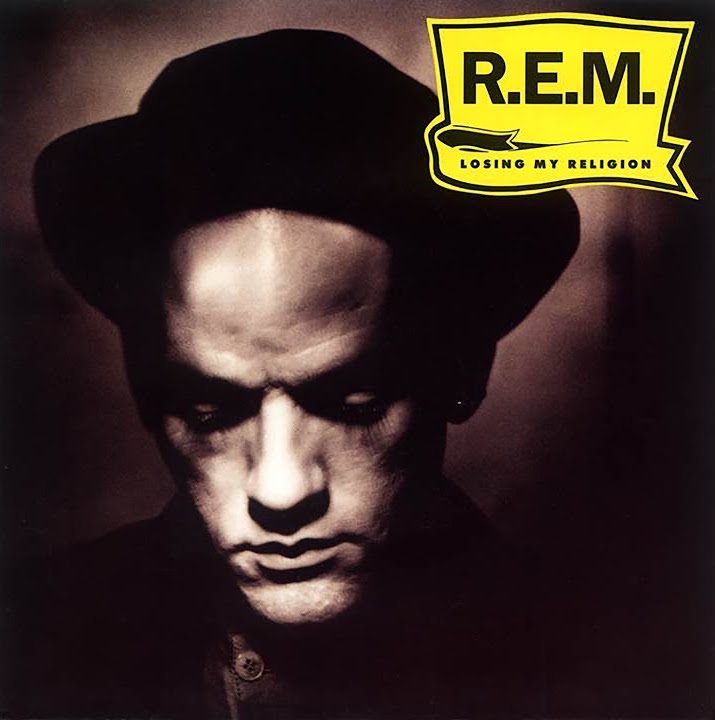
March 16, 1991
- STAYED AT #1:8 Weeks
In The Alternative Number Ones, I'm reviewing every #1 single in the history of the Billboard Modern Rock Tracks/Alternative Songs, starting with the moment that the chart launched in 1988. This column is a companion piece to The Number Ones, and it's for members only. Thank you to everyone who's helping to keep Stereogum afloat.
How did this happen? It's a question that I ask all the time when I'm writing about past pop hits, and there are usually plenty of answers: timing, trends converging, the cult of personality surrounding a particular artist reaching critical mass. It's a mysterious and vaguely magical process, but you can usually answer the question effectively enough. You can do that in this case, too. This time, though, the question feels more urgent than the answer: How did this happen?
For six weeks in spring 1990, Sinéad O'Connor's I Do Not Want What I Haven't Got was the #1 album in America. After that, the country went through more than a year without a rock LP on top. Instead, newer forms of popular music held the album charts in thrall, as MC Hammer, New Kids On The Block, Vanilla Ice, and Mariah Carey traded off the top spot. Finally, in May of 1991 -- the last week before Billboard started using SoundScan to keep track of album sales -- something funny happened. R.E.M., longtime heroes of the American college-rock quasi-underground, found themselves on top of the Billboard 200 for the first time ever.
The first week that Billboard started using SoundScan, Michael Bolton booted R.E.M. out of the #1 spot. A week later, however, Out Of Time was back on top again -- proof, if you needed it, that lots and lots of people were buying R.E.M. records. "Losing My Religion," the chiming and elliptical lead single from Out Of Time, became the sort of thing that I heard whenever my parents drove me to little league practice. This was the moment just before the fabled grunge takeover started, a time when self-serious folk-rock couldn't have been further from the American mainstream. Again, I must ask: How?
The answer is the same as always: "Losing My Religion" was the right song at the right time. R.E.M. started off pretty hot a decade earlier, and they grew steadily in the years that followed. They'd made two top-10 pop hits already, and they'd graduated to arenas when they toured behind their first major-label album, 1988's Green. R.E.M. built an audience on the road, and the music press in both America and the UK sold their legend to the world.
R.E.M. played the game while giving the impression that they were not playing the game. The band embraced some parts of the music business enthusiastically, doing tons of interviews and dropping by radio stations whenever they had product to push. But they avoided other parts -- opting not to print Michael Stipe's hard-to-discern lyrics in their liner notes, refusing to lip-sync in videos. They carved out a niche as a mainstream version of an underground band, and for a little while, they were one of the few bands that fit that definition.
And then there was "Losing My Religion." In some ways, the song was perfectly in keeping with the style that R.E.M. had already developed over six albums. In others, the track was a weirder, quieter move for a band that was already plenty weird and quiet. R.E.M. wrote "Losing My Religion" on largely-unfamiliar instruments, and Michel Stipe sang lyrics that hinted broadly at big subjects without ever lapsing into literalism. For the first time in their careers, the group made a big-budget music video for the clip, and Stipe even consented to lip-sync. The song itself was good, too. That helped.
In the world of modern rock radio stations, the one that I write about in this column, the release of Out Of Time was always going to be an event. R.E.M. were the saints of college radio. Green came out shortly after Billboard started running the Modern Rock chart, and two of its singles, "Orange Crush" and "Stand," have already been in this column. Modern rock programmers were so in love with R.E.M. that even the band's wackiest side projects got some radio play.
In 1987, for instance, all four R.E.M. members worked on Warren Zevon's Sentimental Hygiene album. During those sessions, Zevon and R.E.M. resurrected the Hindu Love Gods, a just-for-laughs group that played a few live shows in Athens. During those sessions, Zevon and the R.E.M. guys got drunk one night and recorded a bunch of covers, mostly of blues standards. In 1990, Warner Bros. released that session as the Hindu Love Gods' self-titled album, and it was mostly ignored -- except on the Modern Rock chart, where the band's cover of Prince's "Raspberry Beret" made it to #23. It wasn't a hit by any stretch, but you have to be at a certain level when even your drunken larks make the charts.
After touring behind Green, R.E.M. took a little time off. Michael Stipe toured Europe with his friends Billy Bragg and Natalie Merchant, while the other guys played on other people's records. R.E.M. kept releasing one-off singles, usually covers, for members of their fan club. That's the kind of break that most big-deal bands need to recuperate when they're finishing up their exhausting cycles. But R.E.M. reassembled relatively quickly, and the non-Stipe band members started putting together instrumental backing tracks, keeping their core chemistry intact even as they messed around with instrumentation.
During those Out Of Time sessions, drummer Billy Berry played a lot of bass, bassist Mike Mills mostly stuck to keyboard, and guitarist Peter Buck got excited about mandolin. Buck had been trying to teach himself mandolin for a while; he brought an acoustic one with him when R.E.M. toured behind Green. Buck didn't want to make a loud rock record. Instead, he got into the idea of chamber music and lush instrumentation. The band also had another musician along for those sessions: Peter Holsapple, formerly of the dB's, a cult-favorite New York power-pop group that broke up in 1987. Holsapple was a touring member of R.E.M. for years, and he played on a bunch of Out Of Time tracks, but he eventually split with the group when he got upset over how much he was being paid.
After his bandmates worked on backing tracks for a while, Michael Stipe came in and figured out lyrics, and then the four of them figured out how they wanted the album to come together. The four of them collectively decided beforehand that they wouldn't tour behind Out Of Time, which opened up the sense of what they could do in the studio. They brought in the B-52's' Kate Pierson to sing on a couple of songs and Stipe's friend KRS-One to rap on the weird album opener "Radio Song." (Apparently Stipe and KRS used to get together and talk about the environment? I have a very difficult time picturing this.) They added in strings and horns and other instruments, and they took their time recording everything with longtime producer Scott Litt before mixing the tracks at Prince's Paisley Park studios.
Peter Buck came up with the "Losing My Religion" riff one night while he was watching TV and noodling with his mandolin. He kept his tape recorder running, and when he listened back, he heard something that he could use. Mike Mills landed on a bassline that, at least to him, sounded like something from a Fleetwood Mac record. (He had to go back to those records to make sure he didn't unintentionally steal something.) Peter Holsapple played acoustic guitar. Buck later claimed that the music took maybe five minutes to write and that Michael Stipe took less than an hour with his lyrics. The band was just in that kind of flow-state, operating on momentum and expertise.
Michael Stipe has given a few different explanations for his cryptic "Losing My Religion" lyrics, but he's always been clear to point out that the song isn't about religion as such. On the song, the band certainly plays around with churchy iconography. The music has a strange and ritualistic grace, and Stipe does have that line about choosing his confessions. But Stipe has always pointed out the Southern expression "losing my religion" -- meaning blowing your top, losing touch with your politeness -- when describing the song. (I live in the South, and I've never heard anyone use the expression that way. But maybe it's a regionally specific thing, or maybe that's just a symptom of living in the South after "Losing My Religion.")
Early on, Michael Stipe said that "Losing My Religion" was about unrequited love and obsession. In 1991, he told Rolling Stone that he wished he'd sung "that's me in the kitchen" instead of "the spotlight," and he later claimed that the kitchen line was the original lyric. From that standpoint, "Losing My Religion" is about being attracted to someone but being too nervous and unsure of yourself to say anything. You're at a party by yourself, trying to fade into the background. You're just watching someone, analyzing them, overthinking every laugh and whisper, worrying that you've said too much. Been there, brother.
When R.E.M. played "Losing My Religion" on MTV Unplugged, Stipe had a different explanation for the song: "This is about you." As in: R.E.M.'s fans. That doesn't necessarily contradict the crush angle. Instead, it gives a glimpse into what it must be like to work as a popular musician. You're always keeping close watch on your own audience and wondering when people's attention will wander. In that version, the line about the spotlight fits better. The song gains another dimension when you consider that Stipe wasn't publicly out of the closet at the time. The man had to be elliptical, since he didn't want to reveal too much of himself to the world. He must've always worried about saying too much.
I wouldn't suggest that any of this was purposeful. As a lyricist, Michael Stipe has always functioned on an instinctive level, as if he had access to his subconscious in ways that most of us will never understand. Maybe Stipe didn't know what he was writing about, but the presence of some heavy meaning was evident just the same. R.E.M.'s name refers to the deepest stage of sleep, and when Stipe sings about how that was just a dream, I get the sense that the dream's boundaries are blurred. "Losing My Religion" has no traditional chorus, but Stipe chants the whole song with such strange fervor that the whole thing comes out sounding like a chorus.
When "Losing My Religion" was all over the radio, I don't think I thought too much about what it meant. I was just a kid, and the song sounded like its vagueness and mystery were purposeful. I was content with the idea that it meant something and that I wasn't necessarily supposed to know what that was. "Losing My Religion" was everywhere, and I heard it so many times that I'm having trouble finding fresh ears to write this column. That overfamiliarity keeps the song from sounding like the miracle that it might be. But there's no such thing as objective analysis, and my own impression is all I have. My impression is: It's a pretty song.
As a kid, I didn't mentally connect "Losing My Religion" with the Bob Dylan records that my parents liked, though I probably registered how they complained less often when the song came on the radio. (My parents pulled the classic parent move of letting me pick the radio stations but then whining about everything that came on.) "Losing My Religion" really does sound like a chamber piece -- mandolin, strings, organ. The strums, the handclaps, and Bill Berry's drums keep things moving, giving the track a slight but propulsive sense of shimmy. But it doesn't sound like a rock song. Michael Stipe delivers his lyrics as if they're some ancient koan. Whenever Mike Mills' harmonies come in, like on the "think I thought I saw you try" line, it sounds desperate. The track has an oddly hypnotic quality, and I honestly can't remember the first time I heard it. It just sounds like it's always existed.
Even the "Losing My Religion" video looks like some ancient object. In the past, Michael Stipe either directed R.E.M.'s videos himself or passed them off to his art-film buddies. For "Losing My Religion," the band recruited Tarsem Singh, a young Indian-born auteur who'd been selling cars while studying film in Pasadena, California. Singh was just starting his video-directing career, and he'd only made two videos, for En Vogue's big hit "Hold On" and Suzanne Vega's non-hit "Tired Of Sleeping." Sinéad O'Connor's "Nothing Compares 2 U" video opened Stipe up to the idea that you could make an artistically compelling clip that involved lip-syncing, and he wanted to do something like that. Singh had other ideas.
Singh wanted the "Losing My Religion" video to evoke a dreamlike form of Indian filmmaking, and he also tossed in allusions to Caravaggio, Andrei Tarkovsky, and Gabriel García Márquez. The clip essentially invented the dusty, yellow-tinted glow that was all over practically every alt-rock video in the '90s. Singh's video is full of artistic lighting and heavy imagery, and I did not clock how overwhelmingly and obviously queer it all was. Even with all its sexy religious icons, the image that everyone remembers from the clip is Michael Stipe dancing hard in his deeply idiosyncratic way. Apparently, Singh got to see that for himself when he went out clubbing with Stipe, and he asked Stipe to dance when he figured out that his images were too static. Later on, he wished that he hadn't shown anything except Stipe's dancing.
R.E.M. worked on Out Of Time right up until the moment that they had to turn the LP in, and it got its title because the band had to come up with something right before a label-imposed deadline. They thought they'd made something strange and potentially alienating, but they still did all the media rounds necessary to sell the album. (They worried that they were kneecapping themselves by refusing to tour, so this was the least they could do.) The band still played acoustic sets for radio stations and filmed performances for Saturday Night Live and MTV Unplugged. They were shocked when the record came out and almost instantly became their biggest album to date.
"Losing My Religion" shot straight to the top of the Modern Rock chart and stayed there for eight weeks, tying a record that R.E.M. set with "Orange Crush" two and a half years earlier. "Losing My Religion" also crossed over to the Hot 100, peaking at #4 in June. (It's still R.E.M.'s highest-charting single on the big chart.) Soon, Out Of Time became R.E.M.'s first #1 album in the UK and then in the US. The album and single were huge all over the world, and the "Losing My Religion" video stayed in heavy MTV rotation for months. That September, "Losing My Religion" swept the VMAs, winning six trophies, including Video Of The Year. R.E.M. did not perform at the ceremony. Tarsem Singh became pretty famous on the strength of that clip, and he went on to a career directing big-budget commercials and visual-feast movies like The Cell and the now-lost film The Fall.
When Out Of Time reached #1, R.E.M. appeared on the cover of Rolling Stone for the third time. In the accompanying article, there's a moment where writer Jeff Giles asks Michael Stipe for his impressions on the other artists on the album chart at the time. His answer is pretty fascinating, and it shows how out-of-place R.E.M. were among their peers in those days:
Mariah Carey I’ve never heard. C + C Music Factory -- I think the single is great. Wilson Phillips I’ve heard. I have no opinion about them. The Black Crowes -- they’re from Atlanta, right? I have no opinion about them. Enigma have two great videos, and they’re kind of floaty, right? Pretty cool. New Jack City soundtrack -- Ice-T was not bad. Chris Isaak -- it’s about time. Queensrÿche I’ve never heard. Rod Stewart we don’t need to talk about. ABC [Another Bad Creation] I think is pretty great. Whitney Houston I’ve never heard. Amy Grant I’ve never heard. Roxette I’ve never heard. The Divinyls I’ve never heard. The Doors -- see ya. Not interested. The Rolling Stones -- see ya.
(Stipe adds that he'd only just learned how to pronounce Mariah Carey's name: "You say it like pariah." Also, I am now picturing Michael Stipe doing the dance from the "Losing My Religion" video to C + C Music Factory, and the image is delightful.)
Weirdly, "Losing My Religion" was the only Out Of Time track to reach #1 on the Modern Rock chart. R.E.M. followed it up with the more obviously poppy "Shiny Happy People," which had Kate Pierson's vocals and which was so upbeat that people assumed it had to be ironic. (The band insisted that it was not.) "Shiny Happy People" got on a lot of people's nerves, but I like that song. (That song reached #3 on the Modern Rock chart and #10 on the Hot 100. It's a 7.)
Out Of Time had a few more singles, but the only other track that got much play on modern rock radio was "Texarkana." Mike Mills wrote the lyrics and sang lead on that one, and it sounded a lot like the R.E.M. of the '80s. ("Texarkana" peaked at #4. It's an 8.) Out Of Time went on to sell four million copies in the US alone, which was more than twice as much as they'd done with Green a few years earlier. Around the world, sales were closer to 20 million. The "Losing My Religion" single ultimately went double platinum. Today, it's by far R.E.M.'s most-streamed song, and the video is one of the few '90s clips that's racked up more than a billion YouTube views.
R.E.M. didn't get a lot of love in the main Grammy categories in 1992, but Out Of Time won the second award for Best Alternative Music Album, defeating records from Elvis Costello, Richard Thompson, Jesus Jones, and Nirvana. (Weird-ass category.) On the Pazz & Jop poll, critics voted Out Of Time the year's #3 album, behind Nirvana's Nevermind and Public Enemy's Apocalypse '91: The Enemy Strikes Black, and "Losing My Religion" was the #2 song and the #2 video, showing up on both lists behind "Smells Like Teen Spirit." (Sorry to spoil, but we'll get to that song soon enough.)
The success of "Losing My Religion" didn't send quite the same kind of shockwave that Nirvana brought later that same year. R.E.M. were more familiar than Nirvana, and their success was less of a surprise. "Losing My Religion" did way better than anyone expected, but R.E.M. had laid the foundation for that success over the years. It didn't happen out of nowhere, and when it came, the band was better able to handle it. Still, I don't know if we get the Nirvana phenomenon if R.E.M. weren't out there, softening the ground in the mainstream. Out Of Time was out of step with the louder sounds coming out of the American underground, but it was a natural progression for the band who, more than anyone else, defined that underground.
Because they weren't touring, R.E.M. kept recording. They were in the zone, and they knew it. Early in 1992, the band made it to #11 on the Modern Rock charts with a tribute-album cover of Leonard Cohen's "First We Take Manhattan." By that time, they'd already recorded their next album. They'll be back in this column before long.
GRADE: 8/10
BONUS BEATS: There are lots of even-quieter covers of "Losing My Religion"; Soccer Mommy came out with a good one last year. Here's Tori Amos' haunted 1995 version, which randomly popped up in John Singleton's movie Higher Learning:
(Tori Amos will eventually appear in this column.)
BONUS BONUS BEATS: "Losing My Religion" has had a surprisingly long tail in the rap world, with people from Jay-Z to Skee-Lo referencing the lyrics over the years. Here's Talib Kweli and Jay Rock rapping over a "Losing My Religion" sample on Kweli's 2012 track "The Corner":
BONUS BONUS BONUS BEATS: In 2012, Coldplay's Chris Martin played an all-star Madison Square Garden fundraiser for Hurricane Sandy relief. He brought Michael Stipe onstage, and they sang "Losing My Religion" together, at least when Martin was finished with his sweaty, self-deprecating stand-up comedy routine. Here's that performance:
(Coldplay will eventually appear in this column.)
BONUS BONUS BONUS BONUS BEATS: In the truly great 1994 film Wes Craven's New Nightmare, there's a scene where a guy is nodding off while driving and trying to keep himself awake by singing "Losing My Religion." Naturally, he falls asleep, and Freddy Krueger gets his ass. Unfortunately, I can't find that scene anywhere online, so I have to go with the song's second-best cinematic moment. In the deeply sad 2022 film Aftersun, Frankie Corio tries to get Paul Mescal, her young and deeply depressed father, to sing karaoke with her. He won't do it, so she gets up and sings "Losing My Religion" on her own. I'm not sure I can watch that scene again, but if you can, here it is:
THE NUMBER TWOS: Divinyls' one big hit, the deeply horny shimmy-sigh "I Touch Myself," peaked at #2 behind "Losing My Religion." It's an 8.
Morrissey's deeply frustrated shimmy-sigh "Our Frank" also peaked at #2 behind "Losing My Religion." It's another 8.


