

Skip to Content
Columns

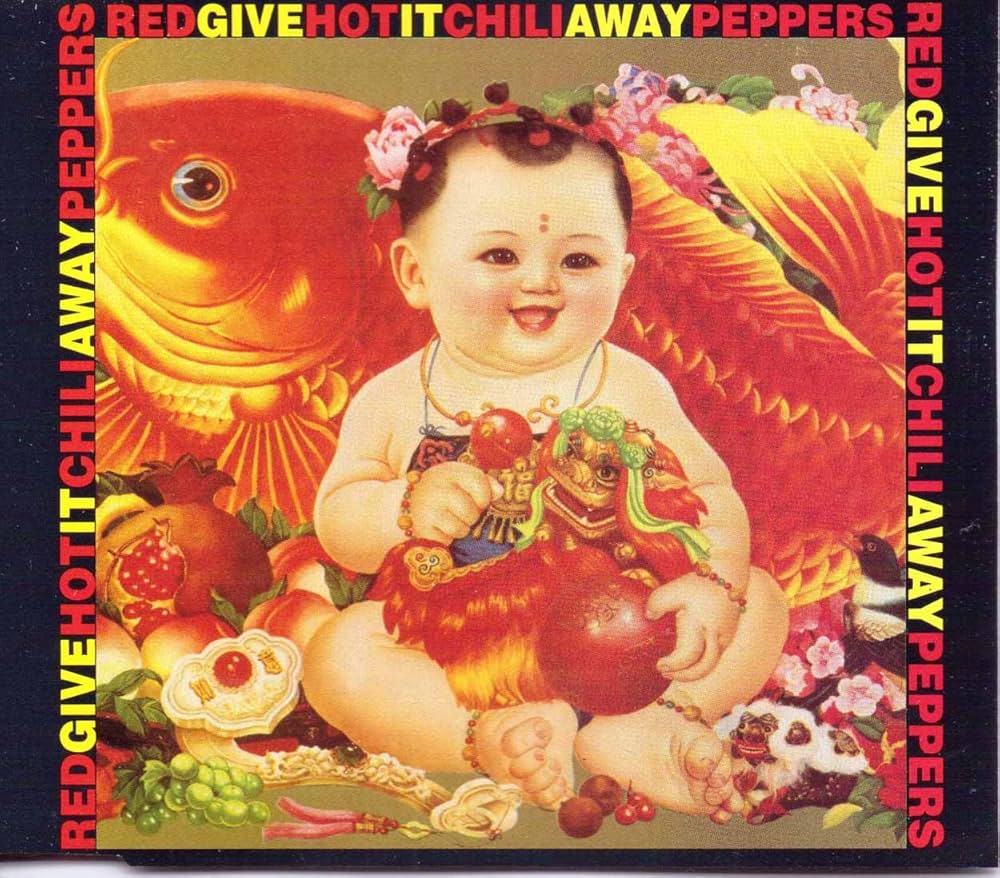
The Alternative Number Ones: Red Hot Chili Peppers’ “Give It Away”

October 26, 1991

  • STAYED AT #1:2 Weeks

In The Alternative Number Ones, I'm reviewing every #1 single in the history of the Billboard Modern Rock Tracks/Alternative Songs, starting with the moment that the chart launched in 1988. This column is a companion piece to The Number Ones, and it's for members only. Thank you to everyone who's helping to keep Stereogum afloat.

They're so fucking stupid.

Sorry. That's a bad way to start. In plenty of important ways, the Red Hot Chili Peppers are not so fucking stupid. They are, in fact, quite intelligent. The Chili Peppers found a way to go from party-rocking LA goons to super-rich radio-rock stalwarts. They have more #1 hits than any other artist in the history of the Billboard Modern Rock chart, and those hits span virtually every era of the chart's history. That means the Chili Peppers will end up being, in some ways, the main characters of this column, god help me.

With the notable exception of lead gibberish-bellower Anthony Kiedis, the various Chili Peppers are all out-of-control great musicians. They've got terrible songs, and they've also got bangers. Over the past few decades, Flea has spent much of his non-Chili Pepper time amassing a pretty great character-actor filmography and playing in brainiac art-rock bands like the Mars Volta and Atoms For Peace. The Chili Peppers are about as successful as a rock band can possibly be. They're still touring stadiums to this very day. So: Not stupid. But also: Stupid. Really fucking stupid. The stupidest.

Members of rock 'n' roll bands are supposed to be horny buffoons. In many ways, that's a central part of the job description, and the Red Hot Chili Peppers have always understood this part of the assignment better than most. Stupidity isn't necessarily incompatible with great rock music, and plenty of moments in Chili Pepper history illustrate that point beautifully. But it's still pretty striking when this column swings abruptly from Robyn Hitchcock to the Red Hot Chili Peppers. It's a clear sign that the circa-1990 style of college-rock gentility was on its way out. Something bigger, brasher, and stupider was about to come in and replace it.

The Chili Peppers released Blood Sugar Sex Magik, their breakout album, a couple of weeks after my 12th birthday, which means I was the perfect age. These motherfuckers were pitched directly at me. Shirtless, energetic, stupid metal guys who rapped? And talked about having sex all the time? I was in. When you're 12 years old and you're so fucking stupid, there are few things more fun than jumping around and headbanging while yelling about "giveitaway giveitaway giveitaway nah." A few decades later, I have a very different reaction to the Chili Peppers' entire thing. But when I access that fucking-stupid part of my brain, I can remember at least a bit of what I once loved about "Give It Away."

Lawng lawng lawng lawng time ago, before the wind and before the snow, two freaks of nature met up at LA's Fairfax High School and became fast friends. Anthony Kiedis came from Grand Rapids, Michigan. At 12, he moved in with his father, a bit-part actor and drug dealer who lived in LA and called himself Blackie Dammett. Young Kiedis started going out for child-actor roles, and he played Sylvester Stallone's son in the widely forgotten 1978 movie F.I.S.T. Kiedis also went out partying with his father at startlingly young ages, smoking weed and sniffing blow and fucking one of his dad's girlfriends, with his father's blessing, when he was 12. (That anecdote is in Kiedis' 2004 memoir Scar Tissue, which also includes many, many stories about Kiedis having sex with teenage girls as a grown man. It's pretty upsetting! These guys have a sketchy-ass history!)

For a while, Kiedis went to an upscale LA high school by lying and saying that he lived with Sonny Bono, a friend of his dad. (Kiedis says Bono was his godfather, though I don't think that was formalized at any religious ceremony.) When the school authorities found out, he had to go to Fairfax, which is where he met an excitable young man named Michael Balzary. Balzary, known to the world as Flea, was born in Australia, and he moved back and forth between Australia and the US for much of his childhood, settling in LA after his mother married a jazz musician. Together, Kiedis and Flea got big into the early-'80s LA punk scene.

Kiedis and Flea were friends with two other Fairfax kids, guitarist Hillel Slovak and drummer Jack Irons, who were in a band called Anthym together. (Later, Anthym changed their name to What Is This? and released one unsuccessful major-label album in 1985.) Flea was a jazz trumpet player, but Slovak taught him how to play bass. For a few months in the early '80s, Flea played for the notorious California hardcore band Fear, which is a hell of a thing to have on your resume. Flea and Kiedis were regulars at Anthym shows, and Kiedis took to giving them over-the-top introductions whenever they'd come onstage. Kiedis couldn't really sing, but an early Grandmaster Flash & The Furious Five show convinced him that he could maybe rap and that he should maybe try doing it in a band.

Kiedis, Flea, Hillel Slovak, and Jack Irons got together and started a goof-around project called Tony Flow And The Miraculously Majestic Masters Of Mayhem, and they played their first show opening for a friend's band in December 1982. That show was originally supposed to be a one-off. They'd only written one song, the not-very-good "Out In LA." But the show went well, so the band stayed together and changed their name to the marginally-less-stupid Red Hot Chili Peppers. They played more LA shows and developed a rep as a fun, physical live band -- balletic horny weirdos who would sometimes get naked onstage, with socks over their dicks, and who put lots of antsy funk and rap elements into what would otherwise be pretty unremarkable punk rock. They got a manager, and that manager somehow got them signed to EMI Records.

Just as the Chili Peppers signed, Hillel Slovak and Jack Irons left the band, since What Is This?, their other band, landed a major-label deal of their own. This would become a regular problem for the Chili Peppers, a group that's never had a truly stable lineup in all the time that they've been together. When they made their self-titled 1984 debut, the Chili Peppers recruited a couple of ringers. Drummer Cliff Martinez had played with people like Captain Beefheart, the Dickies, and the Weirdos. These days, he composes really cool, synthy scores for movies like Drive. Other early Chili Peppers lineups included people like Parliament-Funkadelic guitarist DeWayne "Blackbyrd" McKnight and Dead Kennedys drummer DH Peligro.

For their first album, the Chili Peppers got Gang Of Four guitarist Andy Gill, an important early influence, to produce. (Gang Of Four's only Modern Rock hit, 1991's "Don't Fix What Ain't Broke," peaked at #14.) Gill didn't like working with the Chili Peppers, and they didn't like the album that they made with him. None of the album tracks got much airplay, even on college radio, and critics weren't too impressed. Instead, the band started finding a fanbase by taking their apparently-outrageous live show on the road.

When What Is This? broke up, Hillel Slovak returned to the Chili Peppers. (Jack Irons also came back later on.) Funk overlord George Clinton produced the Chili Peppers' 1985 sophomore album Freaky Styley, and they liked that one better, but hits remained elusive. The Chili Peppers made cameos in a few mid-'80s movies -- Thrashin', Tough Guys, Less Than Zero -- where their antic, cartoony energy made a certain kind of sense. They also found peers on the LA scene, where a few other bands like Fishbone and Jane's Addiction were messing around with similarly fired-up genre combinations. Even while steadily pumping different drugs into their bodies, they maintained a hectic touring schedule. They were picking up momentum, but that momentum wasn't taking them anywhere near the mainstream yet.

The Chili Peppers would open big LA shows for groups like Oingo Boingo and Run-DMC, and they tried to get Run-DMC collaborator Rick Rubin to produce their 1987 album The Uplift Mofo Party Plan. Rubin passed, since the band's drugged-out vibes were too rancid, and they recorded it with former Public Image Ltd. member Keith Levene instead. (Levene was long-gone from PiL when they appeared in a previous column.) Drugs were already taking their toll on the band during the recording sessions, and shortly after the tour for the album wrapped up in 1988, Hillel Slovak died of a heroin overdose. He was 26. Jack Irons, despondent over Slovak's death, quit the band. (He later spent some time in Pearl Jam, a group that'll appear in this column.) Kiedis and Flea, battling their own drug issues, kept the band going, and they found two new members.

Chad Smith, a big Midwesterner who struck Anthony Kiedis as a hair-metal guy, stepped in as the Chili Peppers' new drummer, and he's been in the band ever since. Their new guitarist was John Frusciante, a willowy teenage genius who was a huge fan of the band. This version of the Chili Peppers recorded 1989's Mother's Milk, which became their biggest album to that point. That album's single "Knock Me Down" was the Chili Peppers' first proper hit on the brand-new Modern Rock chart, where it peaked at #6. (It's a 6.)

Mother's Milk also had the Chili Peppers' dizzily great cover of Stevie Wonder's "Higher Ground," which peaked at #11 and which is probably my favorite RHCP song ever. (It's probably not a coincidence that my favorite RHCP song is a cover, but they still did fun and creative things with it.) Mother's Milk went gold, and it took the band to bigger and bigger stages. Flea played bass on Young MC's 1989 album Stone Cold Rhymin' and popped up in the video for his massive hit "Bust A Move." Flea was a bit of a celebrity by then. He'd started acting in 1983, playing a background role in The Outsiders and a bigger one in Penelope Spheeris' punk movie Suburbia. By 1991, he'd been in both Back To The Future sequels and My Own Private Idaho, while Anthony Kiedis was pretty good as a surf-gang hooligan in the summer 1991 masterpiece Point Break.

Tatted-up, shirtless quasi-punk goobers were about to have their zeitgeist moment. The Red Hot Chili Peppers were never part of the Sunset Strip glam-metal scene, but they had a similar swagger, and they treated women in similar ways. Their skate-rat aesthetic was never too arty for mainstream consumption, and as rap became a bigger commercial force, the rock bands who played around with rap were getting bigger and bigger, too. I was all about that shit. As a little kid who loved both rap and metal, I loved all the bands who were trying to combine them, however messily. Faith No More, Primus, Anthrax, Infectious Grooves, and any other band with a singer who had whiteboy dreads and flipped-up baseball caps seemed so fucking cool to me. This stuff was a lot more urgent than the ponderous British bands that were still in heavy alternative-radio rotation. They were stupid in ways that I liked. I was very ready for Blood Sugar Sex Magik.

The Red Hot Chili Peppers recorded Blood Sugar Sex Magik with Rick Rubin, the same producer who'd rejected them a few years earlier. It was the first time that they had the same lineup for two consecutive albums. The Chili Peppers' EMI deal was up after Mother's Milk, and they became the focus of a major-label bidding war before signing to Warner Bros. Finally, they had a budget. Rubin was fresh off of working with Slayer, Danzig, and the Geto Boys, and he suggested that they record at a supposedly haunted Laurel Canyon mansion that had once been Harry Houdini's house. The band members moved in while recording, and they wrote songs by jamming together. The result is a long, sloppy record, but it's the first one that really captures the band's half-naked goober energy.

These days, Rick Rubin goes viral about once a year by insisting that he knows nothing about technical musical production and that he achieves results through pure vibes. I don't know how true that is, but his little nudges and psychological games definitely brought out the best in the Chili Peppers. On Blood Sugar Sex Magik, they bring springy antics and unexpected washes of melody, mostly courtesy of John Frusciante's lovely, oblique guitar lines. The album has a few genuinely affecting power ballads, and those are the songs that really broke the Chili Peppers on a mainstream level. Before they could pull heartstrings, though, the band needed to grab the world's attention. They did that with "Give It Away."

In Scar Tissue, Anthony Kiedis writes that he got the idea for "Give It Away" from a conversation with an ex-girlfriend, the German cabaret-punk great Nina Hagen. Kiedis was over at Hagen's house, and he complimented one of her jackets. She told him to take it. Kiedis was surprised, so she explained herself: "If you have a closet full of clothes and you try to keep them all, your life will get very small. But if you have a full closet and someone sees something they like, if you give it to them, the world is a better place." Kiedis says that's why he started repeating the phrase "give it away" during a jam session and that this altruistic spirit went into all of his lyrics.

Can you hear any of this anti-materialist philosophy at work in "Give It Away"? No! Of course not! It's too stupid! Kiedis literally says the phrase "give it away" 68 times over the course of the song, so maybe that repetition had a subliminal effect and opened me up to the idea that property is theft. And maybe some people took Kiedis to heart when he said that greedy little people in a sea of distress keep their more to receive their less. But "Give It Away," like so many Chili Peppers songs, is basically pure gibberish. Even when Kiedis isn't scatting nonsense syllables -- something that he does all the time -- his words still sound like scatting. "Give It Away" doesn't resonate as a grand statement. Instead, it resonates as the one where Kiedis is like, "You do a little dancin' then you drinkee little wah-tuh."

Anthony Kiedis says that some of his "Give It Away" lyrics are written for the young movie star River Phoenix, a friend of the band: "There's a river, born to be a giver/ Keep you warm won't let you shiver/ His heart is a never gonna wither/ Come on, everybody, time to deliver." That's a touching tribute, especially coming after the bit about "drinkin' mah juice, young love, chug-a-lug me." Phoenix died of a heroin overdose in 1993, while partying with a couple of Chili Peppers.

In any case, "Give It Away" is gibberish, but it's fun gibberish. Kiedis' quasi-rap jabber doesn't sound too informed by any actual rap music from after the Grandmaster Flash days, but there's personality in his yammer. I always liked the way he grunts on the intro and the way he delivers the title phrase as a percussive exclamation. Around Kiedis, the music just bounces. Until today, I thought Flea was slapping at his bass to make it sound like a jaw harp, but it turns out that a friend of the band actually did play jaw harp on the track. Nevertheless, the band is fully locked-in, doing a relatively tight and structured version of their anarchic party-funk. John Frusciante really comes through in the cut, playing a brief but way-out guitar solo that sounds like it's backwards and then ramping it up to the Hendrixian riffing on the headbanging conclusion.

Two songs taught me about the idea that a song should rock harder and harder as it keeps going and then you can headbang at the end: "Give It Away" and "Bohemian Rhapsody." This was a valuable lesson. (The Chili Peppers were on the Wayne's World soundtrack, too.) "Give It Away" is a goofy, ridiculous song, and its chorus is just three words repeated over and over. When I was 12, it was a rush of uncorked energy. Now, it's just a pretty fun song that gets annoying if I hear it too many times. But a pretty fun song is still a pretty fun song.

The Chili Peppers got very fortunate when they filmed the "Give It Away" video with French fashion photographer Stéphane Sednaoui. Sednaoui filmed them in a desert, covered in glittery gold paint and jumping around like satyrs. In glistening black-and-white, they looked less like humans, more like spirits of chaos. John Frusciante swirls a streamer around, and it becomes a trippy effect when played backwards. Anthony Kiedis somehow does rap hands with his entire body -- like, even his eyebrows do rap hands. Kiedis also shows off his be-thonged taint for the camera like he was Lorde on the Solar Power album cover. Everyone has interesting haircuts. It made for an extremely striking visual that plunged the band right into the MTV Buzz Bin.

"Give It Away" became the Chili Peppers' first crossover hit on the Hot 100, where it peaked at #73. Blood Sugar Sex Magik famously came out on the same day as Nirvana's Nevermind. Crucially, it also came out just as Jane's Addiction, an RHCP-connected band who have already been in this column twice, were breaking up. That left a vacuum, and the Chili Peppers stepped right in. The Chili Peppers didn't have too much musically in common with the grunge bands who were about to take off, but they seemed somehow spiritually aligned, maybe because of their shared background in the punk underground. In any case, when the Chili Peppers went out on tour behind Blood Sugar, they took Nirvana and Pearl Jam along as openers. The Smashing Pumpkins were supposed to be on the tour, too, but they dropped off when Nirvana joined, since Billy Corgan didn't want to play shows with the guy who was dating his ex Courtney Love. All of these people will end up playing big roles in this column.

I don't think I bought Blood Sugar Sex Magik before Nevermind, but I definitely got ahold of both records around the same time, and I played the hell out of both. Revisiting it for the first time in forever, Blood Sugar does have some juice, but I wouldn't be mad if it was half as long as it is. The album's best moments are the ballads, and those are the songs that truly took off for the band. After "Give It Away," the Chili Peppers made it to #15 with the way-hornier funk-rock workout "Suck My Kiss," but then they followed it with the bittersweet, elegiac ballad "Under The Bridge." That song went supernova.

Looking back now, it's so weird that I spent my preteen years jamming out to love songs about heroin. But I guess we still have love songs to opiates all over the radio today, so maybe it's not that weird. Maybe it's just a constant thing. "Under The Bridge" actually wasn't that big of a hit on alt-rock radio; it peaked at #6. (It's an 8.) But "Under The Bridge" was a pop smash, peaking at #2 on the Hot 100 and on the Mainstream Rock chart. Gus Van Sant directed the video, which I saw a million times even though I didn't have cable as a kid. (I would always force my friends to put on MTV whenever I was over at their houses.)

Ultimately, Blood Sugar Sex Magik sold 7 million copies in the US alone. It was one of 1992's best-selling albums, and the Chili Peppers' former openers Nirvana and Pearl Jam were also high up on that list. The Chili Peppers weren't just outselling other alternative rock bands. They were outselling everyone this side of Garth Brooks and Mariah Carey. Culture was going through a sudden, meteoric shift, and the Chili Peppers were beneficiaries. They'd been around for years, gradually laying groundwork, which probably put them in a better position to handle the sudden spike in interest than contemporaries like Nirvana and Pearl Jam. But at least a couple of them also had serious heroin addictions, which didn't help.

John Frusciante, who was just 21 when Blood Sugar Sex Magik came out and who didn't much like the idea of being famous, left the Chili Peppers suddenly while the album was taking off. It was his first time parting ways with the band, and it wouldn't be his last. The Chili Peppers kept going with fill-in guitarist Arik Marshall, and they headlined the second edition of the Lollapalooza tour, stepping into the Jane's Addiction role and topping a bill that included Pearl Jam, Soundgarden, Ice Cube, Ministry, the Jesus And Mary Chain, and Lush. At the 1992 VMAs, Pearl Jam and the Chili Peppers went back to back -- the Chili Peppers performed "Give It Away" while dressed like clowns and surrounded by fellow partiers. At the 1993 Grammys, they played "Give It Away" alongside their former producer George Clinton and his resurrected P-Funk crew. That night, "Give It Away" won the Chili Peppers their first Grammy. They took home Best Hard Rock Performance -- defeating Nirvana, Pearl Jam, Faith No More, Alice In Chains, and Guns N' Roses.

The Red Hot Chili Peppers were newly minted mainstream rock stars, but they remained in Modern Rock radio rotation. "Breaking The Girl," the second power-ballad single from Blood Sugar Sex Magik, only made it to #19, which is a bit of a surprise, since I remember hearing that song all the time. In 1992, EMI cashed in on the band's newfound fame by releasing What Hits?!, a compilation of their earlier tracks. It went platinum, and I was one of the million suckers who bought it. To promote that record, EMI pushed the Uplift Mofo Party Plan track "Behind The Sun" to modern rock radio, and it peaked at #7. (It's a 6.)

The Red Hot Chili Peppers were now enormously successful, but they still had plenty of problems -- friends dying, drug problems that never fully disappeared, a new guitarist who didn't fit with the group. Ultimately, none of that stuff slowed them down. They were just getting started. We'll see them in this column many more times, so maybe they're not that fucking stupid after all.

GRADE: 7/10

BONUS BEATS: Lots of rappers have referenced "Give It Away" over the years, but the late Pimp C may have been the first. In 1992, Pimp wore a Nirvana shirt in UGK's "Use Me Up" video, and he also quoted "Give It Away" on his remix of UGK's Menace II Society soundtrack classic "Pocket Full Of Stones." I would love to know more about Pimp's relationship to alt-rock. Here's that "Pocket Full Of Stones" remix:

BONUS BONUS BEATS: Here's the Red Hot Chili Peppers discussing their "Give It Away" lyrics on a beyond-classic all-star 1993 episode of The Simpsons:

BONUS BONUS BONUS BEATS: Here's "Weird Al" Yankovic's video for his Flintstones-themed 1993 "Give It Away" parody "Bedrock Anthem":

BONUS BONUS BONUS BONUS BEATS: Here's noted '90s rap star Shaquille O'Neal quoting "Give It Away" on his "Shoot Pass Slam," possibly the most 1993 song that could ever exist:

BONUS BONUS BONUS BONUS BONUS BEATS: On his 2001 single "Break Ya Neck," Busta Rhymes quoted "Give It Away" heavily enough that he had to give a songwriting credit to the Chili Peppers. Here's the video:

GET THE STEREOGUM DIGEST

The week's most important music stories and least important music memes.