
November 23, 1991
- STAYED AT #1:1 Week
In The Alternative Number Ones, I'm reviewing every #1 single in the history of the Billboard Modern Rock Tracks/Alternative Songs, starting with the moment that the chart launched in 1988. This column is a companion piece to The Number Ones, and it's for members only. Thank you to everyone who's helping to keep Stereogum afloat.
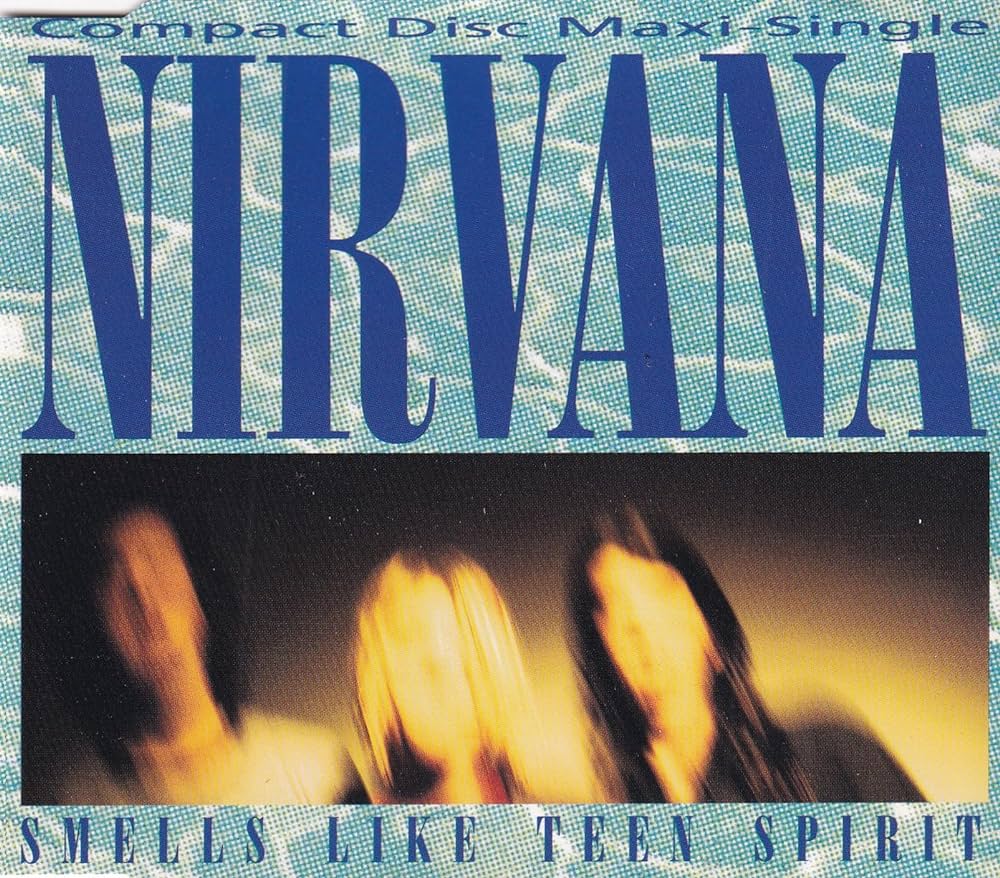
Nirvana played "Smells Like Teen Spirit" live for the first time in April 1991 at a Seattle venue called OK Hotel. The very same night, Alice In Chains were across the street, taping their appearance in the Cameron Crowe film Singles. (Alice In Chains will appear in this column way down the line.) Nirvana released the "Teen Spirit" single a few months later. One day after the single dropped, Alice In Chains' debut album Facelift went gold.
Alice In Chains started off as a pretty normal late-'80s metal band -- they were Alice N' Chains for at least a little while -- before falling in with the scuzzier, noisier bands on the Seattle music scene. Their first big tour behind Facelift was opening for a Megadeth/Slayer/Anthrax arena run, and their first album went gold without any help from modern rock radio. (Mainstream rock was a different story.) Around the same time, tons of other Seattle bands were signing major-label deals, and most of them were treated as metal bands, too.
Nirvana weren't really from Seattle, and they weren't the first band from the extended Seattle music universe to make some noise in the mainstream. By the time Nirvana released Nevermind, Soundgarden and the Screaming Trees had already released their own major-label debuts. Apple, the sole Mother Love Bone album, came out on Mercury in 1990, and the self-titled Temple Of The Dog record, a tribute to the late Mother Love Bone leader Andrew Wood, arrived in April 1991. Pearl Jam's Ten came out almost a month before Nevermind. Things were happening.
Seattle's growly, sludgy, homegrown take on American punk rock was an underground movement, but it wasn't destined to remain an underground movement for long. The first true document of what we call grunge was Deep Six, an indie-label compilation that came out in April 1986. That record featured six bands from the same region, all of whom brought some variation on that deranged fuzz-riff gargle: Green River, Melvins, Malfunkshun, Skin Yard, Soundgarden, the U-Men. Some of the people in those bands went on to do very big things, and a few of them will appear in this column. But Deep Six was a fully underground release that sold a few thousand copies at first, and the stress over the release broke up the marriage of the couple who decided to put it out in the first place.
That means that it took five years for grunge to go from localized DIY phenomenon to noisy, buzzy mainstream product. In the grand scheme of things, that is not a very long time at all. Seattle's version of heavy music had plenty of the things that people loved about Sunset Strip glam metal -- big riffs, bigger personalities, hedonism, abandon, foxy frontmen -- but also connected to something ugly and angry and disconsolate that even the best glam-metal bands could barely touch. The major labels were smart to sign all those Seattle bands. Looking back now, it seems like a sure bet that at least one of those bands would pop. Hell, Alice In Chains were already popping.
Still, for an underground movement to fully connect to something bigger, the right song needs to come along at the right time. "Smells Like Teen Spirit" was that song. People who were at that OK Hotel show tell stories about hearing "Teen Spirit" for the first time and immediately knowing that they were experiencing something colossal. Soon after the single dropped, "Teen Spirit" went into rotation on modern rock radio at a time when those stations were dominated by British stuff, specifically '80s new wave veterans and floppy-haired young rave-rockers. "Teen Spirit" didn't sound much like that stuff, but it still elbowed right past and took over -- at least for a week.
"Smells Like Teen Spirit" was not the creation of alternative rock radio, and it didn't instantly transform the landscape. For a couple of years after "Teen Spirit" went #1, those British bands continued to dominate. "Teen Spirit" became a cultural phenomenon for reasons that were bigger than modern rock radio. It went through MTV and mainstream rock radio all the way to the pop charts, where it went top-ten. (I've already written about "Teen Spirit" at length in a Bonus Tracks column, back when Stereogum was raising money a few years ago.)
Nevertheless, the success of "Smells Like Teen Spirit" stands as a turning point -- perhaps the turning point -- in the history of alt-rock radio. After Nirvana blew up, major labels rushed to sign more bands that could maybe, possibly bring a little bit of that Nirvana magic dust with them. Rock critics, often slow to recognize an important popular phenomenon in the making, tripped over themselves to anoint Nirvana as new generational spokespeople. For years, the music press covered the ins and outs of the Seattle music scene like a soap opera, and the community of massively popular bands was small and interlinked enough that you could follow it like that. Across the country, more and more radio stations adapted the modern rock format. A cultural sea change was afoot. It happened for reasons a lot bigger than one song, but that one song was big enough to stand in for all of them.
You probably already know all the stories behind Nirvana and "Smells Like Teen Spirit." They've been written into canonical rock history, to the point where it feels like hopeless cliché to discuss this stuff. There's nothing new to say, and the excitement behind the song is practically inaccessible for those of us who grew up hearing it all the damn time. Nevertheless, you paid your membership fee, and this is one of the foundational stories, so let's get into it.
Have you ever been to Aberdeen, Washington? I had to make the Seattle-to-Portland drive last year, in the middle of the night, for reasons too dumb to get into here. (I booked a flight into the wrong city. Whatever. Shut up. Could've happened to anyone.) Aberdeen, I learned, isn't the far-flung Seattle suburb that I'd always imagined. Instead, it's about halfway between Seattle and Portland, part of a vast stretch of heavily wooded nowhere. I stopped at Aberdeen for gas, a phone charger, and some SweeTarts at like three in the morning, and that gas station was scary. The overnight clerk looked a lot like Earth frontman and Aberdeen native Dylan Carlson -- a cool look for a drone-metal pioneer, but not the kind of face you want to see behind the counter when you're in prime werewolf hours. The vibes were palpably ominous. It was not a place where I wanted to spend more time.
Aberdeen is the birthplace of one Kurt Cobain, the son of a waitress and a mechanic. Cobain was a sensitive kid who loved drawing and rock 'n' roll and who was majorly affected by the dissolution of his parents' marriage. (The great podcaster Yasi Salek has a theory about how grunge itself was the product of a whole generation of American men reeling from their parents' divorces, and a case could definitely be made.) Cobain grew up around guns and drugs and poverty. He briefly moved in with a friend's extremely Christian family and became extremely Christian himself before renouncing all that. He saw one of his mother's boyfriends abusing her. There are lots of apocryphal stories about young Cobain, some of them spread by Cobain himself, and a few of them ring pretty true to me.
Kurt Cobain felt out-of-place as a high school kid, and he eventually found some others who felt as out-of-place as he did. Cobain had the good fortune to go to the same high school as Buzz Osborne, Melvins leader and genuine American punk rock original. The Melvins were an Aberdeen band, but they were Seattle enough to make it onto the Deep Six compilation, and they basically invented sludge metal when they were still kids. Cobain got to know Osborne in school, and he learned about punk from going to Melvins shows and hanging out with those guys. Their influence is incalculable.
Kurt Cobain dropped out of high school just before graduation, and he eventually formed a band called Fecal Matter, which was generally regarded as a kind of Melvins offshoot. (Melvins drummer Dale Crover played bass.) If Cobain had kept the Fecal Matter name, I probably wouldn't be writing about him in this column. He eventually convinced friend and fellow Melvins devotee Krist Novoselic to join up with him, and that band went through a lot of names before becoming Nirvana. The visual dynamic of Cobain and Novoselic -- little scrawny leader, big tall sidekick -- eventually became part of the Nirvana mythos. (Novoselic is 6'7" -- not as tall as me, but tall enough that he makes the cutoff for Actually Tall.)
Nirvana went through lots of different drummers before landing on a guy named Chad Channing. Meanwhile, both Kurt Cobain and Krist Novoselic moved closer to Seattle -- Novoselic to Tacoma, Cobain to Olympia. In Olympia, Cobain fell in with a crew of idealistic, politically motivated punks, and he started dating Bikini Kill's Tobi Vail. In the guttural roar of Nirvana's early music, you can hear stuff like the melodic twee sensibility of Olympia bands like Beat Happening just starting to seep in, as well as the hooky jangle of the classic power-pop that Cobain never stopped loving.
Nirvana recorded an early demo tape, hoping to get the attention of Sub Pop Records, the Seattle label that existed at the center of that scene. Sub Pop started off as a side hustle from two guys who worked at the Muzak company, and they had a knack for getting attention through fake-corporate business-plan graphics about how they were actually idiots who couldn't get their money straight. The Sub Pop guys took some convincing, but they were impressed enough to release Nirvana's 1988 debut single -- a cover of "Love Buzz," a track that Dutch hitmakers Shocking Blue originally released in 1969. The song is heavy and raw, but it's also catchy, and you don't pick a cover like that unless you've got some serious record-collector instincts.
"Love Buzz" made enough noise that Nirvana got to record a debut album for Sub Pop, as long as they paid for it themselves. For a minute, Nirvana added a second guitarist named Jason Everman, and he's the one who put up the $600 to record Bleach, even though he didn't play on that record. Almost immediately, Everman got kicked out of Nirvana, joined Soundgarden, and then got kicked out of that band -- again, without recording anything. Then he joined the Army and served in the Special Forces. Crazy-ass life.
Nirvana recorded Bleach with Skin Yard's Jack Endino producing, and it's a raw, ugly, grimy record with a few flashes of transcendent melody. At times, it's intentionally off-putting, as when Kurt Cobain yells repeatedly about "daddy's little girl ain't a girl no more." At times, it positively glows with pop potential. (In a different form, a Bleach song will eventually appear in this column.) The album caught the attention of hype-happy British critics like Everett True, and it got Nirvana onto the cover of Melody Maker. The record sold tens of thousands of copies -- a huge success on an underground level. Nirvana wanted more. Eventually, Krist Novoselic drunkenly and angrily dropped in on one of the Sub Pop guys, demanding a proper contract in writing. That contract, along with Bleach sales, is the primary reason that Sub Pop continues to exist today.
Eventually, Nirvana kicked out Chad Channing, and they went through a bunch more drummers. The Melvins' Dale Crover returned to the band for a minute, and Mudhoney's Dan Peters played on the 1990 single "Sliver." Then they found Dave Grohl. As a teenager in suburban DC, Grohl joined his favorite band, the vaguely reggae-influenced hardcore crew Scream. (Scream have been intermittently active over the decades, and they're playing my local DIY hardcore spot next month.) Buzz Osborne took Kurt Cobain and Krist Novoselic to a Scream show in 1990, when the band was just about to break up, and he connected them with Grohl when they were looking for a new drummer. They loved Grohl, since he had a hard-hitting style that reminded them of Dale Crover. Grohl, who'd just turned 21, joined Nirvana in 1990, when they were already working on demos for their second album.
Kurt Cobain didn't like the thudding production of Bleach, and he wanted to find something sharper and more accessible. The band worked on those demos in Wisconsin with Butch Vig, a producer who'd worked with Midwestern noise-rock bands like Killdozer and Laughing Hyenas. Thanks in part to a recommendation from Sonic Youth's Kim Gordon, Nirvana signed with DGC Records, which bought them out of their Sub Pop contract. Nirvana were now major-label artists. When they made their DGC debut Nevermind, they demanded to keep working with Butch Vig. (Vig's band Garbage will eventually appear in this column.)
When Nirvana played "Smells Like Teen Spirit" at the OK Hotel that night in April 1991, they were trying to pile up enough money to drive town to Los Angeles and begin work on Nevermind at the storied Sound City studios. Kurt Cobain later told Rolling Stone, "I was trying to write the ultimate pop song. I was basically trying to rip off the Pixies." To him, those two sentences were not a contradiction. The Pixies were never exactly megastars, but they were a whole lot more ultimately pop than most of the stuff that would've been in Nirvana's orbit at the time. (The Pixies' highest-charting Modern Rock single, 1989's "Here Comes Your Man," peaked at #3. It's a 9.)
I don't think the Pixies invented the quiet-loud-quiet dynamic that Kurt Cobain professed to ripping off, but that stuff has been around as long as I've been conscious of rock-music dynamics, and people do love to credit them. In any case, "Teen Spirit" was so catchy that Cobain's Nirvana bandmates dismissed the song as cheesy, so he forced them to keep practicing it over and over for an hour and a half. In the process, the song took shape, and it ultimately became the only Nirvana track where all three members got songwriting credits.
You know the story of the title, right? One night in Olympia, Kurt Cobain and Bikini Kill's Kathleen Hanna were out defacing a local teen-pregnancy center that really existed to tell teenage girls not to get abortions. They sprayed graffiti on the center's walls, then got drunk and went back to Cobain's apartment. At some point, Hanna wrote "Kurt smells like Teen Spirit" on Cobain's wall in Sharpie. (Cobain was still dating Tobi Vail, who wore Teen Spirit deodorant.) Months later, Cobain asked Hanna if he could use that line as a lyric. He actually never did, but it became the title of the song. When Nirvana took off, sales of Teen Spirit deodorant went through the roof.
The "Smells Like Teen Spirit" single came out on my 12th birthday, so I wouldn't have known that it was about to become a generational anthem when I first heard it. Plenty of people figured it out quickly, though. Nobody can reverse-engineer what happened with "Teen Spirit." You can hear those song lyrics as a stirring, wounded howl of alienation, or you can hear them as this guy yelling whatever comes into his head. Both descriptions fit, and that's the magic. On "Teen Spirit," Cobain sounds ferociously passionate about being mired in nothingness. His voice is scratchy and weird and pained, like Black Francis from the Pixies, but it hints at bigger things, even when those bigger things don't necessarily have anything to do with a mosquito or his libido. There are so many ways to read "here we are now, entertain us," but the the one that resonates the most is that it's what the Nirvana guys would say when they showed up at a party. As in: We're the most uncomfortable people here, and we're going to force you to reckon with our existence anyway.
It's a sick song. Obviously. You don't need me to tell you that "Smells Like Teen Spirit" kicks ass. It's a whole lot bigger and brighter than anything on Bleach. It gleams, thanks in part to the Andy Wallace mixing job that the band later claimed to detest. It also moves. How about those motherfucking drums? The riff comes in, and it's great and catchy, but then you're standing out in the road and four different tractor-trailers smack into you in quick, rhythmic succession. Bleach is a very good scuzz-rock album, but Nirvana leveled up so hard when they added Dave Grohl to the mix. (Thanks to various morbid twists of fate, we'll see a lot more Grohl than Cobain in this column over the years, but let's not think about that now.)
The quiet-to-loud stuff on "Smells Like Teen Spirit" works so well because the loud parts are really loud without losing their catchiness. You don't have to understand anything about the chorus to get crunk to it. I'd argue that most of us still don't know anything about the chorus; the lyrics are oblique and abstract enough that only Kurt Cobain knew what he was saying for real. Even without that, you can lose yourself in the song. It's got the gas-pedal-mash cathartic rage-euphoria that only the best heavy rock songs can incite.
Listening to "Teen Spirit" in the context of the 1991 modern rock charts, I hear how the song fit in with the jangly, uptempo dance-rock of its day. Nirvana don't have much to do with the U2 and Primal Scream tracks that were on the Modern Rock charts at the same time, but Dave Grohl has said that he took his drums from '70s funk records, and the song shares at least a bit of the bottom-heavy friskiness of its contemporaries. (It's probably also worth mentioning that the Pixies released Trompe Le Monde, their final album on the same day that Nirvana dropped Nevermind. The week that "Teen Spirit" sat at #1, Pixies' "Letter To Memphis" was at #10, falling down from its #6 peak. It's an 8.)
"Smells Like Teen Spirit" isn't remotely metal, but it rocked hard enough that metal-centric stations played it. The song was heavier than anything else on the Modern Rock charts at the time, Nirvana tourmates Red Hot Chili Peppers included, and it led to the gradual acceptance of a lot of heavier stuff on those airwaves. The song’s also sensitive and brainy enough that the alternative stations could play it next to Morrissey or R.E.M. without ruining the flow. "Teen Spirit" was a loud, bold attack, but it was also catchy and fun. You could party to it. This probably wasn't the intention, but intentions never matter when it comes to pop music -- and "Teen Spirit," accidentally or not, is pop music.
I'm a little bemused to report that "Teen Spirit" was only a Modern Rock chart-topper for a single week and that none of Nirvana's other singles from Nevermind went to #1. But radio moves slowly, and anyway the alternative stations can say that they got on board before the rest of the world. "Teen Spirit" hit the Modern Rock chart before Nevermind came out, and it reached #1 a few days before the album got its first platinum plaque.
"Smells Like Teen Spirit" owed way more of its success to MTV than to Modern Rock radio. That video is probably responsible for a lot of the song's generational-anthem status, too. The clip debuted on 120 Minutes in late September, and it was in heavy rotation within a few weeks. Samuel Bayer, future auteur of the crappy 2010 Nightmare On Elm Street reboot, had only made one music video, for San Diego hard rockers Asphalt Ballet, before he got the Nirvana assignment. He later theorized that Nirvana hired him because they wanted to make something crappy. If that was the intent, they failed.
The "Smells Like Teen Spirit" video is a riff on '70s teensploitation movies like Over The Edge, and its high-school setting goes a long way toward making Nirvana look like leaders of the youth. Cobain, shot in shadowy amber light with his hair always dangling in his face, comes off as a vengeful wraith, and the kids in the bleachers, recruited via casting-call flyers that the band handed out, lose their shit. (Bayer got the janitor from his apartment building to play the video's janitor, and the cheerleaders are strippers from a local club.) The band didn't like the process of making the video, and they encouraged their fans, equally frustrated at the end of a long shoot, to go nuts and destroy the set at the end. The result looks scary and chaotic and fun. If you're a kid watching the clip at home, you can't not want to be a part of whatever's happening.
While the "Teen Spirit" video popped up all over MTV, Nevermind was selling. I bought my cassette copy sometime in the fall of 1991, and I hid it from my parents, thinking that they'd maybe object to the baby dick on the cover. (They probably would've been fine with it, but I never knew what would set them off.) Every kid in my middle school had the album by Christmas, and in January 1992, when kids started spending their own Christmas money, Nevermind famously knocked Michael Jackson's Dangerous out of the #1 spot on the albums chart. Other alt-rock darlings weren't moving units like that. For the moment, Nirvana were taking over.
They made a great story -- these three slouchy fuzz-punks who'd suddenly turned into pop stars while openly regarding the pop system with total suspicion and disgust. In the 1991 Pazz & Jop poll, critics voted Nevermind the year's #1 album, way ahead of Public Enemy's runner-up Apocalypse '91: The Enemy Strikes Black. In interviews, Kurt Cobain was always happy to discuss the noisy underground music that he loved, and labels rushed to those noisy underground bands, offering them huge contracts. Nirvana usually didn't say too many nice things about their hard-rockin' Seattle peers, and the gossip surrounding that scene became a major magazine story. Kurt Cobain fell in love with Courtney Love, whose band Hole will eventually appear in this column, and they got married in February 1992. She was already pregnant.
Nirvana played bigger and bigger shows, and they got more and more alienated from the process of playing bigger shows. Cobain was a full-blown heroin addict by the time Nirvana signed with DGC, which didn't help his general depression. Cobain also reworked Nirvana's royalty agreement so that he'd get the vast majority of their publishing, and the resulting friction almost broke up the band. Still, Nirvana were on a rocketship. "Come As You Are," the second single from Nevermind, peaked at #3 on the Modern Rock chart in February 1992. (It's a 10.)
Weirdly, none of the other Nevermind singles got a ton of modern rock airplay. I remember songs like "Lithium" and "In Bloom" being huge, but they did way better on the Mainstream Rock chart. "In Bloom" didn't even make the Modern Rock chart, while "Lithium" and non-single "On A Plain" both peaked at #25. DGC rushed out Incesticide, a collection of tracks recorded between Bleach and Nevermind, in time for Christmas 1992, and "Sliver" peaked at #19. So Nirvana weren't as omnipresent on Modern Rock radio as as some of us might remember, but that doesn't really say much about their cultural resonance. Maybe the alternative radio programmers figured that the band belonged to the world.
The ascent of Nirvana fucked my whole head up. At the time, I loved glam metal, and I'd buy copies of Hit Parader and Circus at the Rite-Aid on the walk home from my bus stop. Nirvana were always doing interviews for those magazines, but they'd continually insist that they weren't metal, and they'd talk about bands like Flipper instead. I didn't know what any of it meant, but I was fascinated. For the next year or so, anytime Hit Parader described a band as "alternative metal" -- Pearl Jam, Ministry, King's X, L7, Danzig -- I was all-in on that band. The first time I ever stayed up to watch Saturday Night Live, it was the January 1992 episode where Nirvana were the musical guests. The host was Northern Exposure guy Rob Morrow, and I didn't really get most of the jokes, though I pretended that I did.
The story of Nevermind knocking Michael Jackson's Dangerous out of the #1 spot was irresistible cultural-commentator bait, and Nevermind kept selling for months. At its peak, it was moving about 400,000 copies a week. (That usually wasn't as much as Garth Brooks' Ropin' The Wind, but it was pretty impressive anyway.) Nirvana brought a whole universe into the mainstream conversation with them. They weren't even all that representative of what was happening in Seattle, but they became popular anyway. Nevermind was quadruple platinum by the end of 1992. It went diamond in 1999.
In 1991, the pre-Nevermind Nirvana played on the mainstage of the UK's giant Reading Festival. They were on in the middle of the afternoon, and the mere fact that they were that high up on the bill -- above Silverfish, below Chapterhouse -- was a real testament to the power of British press hype. One year later, Nirvana headlined the final night of that same festival, and they booked all the acts on their stage -- Nick Cave, Mudhoney, Teenage Fanclub, L7, Pavement, the Screaming Trees, the Melvins, an ABBA tribute act. That was the day that L7's Donita Sparks threw her tampon in the crowd and Kurt Cobain, amidst overdose rumors, came out onstage in a wheelchair as a practical joke. The world had already shifted around Nirvana, and it would continue to shift. We'll see them in this column again.
GRADE: 10/10
We rely on reader subscriptions to deliver articles like the one you're reading. Become a member and help support independent media!
BONUS BEATS: I already wrote a whole column about "Smells Like Teen Spirit," with all the obvious Bonus Beats, so I'll try to go for some slightly less-obvious ones here. For instance: In the summer of 1992, Guns N' Roses and Metallica went off on a massive co-headlining tour together, and Axl Rose wanted Nirvana to be the opening act. This wasn't as far-fetched as it might seem. GN'R already took Soundgarden out on tour earlier in 1991 -- the GN'R crew called them Frowngarden because they weren't having enough fun -- and Rose was a big fan who wore a Nirvana hat in the "Don't Cry" video. Duff McKagan came from the Seattle punk scene and played in some bands that Kurt Cobain admired. In a strange twist, McKagan might've been one of the last people to see Cobain alive.
If Nirvana had accepted that tour offer, they would've been the first band that I ever saw in concert. But they were never going to accept it. Kurt Cobain was publicly open that he didn't like the sexism and homophobia in Guns N' Roses' music -- this was after "One In A Million," so it's hard to argue -- and the spot went instead to Faith No More, a group that'll eventually appear in this column. (I loved Faith No More just as much as Nirvana, so I wasn't bummed.) Axl Rose resented the whole episode, and he later got into a famous altercation with Cobain backstage at the 1992 VMAs. He also burned his Nirvana hat onstage during that tour. Here's muddy, ancient fan footage of Rose calling Nirvana "this band I used to like" and "a buncha fuckin' little pussies" before the rest of the band briefly breaks into a mocking rendition of "Teen Spirit":
https://youtube.com/watch?v=5jllmmt5BJc
(Guns N' Roses' only Modern Rock chart hit, 2008's "Chinese Democracy," peaked at #24.)
BONUS BONUS BEATS: In a snarked-out move that I can only imagine Kurt Cobain would've appreciated, his old buddies the Melvins backed up '70s teen idol Leif Garrett on a 2000 cover of "Smells Like Teen Spirit." Here it is:
BONUS BONUS BONUS BEATS: Here's the long, ghostly, folky version of "Smells Like Teen Spirit," with added spoken-word bits, that Patti Smith released in 2007:
(Patti Smith's only Modern Rock chart hit, 1989's "Up There Down There," peaked at #6. It's an 8.)
BONUS BONUS BONUS BONUS BEATS: Here's Kurt Cobain's old buddies the Meat Puppets doing a mostly-acoustic cover of "Smells Like Teen Spirit" for a SPIN-sponsored tribute album in 2011:
(The Meat Puppets' highest-charting Modern Rock hit, 1994's "Backwater," peaked at #11.)
BONUS BONUS BONUS BONUS BONUS BEATS: When Nirvana were inducted into the Rock And Roll Hall Of Fame in 2014, the band's surviving members played with a few different musicians. Here's the band doing "Smells Like Teen Spirit" with Joan Jett:
(Joan Jett & The Blackhearts' only Modern Rock chart hit, 1991's "Backlash," peaked at #7. It's a 7.)
BONUS BONUS BONUS BONUS BONUS BONUS BEATS: Here's fan footage of former Nirvana tourmates the Red Hot Chili Peppers, who have been in this column once and who will be back many more times, covering "Smells Like Teen Spirit" for the first time in a 2022 set at Flea's Silverlake Academy Of Music:
THE NUMBER TWOS: Primal Scream's explosively blissful, gospel-infused rave-rock miracle "Movin' On Up" peaked at #2 behind "Smells Like Teen Spirit." I was blind, now I can see that it's a 10.