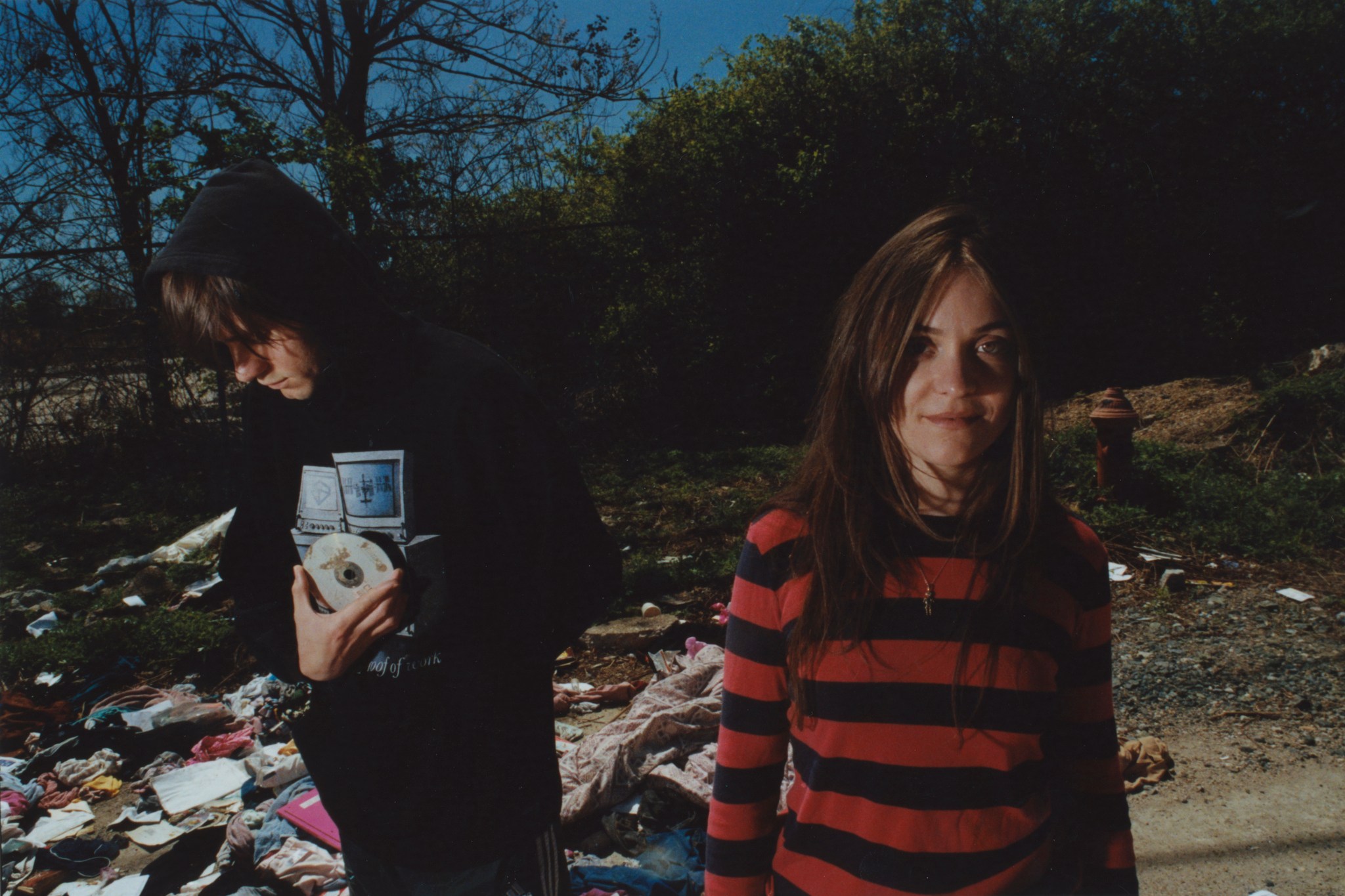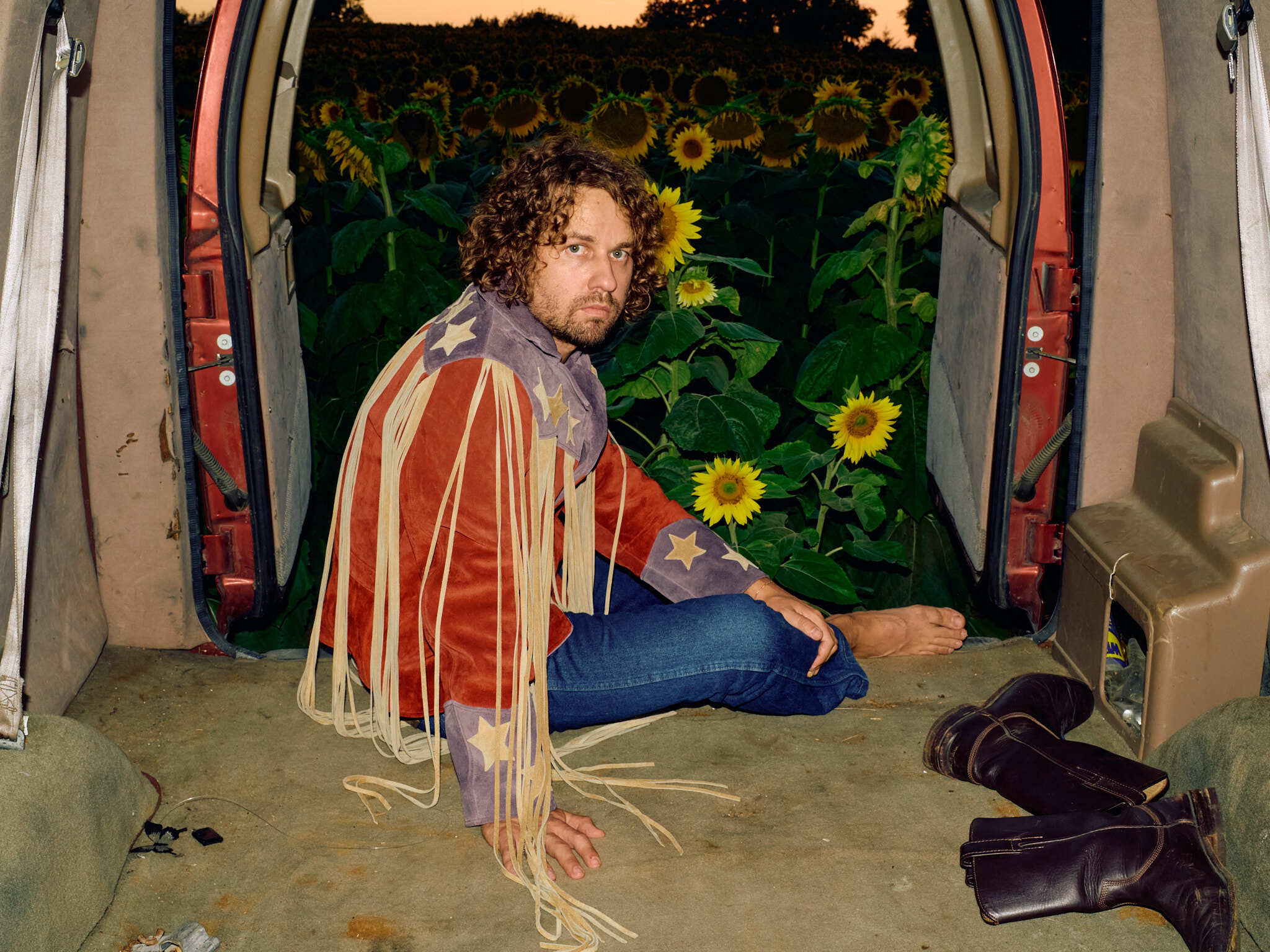


Beatrice Laus, or Beabadoobee, started out as an indie-rock wunderkind. She was a 17-year-old Pavement and Elliott Smith superfan when her debut single "Coffee" got her signed to Dirty Hit, the label run by the 1975 manager Jamie Oborne; by the time she released her debut album Fake It Flowers two years later in 2020, she was nominated for a Brit Award and had done heavy touring across Europe and North America. The slightly more experimental follow-up Beatopia in 2022 firmed her place in the upper echelons of singer-songwriter pop; most recently, you may have seen her as one of the handpicked openers for Taylor Swift's US Eras Tour.
But wunderkinds grow up sometime. If we're lucky, what happens next is they collect the personal and creative lessons they've learned over the course of their abnormal entry into adulthood and make a coming-of-age statement piece. That's what we have in This Is How Tomorrow Moves. It's a breakup-slash-new love album on which Laus is enjoyably scathing but also ready to explore her own faults, in a way that is indeed pretty Swiftian. There are great poppy rock songs, there are super fun stylistic detours, and it's packaged together with the confidence of an artist who's ready to be a bona fide star.
There's also another rite of passage at work here, in which a band heads out to California and makes a record with a big-big-big-name producer for the first time. This Is How Tomorrow Moves was produced by Rick Rubin at his Shangri-La studio in Malibu. In a typically Rubin move, before the process started he had Laus and her long-time guitarist and co-producer Jacob Bugden play him through every song on acoustic guitar instead of showing him recorded demos, in an effort to have them pay closer attention to their songcraft. It was new, too, for the Londoners to have the beach on their doorstep and Nick Cave dropping by between takes. While they were out there, Laus wrote the epic '90s-style acoustic-rock single "Beaches" as a love letter to the experience.
In the interview below, Laus talks us through how La La Land, Sonic Youth, the Eras Tour, rare Lana Del Rey tracks, and more influenced each of the new album's 14 tracks.
1. "Take A Bite"
You've talked about how this song is about, quote-unquote, "Accepting how you're a bitch sometimes." Did it take a bit of soul-searching to write?
LAUS: Definitely. I think writing the song definitely helped me come to terms with that in my brain. I think overall it's a song about finding comfort in chaotic things, despite being in a relatively healthy situation. It's like a self-sabotage sort of thing going on.
What made you choose that as the lead single?
LAUS: I thought that it encapsulated the idea of the record, where I'm finally accepting my own fault in things, and realizing that maybe I'm the problem sometimes. [Laughs] And I just thought sonically it was a good introduction to the sound of the record. 'Cause there's so many different sounds I explore on This Is How Tomorrow Moves, but I think in terms of the instrumentation and the various things happening in that song and the journey it puts you through, I guess it encapsulated the album a lot.
That running theme of taking stock of your own faults and the places where you've been at fault in a relationship - has that been a big thing for you recently?
LAUS: Yeah, I think that's the thing that happens when you grow up. And not to say that I'm a fully grown adult now. I think it's just finally getting on the road to being like, okay, well, maybe I shouldn't spend the rest of my life just constantly blaming other people, but trying to understand why they did certain things and why I do certain things.
You've said your influences for this one were Fiona Apple and Incubus. What inspired you about those?
LAUS: I guess Incubus really came after I made the song, when I realized it was quite reminiscent of a song by Incubus ["Drive"]. But in no way did I directly reference it. I think with Fiona Apple, 100%. I'm a big fan of the production in her work and Aimee Mann's work, and they actually worked with the same producer [Jon Brion]. I just loved their use of piano and the directness of their vocals and the unapologeticness to their lyrics. So I tried taking inspiration from that on this song.
2. "California"
LAUS: I actually wrote it on the couch that I'm sitting on.
Is this your house in London?
LAUS: Yeah. I think I just got back from tour and I wanted to write a song about how I felt in this strange journey of being a musician and being away from home. I started going on tour when I was 17, so straight after sixth form pretty much, and I really struggled a lot with it, trying to find the right sort of schedule for it. Because now I've realized I can't do longer than three weeks. But getting to that point of realizing that, it was definitely a journey, and I definitely needed to write a song about it. And I wanted to write an almost Sonic Youth-inspired song, so I was kind of fiddling around with riffs, and that's that main riff that goes throughout the song. I love Kim Gordon's vocals in general, so in the second verse I tried emulating that. But yeah, essentially that entire song is just about being on the road and being in California a little bit too much.
Speaking of which, you guys made this album out in California, in Malibu. How did it feel, especially as Brits, to be doing that almost rite-of-passage of making an album out in California?
LAUS: Well, it's ironic, because as much as it was a crazy opportunity and it was a really exciting thing, I was very nervous and very unsure at the beginning, and I touched base on that in a song called "Beaches." But it was ironic 'cause I wrote a song about California, and then I found myself making an album in California. But I think what was different about this experience was that it felt like home, and it's 'cause I was posted up and living in a house — in a beautiful house — that had a studio, and obviously a studio that was Shangri-La. So I honestly had no complaints, and I just felt like I was coming to that point in my career where it was time to try out new things and make a record not just in London, and kind of step out of my comfort zone, and I think it really benefited the album.
3. "One Time"
LAUS: I just wanted to make an angry breakup song. I think everybody had been waiting for me to write one. But then there is still, like "Take A Bite," a sense of accepting my own fault in terms of my past relationships. And also the kind of cheekiness of like, "Oh, well, I still think about you from time to time." I wanted a massive hook, and the chords are actually really simple. I actually wrote it two steps down from standard. 'Cause I played around with DADFAD [tuning] so much in my career — no hate on DADFAD — but I wanted to do a thing where I tried writing most of the songs in standard. I took a lot of inspiration from how I used to write songs right at the beginning of my career. I wasn't overcomplicating chord progressions or trying to be impressive with guitar. A lot of the time throughout my career, I felt very self-conscious about how not technical I was on my instrument. But then with "One Time," I really took inspiration from how I used to write songs when I was 17. So yeah, that's one of my favorites of the album.
There's a really awesome guitar solo on this song. Is that you playing or is that Jacob?
LAUS: No, that's Jacob. Jacob is a killer at guitar solos. And I actually copy that guitar solo melody in the bridge/outro 'cause I loved it so much.
Also on that outro part, there's this almost like children's-choir-esque effect with the backing vocals. Where did that come from?
LAUS: Well, just from finding that melody, and I just thought there needs to be a moment in the record where it's just full female rage. So I got me and my friend Sophie to scream it, so it's just the both of us. But we just layered our vocals so many times so it sounds like a choir. It reminds me so much of Annie for some reason, you know, like angry kids just screaming their heart out.
We rely on reader subscriptions to deliver articles like the one you're reading. Become a member and help support independent media!
4. "Real Man"
I love this one. There’s this really fun bluesy feel to it. How did that feel to write?
LAUS: I just wanted to write, like, a sexy song. Like I wanted to write a cheeky, flirtatious song. And the whole idea of it is just finding men constantly disappointing. I think that's a very relatable feeling a lot of people have. So I tried making the sound of it and the melody of it match the vibe of what I was singing about. But it was very inspired by a Lana Del Rey song that is unreleased called "Wayamaya." I remember I found that song on YouTube years and years ago, and I rediscovered it again when I was writing this record, and I was like, oh my god, I want a sort of bluesy, sexy song. So that's how "Real Man" was born.
This is more of a general question, but I know that Rick Rubin had you play your demos to him on an acoustic guitar rather than playing him a recorded demo. Were there any songs where through that process you were like, 'Actually, this works well in this stripped-back capacity and it doesn't need more stuff on it’?
LAUS: Definitely "Everything I Want." And even "Coming Home" and "Real Man," all those songs. All those songs that stayed acoustic on the actual record. We had ideas for it, but once we had played it and once we had A/B-ed it with the demos me and Jacob had made in London, and when we listened to it back with Rick, we realized that maybe stripping it back was the better idea.
5. "Tie My Shoes"
LAUS: "Tie My Shoes," I think it's me trying to come to terms about childhood trauma and about having issues, and how that affects my relationships today. But the premise of just not knowing how to tie my shoes, I genuinely do not know how to tie my shoes. And every person I've been with, I have gotten them to tie my shoes. So I tried looking in a deeper sense, through therapy, through growing up, just trying to figure out why I needed [that] so badly, and I think I missed out on a lot of that when I was a kid. So it’s, I think, one of the saddest moments on the record.
There's these amazing horns going on in the background. How did those come into the song?
LAUS: Well, honestly, Jacob had so many ideas for this song. And what I liked about Rick is he still prioritized the meaning and the lyrics, and he still put them in the forefront, despite all this beautiful instrumentation that Jacob had ideas for. And I think it just suited the song so much. It's a very emotional song, and I feel like the saxophone just is such an emotive instrument.
6. "Girl Song"
This is a song where you sing about insecurities and self-esteem and body image. Why did you feel like you needed to write this song?
LAUS: It's funny you ask that. So I wrote it in this house again, this is another song I wrote at home. And I didn't realize, I think, I was coming onto my period. But I was just really, really sad one day, and I had one spot on my face, and I felt like the world was tumbling down at my feet. So the words just came really naturally. I got really inspired by Simon & Garfunkel and the Beatles — true songwriters, and how they structure a song and their melodies. So I tried referencing that in this song. But really it was the lyrics that kind of brought this song to life and made it a thing. I feel like I write my favorite songs when I feel a very strong emotion, whether it's feeling really, really happy or really, really sad, and I just felt really down that day.
It feels really cool to have just a straight-up piano ballad in the middle of the album. Did that feel like a bold move to you?
LAUS: Yeah. I think just writing a piano ballad in general was a bold move, and it was actually meant to be a single, but I was scared about it. Because it was so different to what I had made, and I just thought, I think it's more special when people find it on the record. But yeah, I actually originally wrote it on guitar, I can't play piano. So I played it to an amazing piano player, his name is Benny [Bock]; I just played him the song on guitar and he just immediately took it up on piano. We didn't know whether we wanted a piano song, but then when we heard the chords transcribed on piano chords, I was like, this has to be a ballad, this has to be a piano song.
7. "Coming Home"
I love the waltzy feeling going on. What inspired that?
LAUS: Well, I wrote it in LA, so I guess there was a La La Land-esque [feeling] to it, and that romanticness to it. And I also missed my boyfriend and my cats a shit-ton. It was just after the Taylor tour, but then I had to stay a week extra in America because there was no point of flying all the way back home to London, so that meant I was away from home a little bit longer. And I just remember being really sad in my hotel room, and I remember I wrote a lot of songs in that hotel room. I was just on a complete roll, I think I just felt very inspired because I was so sad. But a song like [2023 standalone single] "Glue Song" I think opened my eyes to that realm of music, so writing "Coming Home," it felt quite natural to me.
The song's about yearning for this domesticity that you don't get to have a lot when you're a touring artist. How has you relationship with that idea of domesticity developed as you've gotten older?
LAUS: Well, I definitely tend to romanticize it a lot more when I'm away from it. I think there's a beauty in mundane things, especially when life is so fast for a musician. I tend to just think about like, washing the dishes when I'm on tour, and I'm like man, I haven't washed any dishes or swept the floor or cleaned, because I'm on a tour bus where the bus driver cleans it every night. So I tend to romanticize that a lot, and I find it really fun talking about those things in music because they're not stereotypically beautiful things, they're just the mundane and boring bits of life that I really crave.
8. "Ever Seen"
LAUS: I actually found the chords when I was on tour with Taylor, and I realized, wow, I never really take notice of hooks. The hooks just come naturally to me, but what if I really think about this when I write a song? So I had the hook of like, 'The prettiest eyes I've ever seen,’ and I would play it over and over and over again. And I was struggling to find inspiration for the rest of the words in this song. I was definitely in love, but I wanted a song that was not just about romantic relationships. And then I went to Glastonbury and had an amazing time, but you know, when you're getting fucked up absolutely every day you're due a comedown. So I had the worst comedown of my entire life after Glastonbury. [Laughs] And I actually wrote this song with my boyfriend, and it was actually really therapeutic. Hence the lyrics like, 'I swear it's just the comedown that made me do it,’ and all the lyrics just kind of insinuating that I can be a bitch sometimes and it's because I get too fucked up a lot, but I still love you and you have the prettiest eyes I've ever seen. And then also in terms of writing it whilst I was doing the Taylor tour and thinking about that Taylor tour, I thought about how she was obsessed with bridges, and I never really thought about bridges. So I was like, I really want the bridge to transform the song or just go to a completely different world. So I think that's how "Everseen" was truly shaped.
It's cool that you mention the Taylor tour, 'cause I definitely got a Taylor Swift vibe listening to this song. Does that happen a lot, where the artist you're touring with seeps in as inspiration?
LAUS: Oh yeah, definitely. [Especially] someone as respectable as Taylor, 100%. And I had so many different plans for this song. It was meant to be a country song. 'Cause she played "Begin Again" and I was like, oh my god, I wanna try and write a song like "Begin Again" — that's my favorite Taylor Swift song. So "Everseen" was meant to be a country song, but then it soon became apparent that because the song was basically about drugs and about falling in love, it had to feel like you were kind of tripping on shrooms. So it's almost like a nod to a song called "See You Soon" on Beatopia, but a much more upbeat version.
9. "A Cruel Affair"
There's kind of a bossa nova thing happening here, which you've done before on "The Perfect Pair" from Beatopia. What draws you to that sound?
LAUS: I just love bossa nova. And I think after "The Perfect Pair," I promised myself that every record I release, there has to be at least one bossa nova song. Just 'cause I find the melodies really fun. The guitar makes the melody, and the vocals can stay absolutely linear. I thought that what was perfect for me about this song was that I wanted to write a song about constantly comparing myself to every pretty girl on the internet, but I wanted to feel hot in doing so. And every time I listen to bossa nova in the summer I feel like a sexy bitch. [Laughs] So I was like, it's only fair to write a bossa nova song about it. And at the end, there is a sense of hope where I'm like, "She's a catch but so am I," so what's the point of being pissed off about it? So yeah, the album is deep as it is, and so serious, and I just wanted a fun little break from all the seriousness of it all.
10. "Post"
LAUS: So that's one of the songs that I didn't really take from personal experience. Maybe a little bit, but mostly inspired from things that I've heard other people go through when they go through breakups. And I just loved the idea of waiting for someone to send you a letter through the post, and trying to find out what they feel. But that's why the chorus goes, "He said, he said…" but no explanation of what he said. Because he didn't say anything. [Laughs] I wanted a rock song, I wanted a massive intro. I just had this vision of creating like a scene or something very visual, kind of painting a scene with music and words. Yeah, I love that song, that's one of my favorite songs off the record.
11. "Beaches"
https://youtube.com/watch?v=nNXSSfSmbao /wp:paragraph -->