

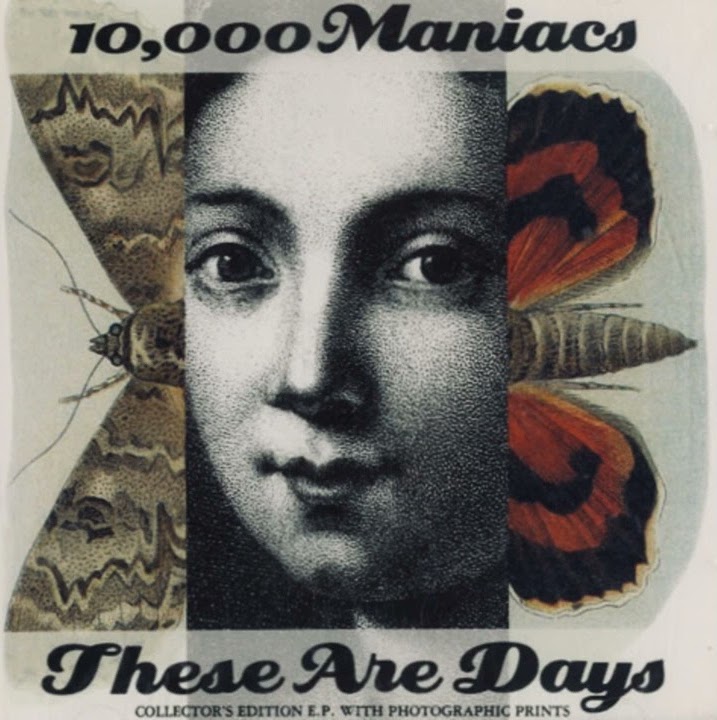
November 21, 1992
- STAYED AT #1:2 Weeks
In The Alternative Number Ones, I'm reviewing every #1 single in the history of the Billboard Modern Rock Tracks/Alternative Songs, starting with the moment that the chart launched in 1988. This column is a companion piece to The Number Ones, and it's for members only. Thank you to everyone who's helping to keep Stereogum afloat.
They were Chelsea Clinton's favorite band. That kept coming up, again and again, in every article about Chelsea Clinton. I read a bunch of articles about Chelsea Clinton in the fall of 1992. I'm almost exactly the same age as her, and the idea of a kid like me living in the White House was fun to think about. But Chelsea Clinton was not like me. I was 13 years old, and I could not imagine telling a magazine journalist that 10,000 Maniacs were my favorite band. The entire idea was just alien to me.
When I was a kid, I felt like people were trying to push 10,000 Maniacs on me. I wasn't interested. 10,000 Maniacs had a fun name, but they did not make fun music -- not to me, anyway. They made stately, jangly folk-rock about serious subjects. They made VH1 music, adult contemporary music, grown-up music. I didn't know the word "middlebrow" yet, but I knew the vibe. When 10,000 Maniacs came on the radio, I usually didn't rush to switch stations, but I kind of glazed over. They were simply there. But "These Are Days," the band's only #1 hit on the Billboard Modern Rock charts, tickled a weird little thing in the back of my mind. That song stuck with me. Maybe these really were days that I would remember.
A few weeks after Bill Clinton won his first presidential election, "These Are Days" pushed its way to #1 on the Billboard Modern Rock chart. I don't think that was a coincidence. People were excited about the idea of a Clinton presidency -- a fresh-faced baby-boomer Democrat coming into office after 12 years of iron-fisted Republican rule. Maybe things would be different. A few months later, Dennis Miller introduced 10,000 Maniacs as "Chelsea's favorite band" when they played MTV's Rock & Roll Inaugural Ball. They played "These Are Days," and then band buddy Michael Stipe joined them for a cover of Lulu's "To Sir With Love." When they finished up a version of "Candy Everybody Wants" with Stipe, the camera cut to Kurt Loder, out in the crowd with Megadeth's Dave Mustaine.
And then... everything else happened. Now, those really are days that I remember, but the memories are a little more complicated and baffling than what the song suggested.
The 13-year-old version of me wasn't entire wrong, though I didn't have the full picture. 10,000 Maniacs were middlebrow, but they weren't on alternative radio because some mysterious power was trying to force the band on me. The band came by their place in that ecosystem honestly. They came up through the American post-punk underground, through college radio and the club touring circuit, before they reached the point where someone like Chelsea Clinton could decide that they were her favorite band. By the time that they played that MTV Inaugural Ball, bandleader Natalie Merchant was already on her way out. Unlike the Clintons, she knew when to quit.
Natalie Merchant wasn't much older than 13 when she joined 10,000 Maniacs. Merchant comes from Jamestown, a small city in western New York -- near the Pennsylvania border, about an hour and a half south of Buffalo. She hated high school enough that she dropped out and went straight to community college. In 1981, a bunch of older Jamestown musicians were starting a post-punk-ish band. Originally, it was going to be called Still Life, and Terri Newhouse, then-wife of guitarist Rob Buck, was going to be the lead singer. The group invited 17-year-old Merchant to sit in with them. Pretty soon, Newhouse was gone, and Merchant was the lead singer.
The band went through a bunch of membership and name changes early on. They started calling themselves Burn Victims and then switched over to 10,000 Maniacs. The name came from Two Thousand Maniacs!, a 1964 B-movie from culty horror director Herschel Gordon Lewis. The name never quite fit. 10,000 Maniacs were too flowy and sedate to give off any maniacal vibes, and their seriousness clashes with the silliness of that name. It was memorable, though. My dad loved that name, though he always thought it was 10,000 Screaming Maniacs. He must've heard an NPR story about them or something. It became a running thing that he'd bring up unprompted for years: "Any new songs from 10,000 Screaming Maniacs?"
There wasn't much of an alternative scene in Jamestown, and 10,000 Maniacs struggled to find gigs. They briefly moved to Atlanta, but that didn't work out, so they headed back to Jamestown. They got money from keyboardist Dennis Drew's mother to self-release their 1982 debut EP Human Conflict Number Five, and it sounded nothing like the band that they would become. Early tracks like "Planned Obsolescence" are skronky, scratchy post-punk, with a bit of reggae in there -- way closer to Pylon than their Athens contemporaries R.E.M. A year later, they dropped the self-released full-length Secrets Of The I Ching. John Peel played their song "My Mother The War" on his BBC radio show, and it took off enough that the band toured the UK.
On the strength of Secrets Of The I Ching, 10,000 Maniacs signed to Elektra, and the label sent them off to London to record their major-label debut The Wishing Chair with Joe Boyd, the veteran folk-rock producer who recorded Fables Of The Reconstruction with R.E.M. around the same time. Two years later, they made their follow-up In My Tribe with onetime Beatles associate Peter Asher. Those two albums pushed them further toward the glimmering, sincere folk-pop that would become their sound. In My Tribe was 10,000 Maniacs' big breakout. A cover of Cat Stevens' "Peace Train" became a college radio hit, and follow-up single "Like The Weather" fully crossed over, reaching #68 on the Hot 100.
10,000 Maniacs had a lot going for them. The band's sound developed into a shimmery, jangly version of folk-rock that made sense when played alongside the Smiths or R.E.M. The latter band embraced 10,000 Maniacs and took them on tour; Natalie Merchant and Michael Stipe also apparently dated for a little while, or at least they said they did. Merchant was the reason that 10,000 Maniacs stood out. She was a lively and engaging stage presence who didn't seem that different from new-breed folksinger types like Suzanne Vega or Edie Brickell. Merchant almost always wrote about serious, weighty subjects, and every contemporaneous article about the band described her as "ultra-PC" or "holier than thou" or some such thing. But she was also an obvious star, to the point where she was the only member of the band that got any press or attention.
Critics liked In My Tribe enough that it made the 1987 Pazz & Jop poll. (It came in at #29, one down from Eric B & Rakim's Paid In Full.) Ultimately, the album went double platinum, and its second single, the child-abuse song "What's The Matter Here?," came in at #8 on the first-ever edition of the Modern Rock chart. (It's a 6.) In 1989, 10,000 Maniacs released Blind Man's Zoo, another album that they recorded with Peter Asher. That one didn't sell quite as well, but it still went platinum. Lead single "Trouble Me" made the top 10 on both the alternative and adult contemporary charts, which foreshadowed the band's future as adult-alternative standbys. On the Hot 100, "Trouble Me" became 10,000 Maniacs' biggest hit yet, peaking at #44. ("Trouble Me" made it to #3 on the Modern Rock chart. It's a 5.)
Natalie Merchant came down with spinal meningitis while touring behind Blind Man's Zoo, so 10,000 Maniacs took a bit of a break, which she spent volunteering at a Harlem daycare center for unhoused kids. When 10,000 Maniacs got back together to make their next album, Merchant pretty much took control, writing many of the songs herself. The band recorded it with producer Paul Fox, who's already been in this column for his work with XTC, Robyn Hitchcock, and the Sugarcubes. Sonically, it's a bit brighter and more buoyant than the band's previous records, but it's very much part of the lineage. 10,000 Maniacs' sound remained light years removed from what was happening on the grungier end of alt-rock radio, and that would never change.
Natalie Merchant co-wrote Our Time In Eden lead single "These Are Days" with guitarist Rob Buck. (Given all the R.E.M. mentions in this column, I should probably clarify that he's not related to Peter.) The song is a dazed shimmer where all the instruments -- piano, organ, sparkly guitar strums, percussion from Brazilian session ace Paulinho Da Costa -- seem to tumble all over each other. Natalie Merchant sings the whole thing in second person, assuring you, the person hearing the song, that you are "blessed and lucky" and experiencing a wonderful, evanescent time in your life. I hated hearing stuff like that as a kid -- that whole idea that you should savor these carefree times while you can. When I graduated from middle school, the school printed up shirts with the lyrics from "These Are Days." I don't think I wore mine one single time.
In any case, Natalie Merchant wrote plenty of songs about miserable subjects, including some of the issues that contributed to my middle-school years being kind of shitty, so I can't hold "These Are Days" against her. The song really is pretty. It sounds like it's been specifically recorded to play during a movie montage where someone runs around a sunny meadow in slow motion, smiling up at the sky. But there's a melancholy tug underneath it. Some of that comes from the inevitable end of the days that you'll remember: "Never before and never since, I promise, will the whole world be warm as this." Some of it comes from the way that Merchant sings to "you," rather than singing about her own happiness. The melancholy isn't quite enough to make me stop hearing the song as church youth-group music, but it gives it a bit more weight and dimension.
My annoyances with "These Are Days" are mine alone. On just about every level, I can understand that "These Are Days" is a good song. Natalie Merchant, whose voice can sort of evaporate from my mind, really throws herself into that one, and there are real shades of emotion in her delivery. Her bandmates find an explosive-sunshine pocket, and then they never leave it. Lots of people have lots of warm memories attached to "These Are Days." I don't. It's weird when a song about the best part of your life calls up all sorts of visceral memories about walking around on eggshells because you're miserable at home and you can't wait to get away and take some control. (My dad wasn't all cute band-name malapropisms.) Today, I can recognize the things that work on "These Are Days," but I can't get past my own sullen-kid associations.
For her part, Natalie Merchant also couldn't wait to get away and take some control. In 1993, Merchant appeared on the cover of Rolling Stone without her bandmates, and the accompanying profile has lots of stuff about how Merchant's total unwillingness to party contrasted with the attitudes of all the older guys in the band. One of them seems to regret the fact that Merchant, rather than Edie Brickell, is their singer. But they were still reaching new peaks of success. Our Time In Eden went double platinum. Follow-up single "Candy Everybody Wants," recorded with James Brown's horn section, made it to #5 on the Modern Rock chart. (It's a 6.) 10,000 Maniacs were right in the zeitgeist, but Merchant would be gone from the band by the end of 1993.
In April 1993, 10,000 Maniacs taped their episode of MTV Unplugged. A few months later, Natalie Merchant announced that she was leaving the band and striking out on her own. Their Unplugged album came out after she left, and it turned out to be the biggest thing that they ever did. Their cover of Patti Smith's 1978 Bruce Springsteen duet "Because The Night" peaked at #7 on the Modern Rock chart. (It's an 8. Patti Smith's only Modern Rock hit, 1988's "Up There Down There," peaked at #6. It's another 8.) "Because The Night" also hit big on adult-contemporary radio and made it all the way to #11 on the Hot 100, way higher than any other 10,000 Maniacs song. The Unplugged album went triple platinum. Merchant ended her time in that band on top.
Later on, Merchant said that she simply didn't have enough control as the singer in a band, and she especially hated that "These Are Days" ended up in promos for the short-lived Fox show Class Of '96. In 1995, Merchant came out with the self-produced solo debut Tigerlily. Critics were not into that album, which was considerably smoother and blander than anything she'd done with 10,000 Maniacs, a band whose music was already smoother and blander than what many of their contemporaries were making. Alternative radio wasn't much into Tigerlily, either. Lead single "Carnival" peaked at #12, and then Merchant never charted any higher than that.
At that point, though, Natalie Merchant didn't need alternative radio. "Carnival" made it to #10 on the Hot 100, and Tigerlily went quintuple platinum. Merchant's solo career popped off right in the center of the Lilith Fair zeitgeist, and she found her audience. Merchant's later solo records didn't sell nearly as well, and she regularly takes long breaks between tours and records, but she still plays pretty big venues whenever she wants.
Until researching this column, I had no idea that 10,000 Maniacs kept going without Natalie Merchant, but they did. John Lombardo, one of the band's original guitarists and main songwriters, left after The Wishing Chair, and he formed the folk-rock duo John & Mary with singer Mary Ramsey. John & Mary opened for 10,000 Maniacs on tour. Ramsey played viola on some 10,000 Maniacs songs, and she played with the band and sang backup on Unplugged. After Merchant left the band, Lombardo returned, and Ramsey became the new lead singer. 10,000 Maniacs never landed on the Modern Rock chart again after Merchant's departure, but a dance-flavored 1997 cover of Roxy Music's "More Than This" reached #25 on the Hot 100.
In 2000, guitarist and "These Are Days" co-writer Rob Buck died of liver failure. He was 42. Even after that, 10,000 Maniacs kept going. Last year, Ramsey said that she was leaving the band, and Sixpence None The Richer's Leigh Nash was going to come in as the new lead singer. But then Sixpence None The Richer got busy again, and now Ramsey is once again the singer for 10,000 Maniacs. They're still playing shows today. Natalie Merchant hasn't done anything with the band since she left, and they'll probably remain two separate entities until they're both done with music.
These days, I don't really hear people talk about 10,000 Maniacs. They've never become a cool influence, though I'm sure that some of the quieter and more bookish indie rock stars of the '00s, your Decemberists and Sufjan Stevenses, probably had cracked-jewel-case copies of Our Time In Eden in their cars at some point. If you're old enough, then perhaps the 10,000 Maniacs days are days you'll remember. If you're not, you're probably OK. And if you're Chelsea Clinton, please do not run for office, ever.
GRADE: 6/10
BONUS BEATS: It's been a while since I've seen it, but there's apparently a fairly pivotal "These Are Days" needledrop in Bringing Out The Dead, the stressed-out and hallucinatory 1999 Martin Scorsese film where Nicolas Cage plays an ambulance driver. Sadly, however, I can't find that scene online. So here's the next best thing: "These Are Days" soundtracking the opening credits of the 2003 Steve Martin movie Cheaper By The Dozen, helpfully captured by someone who apparently held a camera up to a TV while breathing heavily:
THE NUMBER TWOS: The Sundays' jangle-bliss reverie "Love," a song that kind of sounds like a better version of "These Are Days," peaked at #2 behind "These Are Days." It's an 8.


