

Skip to Content
Columns

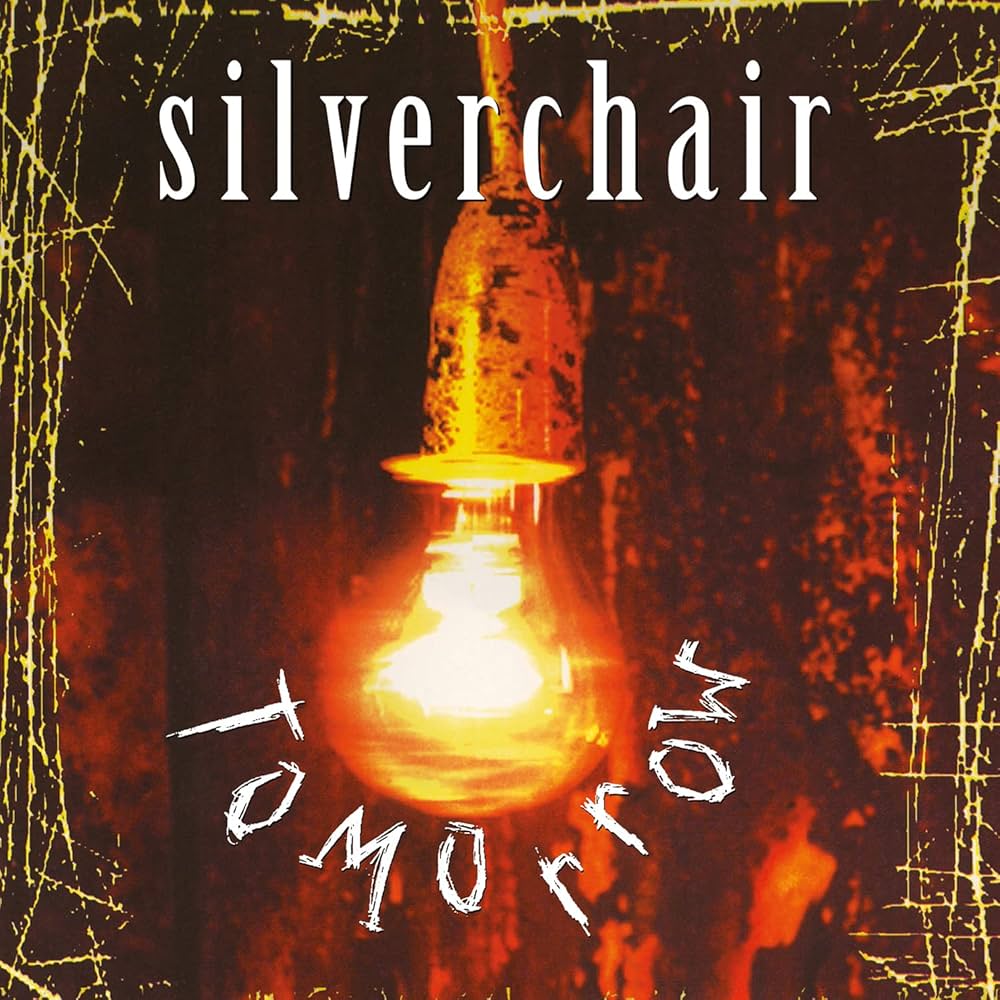
The Alternative Number Ones: Silverchair’s “Tomorrow”

September 2, 1995

  • STAYED AT #1:3 Weeks

In The Alternative Number Ones, I’m reviewing every #1 single in the history of the Billboard Modern Rock Tracks/Alternative Songs, starting with the moment that the chart launched in 1988. This column is a companion piece to The Number Ones, and it’s for members only. Thank you to everyone who’s helping to keep Stereogum afloat.

I have terrible news. There's no bathroom. In addition, there is no sink. And if that wasn't bad enough, the water out of the tap is verrrryyy hard to drink! It's very hard to drink! I'm as appalled as you are. We're looking into it very strongly.

Daniel Johns, the frontbaby from the ridiculously young Australian grunge trio Silverchair, told Rolling Stone that "Tomorrow," the band's breakout hit, was inspired by a TV show he'd seen. The song, per Johns, is "about this rich dude, and I was thinking about what a cock he was. It’s just a song about any rich dickhead." That's right, Daniel Johns! Let these one percent motherfuckers know! When rendered in radio-grunge form, Silverchair's message of class war came out sounding like this: "You say that money isn't everything, but I'd like to see you live without it/ You think you can keep on goin’, livin’ like a king?/ Ooh babe, but I strongly doubt it." He strongly doubts it! Very hard to drink!

They were children. When their song "Tomorrow" conquered the American alt-rock airwaves, all three members of Silverchair were 15 years old. Their combined age was how old I am now, as I write this. But this column is running on my birthday. As you read this, I am now older than the combined ages of all three Silverchair members when "Tomorrow" conquered the American alt-rock airwaves. Perhaps I should give them some grace. Perhaps I should say what everyone said about Silverchair back then, which is that it's very impressive that these three little kids from such a far-flung locale managed to copy the sound of Seattle grunge so accurately. To dunk on Silverchair is to be mean to little kids. I get that. The problem is that I was also 15 years old when "Tomorrow" conquered the American alt-rock airwaves. I am basically the exact same age as all three of those Silverchair kids, and I thought that song was fucking stupid.

I read every article about Silverchair that I could find way back then. I was fascinated. How were these kids, these kids the same age as me, going out and becoming rock stars? Maybe I should've been inspired. Maybe I should've been on their side. Maybe it should've been like when I saw Home Alone in the theater at 10 years old and screamed with delight at the spectacle of a kid my age torturing burglars. That wasn't how I reacted, though. My reaction to Silverchair was pure, unvarnished player-hater shit. It was something like this: "I'm 15, and I'm a fucking idiot! Every other kid I know is a fucking idiot! I bet these Silverchair guys are fucking idiots, too! What's so special about these fucking idiots?" Also, their big song sounded like fake grunge. I'm not sure I had "fake grunge" in my vocabulary at the time, but fake grunge would become a severe problem on alt-rock radio in the years ahead. That problem starts here.

I'm not being fair. The fake-grunge thing didn't start with Silverchair. It probably started the moment that grunge first became a phenomenon. Pearl Jam were still in the process of taking off when Stone Temple Pilots released "Plush," the 1992 single that sounded enough like Pearl Jam as to seem suspicious. Stone Temple Pilots went on to do lots of things that mostly removed them from the fake-grunge conversation, and they'll theoretically appear in this column one day, though that won't happen for a long time. But "Plush" really felt like the moment when the first of 20 million other Eddie Vedders emerged. ("Plush" peaked at #9 in 1993, and I'm frankly shocked that it didn't go higher. It's a 7.)

Stone Temple Pilots had existed in some form since 1985, so they were around for long enough that they could plausibly claim that they'd simply landed on a grunge-adjacent sound on their own, not from riding other bands' waves. The journey from STP to Creed was a long one, and there were lots of stops on the way. (I will henceforth use Creed as the standard-bearer of all things fake grunge, and I don't care if that's unfair.)

In 1994, the nebulously Christian band Collective Soul came out of Atlanta and put a lot of grunge stank on their debut single "Shine," which reached #4 and honestly slaps pretty hard. (It's an 8. Collective Soul's highest-charting Modern Rock song, 1995's "December," peaked at #2. It's a 6.) Live, a band that's been in this column a couple of times and will return, made their own contribution to the fake-grunge canon. Silverchair were simply another step along that path, but they were the first band that could not plausibly claim that they shared a bunch of influences with Pearl Jam and Nirvana and that they'd landed on that sound independently, through sheer coincidence. Instead, their defense was that they were kids.

The music press was always pretty condescending about Silverchair, but even the most dismissive critics had to concede that these little fresh-faced Australian kids did a very convincing job riffing on the sound that their grunge elders established. This is entirely true. In retrospect, it's absolutely nuts that Silverchair were able to do what they did. On "Tomorrow," the band's first single, the guitars tingle quietly and then churn forcefully. Daniel Johns bellows in the same baritone gargle-moan that Seattle guys used when they wanted to sound like backwoods mutants, and he's somewhat convincing. He sounds vaguely passionate and vaguely threatening. His lyrics are dumb, but plenty of actual grunge lyrics were dumb, too. The production finds the right balance between raw intensity and radio-ready polish, and the chorus achieves the kind of uplift that you can't really fake. Ultimately, "Tomorrow" sounded big enough to push past the kiddie-grunge novelty factor and become the most-played song on American alternative rock radio in 1995. That's quite an achievement. As a listener, though, I could never get past the kiddie-grunge novelty factor. I still can't.

The Silverchair kids all grew up in Merewether, a suburb outside of the coastal Australian city of Newcastle. Daniel Johns' father owned a fruit shop, and Ben Gillies is the son of a plumber. Johns and Gillies became friends when they were five or six. When they were 11, they started a group called the Silly Men, and it was just them rapping over keyboard demo tracks. I wish they would've kept the name. At some point, Johns started playing guitar, and Gillies started playing drums. When they were 12, they enlisted Chris Joannou, another friend from school, to play bass. For a little while, another kid named Tobin Finnane played guitar, too, but he didn't stick around.

Those kids called themselves the Innocent Criminals, and they practiced Led Zeppelin and Black Sabbath covers every day after school. Eventually, Johns and Gillies started writing songs together. A neighbor told Johns about YouthRock, a national competition for young Australian bands, run by the TV show Nomad and the alt-rock radio network Triple J. So the Innocent Criminals went into a studio, and they recorded a cheap demo of a few songs. One of those songs was "Tomorrow." The original demo version of "Tomorrow" is crudely recorded, and it's six and a half minutes long, but it mostly sounds like "Tomorrow." It won the YouthRock contest. The judges listened to hundreds upon hundreds of tapes from kids, and "Tomorrow" sounded most like a real song.

When they won the contest, the Innocent Criminals changed their name to Silverchair. They said that they got the name from hearing a radio caller attempting to request two songs, Nirvana's "Sliver" and You Am I's "The Berlin Chair," but getting the titles all mixed up. If that were true, it would mean that the grunge influence was literally inscribed directly into Silverchair's band name, along with the influence of You Am I, an Australian alt-rock band that was just one album deep into its run. But it later turned out that they'd made up that story and that they'd really named themselves after The Silver Chair, one of CS Lewis' Narnia books. I can see why they didn't want to admit to that. It's like if a teenage rapper came out now calling himself the Prisoner Of Azkaban or some shit. Lil Captain Underpants.

As part of their prize, the newly rechristened Silverchair got to record a professional version of "Tomorrow" and make a video for it. They went into the studio with Kevin Shirley, a South African-born producer who'd moved to Australia in the '80s. He'd worked with a bunch of Australian bands, including the Hoodoo Gurus, past subjects of this column. The Shirley-produced version of "Tomorrow" sounds a whole lot thicker and less tentative, but it doesn't polish the band up too much. Shirley told Silverchair that he wanted to make sure they still sounded like themselves, only louder, which turned out to be the right approach for this band. In the original Australian "Tomorrow" video, they look almost impossibly young -- like Hanson, except Hanson didn't exist yet.

Daniel Johns and Ben Gillies wrote "Tomorrow" together, and it's a perfectly solid piece of generic '90s alternative rock. It's got a bunch of big riffs, a fun wah-wah solo, and a real sense of motion when it builds up to its big singalong chorus. But it's nothing special. It's a trudge. Maybe I'm just unfairly projecting things on these kids, but what I hear in "Tomorrow" is a solid stylistic imitation rather than a full-blown piece of expression. It's a genre exercise -- the kind of thing you write when you're learning to write, before you figure out your own voice. There were a million songs just like that on the radio at the time, and plenty more lurked in the wings. "Tomorrow" was on the same free CMJ CD where I first encountered Alanis Morissette's "You Oughta Know," and I only barely remember hearing "Tomorrow" on that one. Without the benefit of their ridiculous backstory, Silverchair's big song sank into the background.

The backstory was pretty good, though. Silverchair's re-recorded "Tomorrow" got some radio play in Australia because of the contest, and Australian record labels started trying to sign the kids. They agreed to a deal with Murmur, a newly launched Australia-specific Sony imprint. (Yes, Murmur is named after the R.E.M. album. I like how you can find R.E.M.'s fingerprints on even the alt-rock radio hits that otherwise have no detectable R.E.M. influence.) Murmur released "Tomorrow" as a single in September 1994 in Australia, and it blew the fuck up. A month after its release, "Tomorrow" was the #1 single in the country.

Silverchair didn't have to put in any time on the famously punishing Australian pub circuit. The first time that the kids in the band saw a big rock show -- a group called the Screaming Jets -- they were the opening act. In January 1995, Silverchair joined Big Day Out, the touring Australian alt-rock festival. They were slated to play early in the afternoon on a side stage, and their sets were mobbed, to the point where kids were climbing on rooftops to watch them and then diving off into the crowd.

Silverchair's debut album Frogstomp came out in March 1995 in Australia -- less than a year after they'd sent their demo tape into the YouthRock contest. I hate the title, and I hate the cover art, but what am I going to do about it? Nothing, that's what. The band recorded it with Kevin Shirley, the guy who'd produced the "Tomorrow" single. I'm only just listening to Frogstomp for the first time now, and it's heavier than I expected. Some of the band's riffs conjure real-deal Sabbath-style sludge, though it's not like they ever get quite as heavy as, say, Alice In Chains. That's probably not a fair comparison, but Silverchair got played on the same rock stations as Alice In Chains, and "Tomorrow" got more play. But I'm getting ahead of myself.

The mothers of all three Silverchair members became their managers, and their fathers became the band's roadies and chaperones on tour. Frogstomp sold an insane number of copies in Australia, and then Epic made a deal to release the album in the US. Mark Pellington directed a new "Tomorrow" video for American audiences, and you can tell that he had explicit instructions to make it look like his own video for Pearl Jam's "Jeremy." ("Jeremy" peaked at #5. It's a 10.) Pellington's "Tomorrow" video sucks. It's got lots of shots of the Silverchair kids headbanging angelically, intercut with footage of an evil dancing leisure-suited pig-man with blood on his teeth. The pig-man might eat a dog? It's not entirely clear. He definitely eats money, though. We also get close-ups of a llama's face, along with signs, flashed onscreen, that say "money is anything," "power is anything," "hate anything very hard," and "sorry if I don't." Makes you think, right? No? It doesn't make you think at all?

All of the "Tomorrow" video's spooky posturing gave off the distinct sense that record execs were just pushing this band on kids like me, kids the exact same age as the Silverchair kids, and I didn't want any part of it. It felt weird and gross to see my own generational peers pantomiming grunge gestures and getting the major-label push. Maybe that's my issue. Maybe it has nothing to do with the song itself. Maybe I'd be able to properly rock out to the "Tomorrow" chorus if I could put all that extraneous context business out of my mind. But this is my column, and if you've been reading it, you know that I love extraneous context business. The Silverchair marketing feeling stuck with me more than the song. (I swear I'm trying to be fair here. The rating at the bottom of this column would've been lower if I'd written it in 1995.)

MTV went running with the "Tomorrow" video, and the song got tons of radio play, topping both the Modern and Mainstream Rock charts. Silverchair toured the US a few times, first with the Red Hot Chili Peppers and then with the Ramones. I'm sure the Ramones' crowd was very polite and understanding. At the 1995 VMAs, Silverchair performed "Tomorrow" atop the Radio City Music Hall marquee, with fans watching from across the street. A few months after that, Silverchair were musical guests on Saturday Night Live. (Host: David Alan Grier. That was the episode where David Spade made fun of Eddie Murphy on Weekend Update and Murphy got super-pissed about it.) Frogstop made it to #9 on the album charts over here, and it went double platinum, even though it really only had the one hit. Follow-up single "Pure Massacre" peaked at #17, and I really don't remember ever hearing it on the radio. It's not bad, though.

Silverchair remained an absolute fucking phenomenon in Australia for the rest of their run. They released five studio albums, and all of them went at least triple platinum over there. Frogstomp won a bunch of ARIA Awards, and the band sent producer Kevin Shirley's seven-year-old son out to accept them, which is pretty funny. Kevin Shirley, incidentally, moved to LA in the wake of Frogstomp, and he produced records for bands like Aerosmith and Journey. How prestigious are the ARIA Awards, anyway? Because Silverchair have 21 of them -- the most of any artist in history. Does that mean they're like Beyoncé over there? I'm asking because I genuinely don't know. You guys really fuck with Silverchair like that? Is it like the Tragically Hip in Canada -- a cultural staple and a point of national pride that the rest of the world will just never be able to properly understand?

In America, Silverchair never touched the popularity of "Tomorrow" again, but they were in the mix for longer than I realized before I researched this column. That seems to be the case in most places, since "Tomorrow" has about three times as many Spotify streams as any other Silverchair song. But Silverchair persisted. Their sophomore album Freak Show came out in 1997, and lead single "Abuse Me" reached #4 on both the Modern and Mainstream Rock charts. (It's a 4.) Silverchair got grand and orchestral on 1999's Neon Ballroom. Lead single "Anthem For The Year 2000" is about youth rebellion, while "Ana's Song (Open Fire)" is Daniel Johns' attempt to wrestle with his own anorexia in the public eye. I think both songs are pretty bad, Both of them reached #12 on the Modern Rock chart over here. Both Freak Show and Neon Ballroom went gold.

Silverchair brought in Van Dyke Parks to do string arrangements on their last two albums, 2002's Diorama and 2007's Young Modern. Singles from both of those albums got alt-rock radio play in the US. "The Greatest View," from Diorama, only made it to #36 over here, and that didn't happen until six years after its release for some reason. But "Straight Lines," from Young Modern, went all the way to #12. That's some serious staying power for a kiddie-grunge novelty act, though I'd be more impressed if I liked any of those songs at all. I was more impressed to learn that Daniel John was married to fellow Australian radio phenom Natalie Imbruglia for five years. That brought the player hater back out of me. Once upon a time, I had it bad for Natalie Imbruglia. (Imbruglia's highest-charting Modern Rock hit is obviously "Torn," which peaked at #12 in 1998.)

Silverchair announced what they called an "indefinite hibernation" in 2011, and that hibernation is still happening. Daniel Johns' bandmates have said that he broke the band up and then changed his mind multiple times before the real breakup finally happened and that they aren't really in contact anymore. Johns released a couple of solo albums and dealt with some substance abuse issues. He's been arrested for drunk driving a couple of times, and he has stayed out of the public eye in recent years.

I don't really like Silverchair's music, but Daniel Johns was some kind of child prodigy. I hope that he figures things out and that the people of Australia can continue to celebrate Silverchair's entire catalog without feeling weird about it. When you're as young as him, international fame is a cup that's very hard to drink.

GRADE: 5/10

BONUS BEATS: Beavis And Butt-Head really did some exemplary work hating on the "Tomorrow" video: "I think this is supposed to be freaking us out, but, like, I'm un-freaked. In fact, this video is making me feel totally normal." Here, enjoy:

GET THE STEREOGUM DIGEST

The week's most important music stories and least important music memes.