Skip to Content
Columns

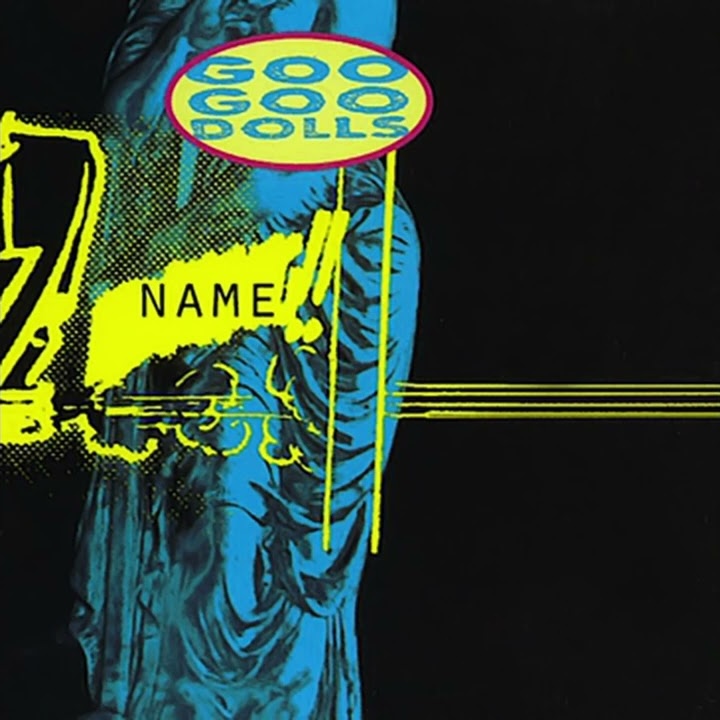
The Alternative Number Ones: Goo Goo Dolls’ “Name”

October 7, 1995

  • STAYED AT #1:4 Weeks

In The Alternative Number Ones, I’m reviewing every #1 single in the history of the Billboard Modern Rock Tracks/Alternative Songs, starting with the moment that the chart launched in 1988. This column is a companion piece to The Number Ones, and it’s for members only. Thank you to everyone who’s helping to keep Stereogum afloat.

I'll tell 'em a name: Goo Goo Dolls. That's a name. Originally, they were the Sex Maggots. That's a better name, in my opinion, but it probably would've made things more difficult for them financially. The story goes that they had to change their name because a club refused to put the name "Sex Maggots" on a marquee, so they had to come up with a new name or else lose the gig. They flipped through an old issue of the pulp magazine True Detective and saw an ad for a toy called a Goo Goo Doll, so that became their name. They knew the name was dumb, and they meant to change it, but they never did.

"Goo Goo Dolls" is an absolute nonsense name, but it was the right kind of nonsense for '90s alt-rock radio. In that moment, names didn't have to mean anything. If your name was more nonsensical, that meant that you were more mysterious and thus more commercially viable. It didn't matter that Toad The Wet Sprocket took their name from a skit on a Monty Python album; it mattered that the name meant nothing. Same with "Goo Goo Dolls." It tripped off the tongue when DJs were rattling off band names, and that was good enough. By the time the Goo Goo Dolls scored their first huge radio hit, they were already five albums deep into their career, but they weren't exactly a brand name.

If anyone thought about the Goo Goo Dolls, they presumably just considered them to be one of a handful of hard-touring bands who really wanted to be the Replacements. The Replacements were gone at that point, so the Goo Goo Dolls were replacement Replacements -- one among many. The Goo Goo Dolls had a sound and an audience, but the name didn't necessarily mean anything to most of the people who would've been listening to the radio at the time. Pretty quickly, that brand came to mean "sensitive adult-contempo ballads," even if that wasn't anywhere near what the Goo Goo Dolls had in mind when they pulled that name from True Detective.

I'll tell 'em another name: John Rzeznik. What a name, right? Go ahead. Try to pronounce it. Do your best. Zez-nik? Rez-nik? Do you just kind of make a buzzing bee noise and then say "Nick"? I don't know. I've never discussed the Goo Goo Dolls in depth out loud, so I've never had to attempt it myself. Actually, I'm lying. I do know. It's Rez-nik. Still, can you believe that name? Can you believe the fact that someone with that name got famous, without taking on a stage name? Can you believe someone with that name came out of any kind of underground punk scene without assigning himself a punk name? It's probably good that he didn't. "Name" probably wouldn't hit the same if you knew the guy singing it as Johnny Pukeface or whatever.

I'll tell 'em one more name: Kennedy. Not "Kennedy" as in the cursed political clan that's now responsible for making sure nobody can get vaccines. "Kennedy" as in the VJ with the glasses who hosted Alternative Nation on MTV back in the day. Today, she's on Fox News, and she's helping to make the world a more evil place. In a roundabout way, she's also helping to make sure that nobody can get vaccines, so maybe she should be welcomed into that cursed political family. Anyway, Kennedy is the name from "Name." When John Rzeznik sings that he won't tell 'em someone's name, the name he won't tell 'em is "Kennedy." But we'll get to that.

Another crazy thing about John Rzeznik: He was not the original frontman for the Goo Goo Dolls. He was in the band, but he was the guitarist who sometimes sang backup. He was not the main guy. Can you believe that? The main guy was bassist Robby Takac. Robby Takac appears to be a regular human person, looks-wise. He doesn't resemble Fabio, or maybe like Channing Tatum with a generic rocker-dude wig on. When you've got a guy who looks like John Rzeznik in your band, you need to put that guy out front. Maybe Rzeznik didn't want the world to see him because he didn't think that they'd understand. You couldn't keep him off to the side of the stage forever, though. Eventually, the Goo Goo Dolls figured it out.

John Rzeznik, like the other Goo Goo Dolls, is from Buffalo. I've never been to Buffalo, but I spent four years in Upstate New York, so I feel like I get the basic vibe. Rzeznik grew up in a working class Polish Catholic family, and both of his parents died when he was a teenager. His older sisters took over raising him. He finished high school and dropped out of Buffalo State College. Like his father before him, he developed a drinking habit. When he met the other Goo Goo Dolls, he was in a hardcore band called the Beaumonts.

Robby Takac and George Tutuska, the other two Goo Goo Dolls, were friends from school, and Takac was in a band called Monarch. Takac's cousin Paul, now a state rep in Pennsylvania, was in the Beaumonts with John Rzeznik, so that's how he and Takac got to know each other. Rzeznik, Takac, and Tutuska started the Sex Maggots in 1985, and they became the Goo Goo Dolls in 1986. They started out playing covers, and they kept playing a lot of covers even as they started coming up with their own tracks. Their self-titled 1987 debut has fast, bleary, punked-up covers of radio-rock standards "Sunshine Of Your Love" and "Don't Fear The Reaper." With that in mind, it's fun to think about all the younger bands who must've played fast, bleary, punked-up covers of the Goo Goo Dolls' own radio-rock standards.

Robby Takac sang lead on every song from the Goo Goo Dolls' self-titled debut. Back then, he was the frontman, and the band opened for a lot of the bigger national punk bands who came through Buffalo. The Goo Goo Dolls released that LP on their own Mercenary label, but it was eventually picked up by Celluloid, a New York label that Bill Laswell helped run. Celluloid got the band for super-cheap, and they pretty much ignored their contract with that label. Soon enough, another label came along and picked them up, and this connection was even more random. Somehow, the Goo Goo Dolls signed on with Metal Blade records, a label that was pretty much exactly what it says on the box. For years, they were labelmates with bands like Cannibal Corpse, Candlemass, Fates Warning, and Sacred Reich. I can't figure out how that happened. It's truly puzzling. The Goo Goo Dolls were still on Metal Blade when "Name" came out! Even at their hardest, the Goo Goo Dolls were never a metal band. They were just messy punks, and I don't think any other bands on the Metal Blade roster sounded anything like them. It's just a weird little fun fact.

The Goo Goo Dolls' second album Jed came out on Metal Blade in 1989. That one still had Robby Takac mostly singing lead, and it had a few more bleary, punked-up covers of radio-rock standards. (That time, it was "Down On The Corner" and "Gimme Shelter.") But Jed also had a couple of tracks where John Rzeznik sang lead, and one of those was the craggy acoustic album closer "James Dean," which is somehow even more a work of Replacements worship than any of the noisier stuff that the Goo Goo Dolls made. It ends with a gay joke, though. I don't think the Replacements would've done that.

By the time that the Goo Goo Dolls made 1990's Hold Me Up, John Rzeznik and Robby Takac split lead vocal duties right down the middle. George Tutuska got to sing lead once, too -- on "22 Seconds," a song that is actually 40 seconds long. The drum tone on Hold Me Up is the same thing you'd hear on one of the death metal records that Metal Blade was putting out around that time, and it did not suit the music at all. Still, the songs were getting catchier and catchier. Rzeznik sang lead on "There You Are," the first Goo Goo Dolls song that ever got a music video. In the clip, they run around Buffalo and lip-sync in the city's minor league ballpark when it's empty, and Rzeznik already looks like a prince in a Disney movie. "There You Are" was the first Goo Goo Dolls song to reach the Modern Rock chart; it peaked at #24.

When Hold Me Up came out, Metal Blade came to a distribution agreement with Warner Bros., which made the Goo Goo Dolls a borderline major-label act. They were still van warriors, and their music still didn't get a lot of attention from the press. In those years, the band's biggest career moment might've been getting their song "I'm Awake Now" onto the soundtrack of 1991's Freddy's Dead: The Final Nightmare, which was not the final Nightmare. That song flirts with hair metal aesthetics, and Rzeznik kind of looks like Jon Bon Jovi in the video. Maybe that's a road-not-taken situation for the group. Even in this TV-ready form, the Goo Goo Dolls didn't have enough clout for Robert Englund to show up and play Freddy Krueger in their video. They had to make do with randomly cut-in movie footage instead.

Like pretty much everyone else, the Goo Goo Dolls discarded any and all hair-metal ambitions by 1993. That's when they released Superstar Car Wash, a really good album that got a lot more attention than anything they'd done up until then. That record has Johnny Rzeznik stepping into the primary-frontman role, and it's got "We Are The Normal," the first Goo Goo Dolls song that ever became a real alt-rock radio hit. For that one, the band sent an instrumental demo to former Replacements leader Paul Westerberg, the band's obvious hero, and he made the Replacements/Goo Goo Dolls connection official by writing lyrics for the song. "We Are The Normal" reached #5 on the Modern Rock chart. (It's a 7.)

I never heard Superstar Car Wash before I started researching this column, and I'm struck by how much I like it. Maybe Superstar Car Wash and "We Are The Normal" are the reasons that John Rzeznik got to know Kennedy, the young VJ who started hosting Alternative Nation on MTV in 1992. Rzeznik was married at the time, so he and Kennedy never dated, though it seems like they had some kind of flirtatious friendship. Later on, Rzeznik said that he would come down from Buffalo to New York and get Ukrainian food with Kennedy and that he was kind of generally in awe of her. She's the subject of "Name." At the time, Kennedy wouldn't let the public know her real name. When Rzeznik sings that he won't tell 'em her name, he means it literally.

Nobody knew about the Kennedy connection at the time. Rzeznik never blabbed to the press. Instead, Kennedy made the revelation in her 2013 memoir The Kennedy Chronicles, and Rzeznik confirmed her story. Rzeznik's "Name" lyrics don't make a whole lot of sense, but they start to come into focus when you know a little more about the people involved. Rzeznik sings, "We're grown-up orphans who never knew their names," and he really is a grown-up orphan. He sings that scars are souvenirs we never lose and that reruns all become our history -- one pretty cliché point about carrying your hurt with you, one pretty decent line about growing up immersed in ephemeral trash culture. But he loses me with this bit: "Don't it make you sad to know that life is more than who we are"? He's talking about their own insignificance, maybe? I'm reaching.

Mostly, I think "Name" takes the vague shape of a meaningful song without bothering to mean much of anything. There's nothing wrong with that. Songwriters try to say deep shit all the time, and most of them never get there. A couple of those Rzeznik lines resonate. To me, though, the song mostly works as a vehicle for his broody-heartthrob smolder. He's pretty good at that smolder. On "Name," Rzeznik sings sweetly and gently, with a touch of rasp in his voice. It's Westerbergian, but Paul Westerberg never recorded a laser-guided radio missile like this one. "Name" has the exact right balance of ingredients to thrive on the 1995 airwaves -- the hooks, the fake-deep sentiments, the soft-focus quasi-jangle aesthetic, the quiet-to-loud structure that never actually gets very loud. It was the right song at the right moment.

From the moment that the Goo Goo Dolls recorded "James Dean," the band got more and more comfortable with the the idea of sensitive acoustic-guitar music. "We Are The Normal," for instance, indulges pretty heavily in acoustic guitars and strings. The way John Rzeznik tells the story, he wrote "Name" almost by accident. The riff came to him when he was messing around with the tuning pegs on his guitar. He put "Name" in the dead center of the 1995 LP A Boy Named Goo, which is mostly a tough and sharp and streamlined piece of punchy power-pop craftsmanship. As with Superstar Car Wash, I'd never heard A Boy Named Goo in full before researching this column. Once again, I'm pleasantly surprised. Maybe Rzeznik meant to hide "Name" among the rockers, but it wouldn't stay hidden for long.

Lots of drama attended the release of A Boy Named Goo. Drummer George Tutuska got into a royalty dispute with John Rzeznik. He later insisted that he wrote a lot of Goo Goo Dolls lyrics and melodies and that he wasn't getting what was due to him. Tutuska played on A Boy Named Goo, but he was fired from the band before the album came out. Mike Malinin, who'd previously been in a band called Caulk, came in to replace Tutuska, and he remained a Goo Goo Doll for many years. At the last minute, the band took "Stand Alone," a song that Tutuska wrote, off of A Boy Named Goo and replaced it with covers of two songs by relatively obscure punk bands, Buffalo's Enemies and Sydney's Lime Spiders. Given that A Boy Named Goo eventually went double platinum, that must've been an unexpected windfall for the Enemies and Lime Spiders.

The Goo Goo Dolls recorded A Boy Named Goo with producer Lou Giordano, who got a degree in electrical engineering from MIT before becoming Hüsker Dü's soundman. Giordano produced records for all the classic early Boston hardcore bands -- SS Decontrol, DYS, Jerry's Kids, the FU's, Gang Green, Negative FX. In the '90s, Giordano worked with alt-rock bands like Sugar, the Connells, and the Smithereens. He knew exactly how to handle the Goo Goo Dolls' combination of muscle and melody. That's what you hear at work on "Only One," the lead single from A Boy Named Goo. But "Only One" only made it to #36 on the Modern Rock chart, and follow-up "Flat Top" didn't chart at all even though it kicks ass. The soft-ballad outlier "Name" was the third single from the LP. Perhaps not surprisingly, it's the one that took off.

Whether by design or not, "Name" lands closer to stuff like Hootie And The Blowfish, college rock-adjacent music that blew up on adult contempo radio in the '90s, than to most of the Goo Goo Dolls' other music. The multi-tracked guitars encircle each other in comforting ways, and the arrangement makes sense. It starts off slow and sedate, and then it speeds up just a touch on the chorus before fading away so that John Rzeznik can moan that he won't tell 'em your name. There's a really nice guitar solo in there. "Name" is fine, you know? It's a perfectly sturdy song that never made a deep impression on me. It's pleasantly boring. I don't hate it, but it doesn't mean much to me.

When I try to remember how "Name" goes, I mostly grasp at the other giant Goo Goo Dolls ballad, which blew up a lot bigger than "Name." Should I hold that against "Name"? I don't know. It just felt like there were a lot of songs like this coming out and getting tons of airplay, and none of them were very exciting to me. You could almost say that it was a tired song that kept playing on a tired radio.

Nevertheless, "Name" shot the Goo Goo Dolls into the upper atmosphere. About half of the video was John Rzeznik looking pretty, with the other two Goo Goo Dolls out of focus in the background. The other half was people on a bus looking pensive -- that real '90s fake-deep shit. The video went into heavy MTV rotation, and the song crossed over and then crossed over again, topping the Mainstream Rock chart and going all the way to #5 on the Hot 100. It was also a #5 hit on the Adult Contemporary chart. The "Name" single went double platinum in 2022, which tells me that people are still streaming it.

The Goo Goo Dolls' follow-up single "Naked" didn't become a pop smash like "Name," but it did go all the way to #9 on the Modern Rock chart. (It's a 7.) For a while, Walmart wouldn't sell A Boy Named Goo because people thought that the baby on the ugly-ass album cover was smeared with blood, not blackberry juice. That kind of dumb controversy is always good for a band. "Long Way Down," the LP's final single, peaked at #25, while "Lazy Eye," the Goo Goo Dolls' song from the 1997 Batman & Robin soundtrack, reached #20.

Those later songs weren't big hits, and I bet the Goo Goo Dolls took note. They must've realized that people really, really wanted to hear big, weepy acoustic adult-contempo ballads from them. Under the right circumstances, perhaps another big, weepy acoustic adult-contempo ballad could be even bigger than "Name." We'll see. The Goo Goo Dolls will appear in this column again.

GRADE: 5/10

BONUS BEATS: Here's Real Estate playing a nicely spindly indie version of "Name" for a 2020 SiriusXMU session:

THE 10S: Smashing Pumpkins' monumental goofy-serious vampire-world headbanger "Bullet With Butterfly Wings" peaked at #2 behind "Name." Despite all my rage, it's still a 10.

Green Day's joyous meth-addiction pogo-beast "Geek Stink Breath" peaked at #3 behind "Name." I'm on a mission, I made my decision: It's a 10.

One more! But it's a big one! Rancid's biggest radio hit, the eternally bouncy gangsta-ska fable "Time Bomb," peaked at #8 behind "Name." Black coat, white shoes, black hat, Cadillac -- the song's a 10-bomb.

https://youtube.com/watch?v=DhKHAopx7D0
https://www.instagram.com/reel/C8viraZJ2bR/?utm_source=ig_embed&utm_campaign=loading

GET THE STEREOGUM DIGEST

The week's most important music stories and least important music memes.