Skip to Content
The Alternative Number Ones

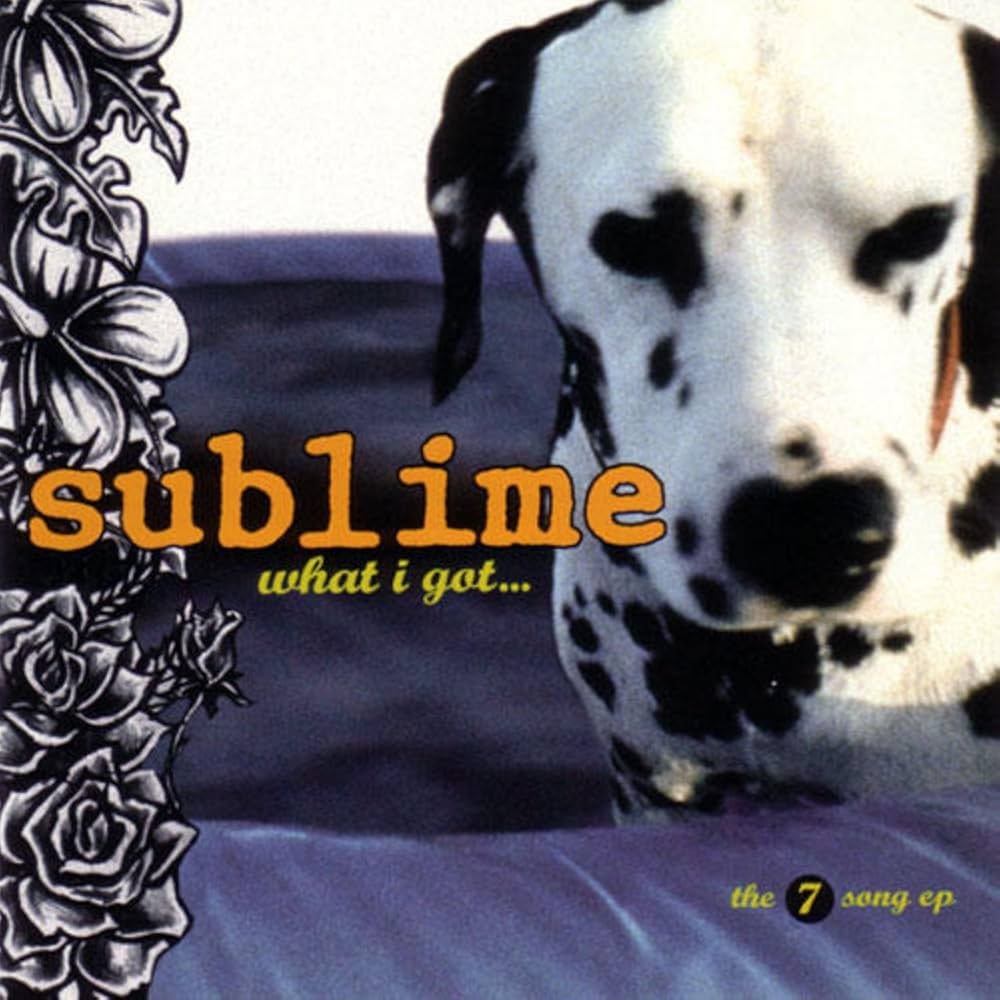
The Alternative Number Ones: Sublime’s “What I Got”

October 26, 1996

  • STAYED AT #1:3 Weeks

In The Alternative Number Ones, I’m reviewing every #1 single in the history of the Billboard Modern Rock Tracks/Alternative Songs, starting with the moment that the chart launched in 1988. This column is a companion piece to The Number Ones. The column is now biweekly, alternating with The Number Ones on Mondays.

When Bradley Nowell died in May 1996, the world didn't really notice. I don't even remember exactly when I learned about the Sublime frontman's death, and I was a fan. I'd been a fan for months.

Sublime were apparently a huge deal in California before Nowell's passing, but that was not the case on the East Coast, where I lived. My entry point was that I heard a ska song called "Date Rape" on the radio once or twice. That song has aged in some really fucked up ways, and we'll get into it below, but I liked it. I knew that it was by a band called Sublime, and I knew nothing else about it. When my family went to Florida for Thanksgiving 1995, I found a cassette copy of Sublime's album 40 Oz. To Freedom at a mall record store; I bought that and the Misfits' Collection II at the same time. 40 Oz. To Freedom was a weird, fascinating record, and I kept listening to it until the tape warped, or maybe the tape just always sounded warped. With Sublime, it was hard to tell.

Bradley Nowell was the undisputed driving force of Sublime, the reason that anyone would listen to that band. But as someone who loved that band's album, I didn't even know what Nowell looked like. Sublime just weren't culturally present for me. They were a mysterious West Coast crew who specialized a sloppy reggae-punk-rap collage that sounded like nothing else I could name. They were about as exotic as a band of suburban white punks could be to a suburban white punk like me. But I don't remember having enough emotional connection to that band that I was crushed when Nowell died. It was just like: Aw man, that's too bad.

When Nowell passed away, his record label seriously considered shelving the self-titled album that Sublime just barely had time to finish recording. They thought that Sublime were a costly write-off, especially with no capability to tour or promote the record. But that album had hits, and it drastically altered both Sublime's legacy and the course of alt-rock radio history. Six months after Bradley Nowell's death, Sublime were well on their way to becoming one of the biggest bands on the radio. A couple of years after Nowell's death, he was an icon, and the songs that he left behind were on constant dorm-room rotation.

That process begins with "What I Got" — a dead guy singing warmly and blissfully about embracing the good things in life and letting the darkness roll off of him. "What I Got" is not a sad song, and it doesn't make Nowell out to be one of rock history's many tragic-doomed-romantic figures. It's a contented little sigh, full of samples and allusions to all the music that Nowell loved more than anything. In a way, that makes it even sadder.

I bought 40 Oz. To Freedom because I thought Sublime were a ska band. Third-wave ska, the herky-jerk reggae mutation that had existed on the American underground for a solid decade, began its moment of mainstream visibility in the mid-'90s, and I was fascinated. I was only just learning all about punk rock, and here was this weird-ass adjacent subculture with its own fashions and reference points and instrumental flourishes. For a little while there, I wore skinny ties and newsboy caps to high school, seriously considering the idea that maybe I liked ska better than punk.

Sublime didn't think like that. They weren't trying to live up to subcultural ideals, and they didn't think in terms of genre. Instead, their music played as a big, sweaty embrace of all the music that they loved — ska and punk, sure, but also rap and dancehall and the Grateful Dead and '70s soul and old comedy records and whatever else floated past them. Sublime definitely shared a ton of influences with 311, the band that preceded them at the top of the alt-rock charts by a few weeks. But where 311 shouted about their all-mixed-up genre-fluid nature through a megaphone, Sublime let all that music sink in and flow out in unpredictable ways.

All the members of Sublime grew up in Long Beach, California. I've never been there, but popular culture has taught me to view that place as a vaguely run-down and dangerous town in the shadow of Los Angeles. Bradley Nowell was the son of a general contractor and a music teacher. Both of his parents were big music people. As a kid, Nowell had problems with ADHD, and he stayed with his father after his parents split up. His father took him on a sailing trip of the Virgin Islands, where he heard reggae for the first time and fell in love. In high school, he played with future Sublime bassist Eric Wilson in a punk band called Hogan's Heroes. Then he went to college for finance but dropped out just before finishing.

While he was still in college, Nowell went back home to hang out with his old friend Wilson and with Bud Gaugh, Wilson's best friend since childhood. The three of them jammed together, with Wilson on bass and Gaugh on drums. Everything clicked, so they picked a band name by flipping to a random dictionary word, and they started playing parties. Parties were the thing for Sublime. They got drunk and high at every opportunity, and you can imagine that they sounded a whole lot more comfortable in a backyard than onstage at a club.

Sublime played their first show in 1988, and they just kept playing shows for years. They'd record music on tapes so that they could hand them out to promoters, or sometimes to people at those parties, but they weren't really trying to sell anything. Sublime always kept that same lineup, those three guys, but they were surrounded by a whole crew of friends who would join them as needed. From a certain perspective, the band became a subculture unto itself. Those guys just floated through Long Beach, and some of the other people floating through the same city at the same time just kind of attached themselves to the band.

One friend of Sublime was Marshall Goodman, who went by the name Ras MG and who fulfilled a lot of roles in Sublime without ever becoming an official member of the band. He DJed, he rapped, and he filled in for Bud Waugh when Waugh was too strung out on heroin and/or meth to play drums. Another friend was Michael "Miguel" Happoldt, a college kid who studied recording and who had access to his school's recording studio. For a school project, Happoldt recorded the band's 1991 tape Jah Won't Pay the Bills. The tape supposedly came out on Skunk Records, the label that Nowell and Happoldt founded together, but it mostly just existed to to help them book more shows and parties.

Sublime and Happoldt recorded the band's debut album 40 Oz. To Freedom by sneaking into that college studio after-hours. It's a messy, loopy album full of allusions, samples, and covers: Toots And The Maytals, Bad Religion, the Grateful Dead. There's an ode to KRS-One and a final track that's nothing but shoutouts, both to the band's friends and to a bunch more of the artists who they loved: James Brown, Jimi Hendrix, Eek-A-Mouse, the Butthole Surfers, Cypress Hill, Fugazi, the Mentors, the Beastie Boys.

Then there's the memorable 40 Oz. To Freedom ditty "Smoke Two Joints," a song about needing to smoke weed before every single part of your day. During one of my teenage phases where I'd get all judgmental about all my stoner friends, that song used to really bug me. In 12th grade, I hosted some kind of coffeehouse event in my school cafeteria, and a couple of my buddies locked the teachers out of the room and then covered "Smoke Two Joints." The crowd loved it. I had to be the asshole who got on the mic right after they finished and be like, "Uh yeah, that guy died of drugs." "Smoke Two Joints" never stopped me from liking Sublime, and I apologize to any high-school friends I tried to guilt trip in between my own drug phases.

"Smoke Two Joints" would be the most endearingly popular 40 Oz. song if not for "Badfish," a gorgeously bittersweet reggae-folk number about feeling like a scumbag because you're hooked on heroin. "Badfish" became the name of the most prominent of the many Sublime cover bands that flourished after Nowell's songs — most prominent, that is, if you don't consider the later incarnations of Sublime to be Sublime cover bands.

All the members of Sublime had substance abuse issues, and Nowell's heroin addiction haunted his entire adult life. In interviews after his death, people close to Nowell would say that he believed the old myths about heroin spurring creativity. But he also knew that drugs were turning him into a human disaster. He'd kick his habits for a little while, and then he'd relapse even harder, a cycle that kept repeating until it killed him. Sublime would meet with labels or join big tours, and then Nowell would do something fucked up and blow the opportunity. Sometimes, he would pawn the band's equipment for drug money just before shows, trusting that someone else would buy it back.

Sublime released 40 Oz. To Freedom on Skunk, and the album became a bit of a word-of-mouth sensation in Southern California, which didn't exactly lend any stability to their lives. The band looted a bunch of equipment during the LA riots (as later depicted on the band's own song "April 29, 1992 (Miami)") and they used that equipment to record an ugly, messy follow-up called Robbin' The Hood in a literal crackhouse. A pre-fame Gwen Stefani sings a duet with Nowell on that one, and you can hear flashes of brilliance on the record. But Robbin' The Hood is mostly a sloppy slog, and it didn't sell.

Robbin' The Hood is not the sound of a band on an upward trajectory, but fate had plans for Sublime. Jeff Weiss tells the whole tale in a great, long 2021 Ringer piece about the band's entire squalid history. (I'm drawing heavily on that epic piece in this column. You should read it. Read Jeff's book, too.) A few months after the release of Robbin' The Hood, KROQ DJ Tazy Phyllipz played a Sublime song on-air, seemingly on a whim. It wasn't a song from Robbin' The Hood. Instead, it was the 40 Oz. To Freedom track "Date Rape" — not even the version that appeared on the album, but a live one from some random compilation. The station's listeners loved that song, and it went into heavy rotation. Other stations around the country picked up "Date Rape," too, though it never made the Modern Rock charts. "Date Rape" is the reason that Sublime ever had a chance to get famous, which puts me in the unenviable position of having to discuss "Date Rape" now.

"Date Rape" is a story-song, and the story goes like this: A guy meets a girl at a bar, gets her drunk, takes her out in his car, and rapes her. She then calls a lawyer and gets him arrested, and he gets sentenced to 25 years in prison, where he gets raped. That's the happy ending, the karmic retribution. As an idiot teenager, I thought this was righteous and just, and I loved the song. It had hectic energy and jerky charm, and it delivered its rape-is-bad message with humor and optimism. That's what I thought then, anyway. Decades later, I am a little more clear on how humor and optimism don't really belong in rape narratives and how this fucking band shouldn't have been the one to tell this story in the first fucking place, especially with prison rape as its punchline. It's a disaster, and it made Sublime regionally famous. It gave them more opportunities to fuck up.

Sublime got booked to play the KROQ's Weenie Roast, the station's big annual festival. That day, they broke into Bush's dressing room and stole all that band's booze, and Lou Dog, Nowell's rescued dalmatian who served as the band's mascot, bit a record exec's young daughter. Sublime got booked on the first-ever Warped Tour in 1995, and they got kicked off the tour after Nowell sicced Lou Dog on some of the tour's pro skateboarders. Still, the band managed not to torpedo their deal with Gasoline Alley, the MCA imprint that ultimately signed them.

MCA paid to send Nowell to rehab, and that worked for a little while. Nowell had just become a father; his son Jakob was born in June 1995. Nowell wanted the band's major-label situation to work. MCA sent Sublime into the studio with David Kahne, a veteran producer who hasn't been in this column but who's been in the mainline Number Ones for his work on the Bangles' "Walk Like An Egyptian." A year before he worked with Sublime, Kahne won the Album Of The Year Grammy for producing Tony Bennett's MTV Unplugged. The Sublime sessions were chaos, and only a few usable songs came out of them, but one of those songs is "What I Got," the subject of today's column. We'll get to the song itself, I promise, but we have to get through some more chaos first.

When it became clear that Sublime couldn't record an entire album with David Kahne, Gasoline Alley sent them off to Austin to record with Butthole Surfers guitarist Paul Leary, a recent subject of this column, at Willie Nelson's Pedernales Studios. Sublime rented an RV and made the long drive down to Texas. During those sessions, Nowell relapsed, and Sublime trashed the studios, as well as all the places where they stayed. Leary had to keep sending people to the bathroom to make sure that Nowell was still alive. Somehow, Sublime were able to finish some kind of masterpiece during those sessions.

Sublime's self-titled album is just as messy and all-encompassing as 40 Oz. To Freedom, but it's bigger and more ambitious. This band shouldn't have been able to get away with leaps like fake-accented bilingual dancehall reggae, but there's a compelling, vulnerable honesty to everything they do. Much of it comes down to the wide-open soulfulness of Nowell's voice. He sings about being an absolute fuckup with such serene charisma that I wind up loving the guy. Plenty of people made slapdash genre-collage music in the mid-'90s, but nobody else did with Nowell's warmhearted, effortless grace. He floated from echo-delay hardcore to molotov-cocktail reggae to Jimmy Buffett flip-flop beach music like it was the most natural thing in the world. To him, maybe it was.

Once the Sublime sessions were done, Nowell headed back to rehab, and he reportedly came out of that final stint excited and rejuvenated. He married Troy Dendekker, his son's mother, in May 1996, just before the band headed out for a quick West Coast tour. One week after the wedding, Bud Gaugh discovered Nowell's body in a San Francisco hotel room, Lou Dog licking the vomit crusted on his face. Bradley Nowell was 28 years old when he died of a heroin overdose. His son wasn't even a year old yet. Sublime wouldn't even come out until two months later.

There are a few different stories about why MCA ultimately decided to release Sublime even though the label had no expectation that the album would sell. My favorite theory is the one about how someone from the band's camp slipped a CD copy to KROQ DJ Jed The Fish. "What I Got" quickly became one of the station's most popular songs, and it spread across the rest of the alt-rock landscape a lot faster than "Date Rape" did. Sublime came out in July 1996, and "What I Got" broke onto the Modern Rock chart a few weeks later. By the end of October, it was the #1 song in alt-rock America.

Many of the people who heard and enjoyed "What I Got" did not realize that they were listening to a dead guy. That's partly because of the slow spread of information during the internet's infancy, and it's partly because the Bradley Nowell of "What I Got" does not sound like a dead guy. If you wanted, you could read all kinds of readymade tragedy into Nirvana's music. Sublime don't offer that. "What I Got" is a happy, breezy, life-affirming listen. That's its reason for being.

On "What I Got," Nowell sings about all the things that could get him down but don't: His money's all gone, his dog sometimes runs away, his mom smokes weed and crack. That stuff doesn't bother him because he can always remind himself of the good things in life. He's got a dalmatian, he can still get high, and he can play the guitar like a motherfuckin' riot, a point that he underlines by playing what I've been told is not a very impressive solo. It sounds good to me, though.

"What I Got" has an extremely loose structure, which makes sense, since it's also got an extremely loose everything else. It's not quite ska or reggae, though you can hear the ghost of a one-drop beat in there. It's got a dusty little breakbeat, supposedly a loop of something that Ras MG recorded on a four-track. Throughout the song, you can hear background noises and low-mixed samples. Nowell sings with beatific ease, and he sounds like he's making everything up on the spot, which he might well be. The guitar solo is, what, 30 seconds into the song? And then there's a blast of organ, some DJ scratches, and a big drum thwack, and Nowell starts doing his own white-guy version of dancehall toasting, telling you to stop fighting and take a tittly-tip from him, take all of your money and give it all the charity.

On "What I Got," Nowell catalogs some of the things that could kill you — "you might get run over or you might get shot" — without mentioning the thing that actually did kill him. The song doesn't have much of a thesis, but Nowell still floats away from its central idea when he goes into deejay mode, unable to stop himself from reminding you that the Sublime style's still straight from Long Beach. But then he catches himself and dips back into crooner mode, repeating over and over that lovin' is what he's got. He says "remember that," as if he's reminding himself. He shouts out his dog again, and then Ras MG comes in with some more turntable scratching. The song doesn't quite end or fade out. Instead, it gradually falls apart, a bunch of instruments stopping and starting before Nowell mutters, "We're done, man." There's nothing professional about it, and therein lies the charm.

When Nowell sings that lovin' is what he's got, it's not an original sentiment. It's a quotation. Nowell is simply repeating a line from "Loving," a 1986 single from the Jamaican singer Half Pint. It's a lyrical and melodic lift, and it's direct enough that Half Pint got songwriting credit on "What I Got." The song's other samples and allusions are nebulous enough that no other non-Sublime members got writing credits on the song, but those bits are in there, too.

Plenty of people have pointed out that the verse melodies on "What I Got" are awfully similar to the ones on the Beatles' "Lady Madonna." Before "What I Got" even starts, you can hear a squeaky voice saying, "I don't wanna fuck you, you can't even sing!" It's Richard Pryor, from a 1974 comedy album. When Nowell sings that life is too short, he doesn't quite finish the line. Instead, we hear the hook from Too Short's 1988 classic "Life Is... Too Short" scratched in. When Nowell says he never had to battle with the bulletproof vest, he's quoting Lauryn Hill on the Fugees' "Nappy Heads (Remix)." The little stop-start breakbeat on the fadeout is from LL Cool J's "Smokin' Dopin'," which itself is from Monk Higgins' "One Man Band (Plays All Alone)."

Almost every Sublime song is like that — these disparate influences shuffled up in a few guys' brains, reshaped into sunny, welcoming dirtbag blues. Maybe Nowell meant all those bits and pieces as salutes, or maybe that stuff was just in the soup of his brain, ready to resurface instinctively. In any case, the man had taste. A radio station that played all the songs Sublime referenced would be a lot cooler than the alt-rock stations that ultimately did play Sublime.

Bradley Nowell wasn't alive to shoot a video for "What I Got," so he's in the clip in the form of archival footage and collaged photos, including the closing shot if him with his infant son and future successor Jakob. There are also lots of shots of Lou Dog running in the sunlight and of Sublime's extended Long Beach crew strolling around en masse and happily mean-mugging the camera. The clip does something difficult. Without the presence of its deceased main character, it captures the song's feeling and the Long Beach culture from whence it sprang.

Sublime hit record-store shelves at a fortuitous moment. The album offered a happy, grimy take on the smarty-pants Beck/Beasties cut-and-paste aesthetic that had been all over the radio all year. Sublime's version of that style was way less studied and intellectual, way more gut-level, even if it drew on many of the same sources. Sublime also came from punk and ska, which were having their own moment. Sublime were never exactly a ska band, but they were close enough that they fit with the zeitgeist.

In 1996, alt-rock kids were just starting to learn what ska even was. (I say that as one of those kids.) The Mighty Mighty Bosstones, a band that will appear in this column, opened the main stage at Lollapalooza 1995, and they blew my teenage mind. That fall, Berkeley punk greats Rancid, half of whom had been in the pioneering underground ska-punk band Operation Ivy, reached #8 with their biggest radio hit, the straight-up ska song "Time Bomb." (It's a 10.)

Sublime's friends in No Doubt released their slow-burn blockbuster Tragic Kingdom at the end of 1995, and "Spiderwebs," the most ska-adjacent of their hits, peaked at #5 in July of the next year. (It's a 9. As it happens, "Don't Speak" broke into the top 10, on its way to a #2 peak, while "What I Got" was at #1. It's a 7.) That same summer, LA ska-punks Goldfinger made it to #5 with "Here In Your Bedroom," their own biggest hit. (It's an 8.) At the 1996 HFStival, where I was not trying to see the Afghan Whigs or Guided By Voices, No Doubt and Goldfinger played my two favorite sets by far. I was going to a lot of punk parties around that time, and the 1995 compilation Ska: The Third Wave was on constant repeat at those things. Sublime helped usher the ska-punk spotlight moment in with the success of "Date Rape," and I think their self-titled album benefited from that wave, even if their own sound was pretty peripheral to the checkerboards-and-bomber-jackets thing that was going on.

Sublime went gold before 1996 ended, and it just kept selling over the next year. Songs from that album were all over the radio, though "What I Got" is the only track that reached #1. The next single was probably my least favorite song on the LP: "Santeria," a jilted-lover reggae tune that just always got on my nerves. Naturally, I could never escape that song. I still can't. "Santeria" peaked at #3 and then just never went away. Today, it's got more than a billion streams, and it's Sublime's most popular song by far. My daughter has learned not to play "Santeria" in the car when I'm driving. (I'll be nice and say it's a 5.)

Almost a year after "What I Got" topped the Modern Rock chart, another Sublime song reached #3: "Wrong Way," a ska song about Nowell's narrator falling for an underaged suicidal sex worker and plotting to murder the guy who pimped her out, her father. A track like that has no business being as catchy or jaunty as it is, but that's the Sublime way. (It's an 8, though maybe that's the wrong way.)

Sublime just kept selling and selling. You couldn't get away from it. The album is now quintuple platinum, which honestly seems low to me. Its last certification was in 1999, and it would probably get a few more plaques if MCA paid for some updated RIAA numbers. (A cover of a Sublime song will appear in this column if I keep writing it for long enough.) Sublime's back catalog kept selling, too. 40 Oz. To Freedom went double platinum, and even Robbin' The Hood went gold. MCA kept repackaging Sublime's leftovers into greatest-hits comps and rarities collections, and some of those sold in big numbers, too. The band became a phenomenon after they stopped being a band. The success of their disreputable, testosterone-drunk music probably helped push alternative radio even further from its college-rock roots, toward the toxic soup that it would become. I can't blame Sublime for that, though. I like them too much.

Sublime couldn't keep going after Bradley Nowell's death. Instead, his two surviving bandmates and a bunch of their friends formed a crew called the Long Beach Dub Allstars, and they put out a couple of albums. (Their only Modern Rock chart hit, the 2001 Will.I.Am collab "Sunny Hours," peaked at #28.) Years later, Eric Wilson and Bud Waugh met Rome Ramirez, a musician who sounded a lot like Nowell even though he was eight years old when Nowell died. They decided to get back together under the Sublime name, but Nowell's widow owned the rights to that name, and she threatened to sue. Instead, the trio had a long run under the awkward, ridiculous name Sublime With Rome. (Sublime With Rome's highest-charting single, 2011's "Panic," peaked at #4. It's a 6.)

Sublime With Rome existed from 2009 to 2023, which means they were around for a whole lot longer than the original Sublime. They put out a lot of records, but one might argue that they were really a Sublime cover band. Bud Gaugh left the band after their first album, so Eric Wilson was the only actual Sublime member in Sublime With Rome for most of that band's lifetime. It seemed like Sublime With Rome could keep running on the fumes of actual Sublime forever. That's not what happened, though. Instead, we got a belated plot twist.

At the very end of 2023, Wilson and Waugh got back together, playing Sublime songs at an LA benefit for ailing Bad Brains singer HR, a foundational Sublime influence. They were joined by Bradley Nowell's son Jakob. Jakob Nowell was a tiny baby when Bradley died, but he looks and sounds uncannily like his father. As a young man, he fronted LAW, a ska-punk band who put out an EP on Skunk Records. After the trial-balloon benefit show, Waugh and Wilson got rid of Rome Ramirez, and Jakob became the frontman for the newly reconstituted Sublime, now known as just plain Sublime. When he joined the band, Jakob was 28, the same age that his father was when he died.

The current continued existence of Sublime feels a bit like a morbid, opportunistic cash-grab, much like the existence of Sublime With Rome before that. But if Sublime 2.0 came through my town on a summer tour, I would seriously consider paying money to see them. I might feel weird about it, but I like those songs. I've been liking those songs since Bradley Nowell was alive. And anyway, the reboot has been shockingly successful. Last year, a Sublime song reached #1 on what's now called the Alternative Airplay chart, and it stayed on top of that chart for longer than any song in history. At least theoretically, Sublime will return to this column. It'll just take a while.

GRADE: 9/10

BONUS BEATS: Lots and lots of people have covered "What I Got" over the years, and I was shocked to discover that I'm kind of charmed by the version that Blues Traveler released in 2012. Here it is:

(Blues Traveler's highest-charting Modern Rock single is "Hook," which peaked at #13 in 1995.)

BONUS BONUS BEATS: Most "What I Got" covers are of the shitty bar-band variety. For a fine example of that, please enjoy someone named Jelly Joseph performing the song in the 2024 Road House reboot where Jake Gyllenhaal played the Patrick Swayze role:

BONUS BONUS BONUS BEATS: Here's Post Malone joining the Jakob Nowell version of Sublime to sing "What I Got" at a 2024 corporate gig in Cancun:

@spin

Lovin' -- and Post Malone -- is what Sublime's got. (? via IG/stevierock9) #sublimel #lovin #whatigot #posty #postmalone

♬ original sound - SPIN

(Theoretically, Post Malone will appear in this column one day, too.)

GET THE STEREOGUM DIGEST

The week's most important music stories and least important music memes.